Sony Announce New External flash for Alpha DSLRs

Sony introduces powerful, compact HVL-F43AM external flash for Alpha DSLRs with Quick Shift Bounce.(Singapore, 13 April 2011) With a powerful output of GN43 (105mm ISO100 m), the compact yet versatile HVL-F43AM flash from Sony is optimised for superb results with all A-mount cameras.

,

HVL-F43AM external flash
As featured on the HVL-F58AM, the innovative Quick Shift Bounce system allows flash head position to be adjusted instantly when switching between horizontal and vertical compositions. This maintains consistent shadow positions regardless of camera orientation, allowing easy creation of natural-looking ‘bounce’ effects.

Smart flash functions open up even broader creative lightning possibilities. Wireless Ratio Control makes it easy to select light emission ratios for up to three separate flash units[1]. This allows quick creation of sophisticated multi-point lighting effects without the need for complex professional equipment.

Ideal for everyday shooting and more serious applications, its dust- and moisture-resistant design makes the HVL-F43AM ideal for demanding assignments, indoors or outside.

Flash power levels are switchable in 22 increments, from 1/1 through to 1/128 level in 1/3 steps. High output power is complemented by a quick 2.9 second (approx.) recycling time. Despite the flash’s extensive functions, operation is refreshingly clear and simple via the high-quality LCD screen and direction buttons.

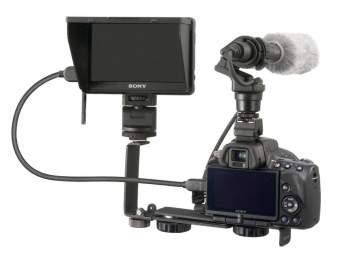
VCT-55LH bracket
The VCT-55LH is a versatile mounting bracket that offers space for mounting additional ISO cold shoe accessories. A useful add-on for all A-mount cameras by Sony, the bracket can also be used with E-mount cameras such as the NEX-5/NEX-3 and the Handycam® NEX-VG10E HD camcorder.

Other accessories – like a shotgun microphone – can be securely mounted while the camera’s main shoe is occupied. The VCT-55LH is ideal for use with the CLM-V55 clip-on LCD monitor that offers a clear, high-resolution view of images during video and still shooting.
* Wireless ratio control available when using DSLR-A900, DSLR-A850 or DSLR-A700.

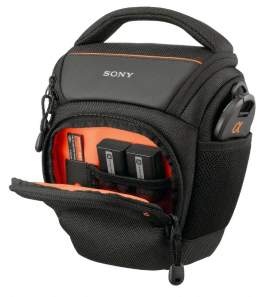
Soft Carrying Case LCS-AMB

The LCS-AMB soft carry case protects your A-mount camera and attached standard zoom lens while you’re travelling. A special suspended partition cradles the camera securely while allowing quick access. Finished in durable black polyester material, the case can be slung over a shoulder using the supplied strap, carried by the grab handle or attached to a belt. It also features handy pockets with space for up to two extra batteries, spare memory card and lens cap. (NB: Not compatible with DSLR-A900/A850).

Lens Hood ALC-SH111
Compatible with DT 35mm F1.8 SAM and 85mm F2.8 SAM lenses, this round-profile hood shades from direct sunlight to prevent glare and lens flare.

The new HVL-F43AM external flash, VCT-55LH bracket, LCS-AMB soft carrying case and ALC-SH111 lens hood for α cameras by Sony are available from May 2011.

“Sony”, “WALKMAN”, “VAIO”, “Cyber-shot”, “Handycam”, “α”, “BRAVIA” and “XDCAM” are registered trademarks or trademarks of Sony Corporation. All other trademarks or registered trademarks are the property of their respective owners.

Main specification for external flash HVL-F43AM

Model Name HVL-F43AM 
Guide Number 43 (105mm, ISO100・m)
Flash Coverage 24-105mm (15mm focal length covered with built-in wide panel)
Flash Control Pre-flash control, manual flash control selectable, direct through-the-lens (TTL) flash metering
Bounce Flash Click positions: up (30°/45°/60°/75°/90°/120°/150°); down (8°); right (30°/45°/60°/90°); left (30°/45°/60°/90°)
Recycling time (based on Sony measurement) Approx. 2.9 seconds (with alkaline battery)
Battery performance (based on Sony measurement) Approx. more than 200 flash cycles (with alkaline battery)
Power level switching 22 levels: (1/1, 1/2, 1/4, 1/8, 1/16, 1/32, 1/64, 1/128), 1/3 steps
Wireless Ratio Control Available to control by 3 groups when used with DSLR-A900/A850/A700
Other features Auto WB Adjustment with Colour Temperature Info; Auto zoom control optimised for image sensor size; High-Speed Synchro; Modelling Lighting; Test Lighting; Multi Lighting. Supports camera’s Red-eye reduction feature. Built-in wide panel and bounce sheet. High quality LCD screen.
Compatible Shoe Auto-lock Accessory Shoe
Included items Mini-stand, Case
Dimensions (WxHxD) Approx. 75 x 129 x 87 mm
Weight Approx. 340g (without batteries)
Power source Four AA-size cells of the same type, either alkaline or Ni-MH 

About Sony Electronics Asia Pacific Pte. Ltd.
Based in Singapore, Sony Electronics Asia Pacific Pte. Ltd. is a subsidiary of Sony Corporation.  It serves as the regional management and marketing headquarters for Sony’s consumer as well as broadcasting and professional products, overseeing Asia Pacific, Middle East and Africa regions. For more information on Sony’s products and services in Asia Pacific, please visit www.sony-asia.com

About Sony Corporation
Sony Corporation is a leading manufacturer of audio, video, game, communications, key device and information technology products for the consumer and professional markets. With its music, pictures, computer entertainment and on-line businesses, Sony is uniquely positioned to be the leading electronics and entertainment company in the world. Sony recorded consolidated annual sales of approximately US$77.5 billion for the fiscal year ended March 31, 2010. Sony Global Web Site: http://www.sony.net/

About make.believe
“make.believe” (make dot believe) is a Group-wide brand message that unites Sony’s communications initiatives across electronics, games, movies, music, mobile phones and network services. “make.believe” symbolises the spirit of Sony – the power of creativity, the ability to turn ideas into reality and the belief that anything you can imagine, you can make real.

Posted in Brand: Sony, Photography Articles & Videos | Tagged , , , , | Leave a comment

Sony Launches Faster Yet More Affordable Memory Stick PRO-HG Duo HX With High Speed Data Transfer

Consumers can now enjoy top performance when capturing images and video with data transfer speeds of up to 50MB/s and 32GB storage capacity


(Singapore, 12 April 2011) – Sony Electronics Asia Pacific announces the new Memory Stick PRO-HG Duo HX, offering even faster data transfer speeds at an affordable price. Meeting the demands of Sony’s best digital imaging technologies, the Memory Stick PRO-HG Duo HX features high performance with speedy data transfers of up to 50MB/s, making it the ideal companion when taking burst shots with an Alpha DSLR or shooting Full HD and even 3D movies and photos with Sony’s new range of Cyber-shot cameras and Handycam camcorders.

 “The discerning users of today seek to capture only the best quality images and HD videos. Thus, they will also need compatible high-speed, high-capacity storage media that will allow them to make the most of the advanced features Sony’s cameras and camcorders,” says Mr. Takayuki Takemura, Deputy Director, Consumer Business Group, Recording Media & Energy Centre, Sony Electronics Asia Pacific. “The Memory Stick PRO-HG Duo HX was specially developed to meet this demand. With its quicker data transfer speeds and greater storage capabilities, users now have the freedom to create and capture best possible shot, at an even lower cost.”

In addition to using high-speed, high-quality flash memory, the Memory Stick PRO-HG Duo HX features a new and intelligent flash memory controller called the “HX Engine” which maximizes the capability of high-performance flash memory and enhances data-transfer efficiency by increasing the internal clock that handles data processing. Besides the faster data transfer speed, the HX Engine is also highly reliable, with an anti-error functionality optimized for Sony hardware features such as high-speed burst shooting, or HD movie shooting. It also possesses intelligent data control for increased stability when reading and writing data of significant sizes. This is done by balancing the allocation of writing data to the flash memory and by avoiding writing data to same area repeatedly, thus reducing risks of errors in writing data. This is further enhanced by the use of an Enhanced Error-Correcting Code that seamlessly detects and corrects errors.

With its improved transfer speed, the Memory Stick PRO-HG Duo HX is perfect for high resolution action photography in continuous burst shooting modes, with the ability to capture up to 190 shots with NEX-5 in a minute[1]. Furthermore, it handles the speed and capacity requirements for not just the Handycam, but also the new demands of AVCHD video and 3D capture capabilities for the new Alpha and Cyber-shot models. This ensures stable, fuss-free recording of large full HD movies, and 3D videos and photos for users.

Not only is the Memory Stick PRO-HG Duo HX able to capture all special yet fleeting moments, its enhanced performance also enables users to rapidly transfer storage-intensive high-resolution photos and videos from the memory card to a computer. At transfer speeds of up to 1.6 times faster than the current models, users can now view freshly taken photos and videos even quicker and more efficiently. Additionally, the large storage capability of the Memory Stick PRO-HG Duo HX makes it ideal for the back-up of data, photos and videos.

Data recovery is also hassle-free as the Memory Stick PRO-HG Duo HX features the AVCHD Memory Card File Rescue software. Available as a free download, the software enables the retrieval of photos, music and movies that were deleted by mistake for greater peace of mind.

Users of the Memory Stick PRO-HG Duo HX can also download x-Pict Story™ for free. This fun and easy-to-use software allows users to create unique slideshows of their favourite pictures, synced to effects and music. These moving photo albums can then be shared with friends and loved ones.

Featuring storage capacities in 8GB, 16GB and 32GB, the new Memory Stick HX will be available in Asia Pacific from end April 2011.

About Sony Electronics Asia Pacific Pte. Ltd.
Based in Singapore, Sony Electronics Asia Pacific Pte. Ltd. is a subsidiary of Sony Corporation.  It serves as the regional management and marketing headquarters for Sony’s consumer as well as broadcasting and professional products, overseeing Asia Pacific, Middle East and Africa regions. For more information on Sony’s products and services in Asia Pacific, please visit www.sony-asia.com

About Sony Corporation
Sony Corporation is a leading manufacturer of audio, video, game, communications, key device and information technology products for the consumer and professional markets. With its music, pictures, computer entertainment and on-line businesses, Sony is uniquely positioned to be the leading electronics and entertainment company in the world. Sony recorded consolidated annual sales of approximately US$77.5 billion for the fiscal year ended March 31, 2010. Sony Global Web Site: http://www.sony.net/

About make.believe
“make.believe” (make dot believe) is a Group-wide brand message that unites Sony’s communications initiatives across electronics, games, movies, music, mobile phones and network services. “make.believe” symbolises the spirit of Sony – the power of creativity, the ability to turn ideas into reality and the belief that anything you can imagine, you can make real.

Posted in Brand: Sony, Photography Articles & Videos | Tagged , , , | Leave a comment

The Best Canon DSLR Lenses That I Will Personally Pick.

Welcome back after the long wait!

This is the 8th article in this series of lens articles and the last. If you have missed the past articles, this is a series of articles about me sharing what are the lenses from the various manufacturers that I will pick & use on a personal basis. Today, I am going to pick my lenses from the Canon EOS DSLR Lens line-up.

You are reminded again that this is NOT a ”buying guide” or a technical review of each lenses. You can easily find those all over the internet. However, I am sharing based on personal experience, usability and how well these lenses compliment your work.

My Pick for Best Canon Zoom lens (General Lens).

This is the lens that I will probably bring it everywhere I go, for commercial shoot or leisure walkabouts.

My pick will be the EF 24-70mm F2.8L USM. Introduced since 2002, covering from a wide angle to medium telelphoto at a constant bright apeture at F2.8, this is the lens that I used most often for my commercial work ranging from weddings to events coverage. Trusted by professionals worldwide, this lens certainly lives up to its reputation. Sharpness is redefined with this premium zoom lens as it produces photos comparable to those shot with L Primes. This is not a light lens at 950gm, and when mounted on my 5D Mark II or 1D Mark IV plus the addition of a EX580II Flash on either unit, the combined weight can be a little too heavy for some. 🙂 Positioned as the “Top of the Line” (And the most expensive) Standard Zoom Lens, the lens build is very solid, handling ergos are well sorted and no wonder this the favourite lens for most wedding & event photographers. Though tagged with a “Macro”, this lens only managed a magnification ratio of 1:0.29X, so it gives closer focusing distance and this is not a real macro lens. (Real Macro lens is 1:1). Focusing is extremely fast with Canon’s proven Ultrasonic Motor (USM) and the color reproduction is probably the best in Canon’s Standard Zoom family. I never regretted buying this lens.

Some Quick Information:
Canon EF 24-70mm F2.8L USM
Format: Full Frame, but can be used on cropped bodies with a corresponding 1.6X increase (1.3x for 1D series).
Focal Range: Wide Angle to Medium Telephoto 24mm-70mm or 38.4mm-112mm on 1.6X APSC. (1.3X APSH 31.3mm-91mm)
Filter Diameter: 77mm
Supplied with Box: Instruction, Lens Pouch & Lens Hood EW-83F.
Suggested Alternative Lens: Canon EF24-105mm F4L IS USM.

My Pick for Best Canon Telephoto Zoom lens (Telephoto Lens).
This is the lens that I will use for portraiture work, short range wildlife shots & street photography.

My pick for this category has to be the EF70-200mm F2.8L IS USM. A super popular “L” Series Lens (before the Mark II arrived), this lens is built top-grade-solid, precisely put together and designed for professionals. Portrait Photographers swear by this lens utilizing the sweet spot from 70mm-150mm while Sports or wildlife photographer love the flexibility of adding on a 2X extender to have a light & compact super telephoto lens that doubles the focal range. The image stabilizer (IS) work superbly well for all handheld applications as the weight distribution of this lens is very well balanced. The IS comes in 2 modes, where mode 1 is strictly for handheld use (so switch it off or to mode 2 when used on tripod) and mode 2 offers a panning mode where the compensation shift is horizontal suitable for tripod use. With 23 elements in 18 groups including 4 UD elements, this large lens is 1570gm so it is slightly on the heavy class but delivers sharp & high quality images that had set the benchmark for industry standard. Well, if all the professionals love this lens, they can’t be wrong. 🙂

Some Quick Information:
Canon EF70-200mm F2.8L IS USM.
Format: Full Frame, but can be used on cropped bodies with a corresponding 1.6X increase (1.3x for 1D series).
Focal Range: Medium Telephoto to Super Telephoto 70mm-200mm or 112mm-320mm on 1.6X APSC. (1.3X APSH 91mm-260mm)
Filter Diameter: 77mm
Supplied with Box: Instruction, Lens Pouch, Tripod Ring Mount & Lens Hood ET-86.
Suggested Alternative Lens: Canon EF70-200mm F2.8L IS USM II (If you have the extra cash)

 My Pick for Best Canon Standard lens (Prime Lens).
This is the lens that I will use for a wide variety of applications when zooming is not everything.

This will come as a surprise to many. My choice for this category is the Canon EF35mm F1.4L USM. In my view, this is the most versatile lens in the prime lenses line up and one of the most popular L Series primes. Why so? Personally I use this lens for a variety of applications. I use this lens as a walkabout lens on my 5D MkII as the 35mm standard wide is good enough for landscape shots, great for doing portraits that do not requires too tight a crop and plus its bright constant apeture of F1.4, this is a great lens for applications where flash is not allowed. Amazing fast focusing lens running on USM so no moments are missed or blurred 🙂 .
Sitting on the L Family Line, lens build is expectedly solid, and this lens is light at 580gm and compact making it a good choice to carry it everywhere. Picture quality is among the best in the competition and if I can only bring one lens out, I will only bring this gem.

Some Quick Information:
Canon EF35mm F1.4L USM.
Format: Full Frame, but can be used on cropped bodies with a corresponding 1.6X increase (1.3x for 1D series).
Focal Range: Standard Wide 35mm or 56mm on 1.6X APSC. (1.3X APSH 45.5mm)
Filter Diameter: 72mm
Supplied with Box: Instruction, Lens Pouch & Lens Hood EW-78C.
Suggested Alternative Lens: Canon EF35mm F2.

The above 3 Canon lenses are the lenses that I will ONLY buy if I can only have 3 lenses for my Canon system. (I have these lenses. :)). The selected lenses above are not your buying guide, but instead, what I will want to have in my camera bag. Canon L-Series Lenses are legendary and seriously they are excellent. Though on the pricey end, I am sure many Canon fans will buy up the scale for the best of image quality and hardware quality. Best of both worlds if you ask me.

Disclaimer:
The above reviews/statement/ findings/ comparisons/ claims are solely personal views consolidated, compiled & based on personal surveys, usage experience, feedbacks from fellow users. This article is NOT PAID by the Brand owner and this article is presented as a reading reference from 1st person point of view.

Posted in Brand: Canon, Photography Articles & Videos | Tagged , , , | 3 Comments

The Best Tokina DSLR Lenses That I Will Personally Pick.

Welcome back!

This is the 7th article in this series about me sharing what are the lenses from the various manufacturers that I will pick & use on a personal basis. The last article was about the Tamron Lenses that I will buy for my system.

Today, I am going to pick my lenses from the Tokina DSLR Lens line-up. It is a known fact that Tokina’s strength lies greatly on its Ultra Wide Angle lenses. Landscape photographers swear by Tokina’s lenses and this is definitely something which I agreed. Strength to strength, 3rd party manufacturers does have a niche that puts them apart from each other. Tokina’s ultra wide angle lenses are among the best while Tamron is famous for their general zoom which had set a certain benchmark for quality & useability while Sigma is top for Super Telephoto zoom lenses. Like all 3rd party manufacturers, Tokina makes a good range of compatible lenses for other brands like Canon & Nikon. For those new to 3rd party manufacturers, here’s a quick start.

Some terms –
Canon – (Image Stabilizer=IS/ EF=Full Frame/ EF-S=APSC/ Ultrasonic Motor=USM)
Nikon – (Vibration Reduction=VR/ FX=Full Frame/ DX=APSC/ Silent Wave Motor=SWM)
Sony – (Steady Shot=SS/ SAL=Full Frame/ SAL+DT=APSC/ Super Sonic Motor=SSM)
Pentax – (Shake Reduction=SR/ D=DSLR/ FA=SLR/ Supersonic Drive Motor=SDM)
Olympus – (Image Stabilization=IS/ Zuiko=APSC/ M.Zuiko=M43/ Silent Wave Drive=SWD) 
Sigma – (Optical Stabilizer=OS/DG=Full Frame/ DC=APSC/ Hyper Sonic Motor=HSM)
Tamron – (Vibration Compensation=VC, Di=Full Frame/ Di II=APSC/  Piezo Drive = PZD)
Tokina – ( Nil/ FX=Full Frame/ DX=APSC/ Internal Focusing System using Silent DC Motor= IFS)
*There are other Lens Manufacturers covering smaller markets, so will not be featuring or mentioning here.

You are reminded once again that this is NOT a ”buying guide” or a technical review of each lenses. You can easily find those all over the internet. However, I am sharing based on personal experience, usability and how well these lenses compliment your work.

My Pick for Best Tokina Zoom lens (General Lens).

This is the lens that I will probably bring it everywhere I go, for commercial shoot or leisure walkabouts.

My pick has to be the Tokina AT-X 124 PRO DX II(AF12-24mm F4.0). (This is the Mark II version)
Taking its design cue and lens design from its award-winning predecessor, this lens is sharp and the Mark II now features improved multi-coating that reduces ghosting or flares. Designed as a DX, this lens is targeted at the mass market which comprises of mostly APSC users, and this lens is priced lower than proprietory brands of the same or similar range to attract users to buy Tokina as the alternative option. Today, even the most hardcore of brand fans has a Tokina in their bags. (I am saying most photographers, not all.) If you have not tried doing portraits at 24mm, you must try this lens then. Though it is not a F2.8 (like its more premium brother the Tokina 11-16mm), the bright constant F4 is already more than adequate to give beautiful bokehs and when it comes to landscape, this lens do outperforms the Tokina 11-16mm at sharpness on most F stops. For those wondering what is the difference of a 11mm wide and a 12mm wide, my answer is, 6 more steps backwards. 🙂 

Some Quick Information:
Tokina AT-X 124 PRO DX II(AF12-24mm F4.0).
Format: APS-C ONLY with a corresponding 1.5X increase cropped factor (1.6x for Canon).
Focal Range: Ultra Wide angle to Wide angle 12mm-24mm or 18mm-36mm (Canon 19.2-38.4mm) on 35mm formats.
Filter Diameter: 77mm
Supplied with Box: Instruction, Lens Hood BH-777.
Suggested Alternative Lens : Tokina AT-X 124 AF PRO DX (AF12-24mm F4.0) – Mark I Version.

My Pick for Best Tokina Telephoto Zoom lens (Telephoto Lens).

This is the lens that I will use for portraiture work, short range wildlife shots & street photography

My Pick, the Tokina AT-X 840 AF (AF 80-400mm F4.5-5.6). Probably the smallest zoom lens that has a super telephoto range of 400mm, this lens is the only lens currenly covering this focal range in Tokina’s lenses line up. Even though this lens has been in the market for about 5 years now (and no replacement was announced yet), it had proven itself to be a performer when it comes to practical uses. It produces sharp portraits and it is also good for wildlife and street photography. Before you start to complain about the 8 blades apeture, you don’t really use F5.6 for wildlife or sports would you? If you do, well, ask the Pros, they will tell you a little story about F16, but that’s another story altogether. Built solid but not too heavy (1020gm), this is lens is great to carry about and to increase practicality, it comes with a built in Tripod ring, a zoom lock that totally eliminates lens creep. All Tokina lenses now comes with multi-coated elements as standard including this lens, plus a specially designed hood (BH-725) which allows the user to adjust the filter or use a CPL without having to remove the lens hood. This lens is sensible and well priced, well designed and a lens that most people forget. You are now reminded. 🙂 

Some Quick Information:
Tokina AT-X 840 AF (AF 80-400mm F4.5-5.6). (Mark I)
Format: APS-C cameras ONLY with a corresponding 1.5X increase.(Canon 1.6X)
Focal Range: Medium Telephoto to Super Telephoto 80mm-400mm or (APSC 120-600mm for 1.5X & 128-640mm for 1.6x).
Filter Diameter: 72mm
Supplied with Box: Instruction, Tripod Ring & Lens Hood  BH-725.
Suggested Alternative Lens: Tokina AT-X 840 AF (AF 80-400mm F4.5-5.6). (Mark II)

My Pick for Best Tokina Standard lens (Prime Lens).
This is the lens that I will use for a wide variety of applications when zooming is not everything.

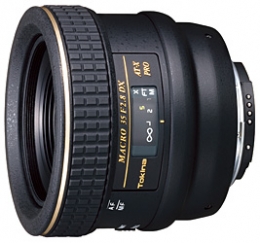
My Pick this time is the Tokina AT-X M35 PRO DX (AF 35mm F2.8 Macro). This is by far the smallest lens that Tokina produce and this is super compact. A real macro lens that gives a magnification ratio of 1:1 plus a minimum focusing distance of only 14cm, this lens is great for super close up macro and when wide open at F2.8, this lens is great for portraits with nice bokehs. When stop down to F7.1, this is one of the best landscape lens (in my view) as it gives sharp & contrasty reproduction of what I see through the viewfinder. Comes with Water repellent coating (WR), this is one lens made for outdoors. So if you are thinking of a 2-in-1 lens, get this lens. (Before it is discontinued). 

Some Quick Information:
Tokina AT-X M35 PRO DX (AF 35mm F2.8 Macro). 
Format: APS-C cameras ONLY with a corresponding 1.5X increase.(Canon 1.6X)
Focal Range: Wide Angle 35mm or (52.5mm for 1.5X & 56mm for 1.6x) on 35mm formats.
Filter Diameter: 52mm
Supplied with Box: Instruction, Lens Hood  HM-522.
Suggested Alternative Lens: Nil.

The above 3 Tokina lenses are the lenses that I will buy if I can ONLY buy 3 lenses for my system. The selected lenses above are not your buying guide, but instead, what I will want to have in my camera bag. 

Tokina has build its reputation over the years with their Ultra Wide angle offerings. Used by beginners to professionals, the lens quality and the optical quality has never failed to impress the user. Though Tokina’s focusing is still not as fast as the competition, it is adequate for the purpose it is built for. Priced to sell and designed for practical use, Tokina remains as one of the Top 3 “3rd Party” brands. I was sceptical about Tokina in my earlier days, but after owning, using (& testing) Tokina lenses, my impression of Tokina has changed. Just like how I was impressed with Sigma’s Telephoto Zooms and Tamron’s Compact and well build lenses.

Disclaimer:
The above reviews/statement/ findings/ comparisons/ claims are solely personal views consolidated, compiled & based on personal surveys, usage experience, feedbacks from fellow users. This article is NOT PAID by the Brand owner and this article is presented as a reading reference from 1st person point of view.

Posted in Brand: Tokina, Photography Articles & Videos | Tagged , , | 2 Comments

The Best Tamron DSLR Lenses That I Will Personally Pick.

Welcome back!

This is the 6th article in this series about me sharing what are the lenses from the various manufacturers that I will pick & use on a personal basis. The last article was about the Sigma Lenses that I will buy for my system.

Today, I am going to pick my lenses from the Tamron DSLR Lens line-up. It is a known fact fact that Tamron is also an OEM Manufacture for many other camera brands for body parts & lenses. Tamron also makes a good range of compatible lenses for other brands like Canon, Nikon, Pentax & Sony. For those new to 3rd party manufacturers, here’s a quick start.

Some terms –
Canon – (Image Stabilizer=IS/ EF=Full Frame/ EF-S=APSC/ Ultrasonic Motor=USM)
Nikon – (Vibration Reduction=VR/ FX=Full Frame/ DX=APSC/ Silent Wave Motor=SWM)
Sony – (Steady Shot=SS/ SAL=Full Frame/ SAL+DT=APSC/ Super Sonic Motor=SSM)
Pentax – (Shake Reduction=SR/ D=DSLR/ FA=SLR/ Supersonic Drive Motor=SDM)
Olympus – (Image Stabilization=IS/ Zuiko=APSC/ M.Zuiko=M43/ Silent Wave Drive=SWD)
Sigma – (Optical Stabilizer=OS/DG=Full Frame/ DC=APSC/ Hyper Sonic Motor=HSM)
Tamron – (Vibration Compensation=VC, Di=Full Frame/ Di II=APSC/  Piezo Drive = PZD)
Tokina – ( Nil/ FX=Full Frame/ DX=APSC/ Internal Focusing System using Silent DC Motor= IFS)
*There are other Lens Manufacturers covering smaller markets, so will not be featuring or mentioning here.

You are reminded once again that this is NOT a ”buying guide” or a technical review of each lenses. You can easily find those all over the internet. However, I am sharing based on personal experience, usability and how well these lenses compliment your work.

My Pick for Best Tamron Zoom lens (General Lens).

This is the lens that I will probably bring it everywhere I go, for commercial shoot or leisure walkabouts.


My Pick, will definitely be the Tamron SP AF28-75mm F/2.8 XR Di LD ASPHERICAL [IF] MACRO. This versatile lens is one of the most compact “F2.8 Zoom” out there today. Covering a reasonable wide angle of 28mm to a portrait range of 75mm, this lens is very suitable for a wide range of applications. This light weight (510gm) and compact lens (length 92mm) is easy to fit into any camera bag! With that as an added bonus, this lens’ build is solid, very well put together.  So apart from the cosmetic, this lens is one of the few “lucky” Tamron lens to get all 3 types of glass (XR Glass, LD Glass & Aspherical Glass)! Photographers can be assured of quality images produced by this lens. Manufactured as a “Di” Lens, this means it can be used on both Full frame & smaller APSC cameras, and it has a zoom lock button typical of Tamron culture, this award-winning lens encompassed almost all the “know-hows” from Tamron. My only complain is, though it has a “Macro” tag to it, this is not a real macro lens (1:3.9), just a good F2.8 zooms lens that allows you to focus nearer to your subjects. :)~

Some Quick Information:
Tamron SP AF28-75mm F/2.8 XR Di LD ASPHERICAL [IF] MACRO
Format: Full Frame or APS-C with a corresponding 1.5X increase cropped factor (1.6x for Canon).
Focal Range: Wide Angle to Light telephoto 28mm-75mm or 42mm-112.5mm (Canon 44.8-120mm) on 35mm formats.
Filter Diameter: 67mm
Supplied with Box: Instruction, Lens Hood, RHAFA09.
Suggested Alternative Lens (For Cropped Bodies): Tamron SP AF17-50mm F/2.8 XR Di II

My Pick for Best Tamron Telephoto Zoom lens (Telephoto Lens).
This is the lens that I will use for portraiture work, short range wildlife shots & street photography

Easy to guess, my PICK surely has to be the Tamron SP AF 70-200mm F/2.8 Di LD [IF] Macro. Like all the “70-200mm” from other manufacturers, this zoom range is very popular with professional photographers as it allows the use for portraits to wildlife. Tamron’s version is a good challenger to proprietory brands. It has a solid build, sensible design, weights only at 1150gm – probably the lightest in its class, and it produces incredibly sharp photos while giving the option of a creamy bokeh from it’s 9 blades constant apeture of F2.8 sweetened with 03 LD elements. Touted as a “buddy” lens to the SP28-75mm F2.8, their combined weight and size becomes really attractive for the photographer who hates to carry all that weight. 🙂 With a magnification ration of 1:3.1, again, this is not a real Macro lens, but when used on a tripod with a remote switch, it can still produce great Macro-like photos! Best of all, the price is the friendliest among the competition. :)~

Some Quick Information:
Tamron SP AF 70-200mm F/2.8 Di LD [IF] Macro
Format: Full Frame, but can be used for APS-C cameras with a corresponding 1.5X increase.(Canon 1.6X)
Focal Range: Light Telephoto to Mid Super Telephoto 70mm-200mm or (APSC 105-300mm for 1.5X & 112-320mm for 1.6x).
Filter Diameter: 77mm
Supplied with Box: Instruction, Lens Bag, Tripod Ring & Lens Hood  AF001C-700.
Suggested Alternative Lens: Tamron SP AF 17-50mm F/2.8 XR Di II VC LD Aspherical [IF]

My Pick for Best Tamron Standard lens (Prime Lens).
This is the lens that I will use for a wide variety of applications when zooming is not everything.

OK, yet another surprise. My Pick this round will be the Tamron SP AF90mm F/2.8 Di MACRO. Tamron do not make a lot of prime lenses to start with, however, one of the very best fixed focal range lens has to be the 90mm Macro, a real Macro lens. (1:1). Doubling up as a good portrait lens, the F2.8 gives incredible bokehs comparable to more expensive counterparts. At a mere 405gm, this lens is feather weight and but does not mean the lens is plasticky. In fact it feels solid when used and handled, but weights next to nothing when it is inside the camera bag. This is one of the sharpest macro lens available in the market now with a very friendly price tag. Try it for yourself to believe.

Some Quick Information:
Tamron SP AF90mm F/2.8 Di MACRO
Format: Full Frame, but can be used for APS-C cameras with a corresponding 1.5X increase.(Canon 1.6X)
Focal Range: Telephoto 100mm or (APSC 150mm for 1.5X & 160mm for 1.6x).
Filter Diameter: 55mm
Supplied with Box: Instruction, Lens Hood  98FH.
Suggested Alternative Lens: Tamron SP AF 60mmF/2 Di II.

The above 3 Tamron lenses are the lenses that I will buy if I can ONLY buy 3 lenses for my system. The selected lenses above are not your buying guide, but instead, what I will want to have in my camera bag.

Tamron remained the Top 3  third party lens brand in the photography world and they have never stop continuing to research & innovate new optical products making them a popular brand among today’s photographers. Though new models are mostly replacement models for the outgoing and dated ones, the excellent lens build quality & the friendly price tags on most Tamrons sure earned them lots of fans. I am one of them by the way. :)~

Disclaimer:
The above reviews/statement/ findings/ comparisons/ claims are solely personal views consolidated, compiled & based on personal surveys, usage experience, feedbacks from fellow users. This article is NOT PAID by the Brand owner and this article is presented as a reading reference from 1st person point of view.

Posted in Brand: Tamron, Photography Articles & Videos | Tagged , , | 10 Comments

The Best Sigma DSLR Lenses That I Will Personally Pick.

Welcome back!

This is the 5th article in this series about me sharing what are the lenses from the various manufacturers that I will pick & use on a personal basis. The last article was about the Pentax Lenses that I will buy for a Pentax system.

Today, I am going to pick my lenses from the Sigma DSLR Lens line-up. Apart from manufacturing lenses for Sigma’s own system, Sigma also makes a good range of compatible lenses for other brands like Canon, Nikon, Pentax & Sony. For those new to 3rd party manufacturers, here’s a quick start.

Some terms –
Canon – (Image Stabilizer=IS/ EF=Full Frame/ EF-S=APSC/ Ultrasonic Motor=USM)
Nikon – (Vibration Reduction=VR/ FX=Full Frame/ DX=APSC/ Silent Wave Motor=SWM)
Sony – (Steady Shot=SS/ SAL=Full Frame/ SAL+DT=APSC/ Super Sonic Motor=SSM)
Pentax – (Shake Reduction=SR/ D=DSLR/ FA=SLR/ Supersonic Drive Motor=SDM)
Olympus – (Image Stabilization=IS/ Zuiko=APSC/ M.Zuiko=M43/ Silent Wave Drive=SWD)
Sigma – (Optical Stabilizer=OS/DG=Full Frame/ DC=APSC/ Hyper Sonic Motor=HSM)
Tamron – (Vibration Compensation=VC, Di=Full Frame/ Di II=APSC/  Piezo Drive = PZD)
Tokina – ( Nil/ FX=Full Frame/ DX=APSC/ Internal Focusing System using Silent DC Motor= IFS)
*There are other Lens Manufacturers covering smaller markets, so will not be featuring or mentioning here.

You are reminded once again that this is NOT a ”buying guide” or a technical review of each lenses. You can easily find those all over the internet. However, I am sharing based on personal experience, usability and how well these lenses compliment your work.

My Pick for Best Sigma Zoom lens (General Lens).

This is the lens that I will probably bring it everywhere I go, for commercial shoot or leisure walkabouts.

My Pick, is none other than the 17-70mm F2.8-4 DC Macro OS HSM. Marketed as one of the standard grade lens in Sigma Lens line-up, this lens is far from “standard”. Covering a wide angle to a portrait range, this well built lens promises surprises for the user. At a bright apeture of F2.8 at wide angle to a F4.0, this lens is much suited to do landscapes, close up portraits and everything else in between. Featuring Sigma’s signature Optical Stabilizer (OS) and super fast Hyper Sonic Drive motor (HSM) for quiet and fast internal focusing (IF), user can be assused of sharp handheld photos with this lens. Though marked as a “Zoom Macro” (magnification ratio 1:2.7), this is more like a lens that can do “closer- than-others” than a real 1:1 macro. Still no one will really complain given its array of positive features. Optical quality are well-controlled with ELD & Aspherical elements, along with its “Super Multi-Layer Coating” on its glass, this is one of the best lens from Sigma.

Some Quick Information:
Sigma 17-70mm F2.8-4 DC Macro OS HSM
Format: APS-C with a corresponding 1.5X increase cropped factor (1.6x for Canon).*Not for Full Frame.
Focal Range: Ultra Wide Angle to Light telephoto 17mm-70mm or 25.5mm-105mm (Canon 27.2-112mm) on 35mm formats.
Filter Diameter: 72mm
Supplied with Box: Instruction, Lens Hood LH780-04.
Suggested Alternative Lens: Sigma 18-50mm F2.8-4.5 DC OS HSM

My Pick for Best Sigma Telephoto Zoom lens (Telephoto Lens).
This is the lens that I will use for portraiture work, short range wildlife shots & street photography

My pick, SIGMA APO 120-300mm F2.8 EX DG OS HSM. This is a very new lens from Sigma as it was only launched in September 2010. Priced slightly on the high side, we can easily understand why. Featuring a weather-proofed lens body (EX Range) with Sigma’s Super Mutli-Layer Coating, Optical Stabilizer (OS), 1SLD & 2 FLD elements for high quality images, runs on Hyper Sonic Motor (HSM) and 9 blade apeture with a bright contant F2.8 throughout the zoom range. Designed with the portrait & wild life photographers in mind, this is lens was intended for hand held shooting! Given its specs and when compared the other brands’ counterparts, you may probably think this lens is not that expensive anymore. 🙂 At least that was what I thought so.

Some Quick Information:
SIGMA APO 120-300mm F2.8 EX DG OS HSM
Format: Full Frame, but can be used for APS-C cameras with a corresponding 1.5X increase.(Canon 1.6X)
Focal Range: Telephoto to Mid Super Telephoto 120mm-300mm or (APSC 180-450mm for 1.5X & 192-480mm for 1.6x).
Filter Diameter: 105mm
Supplied with Box: Instruction, Lens Bag, Tripod Ring & Lens Hood LH1128-01.
Suggested Alternative Lens: Sigma 120-400mm F4.5-5.6 DG APO OS HSM

My Pick for Best Sigma Standard lens (Prime Lens).
This is the lens that I will use for a wide variety of applications when zooming is not everything.


My pick for this category has to be the Sigma 20mm F1.8 EX DG ASP RF. This may not be a “Top of the Line”  lens judging from it’s price, but this EX lens is a definite performer. By far, this is the fastest Super Wide Angle lens at F1.8 in the compeition so that set this lens apart from other similar lenses. A favourite with landscape photographers & journalist, this rear focusing (RF)  lens is also widely used for portraits, and even close up photography. (Magnification Ratio 1:4). Though not equipped with a HSM or Super Multi-Layer Coating for its glass plus this lens is not exactly light (52ogm), the bright 9 bladed apeture and a lens angle this wide, Sigma fans and other users will not complain. I am sure.

Some Quick Information:
Sigma 20mm F1.8 EX DG ASP RF
Format: Full Frame, but can be used for APS-C cameras with a corresponding 1.5X increase.(Canon 1.6X)
Focal Range: Super Wide Angle 20mm or (APSC 30mm for 1.5X & 32mm for 1.6x).
Filter Diameter: 82mm
Supplied with Box: Instruction, Lens Pouch  & Lens Hood LH875-02 548.
Suggested Alternative Lens: Sigma 24mm F1.8 EX DG ASP Macro

The above 3 Sigma lenses are the lenses that I will buy if I can ONLY buy 3 lenses for my system. The selected lenses above are not your buying guide, but instead, what I will want to have in my camera bag.

Sigma remained the Top 3  third party lens brand in the photography world and continuing to research & innovate new optical products making them a popular brand among photographers. Sigma is famed for their telelphoto zooms lenses and the excellent lens build quality that is value for money. Have not used a Sigma? Try it.

Disclaimer:
The above reviews/statement/ findings/ comparisons/ claims are solely personal views consolidated, compiled & based on personal surveys, usage experience, feedbacks from fellow users. This article is NOT PAID by the Brand owner and this article is presented as a reading reference from 1st person point of view.

(2013)
For the Latest Sigma Lenses That I Personally Loves, check out the below links.
1) Sigma 35mm F1.4 DG HSM (ART)


2) Sigma APO Macro 180mm F2.8 EX DG OS HSM

Posted in Brand: Sigma, Photography Articles & Videos, Uncategorized | Tagged , , | 4 Comments

The Best Pentax DSLR Lenses That I Will Personally Pick.

Welcome back!

This is the 4th article in this series about me sharing what are the lenses from the various manufacturers that I will pick & use on a personal basis. The last article was about the Olympus-Zuiko Lenses that I will buy for an Olympus system. Today, I am going to pick my lenses from the Pentax DSLR Lens line-up. *Surprised.

You are reminded once again that this is NOT a ”buying guide” or a technical review of each lenses. You can easily find those all over the internet. However, I am sharing based on personal experience, usability and how well these lenses compliment your work.

My Pick for Best Pentax Zoom lens (General Lens).

This is the lens that I will probably bring it everywhere I go, for commercial shoot or leisure walkabouts.

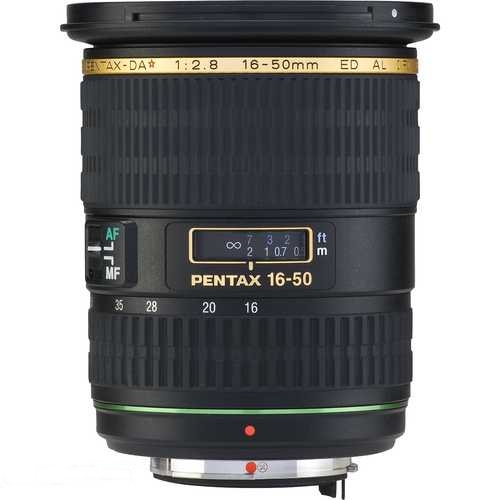
My Pick, the SMC PENTAX DA Star 16-50mm F2.8 ED/AL (IF) SDM or nothing. Listed under the highest grade “DA*” series, these lenses are top-of-the-lines optics. Built solid and weather proofed, the lens well-thought design is elegant & purposeful. Using both Aspherical (03) & ED (02) elements, this lens produces high contrast photos & unsurpassed sharpness even when compared to its own counterparts within the stable. Featuring a ultra wide angle to standard angle, this lens can be used a big variety of genre. The bright apeture of constant F2.8 make this lens a fast performer and beautiful bokeh is guaranteed. From Landscape to portrait, this lens is all you need. Focusing runs on supersonic drive motor (SDM) which gives the lens a fast, accurate and quiet focus, this lens is also pretty light to carry everywhere at only a mere 565gm. Though the price of this lens is a little on the high side, looking at the specs, I will say it is well worth every dollar in your wallet. This is a must get for all Pentax Professionals.

Some Quick Information:
SMC PENTAX DA Star 16-50mm F2.8 ED/AL (IF) SDM
Format: APS-C with a corresponding 1.5X increase cropped factor.
Focal Range: Ultra Wide Angle to Standard 16mm-50mm or 24mm-75mm on 35mm formats.
Filter Diameter: 77mm
Supplied with Box: Instruction, Lens Pouch & Lens Hood PH-RBK 77mm.
Suggested Alternative Lens: SMC Pentax DA 16-45MM F4.0 ED AL

My Pick for Best Pentax Telephoto Zoom lens (Telephoto Lens).
This is the lens that I will use for portraiture work, short range wildlife shots & street photography


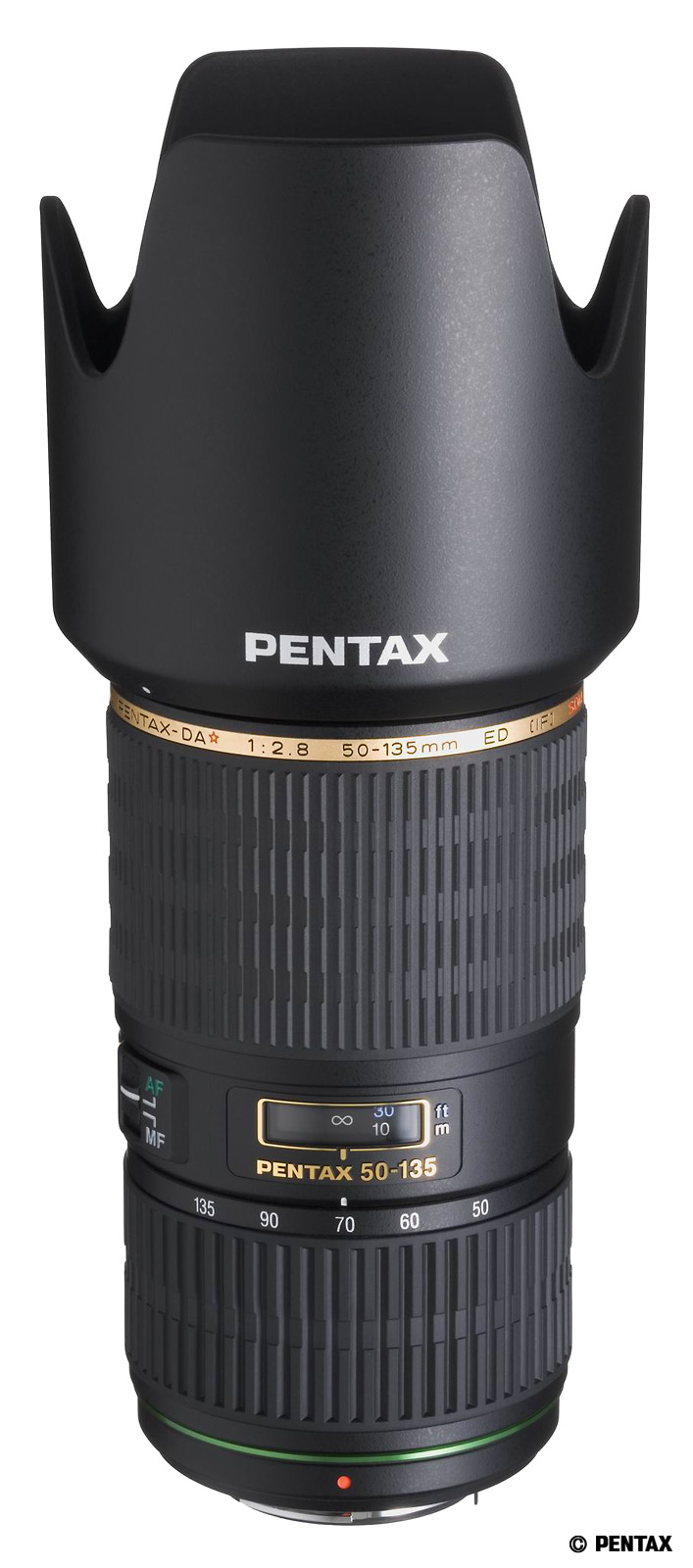
SMC PENTAX DA Star 50-135mm F2.8 ED (IF) SDM will be my pick. This is the “70-200mm” of Pentax (75-202.5mm on 35mm format) and DA Star (DA*) series lens, in short, this is a premium lens by Pentax. Expected of all DA* lenses, this lens is weather-proofed, solid built and the best “buddy” lens to SMC PENTAX DA Star 16-50mm F2.8 ED/AL (IF) SDM! Bright constant apeture of F2.8 promises performance for portraits, events or even wildlife. Hard ware aside, this lens (by far) is also the sharpest telephoto zoom in the whole of Pentax’s medium to telelphoto zoom range. It uses the same Supersonic focusing motor as the 16-50mm – (better known as SDM in Pentax language) that are fast, quiet and highly accurate. Even the weight of 685gm is light when compared to the competition! If you already have the 16-50mm, this the lens that you must have. 

Some Quick Information:
SMC PENTAX DA Star 50-135mm F2.8 ED (IF) SDM
Format: APS-C with a corresponding 1.5X increase cropped factor.
Focal Range: Ultra Wide Angle to Standard 50mm-135mm or 75mm-202.5mm on 35mm formats.
Filter Diameter: 67mm
Supplied with Box: Instruction, Lens Pouch & Lens Hood PH-RBK 67mm. (Tripod Ring NOT Included)
Suggested Alternative Lens: SMC Pentax DA 50-200mm F4-5.6 ED WR

My Pick for Best Pentax Standard lens (Prime Lens).
This is the lens that I will use for a wide variety of applications when zooming is not everything.

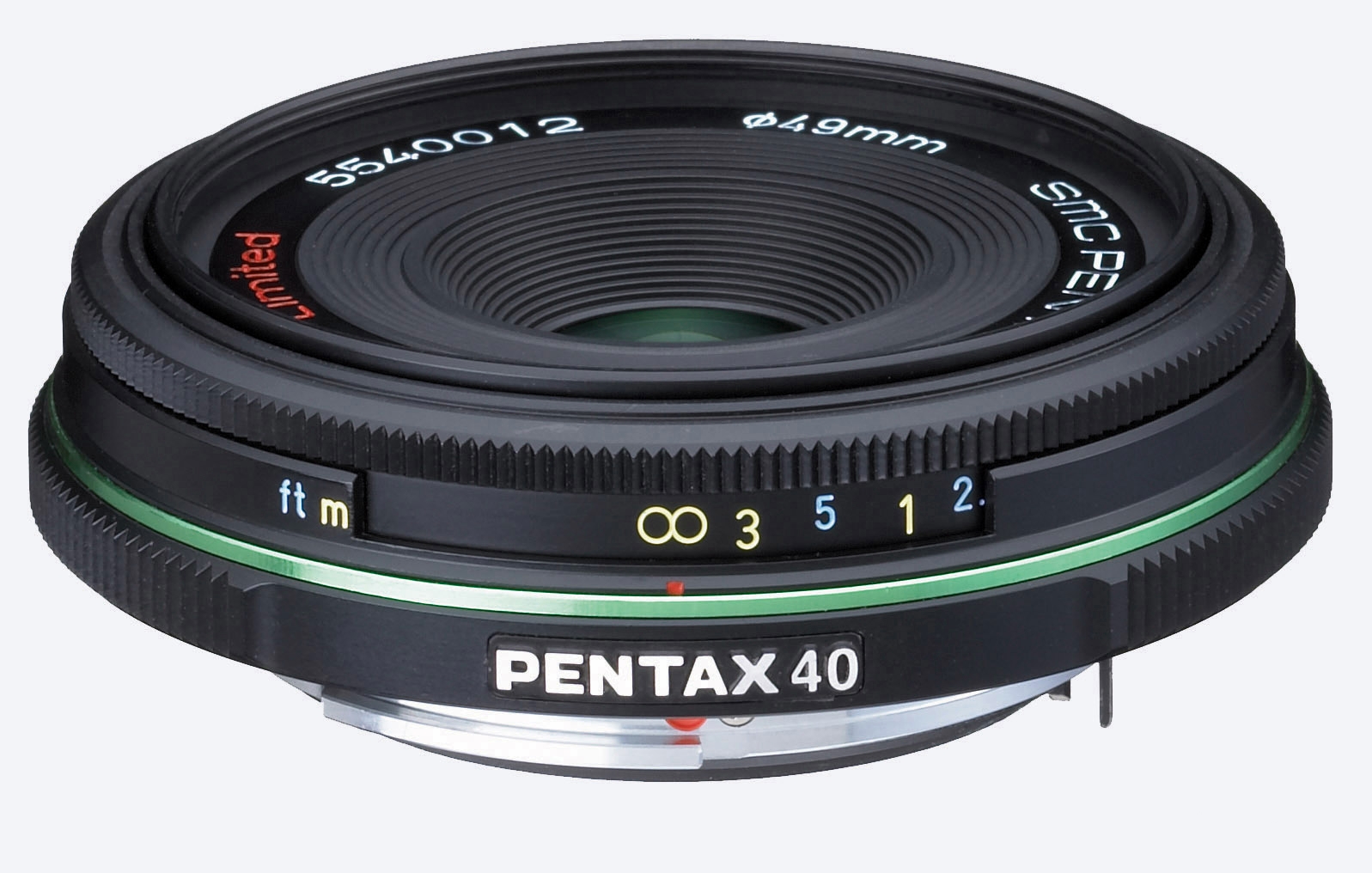
 My pick for this category has to be the SMC PENTAX DA 40mm F2.8 Limited. This little “Pancake” weights only 90 gm and it is compactly designed. This is one crazy little lens that offers the photographer sharpness, high optical quality and well put together except that this is not weather proofed. 😦 Look at it as the Novelty Pentax Lens and you will enjoy the additional (sometimes unwanted) attention from other photographers. This lens is good for portraits and mild close ups, at F2.8 on a 9 blades apeture, the bokeh should be interesting. 

Some Quick Information:
SMC PENTAX DA 40mm F2.8 Limited
Format: M43, with a corresponding 2X increase.
Format: APS-C with a corresponding 1.5X increase cropped factor.
Focal Range: Standard 40mm or 60mm on 35mm formats.
Filter Diameter: 49mm
Supplied with Box: Instruction, Lens Pouch & Lens Hood MH-RC 49mm.
Suggested Alternative Lens: SMC Pentax DA 35MM F2.4 AL

The above 3 Pentax lenses are the lenses that I will buy if I can ONLY have just 3 lenses for a Pentax system. The selected lenses above are not your buying guide, but instead, what I will want to have in my camera bag. 
Pentax remained strong among the “ruling brands” to the likes of Canon, Nikon & Sony and still continues to produce
wonderful products that retains it’s followers and attracting more young users to the brand by introducing interesting models, editions to offer more options for photographers. Just look at the K-X & its replacement model K-R, isn’t that telling you something? Start saving for DA* lense please.

Disclaimer:
The above reviews/statement/ findings/ comparisons/ claims are solely personal views consolidated, compiled & based on personal surveys, usage experience, feedbacks from fellow users. This article is NOT PAID by the Brand owner and this article is presented as a reading reference from 1st person point of view.

Posted in Brand: Pentax, Photography Articles & Videos | Tagged , , | 16 Comments

The Best Olympus DSLR Lenses That I Will Personally Pick.

Welcome back!

If you have read the last 2 articles, this is a series of articles about me sharing what are the lenses from the various manufacturers that I will pick & use on a personal basis. The last article was about the Sony Alpha Lenses that I will buy for my Sony system. Today, I am going to pick my lenses from the Olympus DSLR Lens line-up.

You are reminded once again that this is NOT a ”buying guide” or a technical review of each lenses. You can easily find those all over the internet. However, I am sharing based on personal experience, usability and how well these lenses compliment your work.

My Pick for Best Olympus Zoom lens (General Lens).

This is the lens that I will probably bring it everywhere I go, for commercial shoot or leisure walkabouts.

My pick will be the Olympus-Zuiko Digital 11-22mm F/2.8-3.5.  Categorized as “High Grade” Series (Olympus has 3 grades, Super High Grade, High Grade & Standard), this lens stands out among the same graders which in fact, I feel that it should have been given a “Super High Grade” rating. Why? This “drip proofed” & dust proofed lens feels solid on one’s hand (485gm) but not exactly heavy, and the width of the zoom ring rubber feels good during operation making this lens’ build quality that “feels” much more expensive than it really is.  On image quality, Zuiko is famed for their flawless rendering of colors and image sharpness through their lens construction. This lens has 12 Elements in 10 Groups, including 2 Aspherical Lens Elements (where similar models from other brands has about 10 elements in an average of 8 Groups) and this is definitely a professional grade lens. Though this lens has a moving apeture range between F2.8 to F3.5, this is a fast & bright lens, come on, it’s not even F4 so what are you complaining about? 🙂  Professional users had swear (and still swearing) about the high contrast & sharp photos produced from this lens, try it, and judge it for yourself.

Some Quick Information:
Olympus-Zuiko Digital 11-22mm F/2.8-3.5
Format: M43, with a corresponding 2X increase.
Focal Range: Ultra Wide Angle to Medium Telephoto 11mm-22mm or 22mm-44mm equivalent on 35mm format.
Filter Diameter: 72mm
Supplied with Box: Instruction, Lens Pouch & Lens Hood LH-75.
Suggested Alternative Lens:  Olympus-Zuiko Digital ED 9-18mm f4.0-5.6 (18-36mm on 35mm Format)

My Pick for Best Olympus Telephoto Zoom lens (Telephoto Lens).
This is the lens that I will use for portraiture work, short range wildlife shots & street photography


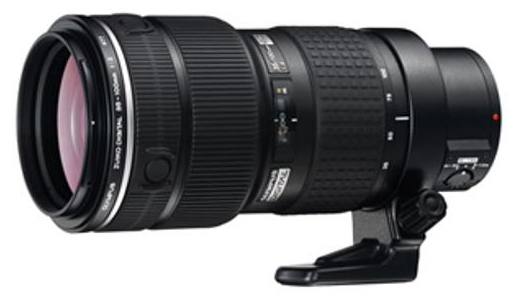
Many of you would have already guessed my pick will be the Olympus-Zuiko ED 35-100mm F2.0 (70-200mm on 35mm format).  In case you are not aware, this lens is the heaviest among all the “70-200mm” range at 1650gm (1800gm with tripod ring)! Categorized as a “Super High Grade” Series lens, this lens is somewhat a showcase model that Olympus wants the world to know. Designed as the world’s fastest “70-200mm” with a bright apeture of F2.0 (Other brands manages at F2.8) and with 1 “Super ED” and 4 ED glass elements for absolute lowest possible chromatic aberration, this is a monster of lenses. As a Super High Grader, this contrasty portrait lens comes splash & dust proofed as standard so it is also a great wildlife lens, (and certainly ready for abuse). Wondering about the bokehs? With 9 circular blades apeture + F2.0, you will never look back at F2.8 portraits again. (OK, I am mainly a Canon user, and hoping Canon will give us a 70-200mm F2.0 someday too).

Some Quick Information:
Olympus-Zuiko ED 35-100mm F2.0
Format: M43, with a corresponding 2X increase.
Focal Range: Medium Telephoto to Telephoto 35mm-100mm or 70mm-200mm equivalent on 35mm format.
Filter Diameter: 77mm
Supplied with Box: Instruction, Lens Pouch & Lens Hood LH-82. (Tripod Ring may not be included in some Countries)
Suggested Alternative Lens:  Olympus- Zuiko Digital 40-150mm F4.0-5.6 (80-300mm on 35mm Format)

 My Pick for Best Olympus Standard lens (Prime Lens).
This is the lens that I will use for a wide variety of applications when zooming is not everything.


Ok, I picked a Macro lens this time. The  Olympus-Zuiko ED 50mm f/2 Macro is like no other. Small & compact, this “High Grade” lens gives sharp close ups photos when stop down (tell you why below, read on) and when wide open, it double up as one of the best prime portrait lens available today in the market. Made “drip & dust” proofed, this quality & elegant lens is built for performance. Weighing at only 300gm, this is one lens that you may wish to carry it around in your bag. This macro lens has a minimum focusing distance of 24cm and the focus speed is fast – probably due to the floating system, but sadly it has a magnification ratio of 1:2, which really means, this is not a real macro lens even though Olympus calls it one. This lens will be more appropriate if called a good “close focusing lens”. However when used for portraiture work, an apeture of F2.0 does produce wonderful photos with creamy bokeh. You gain some, you lose some. 🙂

Some Quick Information:
Olympus-Zuiko ED 50mm f/2 Macro
Format: M43, with a corresponding 2X increase.
Focal Range: Medium Telephoto 50mm or 100mm equivalent on 35mm format.
Filter Diameter: 52mm
Supplied with Box: Instruction, Lens Pouch & Lens Hood LH-55.
Suggested Alternative Lens:  Olympus Zuiko 35mm f/3.5 Macro (70mm on 35mm Format)

The above 3 Olympus-Zuiko lenses are the lenses that I will buy if I must have just 3 lenses for an Olympus system. The selected lenses above are not your buying guide, but instead, what I will want to have in my camera bag. In the light and era of Canon, Nikon & Sony, Olympus remained focused on their committment to photographers by innovating and designing cameras & lenses that are of high quality, user-friendly and still produces high optical quality images. Though Olympus has a slightly smaller following today as compared to just 10 years ago, I will attribute Olympus as the “Victim” of marketing. While the other big boys are sizing up on each other with millions of dollars spent on advertising all these years, Olympus chose to stay low, use the cash for more in-depth R&D and quietly winning fans back with products that others can only imagine. Start googling. 🙂

Disclaimer:
The above reviews/statement/ findings/ comparisons/ claims are solely personal views consolidated, compiled & based on personal surveys, usage experience, feedbacks from fellow users. This article is NOT PAID by the Brand owner and this article is presented as a reading reference from 1st person point of view.

Posted in Brand: Olympus, Photography Articles & Videos | Tagged , , , | Leave a comment

The Best Sony Alpha DSLR Lenses That I Will Personally Pick.

Welcome back!

If you have missed the last article, this is a series of articles about me sharing what are the lenses from the various manufacturers that I will pick & use on a personal basis. The last article was about the Nikkor (Nikon) Lenses that I will buy for my Nikon system. Today, I am going to pick my lenses from the Sony A-Mount DSLR Lens line-up.

You are reminded again that this is NOT a ”buying guide” or a technical review of each lenses. You can easily find those all over the internet. However, I am sharing based on personal experience, usability and how well these lenses compliment your work.

My Pick for Best Sony Zoom lens (General Lens).

This is the lens that I will probably bring it everywhere I go, for commercial shoot or leisure walkabouts.

My pick will be the Sony Carl Zeiss Vario-Sonnar T* 2470mm F2.8 ZA SSM. Covering from a wide angle to medium telelphoto at a constant bright apeture at F2.8, this is one of the excellent lenses from Sony that does almost everything that professionals need. Being a Carl Zeiss unit, this lens boost quality on both the lens build as well as the optical quality. Colors are accurately reproduced and the use of 2 ED glass + 2 Aspherical glass does make a huge difference when compared to other manufacturers’ equivalent. Not to forget the T* Coating from Carl Zeiss that gives  a special touch to create superb image quality. Focus is powered by Sony’s quiet Super Sonic Motor (SSM) with fast focusing that quickly lock its subject into focus correctly. At 995gm, this is a heavy lens. But one that is worth lugging around especially when it produce quality photos that are out of this world.

Some Quick Information:
Sony Carl Zeiss Vario-Sonnar T* 2470mm F2.8 ZA SSM (SAL2470Z)
Format: Full Frame SAL, but can be used on cropped bodies (DT) with a corresponding 1.5X increase.
Focal Range: Wide Angle to Medium Telephoto 24mm-70mm or 36mm-105mm on cropped (DT) Bodies.
Filter Diameter: 77mm
Supplied with Box: Instruction, Lens Pouch & Lens Hood ALC-SH101.
Suggested Alternative Lens for cropped (DT) Bodies: Sony Carl Zeiss Vario-Sonnar T* DT16-80mm F3.5-4.5 ZA (SAL1680Z)

My Pick for Best Sony Telephoto Zoom lens (Telephoto Lens).
This is the lens that I will use for portraiture work, short range wildlife shots & street photography
My pick for this category has to be the Sony AF 70-200 F2.8 G SSM. A “G” Series Lens, this lens is built solid, precised and designed for professionals. I will rate this G Lens to be equal with Canon’s L-Series Lenses. Employing 4 ED Glass in the lens elements, this lens is optically designed for contrasty & razor sharp photography. Although this lens is one of the heaviest (1340gm) among the “70-200mm” range, this is also one of the best among the competition. Using 9 apeture blades, this lens gives creamy bokeh when used for portraiture work and a fast performer when it comes to sports & wildlife. Thanks to the Super Sonic Motor (SSM), this lens is ultra fast at focusing and this lens even comes with 3 additional focus hold/ lock button near the focus ring which adds to operational ease for the photographer. And using the lens, this G Lens feels like nothing hailing from the Konica-Minolta days and it feels better than the Canon EF 70-200mm F2.8L IS USM. Though optically both lenses offers similar image quality, the G Lens feels current while the Canon unit feels dated. (The Mark II feels better though). The G-Series seats below the Carl Zeiss Series in Sony’s line up of premium lenses, but not neccessary worse than its CZ counterparts. Well worth every dollar spent on this lens. 

Some Quick Information:
Sony AF 70-200 F2.8 G SSM (SAL70200G)
Format: Full Frame but can be used on cropped bodies (DT) with a corresponding 1.5X increase.
Focal Range: Medium Telephoto to Super Telephoto 70mm-200mm or 105mm-300mm on DT Bodies.
Filter Diameter: 77mm
Supplied with Box: Instruction, Tripod Mount, Lens Pouch & Lens Hood ALC-SH0010.
Suggested Alternative Lens for DT Bodies: Sony 70-300mm f/4.5-5.6 SSM G (SAL-70300G)

 My Pick for Best Sony Standard lens (Prime Lens).
This is the lens that I will use for a wide variety of applications when zooming is not everything.

Interestingly, my pick for this category is the Sony Carl Zeiss Planar T* 85mm F1.4ZA lens. This is one of the sharpest lens in the whole of Sony’s line up and one of the best Carl Zeiss lens ever made for Sony. This large apeture medium telephoto lens is excellent for portrait works and general photography. Among all the F1.4 lenses in the Sony line, this 85mm has the best bokehs and some say it can be compared to Canon’s EF 85mm F1.2L USM or Nikon’s  AF-S NIKKOR 85mm f/1.4G. Since this is a Carl Zeiss, it has to be good (as marketed), well it certainly lives up to its name. It comes equipped with a Focus Hold Button and it runs on Sony’s super fast Super Sonic Motor (SSM) & not to forget the signature T* coating from Carl Zeiss. Though the physical size of this lens is huge, it is a must to have and a must to use if you wish to experience the excellent image quality & handling of this Carl Zeiss Lens. Though more walking is required. 🙂

Some Quick Information:
Sony Carl Zeiss Planar T* 85mm F1.4ZA (SAL85F14Z)
Format: Full Frame but can be used on cropped bodies (DT) with a corresponding 1.5X increase.
Focal Range: Standard 85mm medium telephoto or 127.5mm on DT Bodies.
Filter Diameter: 72mm
Supplied with Box: Instruction, Lens Pouch & Lens Hood ALC-SH0002 .
Suggested Alternative Lens for DT Bodies: Sony 50mm f/1.4 ( SAL-50F14 )

The above 3 Sony lenses are the lenses that I will ONLY buy if I can only have 3 lenses for a Sony Alpha system. The selected lenses above are not your buying guide, but instead, what I will want to have in my camera bag. Sony is famed for their constant effort to move away slowly from the Konica-Minolta legacy and their evolution has started to make their way into the Alpha lenses.
The G-Series lenses are no longer a joke and the Carl Zeiss lenses served to prove that Sony is serious about reaching out to the professionals who wants quality, precision and operational ease with their Sony System. Have you tried using an Alpha Lens lately?

Disclaimer:
The above reviews/statement/ findings/ comparisons/ claims are solely personal views consolidated, compiled & based on personal surveys, usage experience, feedbacks from fellow users. This article is NOT PAID by the Brand owner and this article is presented as a reading reference from 1st person point of view.

Posted in Brand: Sony, Photography Articles & Videos | Tagged , , , , | 8 Comments

The Best Nikon DSLR Lenses That I Will Personally Pick.

OK, by now you have build up a little collection of lenses. This series of articles are about the Best Lenses that I will personally pick from each brand and this is NO “buying guide” or a technical review of each lenses. You can find those all over the internet. However, I am sharing based on personal experience, usability and how well it compliment your work.

My Pick for Best Nikon Zoom lens (General Lens).
This is the lens that I will probably bring it everywhere I go, for commercial shoot or leisure walkabouts.

 
I will take the AF-S NIKKOR 24-120mm f/4G ED VR anytime. It’s a 5xZoom equivalent at a constant user-friendly apeture at F4 throughout the zoom range, and it runs on Nikon’s sweet Silent Wave Motor (SWM). Though not exactly a light lens at 710gm, but it is certainly worth the weight if you only can bring ONE lens with you. From wide angle to medium telephoto, this is also the focal range that most commercial photographers & journalists loved! This wonder lens covers almost all the range that these photographers required. The Vibration Reduction (VR) function just complete the package for the ultimate “walkabout working lens”. The lens build is solid (as expected from Nikon) and the handling is good. Price wise, I will say it is value for money!

Some Quick Information:
AF-S NIKKOR 24-120mm f/4G ED VR
Format: FX (Full Frame) but can be used on cropped bodies with a corresponding 1.5X increase.
Focal Range: Wide Angle to Medium Telephoto 24mm-120mm or 36mm-180mm on DX Bodies.
Filter Diameter: 77mm
Supplied with Box: Instruction, Lens Pouch & Lens Hood HB-53.
Suggested Alternative Lens for DX Bodies: AF-S DX Zoom-Nikkor 18-135mm f/3.5-5.6G IF-ED

My Pick for Best Nikon Telephoto Zoom lens (Telephoto Lens).
This is the lens that I will use for portraiture work, short range wildlife shots & street photography.

My pick, the AF-S NIKKOR 70-200mm f/2.8G ED VR II. This is a MUST GET Nikkor. Probably Nikon’s best lens ever. This lens incorporated the “best of know-hows” from years of experience in lens design and manufacturing. Using superb quality material for the lens body, the lens elements matched up with an optical design that uses 7 ED glass! Yes 7! If that is not enough, it’s good to know that Nikon swear by their Nano Crystal Coat on their glass, an ultra fast Silent Wave Motor (SWM) that gives ridiculously accurate focusing, plus a Vibration Reduction (VR) unit, now in its 2nd incarnation at “VRII”, a constant 9 blades apeture of F2.8 throughout the zoom range that give smooth and soft bokeh, this is every Nikon Fan Boys’ Dream lens!

Some Quick Information:
AF-S NIKKOR 70-200mm f/2.8G ED VR II
Format: FX (Full Frame) but can be used on cropped bodies with a corresponding 1.5X increase.
Focal Range: Medium Telephoto to Super Telephoto 70mm-200mm or 105mm-300mm on DX Bodies.
Filter Diameter: 77mm
Supplied with Box: Instruction, Tripod Mount, Lens Pouch & Lens Hood HB-48.
Suggested Alternative Lens for DX Bodies: AF-S DX NIKKOR 55-300mm f/4.5-5.6G ED VR

 My Pick for Best Nikon Standard lens (Prime Lens).
This is the lens that I will use for a wide variety of applications when zooming is not everything.

My Pick – the Nikkor AF 35mm f/2D is a little wonder lens. Those not familiar with Nikon (Nikkor) lenses, this 16 years old lens have been around since 1995. Though many other manufacturers had “upgraded” their lens (SLR to DSLR) line-up to cope with the higher resolution produced by digital sensors of today, this lens continue its presence for a simple reason. It works just as well with the latest Nikon DSLRs and optical quality has not been compromised in any way. Color reproduction with this little wonder is wonderful, and on fixed apeture at F2, this is a good bright lens that allows the photographer to use it for many applications. Nice bokehs are harvested from this lens, so those starting out portraitures but do not really like the “tightness” from 50mm, 85mm, etc will find this lens a joy to use. I am sure many of you will not mind having this sharp feather-weight (205gm)  wonder lens in your camera bag.  

Some Quick Information:
Nikkor AF 35mm f/2D
Format: FX (Full Frame) but can be used on cropped bodies with a corresponding 1.5X increase.
Focal Range: Standard 35mm wide angle or 52.5mm on DX Bodies.
Filter Diameter: 52mm
Supplied with Box: Instruction.
Suggested Alternative Lens for DX Bodies: AF-S DX NIKKOR 35mm f/1.8G 

The above 3 Nikkor (Nikon) lenses are the lenses that I will personally pick if I have to choose just 3 lenses to buy for a Nikon system. The combination above is not your buying guide, but what I think is best to have in your camera bag. Nikon is famed for their meticulous details into making their lenses. The arrangement of switches, the shape & design, the “feel” when using it, and the touch of the focus/zoom rings surely puts Nikon/ Nikkor lenses among the bests.  

Disclaimer:
The above reviews/statement/ findings/ comparisons/ claims are solely personal views consolidated, compiled & based on personal surveys, usage experience, feedbacks from fellow users. This article is NOT PAID by the Brand owner and this article is presented as a reading reference from 1st person point of view.

Posted in Brand: Nikon, Photography Articles & Videos | Tagged , , , | 8 Comments

Highlights of IT Show 2011 Brought to you by RedDotPhoto

Guys,
Do make a beeline to Suntec City for the IT Show 2011.
Visit our Group-Approved Merchant,  RedDotPhoto’s Booth at the show for great bargains!

Below are some of the Highlights from the Show, brought to you by RedDotPhoto.

1) Canon Offers

2) Nikon Offers

3) Sony Offers


4) Olympus Offers

All Information above are brought to you by

Posted in Featured Photography Merchants | Tagged , | Leave a comment

SgCameraStore “Big Bang” Sale!


Just received notification from SgCameraStore this morning 09.15am on their “Big Bang” Promotional Sale.

The Sale period will be from 10th March 2011 to 13th March 2011.

Was told by them that ALL items are going for “lower-than-usual” price!

Some highlights that I received via SMS 
– Tripods from $40.00
– Tripods / Carbon Fibre from $190.00
– Fancier 6662A Going at Ridiculous Price $58.00.
– Stobist Kit 60cm Softbox + Stand at $78.00
– Nissin flashes (Free Gift Gifts with every purchase)
– Basic Strobist Package (White Shoot through Umbrella, Stand, Flash Holder $50.00.
– And Many more items (while stock last)

Do make a trip there for the great bargain!

SgCameraStore is located at:
No 5 Coleman Street #02-18
Excelsior Hotel and Shopping Center Singapore 179805
(next to Peninsula Shopping Center )
3 minutes walk from City Hall MRT

Posted in Featured Photography Merchants | Tagged , | Leave a comment

Featured Photographer – Ang Choo Wee

Ang Choo Wee

Ang Choo Wee is an experienced & experimental photographer. We came to know him through one of the SJS’s “Limited” Series events and he have since been joining our shoots regularly. We also got him involved in a commercial project last year shooting an arts event. Through his photos, Choo Wee speaks. His works are interesting to appreciate and certainly of professional standards.

Well travelled and a lover for Asian culture, Choo Wee’s travel photos are beautifully executed and most importantly, he captured the moments so accurate that it simply brings the viewer into the frame. A hardcore Fan of Nikon and Fisheye lens, I’d let you imagine the rest. Humble and easy-going, Choo Wee never fails to share his knowledge with other members of the group – and that made him rather popular in the group. (Especially with the Girls! * Wink Wink)

As usual, without his permission, we have selected a few of his works to be featured here. Enjoy!


Ways to Contact  Choo Wee;
Email: choowee21@hotmail.com
Web: Nil
Facebook: http://www.facebook.com/choowee

Posted in Featured Photographers | Tagged , | 2 Comments

A Year On – And Going Strong.

From the Founders..

How time flies.

A year had passed since we formed Shutter Journey (Singapore) Photography Group and subsequently, the commercial team Shutter Journey (Singapore) Professional Photography Team. Right from the beginning, the group had faced lots of challenges which we have managed to conquer and learn something through every situation. We were glad we came out much stronger than before.

The objective of the group remains clear – to create a platform for photographers to meet photographers and to promote community learning through sharing. This concept had worked well and we personally witnessed the good works of many photographers who had benefitted from this through their photos. And many others has found new friendships through the group events or even paired off as couples! The group has evolved beyond a photography group, rather, I will describe it as a “specialized-social-group-with-a-specific-interest”, ok, I know that’s long. 

After 67 official photography shoots events, 01 overseas photo-excursion, 19 commercial shoots (including weddings), 02 Charity shoots, 06 photography courses/ talks & 01 photography exhibition involving the SJS Members & Moderators from the commercial team, we had indeed come a long way – all within 12 months! Not to mention that SJS is now sponsored by 07 camera stores who further adds value to all SJS registered members with great discounts on camera gears!  

We would like to attribute the success of the group to the moderating team as well as the members who supported us & who believed in us all this while. Without all of you, SJS will not be what it is today.  


The Moderating Team. (Photo: Clockwise – Celes, Shela, Connie, Ruiping, Cassandra & Renhao)

With that, We wish to Sincerely thank Everyone – you know who you are – who had played (and still playing) a part in making SJS  a continual success.

We Say – Happy 1st Anniversary & Keep Shooting!

Love,

Allan LEE & Yu LING.
Founders
Shutter Journey (Singapore) Photography Group.
Shutter Journey (Singapore) Professional Photography Team.
Shutter Journey Memories Studios Inc.

Posted in Group Announcements & Notices, Photography Articles & Videos, Uncategorized | Tagged | 2 Comments

New Cards from Sandisk!

Source: http://www.sandisk.com/

SANDISK ANNOUNCES SDHC CARD FEATURING UHS-I TECHNOLOGY— IDEAL FOR CAPTURING HIGH-RESOLUTION PHOTOS AND FULL HD VIDEOS

SanDisk Extreme Pro SDHC UHS-I Card Offers Photography Enthusiasts the Performance, Reliability and Durability They Need to Shoot Like the Pros

Extreme Pro
Milpitas, Calif., January 17, 2011 – SanDisk Corporation (NASDAQ: SNDK), the global leader in flash memory cards, today introduced the SanDisk Extreme® Pro™ SDHC™ UHS-I card. The card features Ultra High Speed (UHS) technology from the newly released SD 3.0 specification and achieves up to 45MB/sec* read and write performance with long-term reliability by distributing data rapidly and efficiently using SanDisk’s proprietary Power Core™ Controller.

“SanDisk has a long history of developing fast, highly reliable cards for photography enthusiasts and professionals,” said Susan Park, director, retail product marketing, SanDisk. “Our new SanDisk Extreme Pro SDHC card lets consumers take their skills to the next level by capturing high-resolution still images, fast-moving action shots and HD videos of the highest quality.”

Designed for the latest cameras
As DSLRs offer increasingly sophisticated features such as high megapixel continuous burst shooting and high-definition (HD) video capture, photographers need advanced memory cards capable of unlocking their cameras’ full potential. The card achieves high performance and efficient power consumption in UHS-enabled cameras such as the Nikon D7000.

Performance
The SanDisk Extreme Pro SDHC card’s write speed of up to 45 MB/sec delivers improved shot to shot performance of RAW images using continuous burst mode. The card also adheres to the new UHS Speed Class 1 video class rating, offering 10MB/sec* minimum sustained write speed capable of recording HD 1080p videos or even 3D content**. In addition, the card’s fast read speeds of up to 45 MB/sec let users avoid lengthy wait times when transferring content from the card to a computer.

SanDisk develops its flash controllers and memory chips together, allowing the company to perfectly match and fine-tune the two technologies throughout the testing process. The SanDisk Extreme Pro SDHC card uses an intelligent Power Core controller to achieve its speed. The controller’s data prediction and binary caching features allow for improved overall performance.

Reliability
Featuring an automatic error-code correction (ECC) engine, the SanDisk Extreme Pro SDHC card offers long-term reliability that comes from the brand trusted by professional photographers. Advanced wear leveling extends card endurance by distributing data evenly throughout the card. For added protection, the card includes one year of RescuePRO® media recovery software, which lets photographers recover their images in case of accidental deletion.

Durability
Designed to withstand the most extreme conditions, the new card offers photographers peace of mind knowing that their photos are stored on one of the most rugged cards in the world. Able to withstand punishment, the SanDisk Extreme Pro SDHC card is water proof, temperature proof, shock and vibration proof, x-ray and magnet proof***. The card is backed by a lifetime limited warranty.****

Availability and Pricing
The card is shipping to major retailers worldwide and is available immediately at www.sandisk.com. The card comes in 8GB1 to 32GB capacities carrying suggested retail prices ranging from $109.99 to $349.99.

Extreme Pro
The SanDisk Extreme Pro UHS-I SDHC card is fully compatible with any camera, card reader or other device that supports SDHC cards. The SanDisk Extreme Pro ExpressCard™ Adapter, designed for high performance SDHC and SDXC UHS-I cards, is available at www.sandisk.com for $49.99.

 ——————————————————————————————————————–

SANDISK ANNOUNCES WORLD’S FASTEST HIGH-CAPACITY COMPACTFLASH CARD

SanDisk Extreme® Pro™ CompactFlash® Card Offers Unprecedented Combination of Speed and Storage-Up to 100MB/sec Write Speed and 128GB Capacity

SD_WORM
Consumer Electronics Show, Las Vegas, January 5, 2011-Consumer Electronics Show, Las Vegas, January 5, 2011-SanDisk Corporation (NASDAQ: SNDK), the global leader in flash memory cards, today announced the world’s fastest high-capacity CompactFlash® card. The latest milestone in SanDisk’s long history of industry-leading products, the SanDisk Extreme® Pro™ CompactFlash® card features 128 gigabytes (GB)1 of storage and up to 100 megabyte per second (MB/sec)2 write speeds. With its Power Core® controller and UDMA-7 interface, the card delivers the performance demanded by high-end DSLR cameras.

“No other product on the market can match our new card’s combination of speed and storage capacity,” said Susan Park, director, product marketing, SanDisk. “By consistently pushing the boundaries of flash innovation, we are able to develop advanced products not found anywhere else.”

With a set of features optimized for professional photographers and videographers, the 128GB SanDisk Extreme Pro CompactFlash card is ideally suited for imaging applications requiring Full HD3 1920×1080 resolution, up to 50Mbps bit rate and 4:2:2 color sampling. The card’s unprecedented combination of speed and storage lets photographers capture more frames when shooting in continuous burst mode, and enables them to record high quality Full HD videos.

  • Up to 100MB/sec write speed enables shorter wait times and faster continuous burst shooting.
  • Video Performance Guarantee4 allows for superior Full HD video recording at a sustained 20MB/sec write speed.
  • 128GB capacity aoffers more room for capturing RAW+JPEG photos, sequential bursts, even Full HD and 3D video content.
  • SanDisk’s proprietary Power Core™ controller distributes data across the card more rapidly and efficiently, and the UDMA-7 interface allows for maximum data transfer between card and camera.
  • Best-in-class quality assurance offers photographers peace of mind knowing that the card is backed by rigorous stress, shock, vibration, humidity and moisture testing procedures and a lifetime limited warranty5. The card features RTV silicone coating for added protection.

Availability and Pricing
The 128GB SanDisk Extreme Pro CompactFlash card is available now for preorder atwww.sandisk.com, and will be available at retailers worldwide later in Q1 2011. The card carries a suggested retail price of $1,499.99.

About SanDisk
SanDisk Corporation is the global leader in flash memory cards – from research, manufacturing and product design to consumer branding and retail distribution. SanDisk’s product portfolio includes flash memory cards for mobile phones, digital cameras and camcorders; digital audio/video players; USB flash drives for consumers and the enterprise; embedded memory for mobile devices; and solid state drives for computers. SanDisk is a Silicon Valley-based S&P 500 company, with more than half its sales outside the United States.

Posted in Brand: Others (Cosina, Carl Zeiss, Leica, Mamiya, Samyang, Vivitar, Zenitar,etc), Photography Articles & Videos | Tagged , | Leave a comment

TOKINA AT-X 16-28MM F/2.8 PRO FX Lens

Announced: Q3, 2010
Current: Q1, 2011 – And hasn’t reach our shores yet.

This new Tokina lens is the first in a new generation of full frame (FX) lenses designed for professional digital SLR cameras like the Canon EOS 5D Mark II and the Nikon D700 and D3x. The 16-28 zoom range gives the professional photographer a super-wide angle of view to get close to subject for dramatic effect or to take in entire scenes.

NEW Silent DC Motor with GMR senor
The 16-28 f/2.8 uses a newly developed silent DC motor that allows the lens to focus faster and more quietly then previous generations. The DC motor coupled with a new GMR magnetic AF sensor work together to increase AF Speed.

Ashperical and Super-low Dispersion glass elements
A new, 56mm in diameter, large sizes aspherical glass element is incorporated into the front lens group, while there are 2 more aspherical elements in the rear group. 3 SD super-low dispersion glass elements are also incorporated through-out the optical design to reduce chromatic aberration, give maximum resolution, more even brightness and distortion correction.

One-Touch Focus Clutch
Tokina’s exclusive One-touch Focus Clutch Mechanism allows the photographer to switch between AF and MF simply by snapping the focus ring forward for AF and back toward the camera to focus manually. There is no need to change the AF/MF switch on Nikon camera bodies* and there is no second AF/MF switch on the lens for Canon, everything is accomplished by the focus ring.

Posted in Brand: Tokina | Tagged , , | Leave a comment

Tamron 18-270mm F/3.5-6.3 Di II VC PZD

December 9, 2010, Saitama, Japan – Morio Ono, President and CEO of Tamron Co., Ltd., a leading manufacturer of optical equipment, announced the release of yet another groundbreaking lens: the world’s most compact, lightweight lens with a 15x zoom ratio*1, featuring a 62mm filter diameter, VC (Vibration Compensation) image stabilization and Tamron’s first standing wave ultrasonic motor system for SLR lenses, PZD (Piezo Drive) *2. The 18-270mm F/3.5-6.3 Di II VC PZD (Model B008) DSLR ultra-high-power zoom lens for Canon and Nikon mounts will be released in Japan on December 20, 2010, with the development of a Sony*3 compatible mount at a later date.

The 18-270mm F/3.5-6.3 Di II VC PZD (Model B008) (referred to below as 18-270mm Di II VC PZD) is an astonishingly light, compact ultra-high-power zoom lens with a filter diameter of 62mm. Weighing in at 450g, this new all-in-one zoom lens is equipped with an AF unit driven by Tamron’s new PZD (Piezo Drive)*2, an ultrasonic motor that delivers faster and quieter focusing when the autofocus is engaged.
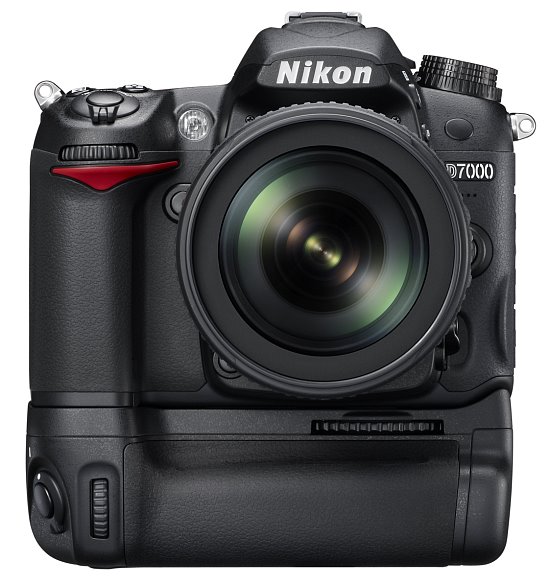
The 18-270mm Di II VC PZD, will be easy to use and highly portable – a high-power zoom that will offer the user the versatility to shoot in a variety of situations. Its wide zoom range of 18-270mm positions the lens as an all-purpose workhorse for any photographic situation.

Product Features

  • 1. The 18-270mm Di II VC PZD boasts the world’s highest zoom range at 15x magnification for a lens with its compact size and light weight*1, with the added value of Tamron’s proprietary VC (Vibration Compensation) image stabilization. At 450g, measuring 88mm in length (from mount face to the tip of the lens), and 74.4mm in diameter with a filter diameter of 62mm, it’s a compact and easy-to-carry lens.
  • 2. Silent, high-speed autofocus in a compact lens due to the incorporation of Tamron’s new PZD (Piezo Drive) *2 autofocus technology.
  • 3. This lens has a minimum focusing distance of 0.49m throughout the zoom range and a maximum magnification ratio of 1:3.8.

Di II (Digitally integrated design): Di II lenses are for exclusive use with digital SLR cameras (with APS-C size sensors), with a suitably optimized optical design. These lenses cannot be used with digital SLR cameras with an image sensor larger than APS-C size, or 35mm film SLR cameras.

  • (*1) For SLR camera high-zoom-ratio lenses with 15x magnification capability. Current as of December 2010. (Source: Tamron).
  • (*2) PZD (Piezo Drive) is a standing wave ultrasonic motor system developed by Tamron. The motor is faster and quieter than DC motors when the AF drive is operated, and compared with ring type ultrasonic motors, it has an actuator that facilitates lens design and reduced size.
  • (*3) The Sony mount is not equipped with the VC image stabilization mechanism, as the body of Sony’s digital SLR cameras has a built-in image stabilization function. Consequently, the lens with a Sony mount is referred to as the 18-270mm F/3.5-6.3 Di II PZD and does not include the VC description.

PZD (Piezo Drive)

Ultrasonic motors are divided into two categories depending on the principle that generates the energy to move the drive: traveling wave motors and standing wave motors. Traveling wave motors include the ring type ultrasonic motor used in the recently launched 70-300mm F/4-5.6 VC USD as well as other lenses, but this lens employs a newer technology, the PZD (Piezo Drive), which functions on the standing wave principle.

A standing wave ultrasonic motor utilizes high-frequency voltage to extend and turn the piezoelectric (piezoceramic) element, thus moving the entire element in a standing wave movement. The metal tip is the contact point of the element to the rotor, and moves in an elliptic motion from the swiveling motion of the moving element, and the friction from this motion turns the rotor. Standing wave ultrasonic motors have the distinct advantage of being smaller than their traveling wave counterparts, and therefore allow a more compact SLR lens size.

VC (Vibration Compensation)

Tamron’s VC mechanism employs a three-coil system, whereby three driving coils activate the shake-compensating VC lens group electromagnetically via three steel balls. The VC lens elements are held in place only by contact with the steel balls, achieving smooth movement with little friction. This provides a stable viewfinder image with excellent tracking performance that eliminates the blur from handheld shots for cleaner, crisper shots.

New VC mechanism (moving coil method)

Tamron’s original VC image stabilization mechanism utilized a moving magnet system whereby a heavy magnet was positioned near the moving VC lens element. In the new VC unit the positions of the magnet and the coil are reversed, because of this the VC optical lens element is attached to the coil. The new VC mechanism employs a moving coil mechanism with a lightweight coil, and the lighter coil reduces the load on the drive system. Thus, the lighter, more compact new VC unit contributes to the lens’s overall light weight and compact size.

Notice of Classification Code Change for Nikon Mounts

Since the introduction by Tamron of the first Nikon mount lens featuring an internal AF motor, the AF28-300mm F/3.5-6.3 XR Di VC (Model A20), all Nikon mount lenses with the internal AF motor had used the classification code “N II.” Lenses using a coupler system* without an internal AF motor were designated as “N.” As future lens introductions for Nikon will have the internal AF motor as a standard feature, Tamron has decided to simplify the designation and consolidate all Nikon mount lenses as “N,” eliminating the “N II” designation for future models. This classification code change will be effective from the 18-270mm F/3.5-6.3 Di II VC PZD (Model B008).

The “N” classification lenses with coupler systems are: AF 55-200mm F/4-5.6 Di II (Model A15); AF28-300mm F/3.5-6.3 XR Di (Model A061); SP AF200-500mm F/5.6-6.3 Di (Model A08); and SP AF180mm F/3.5 Di (Model B01).

*Coupler system refers to a system that uses a shaft to harness the AF motor built into the camera body to operate the lens.

Posted in Brand: Tamron | Tagged , , | 2 Comments

SIGMA APO 120-300mm F2.8 EX DG OS HSM

The Sigma Corporation is pleased to announce the new Sigma APO 120-300mm F2.8 EX DG OS HSM.
The successor to the APO 120-300mm F2.8 EX DG HSM, introduced to market in July 2005, this new
lens offers the latest optical design technology.

This large aperture zoom lens features Sigma’s OS (Optical Stabilizer) function and weather-resistant
design throughout for use in harsh conditions. One SLD and Two FLD glass elements are used for
maximum correction of chromatic aberrations. The super multi-layer lens coating reduces flare and
ghosting, and the lens design incorporates an inner focusing and inner zooming system to ensure
sharp images throughout the entire zoom range. Improved optical performance provides excellent
correction of sagittal coma flare, and ensures ultra-high resolution, comparable to a fixed focal length
lens. The OS function offers the use of shutter speeds approximately 4 stops slower than would
otherwise be possible. This system enables hand held tele-photography. Incorporation of HSM
(Hyper Sonic Motor) ensures quiet and high speed AF, while allowing full-time manual focus override.
The rounded 9 blade diaphragm creates an attractive blur to the out of focus areas of the image.
The addition of the optional APO TELE CONVERTER produces an ultra telephoto zoom lens with AF.

Briefs:
– Designed for use with full frame digital SLR cameras. May also be used with smaller APS-c size sensors
– Weather resistant feature protects the lens from the effects of harsh weather conditions
– Offers Sigma’s OS System (Optical Stabilization) allowing handheld photography even in low-light situation
– HSM (Hyper-Sonic Motor) ensures a quiet & high-speed auto focus
– FLD glass elements with performance equal to fluorite glass for compensate for color aberration

This lens was launched  elsewhere in Sep 2010, should reach our shores Q1 2011.

Posted in Brand: Sigma | Tagged , , | 4 Comments

Lens Hood – How Much Do You Really Know?


So you got lenses, lots of them. However, you noticed some of the lenses you bought does not come with a supplied dedicated lens hood. You wonder why. Before you start calling the store and find out if the salesman had took it out and used it as a pencil holder, well, welcome to the real world. Apart from 3rd Party Lenses that usually comes with a Lens hood, some brands only include the lens hoods for their premium lenses only, while for the rest of their lenses, you have to buy separately. So is lens hood that important? Read on.

I am not going to use very technical terms for this article because this article was written with the intention to educate “not-so-experienced” photographers. I try to simplify as much as I can so that everyone can understand.

All lenses were made with varying angles of tilt, this is due to the converging front element that made (or decides) your angle of view – that also translate into your focal range.  The lens being an optical instrument, it also means lights travel through the lens in order for it to work just like how it is supposed to be and since the lens elements are mostly made from glass, you can be sure of stray lights (cross lights) starts to show on some of your photos. The Pros calls these stray lights “Lens Flare”.

Lens Flare can occur anywhere, yes, anywhere, there are some badly mis-informed photographers who swear by their wrongly-led-believes that “you only get lens flare outdoor” thus the use of a lens hood is only for outdoor use. Some insisted that Lens hood works only during day time but not night time. Guys, these are NOT True. Let me explain further why so.

Since the Pros and Non-Pros both agreed that Lens Hood is best used for outdoor day shoot, then I shall not tread there, instead, let me address the “gray areas”.

At indoor locations, there are ambience lights in many forms, there will be decorative/ furnishing items, polished utensils and so on. These are perfect surfaces for lights to bounce off into a thousand possibile lights trails. Such are the very reasons why a photographer should use a lens hood if they really care about how their photos might turned out. Stray lights does not appears as a flare everytime on your photos, sometimes your photos will look flushed out or washed out because there are simply too many stray lights causing a mild hazy effect on your photo! (If there are too many flares, remove your filter)

At outdoor location at night. Lights from buildings, street lightings, headlights of vehicles and other reflective street furnitures created a light mess. Lights are thrown in a million directions so using a lens hood at night is in fact more important than using it than any other time! One thing many photographers refused to understand is, our eyes may not see every possible light trails (unless it’s a hazy foggy night), but our lenses + camera sensor captures every single light trails directions simply because they are optical instruments and our eyes are not! Lenses are arranged in element priority and into floating or focusing groups. Most of the in-lens construction is to help reduce flares and some manufacturers uses special glass to cut flares (Except mirror lenses), light can come in any direction that you can think of and not think of, so even in near dark conditions, there are still low frequency lights!

Now, there’s more. Lens hood apart from being a photo saver, it is also an added insurance to your precious lenses. Most lens hood extent itself from the front lens element from 2 inches to 9 inches depending on the lens type and design, the added inches become very useful when wading around in crowds, your UV filter or Protector glass will not save you from a knock say from a laptop bag’s metal buckle, but a lens hood will, get the drift?

And lastly, there’s another group of camera users (note I did not use “Photographers”) who feels that by slapping on a lens hood, it makes their lenses looked longer or more professional. Lolz. though these guys are on the wrong track, but they are doing the right thing.

So if your lenses does not came with a supplied hood, there are a host of compatible 3rd party brands to consider from as most original brands’ hoods are overpriced. Do note that, the inner lining of the hood must be of a matted surface (smooth surface increase reflection causing light paths) or comes with a velvety cloth-like cover (think Canon L-Lenses Hood) so selecting the right hood is important too should you opt for 3rd party brands.

Still not convinced you should use a lens hood at all times? One day I am sure you will remember this article when something really does happened. And trust me, in photography, it will.

To XX: Mind you, those white spots/ lines/ shapes on your photo are not dusts on your lens – those are really lens flare).

Posted in Photography Articles & Videos | Tagged , , | 2 Comments

Canon & Nikon – How To Kill Sony

Sony wowed the world again recently with the release of their SLT A-33 & SLT A-55. Sitting in the Alpha DSLR line, these 2 cameras are like no other. Cheap, Light weight, Compact & packed with good specs. Some of you not familiar with Sony Alpha might get a shock when you look at the specs from these 2 hybrids. The Frames Per Second (FPS) itself already fascinates me, the SLT A-33 gets a 7 fps while the turbocharged SLT A-55 gets a whopping 10 fps! Do read up more on these 2 cameras on Sony’s site if you are keen to find out more.

Now, back to the story and over to the Canon & Nikon Camp. Market speculations had suggested that the 2 big boys of DSLR may be up to something up their sleeves having seen Sony’s success on these “hybrid” entry-level cameras. After reading up on many sites and rumour-sites, I gathered some speculated specs for the fun of it and who knows, it might be just what we are going to expect soon.

Line Up –
I reckon Canon’s version will be along the Rebel/Kiss/T/XXXD line while Nikon may have it on a new number system but still along the line of the older DXX series.

Megapixel –
Should be around the range of 15.1-18mp

ISO Sensitivity –
Should be around 80-12,800 if not, expandable to 25,600.

Frames Per Second –
Between 9-12 fps.

Focusing & Metering –
Expect 21 AF Points with 19 virtual points and maybe 64 zone metering. Maybe they will even throw in fast focus detection (think auto face focus) like in-camera panning too. In short, it’s like “Super Al Focus” in Canon’s language.

Customs Functions –
Canon & Nikon are very good at this. Maybe they will throw in 60+ Useless Customs Functions or more! Please bear in mind, if you can adjust the LCD screen brightness – that is considered One Custom Functions – lolz.

Price –
Canon & Nikon are pretty good at this too. Purposely priced and sell it lower than what Sony is offering on a model-to-model basis. Even a SGD$100 lower price point will hit Sony badly. (Knowing “Price-sensitive” & “Brand Concious” Singaporeans.)

I shall stop here. Like many who suggested, Canon & Nikon may just push out a lower spec-ed mini “1D /D3” in a light package (and probably cute), small size & cheap camera out before they loses their biggest market share here(Consumer/ Beginners) to *Sony.

Let’s wait and see what Canon & Nikon will roll out next. They fight, We Watch.
As consumers, we will be the ultimate winner.

Background
*Sony has always pulls off stunts like releasing a few entry-levels models at the same time while the compeition usually releases 1 or 2, but segmented to different categories of users. 

Sony shocked the world last year when they release A230, A330, A380, A550 (Sony claims A5XX series as “mid-range” but it is advanced beginner for those who knew) all at about the same time. Basically all are entry level DSLRs but priced according to specs – more specs, more expensive and at about the same time, Canon had a mid-life EOS500D & a fairly new EOS1000D and Nikon was soldiering on D5000 and pending release of D3000.

2010 saw the release of A290, A390, A33 & A55 at almost the same time again – it is almost like pulling off the same stunt all over again but with more substance this time with the A33 & A55.

For more information on Sony’s DSLR – you may wish to read up here.

Posted in Brand: Canon, Brand: Nikon, Brand: Sony, Photography Articles & Videos | Tagged , , , , , | 2 Comments