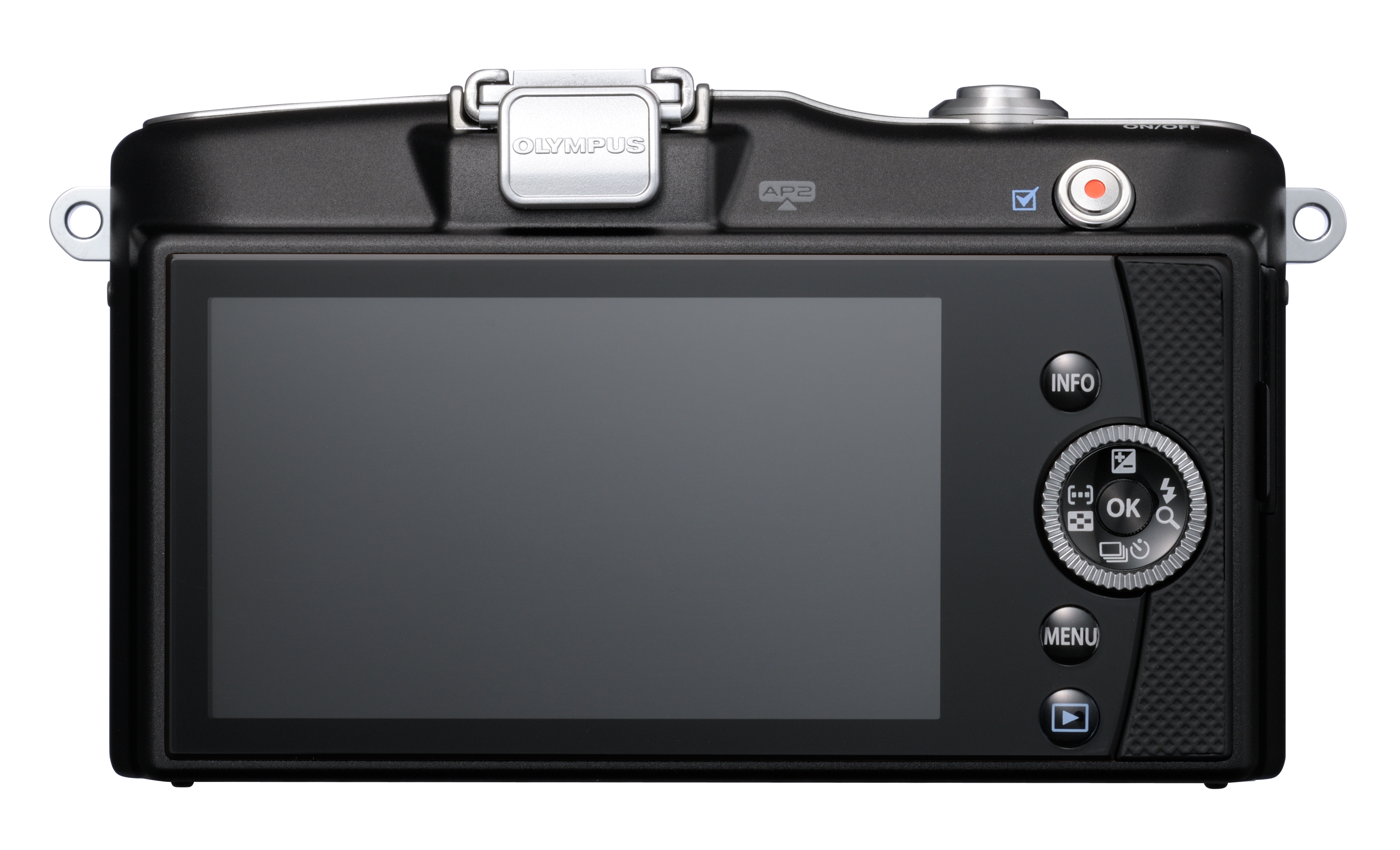
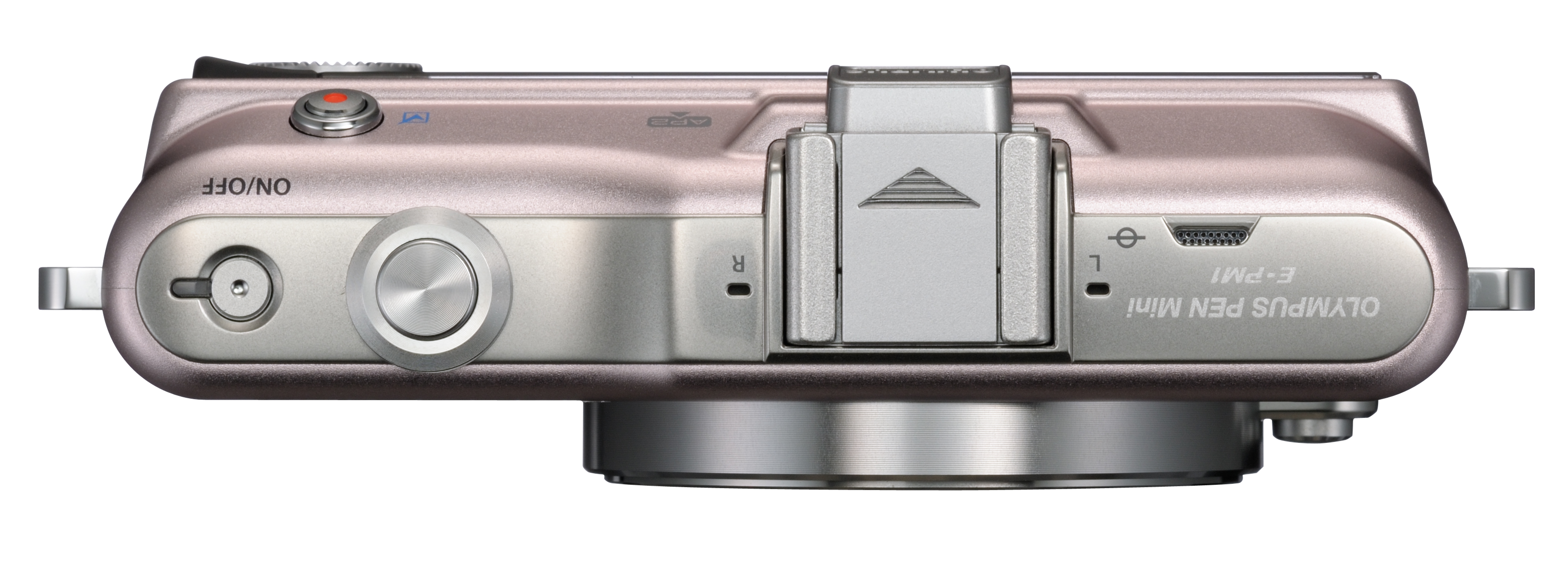
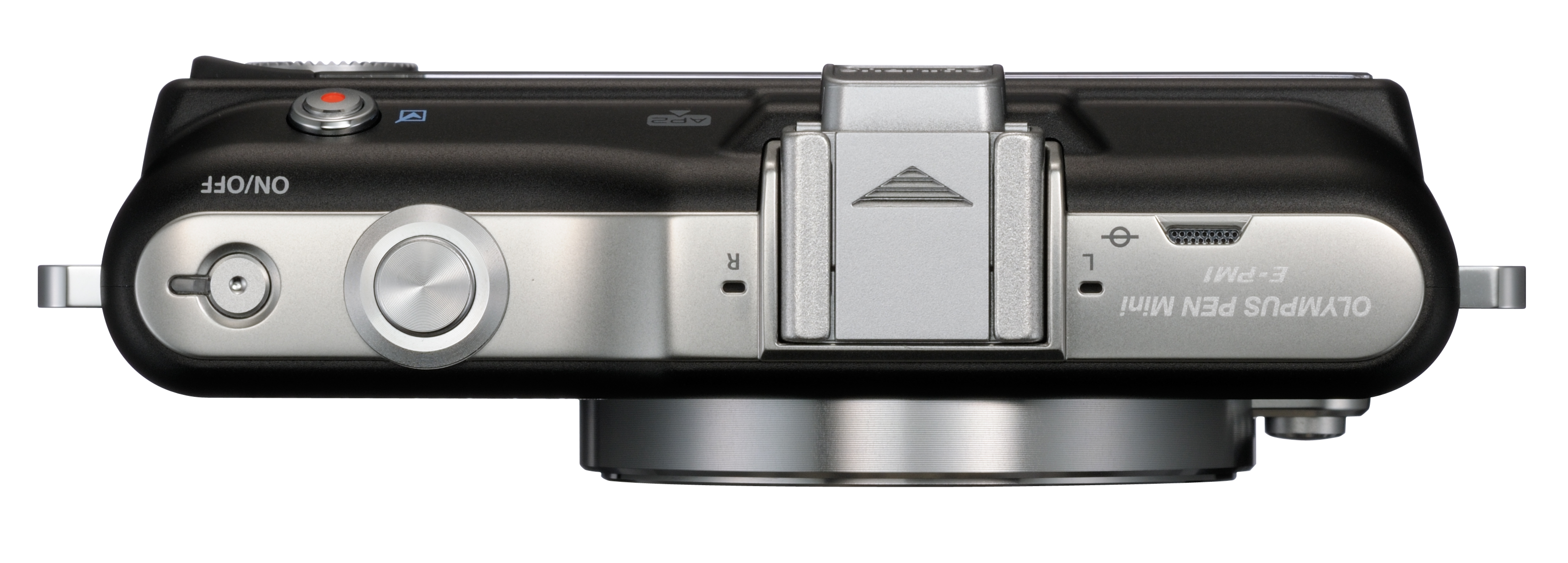
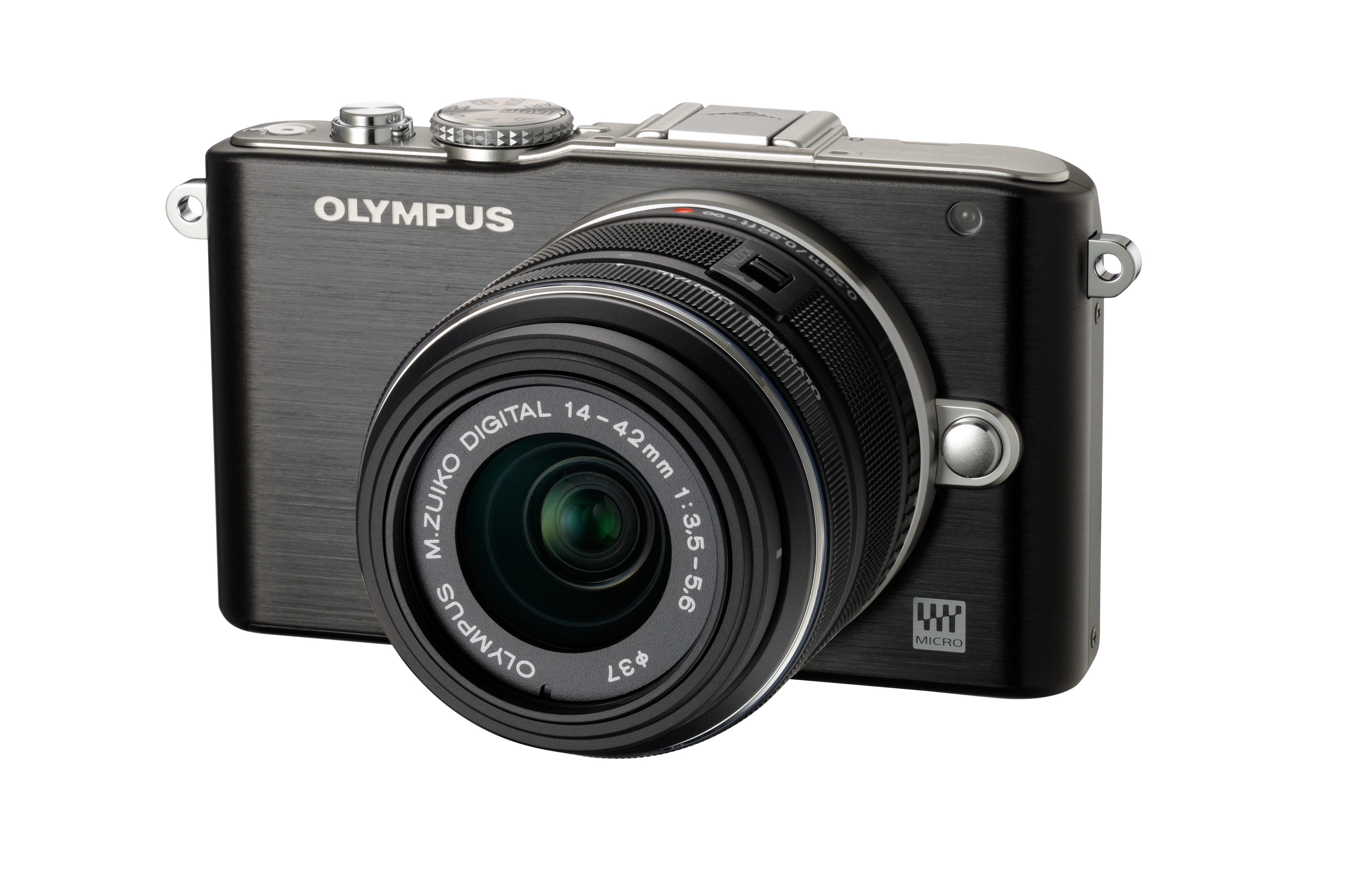
Olympus Announced 3 New PEN series cameras and 2 New Zuiko lenses (Part 1)

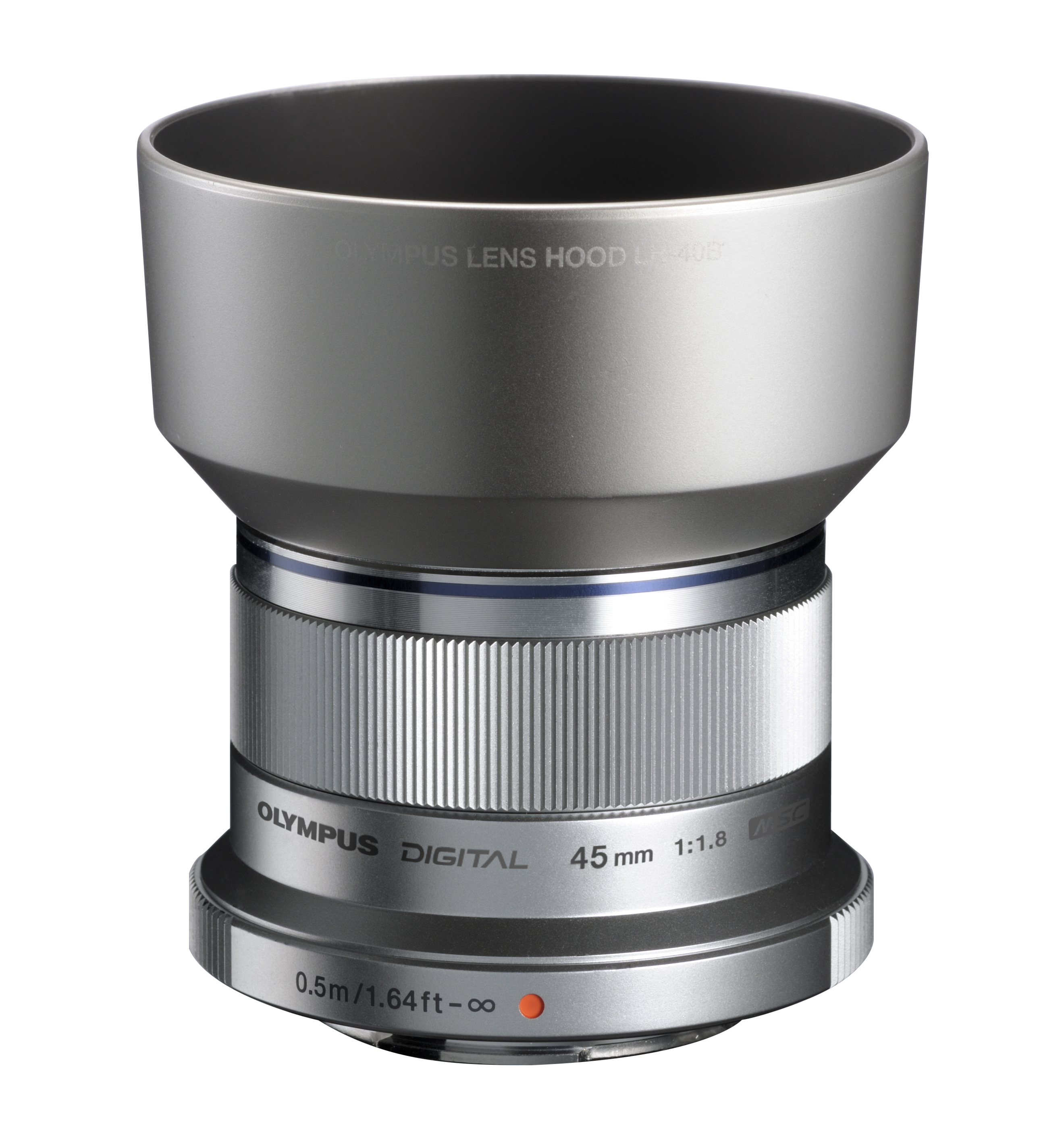
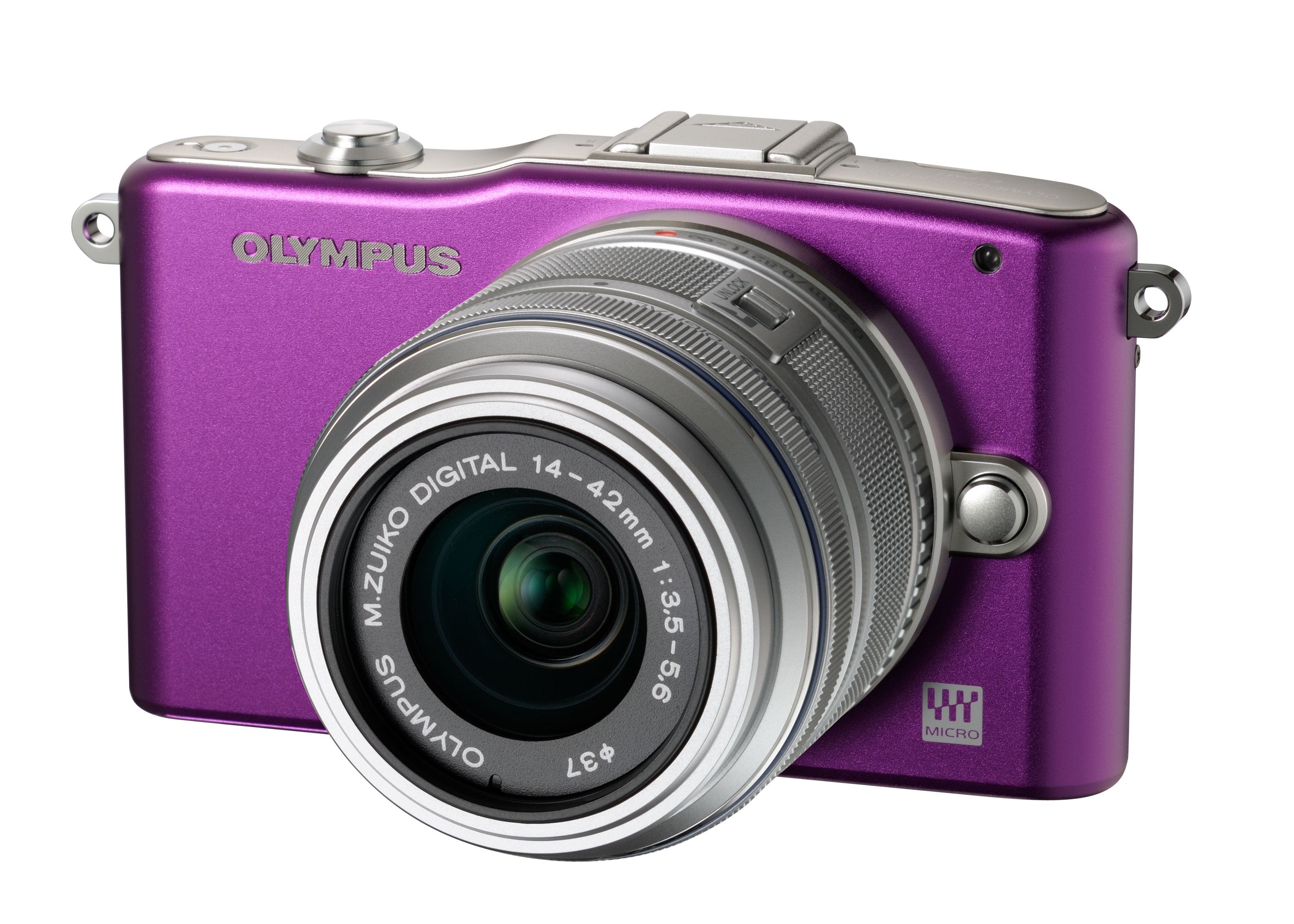
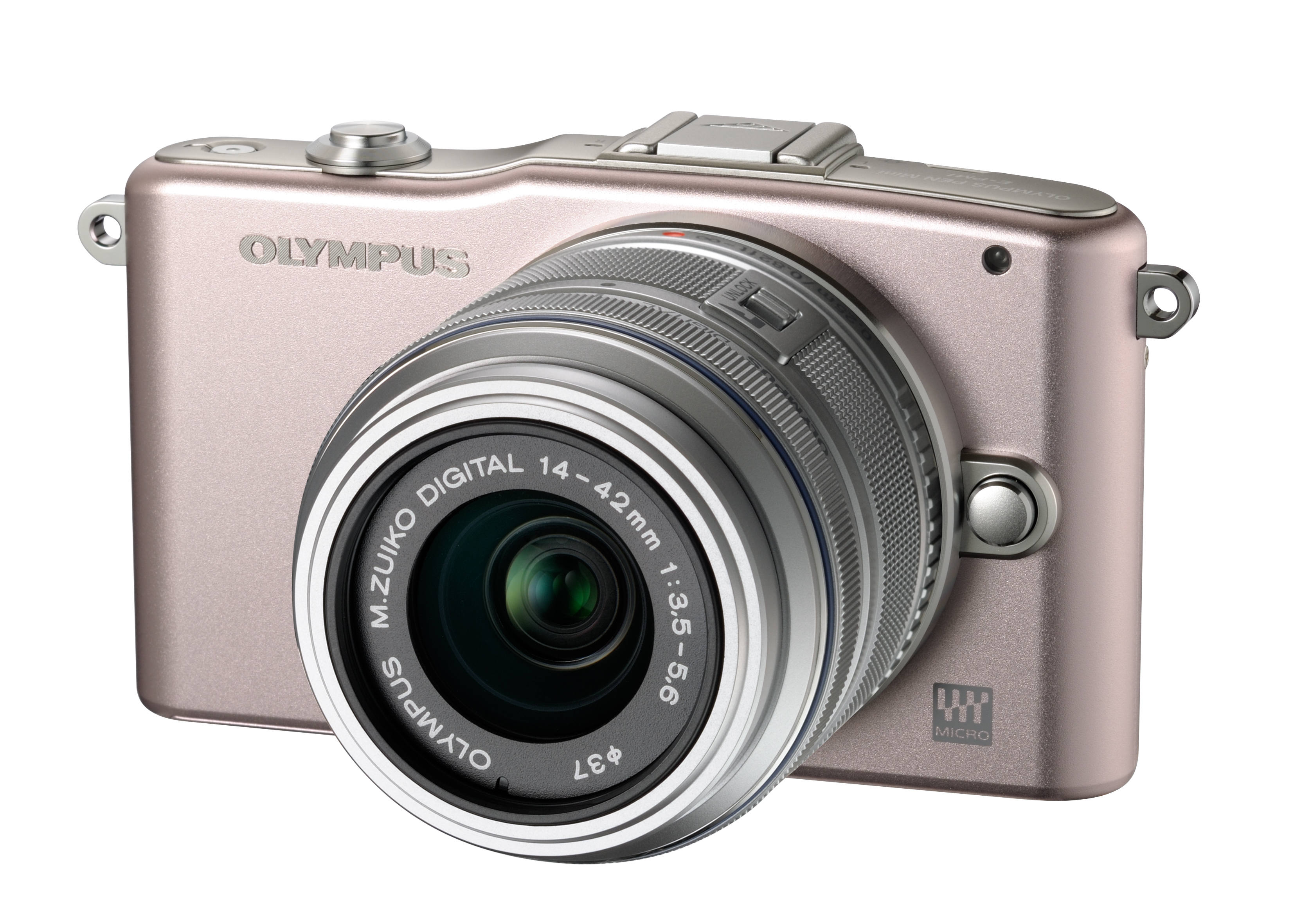
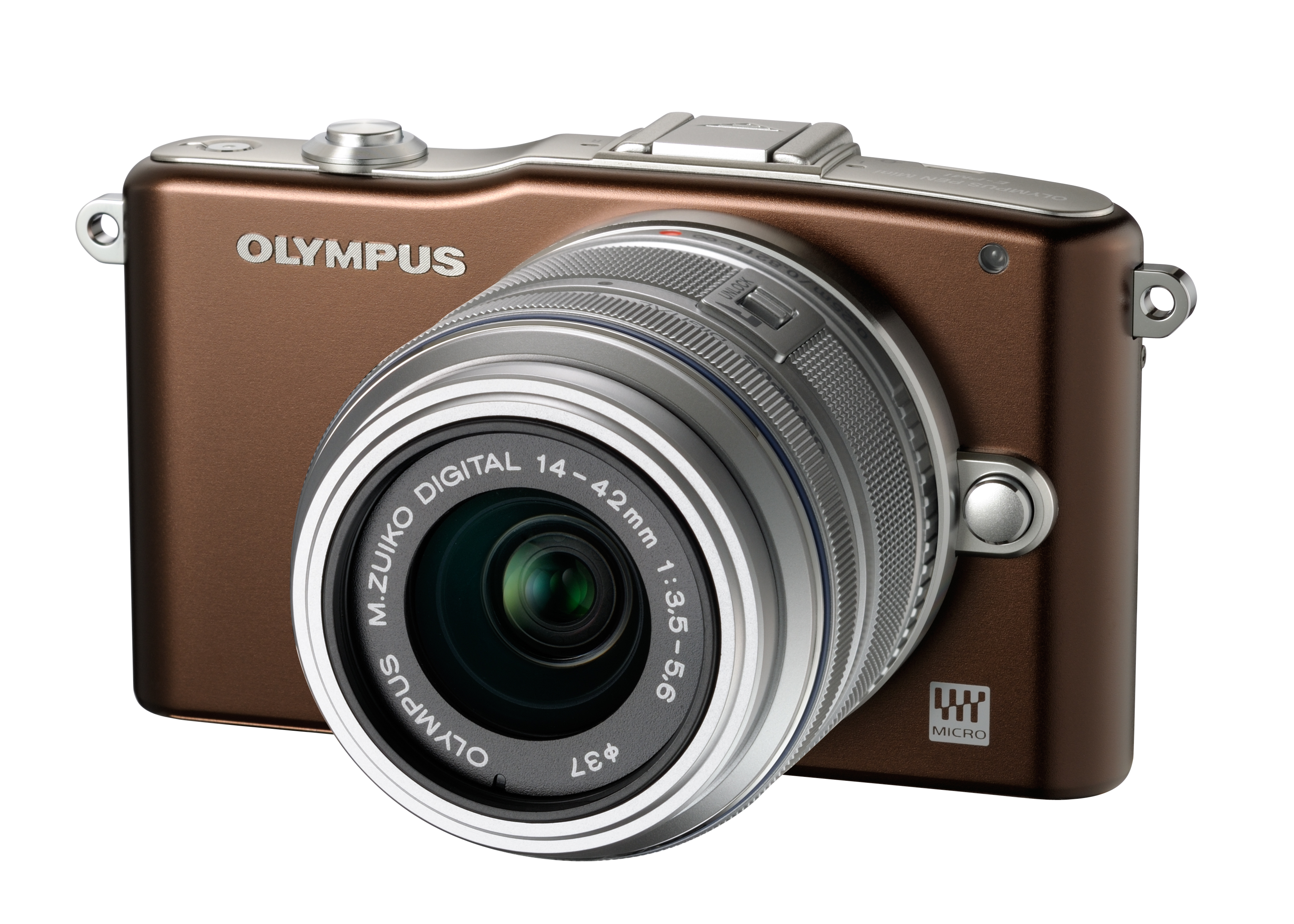
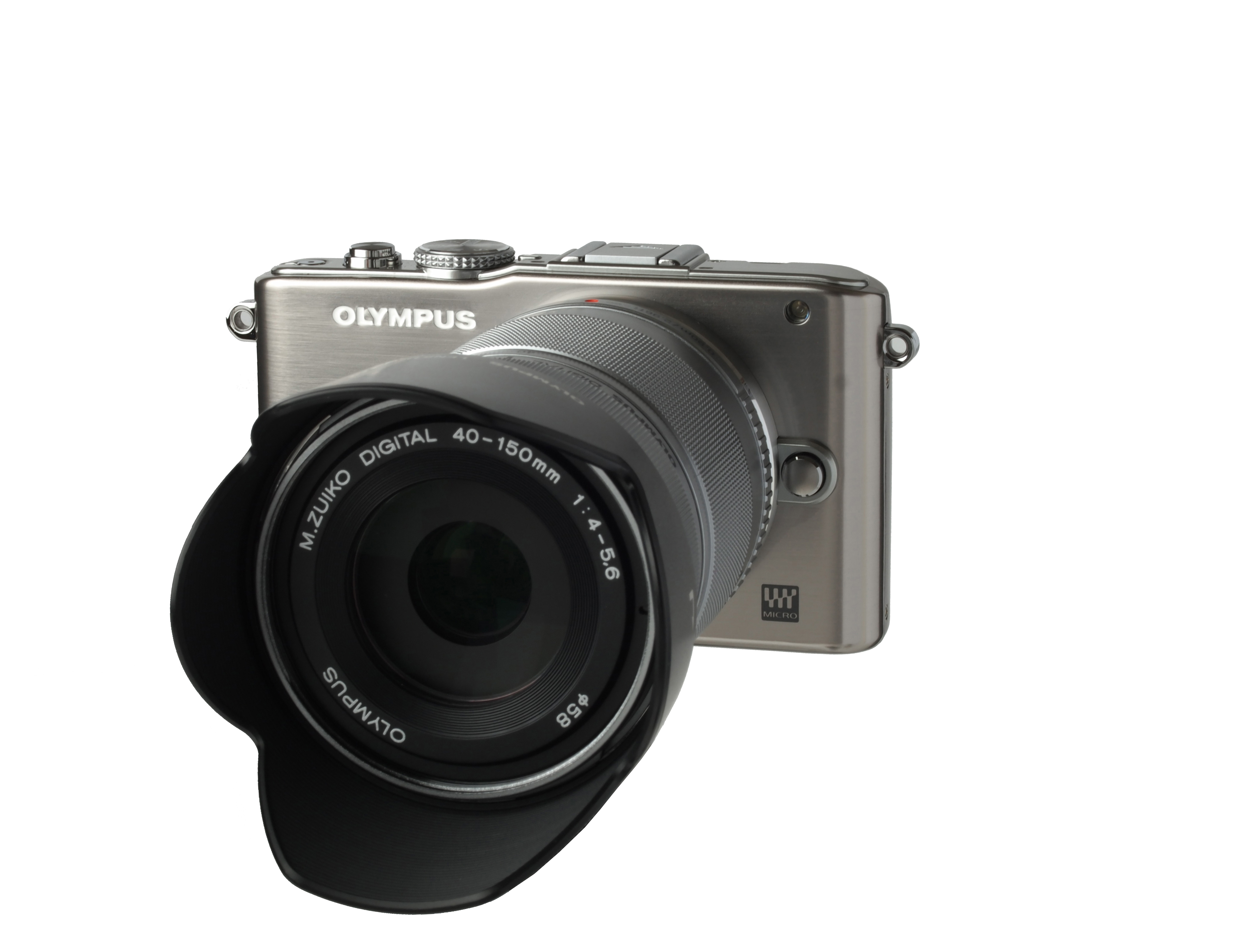
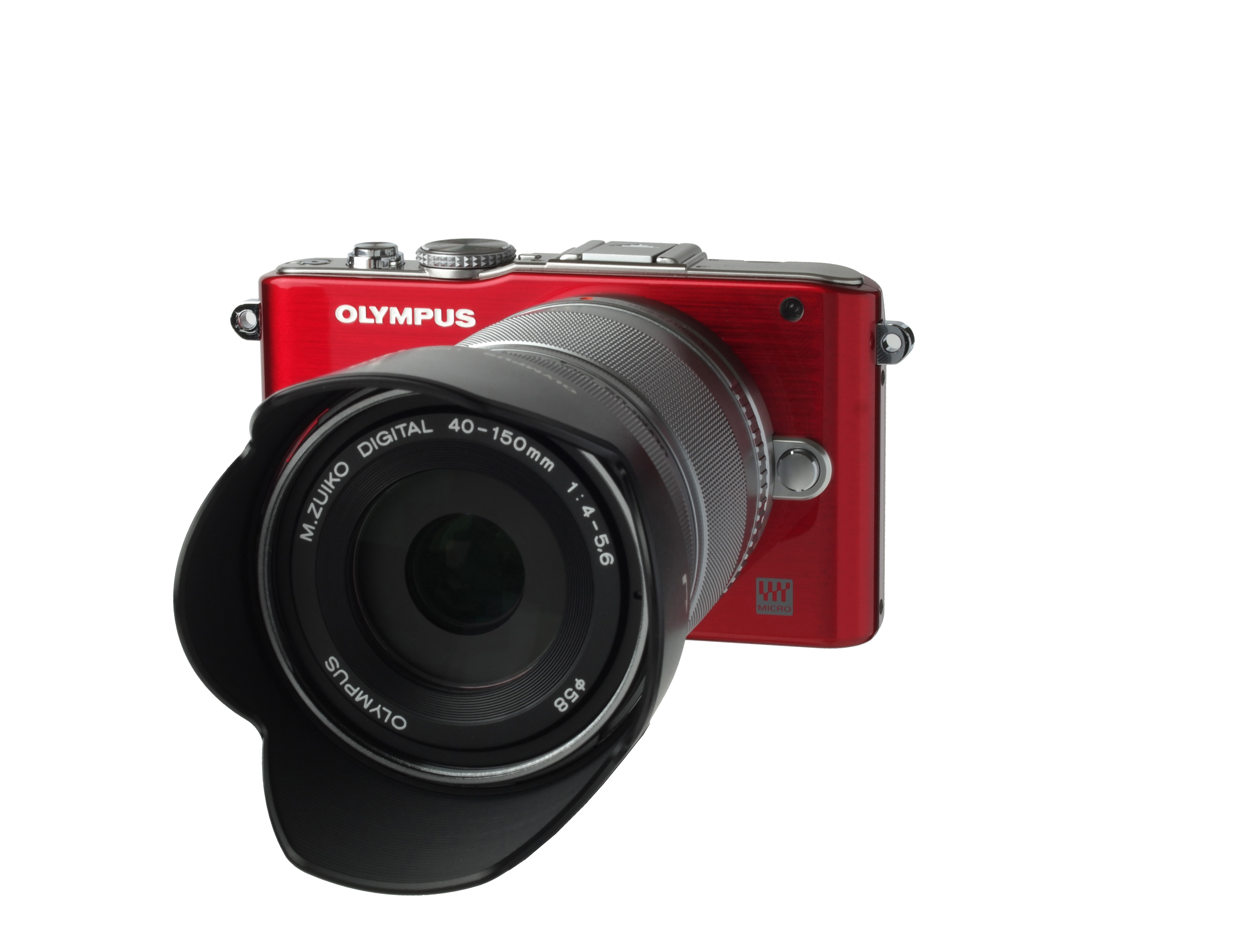
They are the long awaited (if not anticipated) OLYMPUS E-P3, OLYMPUS E-PL3 and OLYMPUS E-PM1 & 2 Zuikos, the Olympus MZ12mm and Olympus MZ45mm lenses.

For the sake of reading ease, I have decided to break this news to you by breaking it into 4 parts.

I am covering or rather duplicating what was sent to me from Olympus’s Press Releases as I am in not in the position to comment or review the camera until I tested it.

Let’s Start with Olympus E-P3.

Main Features
1. World’s fastest AF (autofocusing)* achieved through the FAST (Frequency Acceleration Sensor) AF system and a lens incorporating the MSC (Movie & Still Compatible) mechanism

2. Higher-than-ever image quality and high ISO12800 sensitivity, thanks to the new 12.3-megapixel High Speed Live MOS Sensor with full HD movie compatibility and new TruePic VI image processing engine

3. Advanced graphical user interface featuring a 3.0-inch OLED display with touchscreen panel. High-quality design with full-metal body and sophisticated detachable camera grip

*Among interchangeable lens type digital cameras available as of June 30, 2011. Focusing time between infinite and 1 meter, measured at the 35mm (70mm at 35mm camera equivalent) of an M.ZUIKO DIGITAL 14-42mm f3.5-5.6 II R lens mounted on the OLYMPUS PEN E-P3 camera. According to Olumpus in-house test conditions.

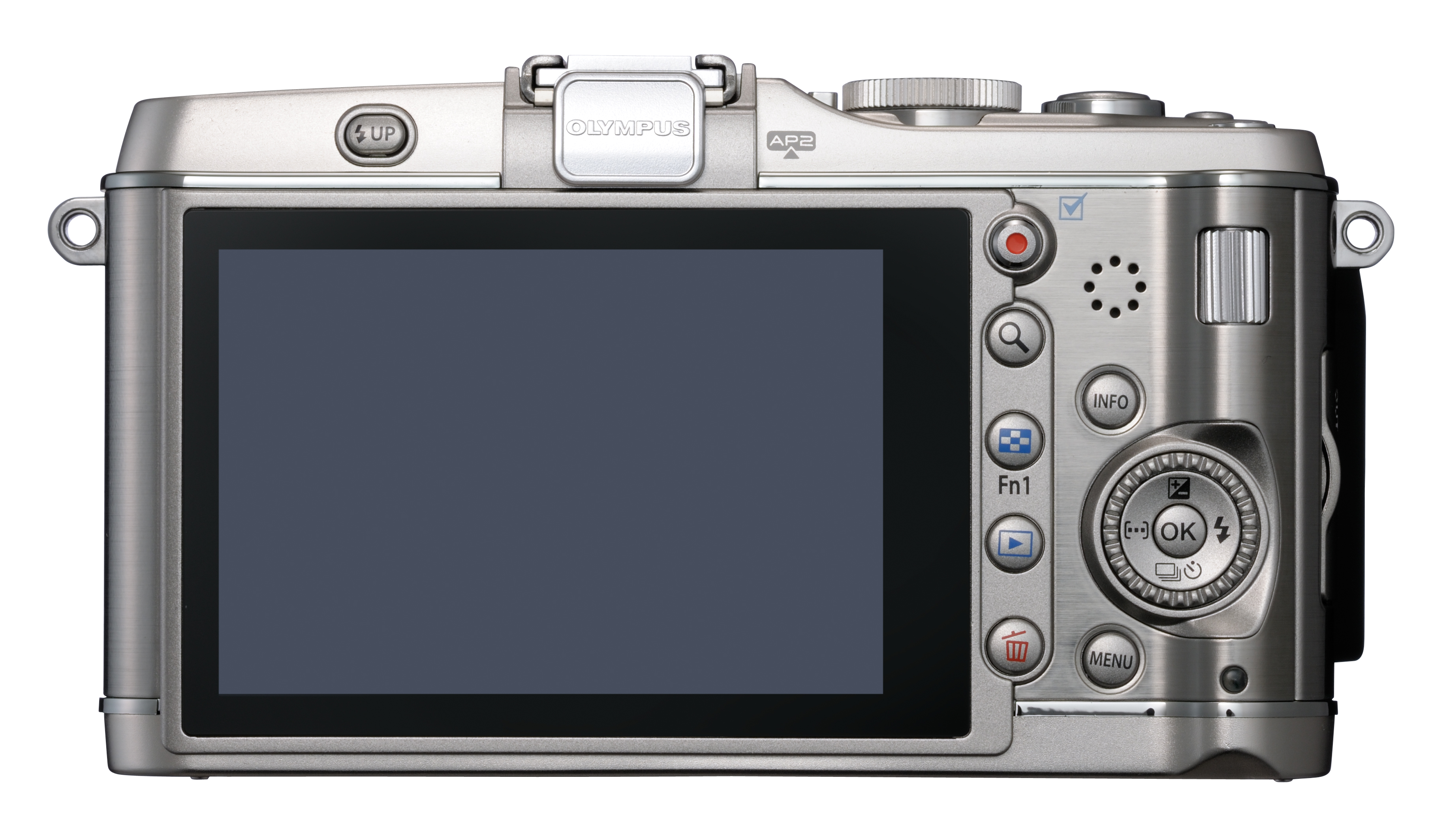
The OLYMPUS PEN E-P3 is an interchangeable lens type digital camera that conforms to the Micro Four Thirds System standard. Designed as the new flagship of the PEN series of new generation system cameras, the E-P3 is aimed at camera buffs looking for a camera that combines traditional style and functionality with advanced digital capabilities and top-notch performance.

Like previous models in the PEN series, the E-P3’s remarkably compact design has been made possible by the elimination of the quick-return mirror, while maintaining key SLR advantages such as high performance and high image quality.

In fact, the E-P3 easily outperforms any other camera on the market with its powerful new FAST AF system. When combined with a lens incorporating the new MSC (Movie & Still Compatible) mechanism, which increases the speed and decreases the noise of autofocusing, the combination of AF’s double-speed sensor drive and the double-speed detection processing allows the E-P3 to achieve the world’s highest AF speed. At the same time, better-than-ever image quality is made possible by the new 12.3-megapixel High Speed Live MOS Sensor with 1080i full HD movie compatibility and the new TruePic VI image processing engine. High-sensitivity shooting at ISO12800 is also possible.

Simplicity and ease of use have always been the hallmark of the PEN series, and the E-P3 is no exception. In addition to its convenient Main and Sub dials, the new E-P3 is equipped with a 3.0-inch, 610,000-dot OLED display whose excellent colour reproduction and touchscreen panel provide the superior display capability and intuitive operability needed for creative image composition. The user interface’s high-definition text and graphics support attractive graphical menus that are easy to see, easy to understand, and easy to use.

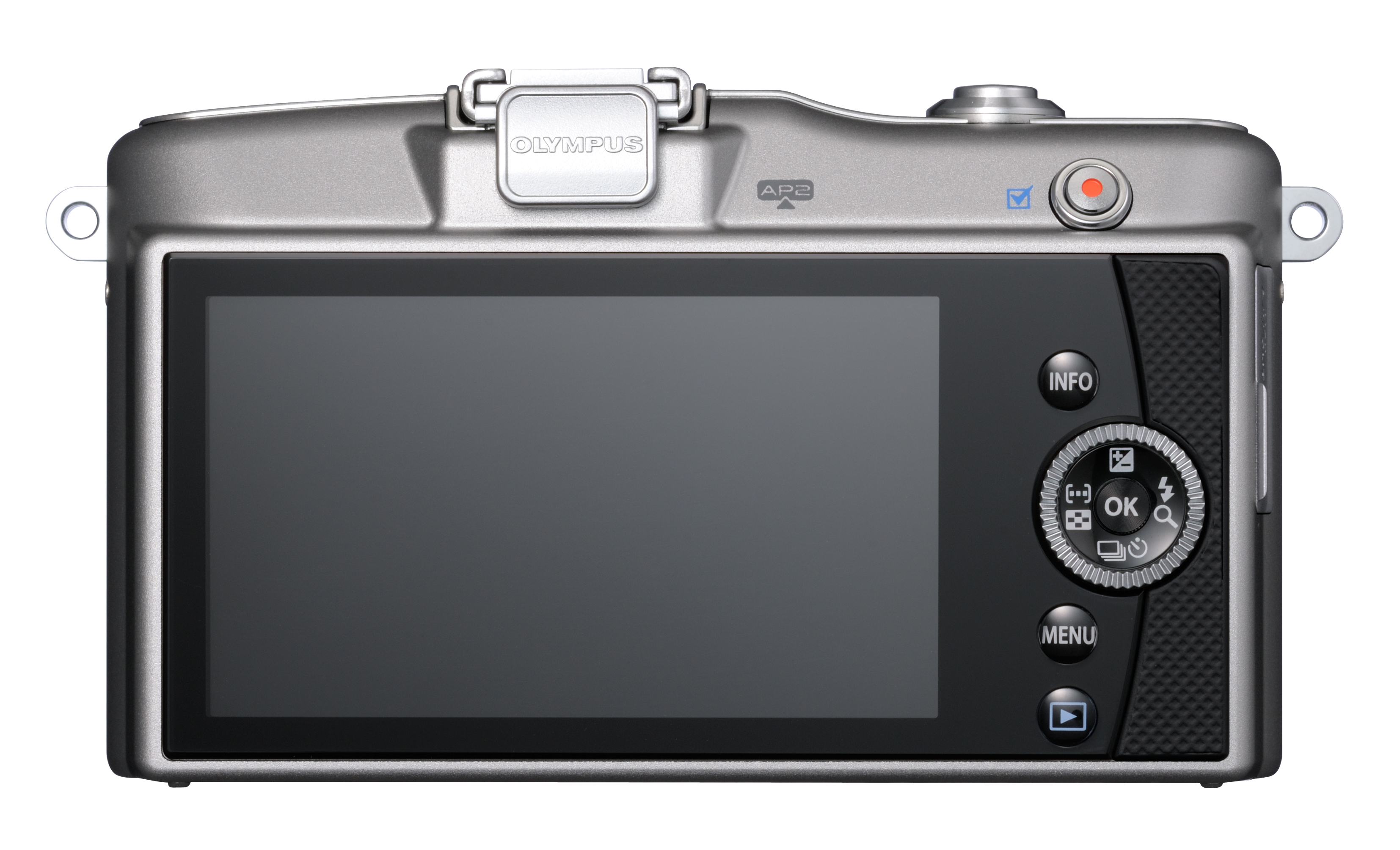
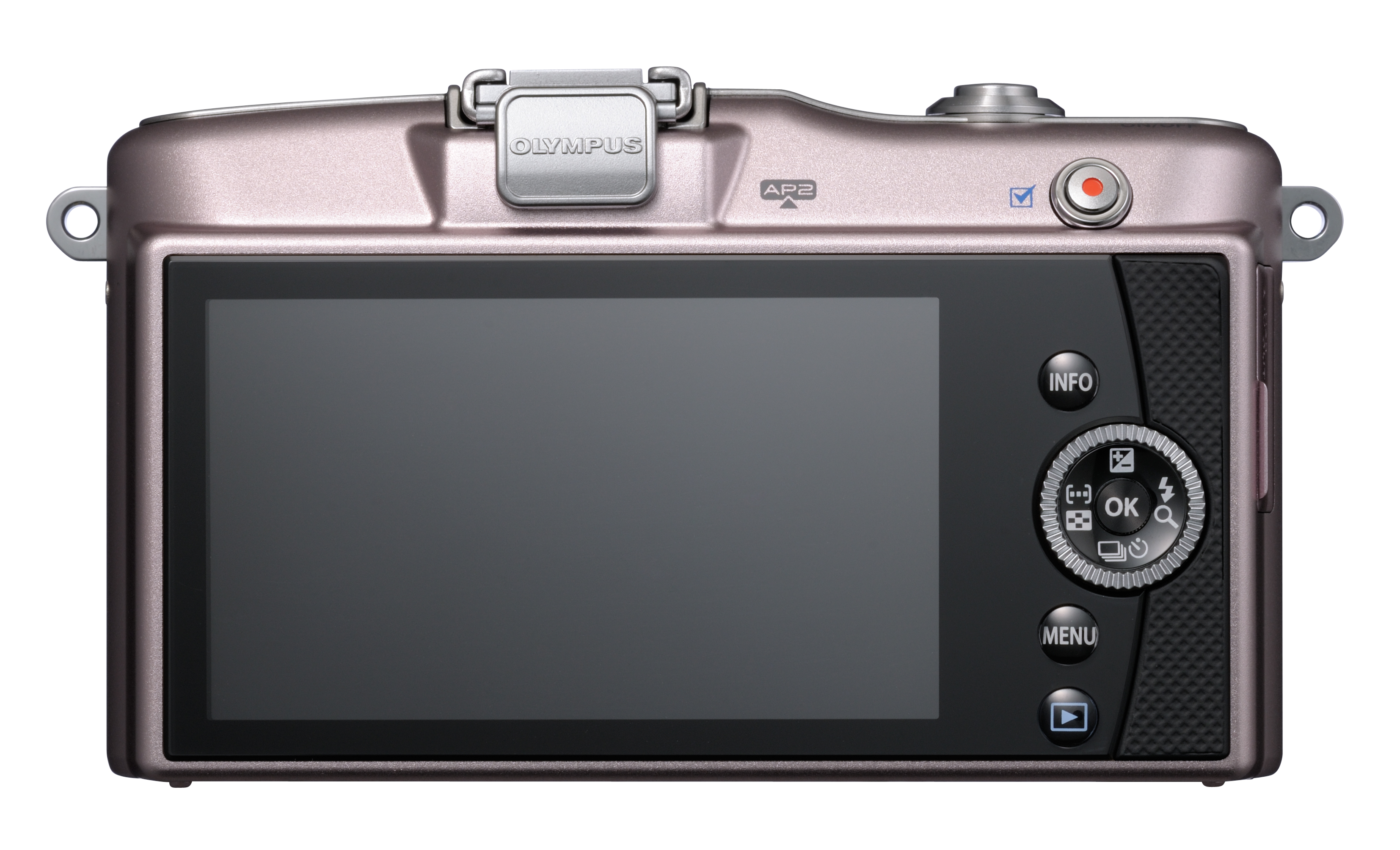
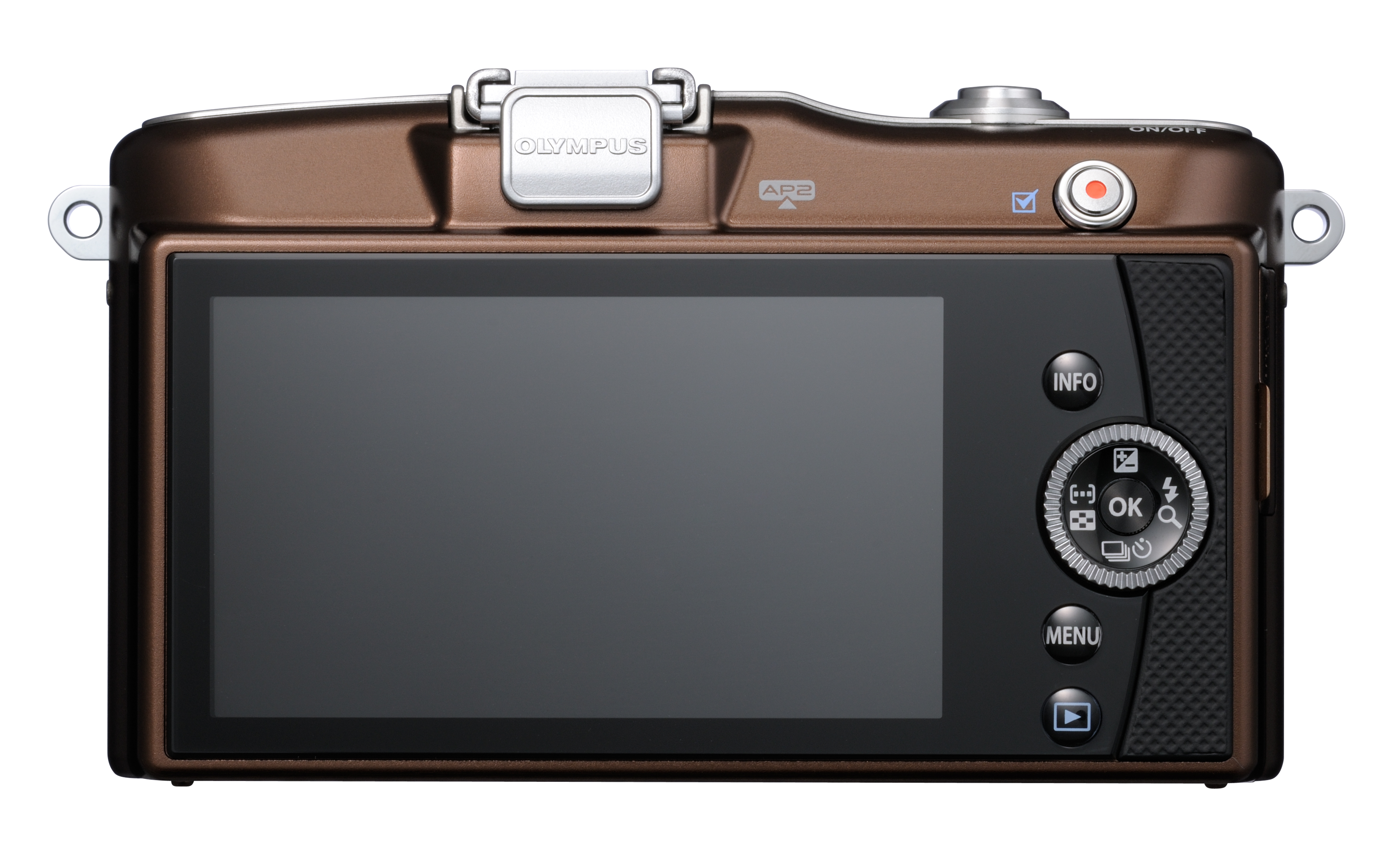
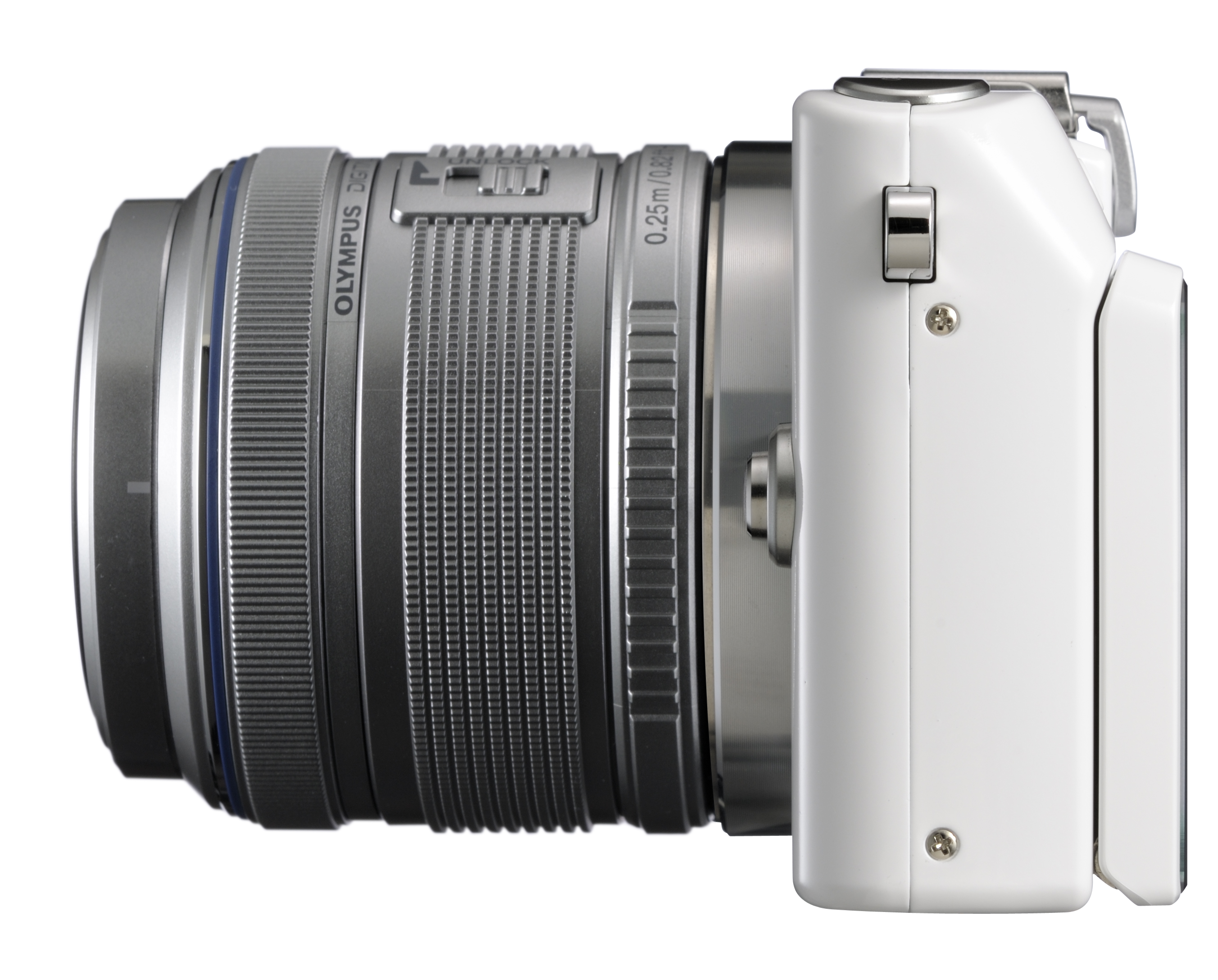
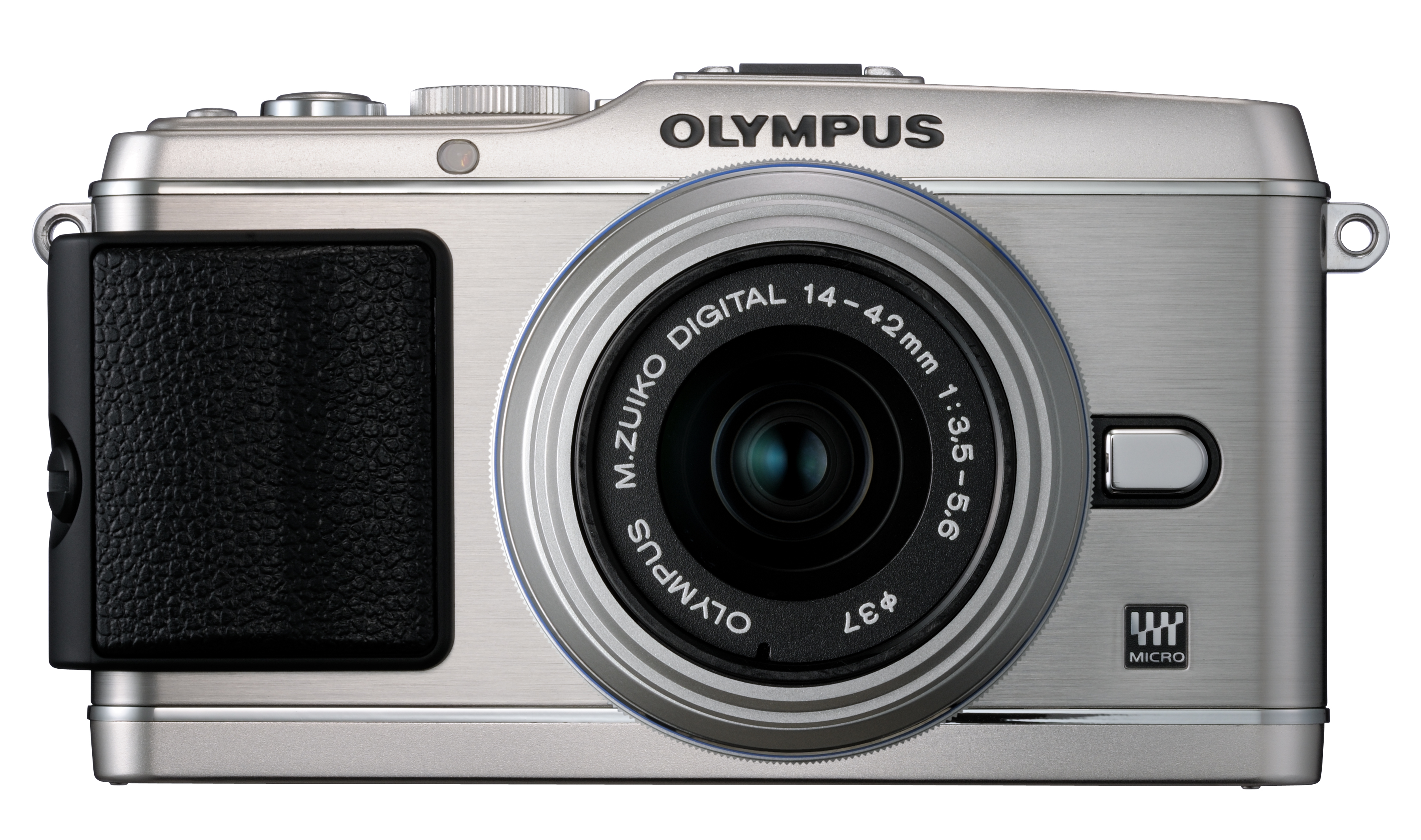
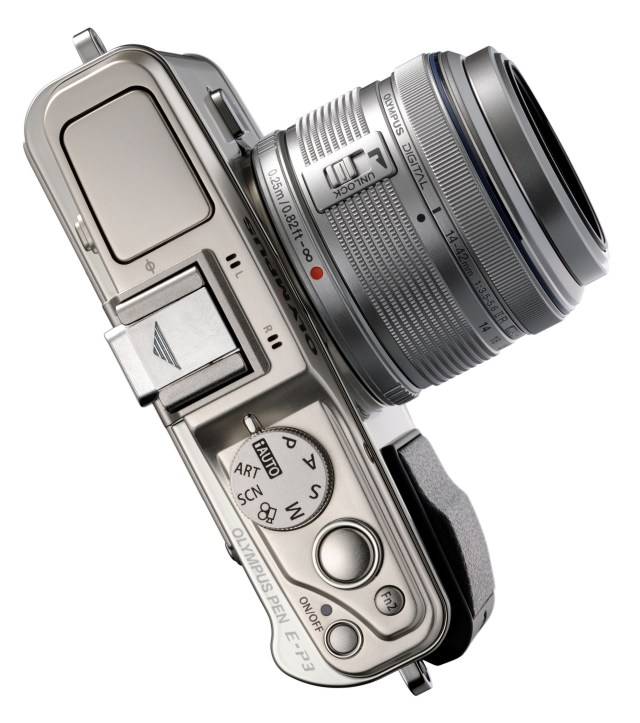
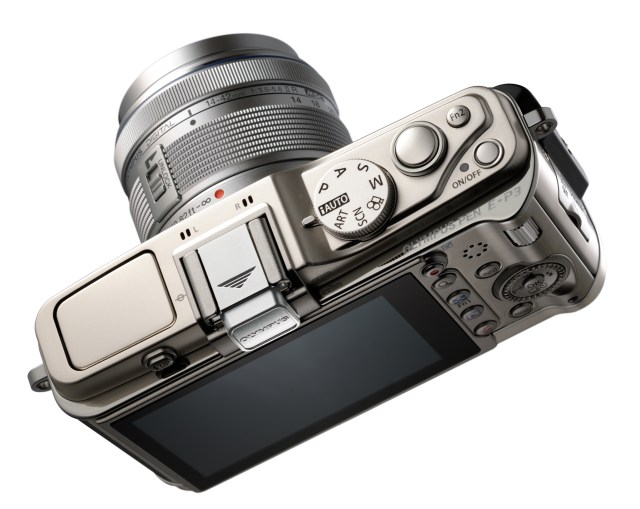
Recreating the timeless style of the classic Olympus PEN series, the E-P3’s advanced performance is housed in an elegant, retro design with a durable metallic finish that exudes quality, reliability, and performance. A work of art in itself, the E-P3 features a new detachable grip, giving the user the opportunity to choose a grip most suitable to his or her shooting style; for example, an optional large grip can be used in place of the provided standard grip or the grip can simply be detached for a simpler look. Available in a choice of three colours — Silver, Black and White — the OLYMPUS PEN E-P3 brings a new level of performance to the world’s most stylish line of cameras.
Another example of Olympus’s commitment to relentlessly enhancing and advancing its line of new generation system cameras, this new camera is certain to expand today’s fast growing market for lens interchangeable type digital cameras.

Other Features
Advanced Art Filters
– Incorporates ten Art Filters (with variations and Art Effects)
– Addition of a new variation (Pale & Light Colour II) and new Art Effects (Starlight and White Edge)
– Art Filter bracketing for recording multiple Art Filter pictures with a single shot
– Full HD Art Filter compatible with full HD movie (AVCHD)
– 3D Art Filter compatible with 3D Photo Shooting scene mode

Advanced Live Guide
– Instant recall of Live Guide with Fn button in P/A/S/M modes 3

Advanced movie recording
– Incorporates full HD movie shooting (AVCHD)
– Built-in stereo microphones

– Built-in GN10 (ISO200) flash with wireless controllability
– Built-in sensor-shift type image stabilization plus electronic movie image stabilization using the multimotion-compatible movie IS system 
– Tone control for individual variations of the tones of bright and dark sections 
– One-push digital teleconverter function
– Two Fn buttons (Fn1/Fn2) 
– Menu Guide to clarify menu items
– New scene mode: 3D Photo Shooting
– Proven, reliable dust reduction system
– Level Gauge display on Live View monitor

Main Feature Details
– World’s fastest AF (autofocusing)* achieved through the FAST AF system and lens incorporating the MSC (Movie & Still Compatible) mechanism

– New AF system boasts world’s highest speed
One of the primary areasOlympus concentrated on when developing the E-P3 was the AF (autofocusing) system. The result is the world’s highest AF speed, faster than any traditional SLR with mirrors. Because the new FAST AF system drives the Live MOS Sensor at double the previous speed (120 fps), image signals can be obtained more quickly than with previous systems. The speed of the AF computations that generate the contrast signal from the image signal in order to determine the degree of focusing has also been doubled. The advantages made possible by these improvements are further enhanced by the increase in the speed of communication for controlling the lens motion and the synergy of the MSC (Movie & Still Compatible) mechanism which facilitates fast, quiet movement of the AF system in the lens, as well as faster response time from shutter release to the start-up of AF system. Together, all of these improvements have resulted in imager AF speed that is almost three times faster than before, making it by far the world’s fastest.

*Among interchangeable lens type digital cameras available as of June 30, 2011. According to our in-house test conditions, with an M.ZUIKO DIGITAL 14-42mm f3.5-5.6 II R lens mounted on the OLYMPUS PEN E-P3 camera, with the lens at the infinity position, and with the subject at a distance of 1 meter and the lens focal length at 35mm (70mm at 35mm camera equivalent), AF calculation time is the time between when the shutter button is pressed and the start of exposure, focus to shutter release.

– 35-area multiple AF with group area selection
The number of focus selection areas has been increased from 11 to 35, enabling detailed, pinpoint AF across a wider area than before. To capture a moving subject accurately, the group area selection can apply AF to a limited region compose of 3 vertical and 3 horizontal areas.

– Full-time AF
The full-time AF function keeps the Live View image focused even when the release button is not pressed. As the camera always remains focused on whatever subject it is pointed at, S-AF shooting, which is initiated by a half-press of the shutter release button, can be engaged more quickly.

– Improved tracking AF performance keeps moving subject in focus
The functionality of the tracking AF that automatically tracks and focuses on a moving subject has been improved. Unlike the previous method, which tracked the feature points of the luminance signal and tended to lose the tracked subject when the shapes of the feature points changed, the new system used in the E-P3 employs an advanced detection method that uses the chroma signal and face detection data as well as the luminance signal, allowing it to continue focusing on the subject even when its shape changes or temporarily disappears during tracking.

– AF illuminator
The E-P3 is the first PEN series camera incorporating an AF illuminator to support autofocusing in low light. The light covers a range of about 3 metres and can be switched ON/OFF.

– Improved face & iris detection AF
The iris detection AF introduced on the E-PL2 has been made more versatile, allowing users to choose from “OFF”, “nearer-eye priority”, “left-eye priority” and “right-eye priority”. This facility is provided because the orientation of the face in portrait shooting is fixed so the focused eye is also usually fixed. Some photographers may prefer to be able to deliberately focus on the farther eye instead. These selections can be activated directly with a button.

– Higher-than-ever image quality and high ISO12800 sensitivity thanks to the new 12.3-megapixel High Speed Live MOS Sensor with full HD movie compatibility and new TruePic VI image processing engine

New 12.3-megapixel High Speed Live MOS Sensor with full HD movie compatibility
Based on the 12.3-megapixel High Speed Live MOS Sensor used with the previous PEN series cameras, the new High Speed Live MOS image sensor is now capable of recording a full HD, or 1960 x 1080/60i movie. It is also driven at a double speed for AF as described above. Furthermore, the use of the line addition method for readout of lines in movies and Live

– View images improves image reproduction, reducing jaggy oblique lines and other noise. Maximum sensitivity has also been boosted to as high as ISO12800.

– New TruePic VI image processing engine
The E-P3 incorporates the newly developed TruePic VI image processing engine. It achieves both improvement of the image processing quality as well as reduction of processing time.

– Advancement of image processing quality
Fine Detail Processing and Real Colour Technology
In addition to inheriting the Fine Detail processing that provided the E-5, our DSLR flagship, with extremely high resolution, the E-P3 incorporates Real Colour Technology to improve reproduction of colours that are hard to be reproduced accurately. This technology improves the reproduction and gradation expressions of previously hard-to-reproduce colours such as emerald green, yellow, thereby also increasing the 3D feeling of the image.

– Advanced Shadow Adjustment Technology (ASAT) for improved back light correction
The Shadow Adjustment Technology (SAT) used to improve gradations in dark areas when the Gradation Auto is set (manually, iAUTO, etc.) has been further enhanced to provide optimal performance even under extreme high contrast conditions such as shooting against the light. As a result, this new ASAT technology produces a natural image like that seen by the naked eye, optimizing the brightness of the under-lit area with respect to the highlight area to prevent both over- and under-exposure.

– MPEG4 (H.264) movie codec
The E-P3 incorporates the MPEG4 (H.264) movie codec to record AVCHD-format movies that can be played back on living-room AV components such as HDTVs and Blu-ray players.

Improved movie quality: Inter-frame flicker noise reduction
The inter-frame flicker noise reduction function reduces the flickering noise in motion JPEG movies and Live View display, as well as in AVCHD movies.

Improved processing speed

– Enhanced Art Engine
The Art Engine that handles image processing for the Art Filters has been further refined to speed up frame rates in Live View, provide faster response after shooting, as well as making possible such new functions as Art Filter bracketing and 3D Art Filter shooting. The result is a sophisticated Art Filter system that’s easier to use, as well as more flexible and creative.

– Improved sequential shooting response with faster return to Live View
As the previous image processing engines were designed based on viewfinder shooting, a single image processing core processed the recorded image and Live View image in sequence and was not capable of outputting the Live View image until the recorded image had been processed. The TruePic VI engine newly designed exclusively for the Micro Four Thirds System incorporates a Live View-dedicated image processing core so that it can output the Live View image during recorded image processing. This has dramatically reduced the time it takes to return to Live View after shooting, enabling faster response during sequential shooting and rapid SLR-style shooting.

– Advanced user interface featuring a 3.0-inch OLED display with touchscreen panel, high-definition text and graphics. High-quality design with full-metal body and sophisticated detachable camera grip

3.0-inch OLED display with touchscreen panel
The 3.0-inch OLED (organic EL) display used as the rear-panel monitor of the E-P3 can display video data equivalent to VGA (approx. 920,000 dots) using a special layout of 610,000 dots. With the ability to reproduce tight black and vivid colours thanks to OLED’s wide colour reproduction characteristic, this display provides a wide angle of view, rich colour expression and high resolution, all of which are sure to enhance the joy of photography. With two colour tone options of “VIVID” and “NATURAL”, the user can take advantage of the properties of the OLED for a vivid picture, or reproduce a tone similar to the LCD display used on PC monitors.

The monitor also features an electrostatic capacitance type touchscreen control in addition to the traditional button and dial control facilities. This allows the following operations to be performed simply by touching the panel surface.
– During recording: Touch shutter release, Touch AF, Touch enlargement, Touch Live Guide, AF area selection
– During playback: Frame advance/backward, enlargement/index (calendar) playback, one-touch enlargement by double-tapping

Of course, these operations are also available using conventional buttons and dials, as well as via the touchscreen panel, which can also be switched OFF if not needed. Long-term durability is assured by solid construction with the space between the cover and the panel sealed with optical adhesive that suppresses reflections due to airspace. The screen itself is treated with Anti-Fingerprint coating to minimize the diffused reflections due to finger oil. The result is excellent visibility, indoors and out.

– Advanced user interface with high-definition text and graphics
The E-P3’s user interface has been completely redesigned. The font and graphics used in the menus offer improved visibility and quality to render elegant graphical menus that are 7 attractive, easy to see, easy to understand, and easy to use.

– High-quality design with full-metal body
In spite of the built-in flash and accessory port, the E-P3 recreates the sophisticated design of original PEN, retaining the simple, elegant profile made popular by the E-P1. The full-metal body includes metallic rear panel button controls and effectively balances ruggedness and light weight. The mode dial has a metallic pear-skin finish, and metallic dials and buttons, particularly the power button and blue power indicator feel solid and durable. The cool touch of metal in the palm of hand, the comfortable weight, and excellent balance will satisfy any lover of cameras.

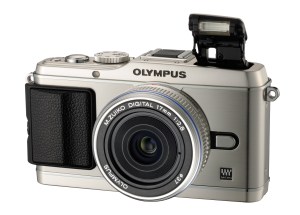
– Two types of detachable grip
To better satisfy the demands of camera buffs, the E-P3 features a detachable grip that can be changed or removed to suit the shooting style of each user. The user can detach the provided standard grip and replace with the optional MCG-2 Camera Grip to hold the camera more firmly or just use the camera without a grip for a simpler look.

– Other Feature Details

Advanced Art Filters
– Incorporates ten Art Filters (with variations and Art Effects)

Ever since the E-30 was introduced (December 2008), Olympushas been supporting the creativity of photographers by incorporating easy-to-use Art Filters in its lens interchangeable type digital cameras. The new E-P3 incorporates all ten Art Filters, as well as all the Art Filter variations and Art Effects developed by Olympus.

– Pop Art
Enhances colours, making them stronger and more vivid to create high-impact images with a pop-art feel.

-Soft Focus
Gives images a dream-like quality that creates a romantic and mystical atmosphere.

– Pale & Light Colour
Subdues highlights and shadows to assure muted colour tonalities that evoke a mood of reflection and nostalgia.

– Light Tone
Brightens the image to reveal more shadow detail and evoke a lighter mood.

– Grainy Film
Recreates the classic grainy look and tonality of black & white photography, imparting a 8 dramatic feel to images.

– Pin Hole
Adjusts colour and reduces brightness at the periphery, recreating the distinctive look of photos taken with a pinhole camera.

– Diorama
Creates the look of a miniature diorama by enhancing colour and contrast, and blurring the periphery to distort distance perception.

– Cross Process
Simulates the unexpected colour transpositions and look that result when negative film is processed with a positive film emulsion, or vice versa.

– Gentle Sepia
Gives images the look of a vintage sepia-tone print, with gentle contrast and well-defined shadows.

– Dramatic Tone
Represents real space in a more imaginary way by applying unrealistic tones of light and darkness based on local changes in contrast.

Addition of a new variation (Pale & Light Colour II) and new Art Effects (Starlight and White Edge)

With the PEN Lite E-PL2 (launched on January 2011), variations were introduced for the Pop Art, Grainy Film and Pin Hole Art Filters that slightly change the atmosphere of each filter. With the E-P3, a new variation is also available for the Pale & Light Colour filter. The Pale & Light Colour II variation is more reddish than the original Pale & Light Colour I and helps the user select a photographic expression closer to his or her own image

The Art Effect function that can add various composition effects to Art Filters has also been expanded with the E-P3. In addition to the existing Art Frame effect, which puts a frame around the image, the Pin Hole effect, which decreases the brightness around the periphery of the image, and the Soft Focus effect, which provides focusing with both sharpness in the centre and softness around it, Olympus has added the Starlight effect, which produces an effective trace of light in a night scene and the White Edge effect, which defocuses the four corners of the image in white
*1. These effects allow the photographer to more effectively produce exactly the image they desire and provide everyone with the opportunity to utilize exciting new creative expressions in both still images and movies*2
*1 The number and types of variations and the applicable effect functions are variable between Art Filters.
*2 When a movie is recorded using an Art Filter, the number of frames and presence/absence of audio and Art Effect are variable depending on the type of the Art Filter.

Art Filter bracketing for recording multiple Art Filtered pictures with a single shot
The Art Filter bracketing function can generate multiple pictures with different Art Filters with a single shot, making it possible to experiment with several different photographic effects at the same time. In addition to the Art Filters, this function can also be used to select multiple picture modes including Vivid, Natural, Flat and Portrait.

– Full HD Art Filter
*3 compatible with full HD movie (AVCHD)
Movie shooting with Art Filter is possible in full HD (AVCHD) format
*3 , allowing users to enjoy full HD Art Filtered movies on a large-screen TV with family or friends.

3D Art Filter
*3 compatible with 3D Photo Shooting scene mode
When the scene mode is set to 3D, the Art Filter can be applied to 3D photos
*3 Not available with the Starlight effect.

– Advanced Live Guide
Instant recall of Live Guide with Fn button in P/A/S/M modes
Since the E-PL1 (launched on March 2010), Olympus has been incorporating a new user interface called the Live Guide. Designed for users who do not have expert knowledge of photography but want to have creative control over their pictures, Live Guide lets users shoot the pictures they want by selecting an icon and operating a slide bar to control the major factors for the SLR photography including “colour vividness”, “colour balance”, “image brightness”, “depth of field (blur background)” and “subject in motion”. The names of these factors are expressed in daily, easy-to-understand languages without any jargon.

With the new E-P3, the Live Guide function, which previously was only available in iAUTO mode, can now be accessed with the Fn button in any of the P/S/A/M exposure modes. The touchscreen panel on the Live View monitor makes it possible to recall the Live Guide and operate the slide bar in a more intuitive manner.

– Advanced movie recording
Incorporates full HD movie shooting (AVCHD)
In addition to the popular Motion JPEG (AVI: approx. 30 fps) format
*1, which can be easily played back and edited on a PC, the new E-P3 can record movies in both full HD (AVCHD: 1920 x 1080/59.94i) and HD (AVCHD: 1280 x 720/59.94i) movie formats*2 for extended recording and playback on a large-screen high-definition TV set.
*1 Recording capacity per one file is limited up to approx. 2 GB; max. recording time is approx. 7 minutes.*2 Recording capacity per one file is limited up to approx. 4 GB; max. recording time is approx. 22 min. in full HD mode, approx. 29 min. in HD mode. Image sensor output is approx. 30 fps.

– Built-in stereo microphones
Olympus’s extensive experience in the field of IC recorders has made it possible to develop high-quality recording systems that offer extreme fidelity to the original sound and full presence. The camera body incorporates stereo microphones compatible with the linear PCM format (Motion JPEG mode) for high audio quality without compression, and Dolby Digital format (AVCHD mode). When high-quality external stereo microphones such as the SEMA-1 Microphone Set 1 (optional) is attached to the accessory port, audio input is switched automatically to the external stereo microphones facilitating higher quality stereo sound recording and effectively reducing wind noise.

– Built-in GN10 (ISO200) flash with wireless controllability
The E-P3 incorporates a GN10 (ISO200) electronic flash with built-in TTL metering. When the FL-50R, FL-36R and/or FL-300R external flashes are used, wireless control of multiple flashes is possible without an external commander. Firing mode and firing intensity settings for each of up to three groups and a built-in flash can be set easily on the LCD panel on the rear of the body. The built-in flash intensity can be set between 1/1 and 1/64 in 1-step increments.

– Built-in sensor-shift type image stabilization plus electronic movie image stabilization using the multi-motion-compatible movie IS system
The E-P3 incorporates an image stabilization mechanism based on image sensor shifting so handheld shooting with reduced image blurs is possible even in low-light scenes or telephoto shooting. This mechanism shifts the image sensor unit instantaneously and precisely, and is built into the camera body so image stabilization is possible with any lens, including an M.ZUIKO DIGITAL lens as well as an old lens mounted using an adapter if the focal length is input manually.

Furthermore, an electronic movie image stabilization function with multi-motion compatibility is incorporated to compensate for image blurs due to ordinary camera shakes to those caused by respiration and walking.

– Tone control for individual variations of the tones of bright and dark sections
As an extension of the brightness adjustment of the Live Guide, functions for individual adjustment of the brightness of only in the “bright section” or “dark section” is added to the exposure compensation function to enable adjustments equivalent to those available with the Live Guide even when this is not activated. These functions make easy the pictures with tight black with a taste of reversal film or advanced expressions for enhancing or eliminating the gradations of white of snow.

– One-push digital teleconverter function
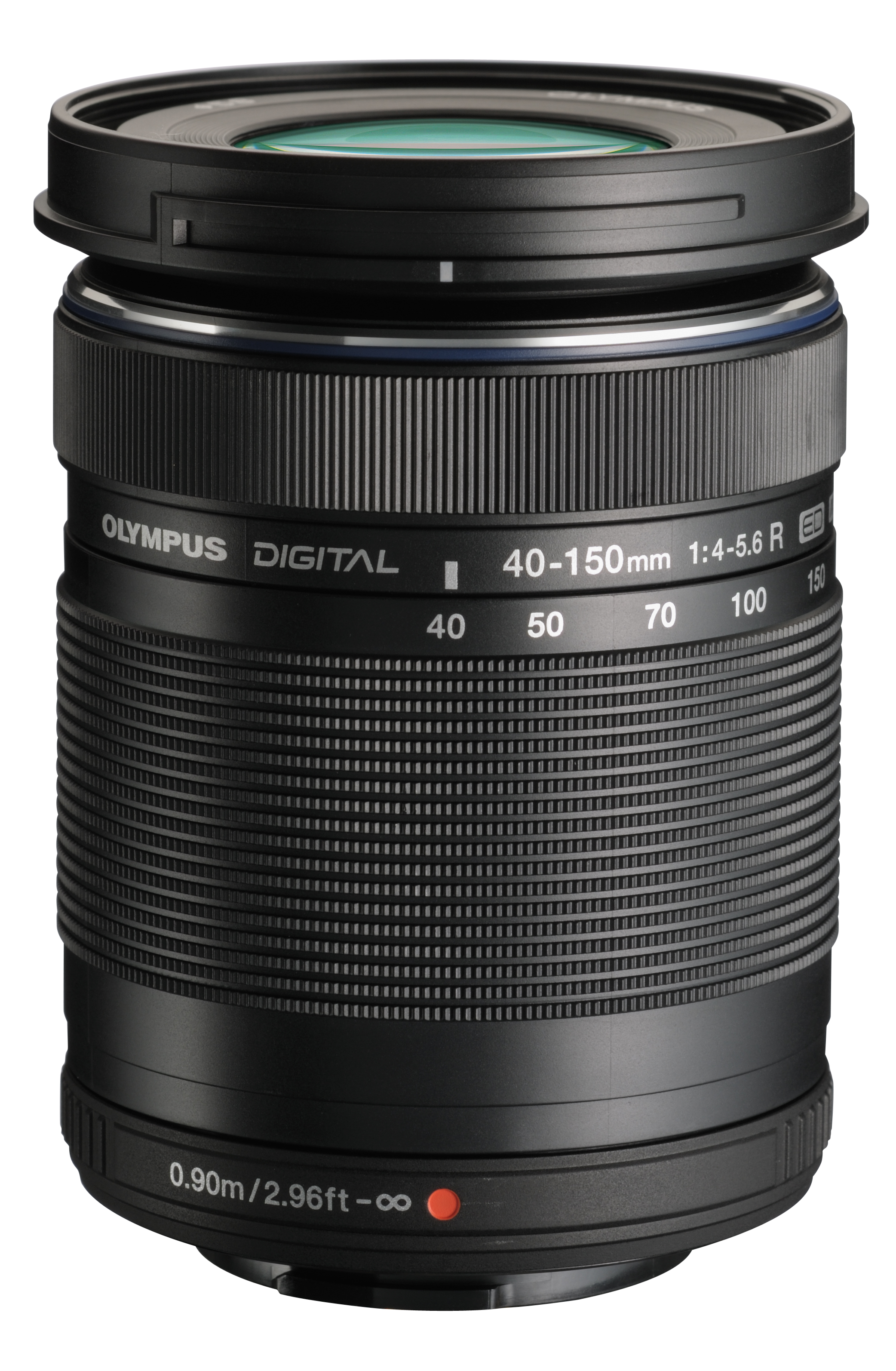
The One-Push Digital Teleconverter function magnifies the captured image by 2X with digital processing for easy telephoto shooting. Assigning this function to the Fn button allows you to take 2X close-up photos at the touch of a button. And when you use it in combination with an optional M.ZUIKO DIGITAL ED 40-150mm f4.0-5.6R lens, you’ll be able to capture amazing super telephoto pictures with a focal length of 600mm (35mm camera equivalent). The captured image is output as a high-quality signal with all the original pixels ensuring the superior image quality thanks to superior image complement performance of the new TruePic VI image processing engine. 11

– Two Fn buttons (Fn1/Fn2)
For added convenience, more functions can be assigned to the Fn button. Conventionally, only one Fn button is provided, but the new E-P3 is equipped two Fn buttons, allowing you to assign a different frequently used function to each button.

– Menu Guide to clarify menu items
If two seconds pass without any operations during menu display, the camera enters the explanation display mode, popping up an explanation of each menu item whenever it is changed. As the user can find out what each function is used for and how it is used without the instruction manual, the explanation display is a big help for users who are not familiar with the camera or who have forgotten how to do some operations. Once the user is accustomed to the camera, pressing the INFO button turns the pop-up display off. Whenever an explanation becomes necessary, press the INFO button to start up the display again.

– Proven, reliable dust reduction system
If dirt or dust penetrating the camera body during lens replacement attaches to the low-pass filter or image sensor, it will show up in the image. This problem is particularly important with the E-P3 because its mirrorless structure does not cover the image sensor with the shutter screen.Olympushas been aware of the critical nature of this problem since the beginning of development of lens interchangeable type digital SLR cameras and solved it properly. When the camera is turned on, the SSWF (Super-Sonic Wave Filter) installed in front of the image sensor is activated to blast dust away from the image sensor with supersonic vibrations. The tremendous power of the supersonic waves manifests reliable dust reduction performance by even removing dust that cannot be removed merely by shaking the image sensor or dust that is attached by intermolecular force and cannot be removed by merely discharging static electricity.

– New scene mode: 3D Photo Shooting
The 3D Photo function has been newly added to the scene modes. After the first shot, simply sliding the camera following the guide takes the second shot and records a 3D file (MPO format). The recorded image can be played with powerful 3D playback on a 3D function-compatible PC or TV.

– Level Gauge display on Live View monitor
Using the dual axis sensor incorporated in the camera, a 2-direction level gauge corresponding to vertical and horizontal directions can be displayed on the Live View monitor.

– New Optional Accessories

FL-300R Electronic Flash
The FL-300R is a compact, lightweight external flash with a slim profile that matches any PEN camera. Featuring bounce and remote control capabilities, this flash achieves a GN (Guide Number) of 28 (ISO200-m) despite its compact, pocket-sized design. A tilting mechanism with max. 60° upward and 30° downward capability enables bounce flashing so that a soft expression with high-quality and deeper feelings can be enjoyed easily. Close-up flash shooting impossible with the camera’s built-in flash is also possible using the FL-300R.

The FL-300R is also compatible with remote flashing. The firing intensities of up to two groups of flashes can be controlled independently with wireless control.

The flash is equipped with a built-in wide panel, which can be used to cover an ultra-wide angle with a focal length of 9mm (equivalent to 18mm of 35mm cameras).

– Interchangeable Lens M.ZUIKO DIGITAL 14-42mm f3.5-5.6 II R (Silver/Black)
The M.ZUIKO DIGITAL 14-42mm f3.5-5.6 II R is the new standard lens for the PEN series cameras, launched at the same time as the E-P3. It has newly been designed to match the new line of PEN series while retaining the high performance of the previous M.ZUIKO DIGITAL 14-42mm f3.5-5.6 II standard zoom lens. It incorporates the MSC mechanism and implements fast, quiet AF using the inner focus method. Despite the compact size and light weight, it is applicable in a wide range from street shooting to portrait shooting.

– MCG-1/MCG-2 Camera Grips (Black/White)
These are the detachable camera grips optionally available for the E-P3. The MCG-1 is the same grip as the one standard as provided with the camera body, while the MCG-2 is a large-sized grip that can be interchanged easily with the standard type. The large grip will improve holding of the camera when the user needs to hold it more firmly, for example when using a telephoto lens.

– CS-29FBC Leather Front & Body Case
The CS-29FBC is a genuine leather full cover case designed exclusively for the OLYMPUS PEN E-P3. It can accommodate the camera together with the M.ZUIKO DIGITAL 14-42mm f3.5-5.6 IIR standard zoom lens, the M.ZUIKO DIGITAL ED 9-18mm f4.0-5.6 wide-angle zoom lens or the M.ZUIKO DIGITAL 17mm f2.8, M.ZUIKO DIGITAL ED 12mm f2.0 or M.ZUIKO DIGITAL 45mm f1.8 thin pancake lens mounted. Designed to enable quick shooting without taking the camera out of the case, it provides reliable protection for the lens and camera body.

– CS-30B Leather Body Jacket
The CS-30B is a genuine leather body jacket designed exclusively for the OLYMPUS PEN E-P3. It protects the sensitive parts of the camera body without detracting from its design. In addition to the practical aspect of camera body protection, the body jacket’s genuine leather and rugged construction exude a sense of both traditional craftsmanship and contemporary styling. The ideal complement for the OLYMPUS PEN E-P3, this jacket makes the camera even more fun to carry. Naturally, shooting and playback is possible while viewing the rear-panel LCD without taking the camera out of the body jacket.

– CSS-S109LLII Leather Shoulder Strap
The CSS-S109LLII is a genuine leather shoulder strap with an increased length adjustment range that makes it even more convenient than the CSS-S109LL shoulder strap. The strap length can now be made short enough to use as a neck strap and long enough to sling over the shoulder and across the chest. The colour can be coordinated with the body jacket.

– CSS-S114 Shoulder Strap
The CSS-S114 (launched on January 2011) is a beige-coloured shoulder strap that’s both fashionable and practical. Now available in brown and green as well, it features a warm, natural design that complements any of the new OLYMPUS PEN models, including the E-P3, E-PL3 and E-PM1. Made of luxuriously textured fabric, this strap can also be customized by attaching pin badges or other items. The length is about 138 cm, the optimum length to sling the camera over a woman’s shoulder and across her chest.

Body / Lens Colour Combinations Available
The following body/lens colour combinations are available.

 When the body colour is Silver or White, the lens colour is Silver.·
 When the body colour is Black, the lens colour is Black.·

OLYMPUS PEN E-P3 is available at Olympus authorised retailers.
For more information please visit http://home.olympusimage.com.sg/contactus/authorised_retailers.asp

Look out for Part II when I return with the specs for OLYMPUS E-PL3 .

Stay Tuned.

About Olympus Imaging Singapore
Olympus Imaging Singapore is the unparalleled industry leader in opto-digital technologies, delivering award-winning digital imaging products for the consumer and professional markets inSingapore. Driven by a strong commitment in providing innovative products and solutions of the highest quality, Olympus Imaging Singapore works closely with industry partners, customers and otherOlympusbusiness units in producing leading-edge products. These include analogue and digital cameras, professional SLR imaging systems, and voice recorders, amongst others. Olympus Imaging Singapore’s unrelenting efforts in superior customer service also bear testimony to its brand promise of delivering the best user experience to all consumers and professional users in the imaging field. For more information, please visit http://www.olympusimage.com.sg.

Posted in Brand: Olympus, Photography Articles & Videos | Tagged , , , , , | Leave a comment

HOYA PRO1 Digital ND16 Filter

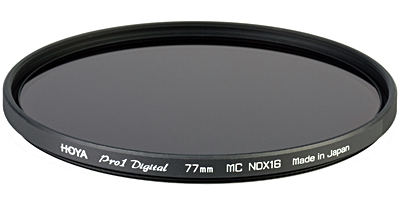
Hoya Corporation Announces the new HOYA PRO1 Digital ND16 Neutral Density filter. 
 
The ND16 is a dark neutral density filter with a filter factor of 16, meaning there is 4 stop light loss. This is a great filters for slowing down shutter speeds to capture motion. An example: In daylight, maybe the slowest shutter speed possible without a filter could be 1/60 sec at F/22 By adding the HOYA PRO1 ND16, a shutter speed of 1/4 sec would be possible.

Another use of the ND16 would be controlling depth of field. With a strong ND16, a much wider aperture can be used. Wide apertures like F/1.4 and F1.8 create a very shallow depth of field and have the effect of isolating the subject from the background. Creative possibilities are endless with this type of filter.

The HOYA PRO1 Digital ND16 has all the features of the PRO1 Digital series such as DMC multi-coating to reduce reflections and a low profile.


Product packaging Identifyer.
(Don’t buy Fakes.)

How to identify a real distributor/ dealer selling genuine goods? 
Most dealers carries all 4 brands stated here within the same shop!
(Tokina lenses, Hoya filters, Kenko photo accessories and SLIK camera support systems.)
Posted in Brand: Others (Cosina, Carl Zeiss, Leica, Mamiya, Samyang, Vivitar, Zenitar,etc), Photography Articles & Videos, Uncategorized | Tagged , , , | 2 Comments

SIGMA APO 70-200mm F2.8 EX DG OS HSM receives TIPA Best Expert Lens Award

The Sigma Corporation (COO: Kazuto Yamaki) is pleased to announce that the SIGMA APO 70-200mm F2.8 EX DG OS HSM, a large aperture telephoto zoom lens optimized for use with the latest digital SLR camera and incorporating Sigma’s original OS function, has won the “TIPA Best Expert Lens” award. This lens was introduced to market in July 2010.
Name of Award :TIPA Awards 2011 Best Expert Lens
Product :SIGMA APO 70-200mm F2.8 EX DG OS HSM

This bright, high quality telephoto zoom lens contains 22 elements (including 3 SLD and 2 FLD glass elements) in 17 groups. The lens is designed to cover 24x36mm ”full-frame “sensors and has an optical image stabilisation system (OS) that compensates approximately four stops. Its HSM function assures smooth and silent auto focusing. Chromatic aberration is reduced to a minimum and sharpness is at a very high level over the entire focal length range.
The Sigma Corporation is committed to continue the development of outstanding products that will answer the wide variety of customers` needs in the future.

*Currently, 29 publication from Europe, South Africa, Canada and USA are members of the TIPA (Technical Image Press Association) organization and chief editors and technical editors of these publications constitute this organization. Since 1991, TIPA has presented many awards in several sectors, including imaging.

Posted in Brand: Sigma, Photography Articles & Videos, Uncategorized | Tagged , , | 3 Comments

OLYMPUS Wins Germany’s Red Dot Design Award for the Second Year in a Row

With Olympus XZ-1, a New Flagship Compact Digital Camera.

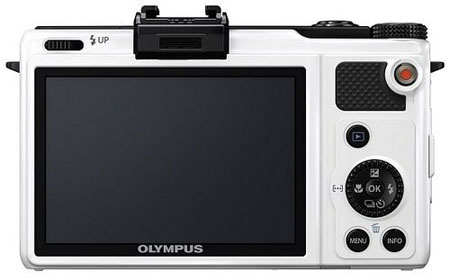
Olympus Corporation (President: Michael Woodford) is pleased to announce that, for the second year in a row, the OLYMPUS XZ-1 compact digital camera from Olympus Group has won the prestigious Red Dot Design award.

The award is given to designs in production for no more than two years, and judges those designs across nine categories, including degree of innovation, functionality, ergonomics, ecological compatibility, and durability. The “red dot” that is the mark of this award means that, whether in business or design, the product has been recognized as the best of the best.
(http://www.red-dot.de)

The OLYMPUS XZ-1 is the first compact digital camera to incorporate a ZUIKO-brand lens. Beginning with its use in Olympus’s first camera, the Semi-Olympus I of 1936, the ZUIKO lens has, for 75 years, continued to carry on the Olympus tradition of high-performance lenses.

However, not everyone who wants the high picture quality of an SLR is prepared to deal with changing lenses. Other users want a camera with high picture quality and lower size and weight than an SLR as a sub-camera for their SLR cameras, but don’t need it to be of the interchangeable lens type. For these people, Olympus has developed a compact camera that, unlike the PEN series, offers a fixed zoom lens and near-SLR picture quality.

The wide-angle 4X zoom lens (equivalent to 28 to 112mm on a 35mm camera) is very bright, with an open f-value of 1.8, while in the telescopic position, excellent brightness is achieved with an aperture of 2.5. This new flagship compact camera offers sharp imaging performance from the center to the periphery, in both wide-angle and telescopic modes.

Olympus Design
“Your Vision, Our Future” is the corporate slogan of the Olympus Group. Our design vision is “creating the future by realizing dreams”, and our design philosophy is “products that make people happy”. We believe that by consistently producing products with good design, we can send out the same message throughout the world and establish our brand identity.

Posted in Brand: Olympus, Photography Articles & Videos, Uncategorized | Tagged | 1 Comment

PENTAX 645D WINS GP JAPAN 2011 CAMERA OF THE YEAR

PENTAX 645D Medium-format Digital SLR Camera Wins “Camera of The Year” at Camera GP Japan 2011 Awards  
GOLDEN, CO.  PENTAX Imaging Company announced on behalf of PENTAX Japan that the PENTAX 645D medium-format digital SLR camera, first launched in June 2010, was selected as Camera of The Year at Camera GP Japan 2011 Awards. The winning camera features exceptional reliability and superb operability, along with remarkable, super-fine image quality assured by approximately 40 effective megapixels.
   The Camera Grand Prix Awards is held annually under the sponsorship of the Camera Journal Press Club (CJPC), a group of photography writers from the top 11 photo and camera magazines in Japan. This is one of the most prestigious camera awards in the country, representing the CJPC’s selection of the most distinguished still cameras introduced to the Japanese market during the year. In addition to Camera of The Year, the group also selected winners in three different categories: the Readers Award, with voting by magazine readers; the Editors Award, a selection by professional writers from all photographic and imaging products; and the Lens Award, a new award established this year.
  
Winners are decided by a 57member selection panel consisting of the editors and publishers of club-member magazines, photographic experts, technical writers and professional photographers, as well as CJPC members. The PENTAX 645D was selected over 172 other new products introduced in Japan from April 1, 2010 to March 31, 2011.
The panel concluded that, as the first medium-format digital SLR camera launched by PENTAX, the 645D represented a  combination of many advanced and photographer-friendly features, including an extra-large CCD image sensor, designed to deliver super-fine images and all housed within a highly dependable dust-proof, weather resistant body. It further praised PENTAX for never abandoning the development of the 645D, bringing it through a series of trials and errors over many years to perfect it as a super-high-resolution, multi-featured medium-format digital camera that is far more affordable than competitive models. The camera’s compatibility with conventional lenses also played a crucial role in the decision of this year’s Camera of The Year.
  
Founded in 1984, the Camera Grand Prix Awards this year celebrated the 28th Camera of The Year winner. PENTAX has had three winners in the past: the PENTAX Z-1 Quartz Date in 1992; the PENTAX 645N in 1998; and the PENTAX K10D in 2007. The 645D now joins them as PENTAX’s fourth winner of this prestigious award.
  
 The PENTAX 645D has already been selected as the Best D-SLR Professional in Europe 2011 by the prestigious Technical Image Press Association (TIPA) as well as an AMERICAN PHOTO Magazine’s Editor’s Choice.  These highly coveted  awards in Japan, Europe and the United States help demonstrate the 645D’s outstanding performance and technical excellence. 
Posted in Brand: Pentax, Photography Articles & Videos | Tagged | Leave a comment

Canon U.S.A. Provides Updates On Highly Anticipated EF Lens Availability For 2011


LAKE SUCCESS, N.Y., May, 2011
– Canon U.S.A., Inc., a leader in digital imaging, today announced updated availability dates for five of its EF lenses.

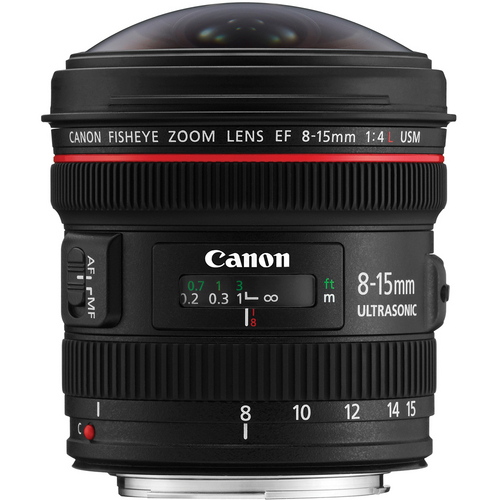
  • Canon EF 8-15mm f/4L Fisheye USM lens is scheduled to be available in late July 2011
  • Canon EF 300mm f/2.8L IS II USM lens is scheduled to be available in late August 2011
  • Canon EF 400mm f/2.8L IS II USM lens is scheduled to be available in late August 2011
  • Canon EF 500mm F4L IS II USM lens is scheduled to be available in December 2011
  • Canon EF 600mm F4L IS II USM lens is also scheduled to be available in December 2011
Canon EF 8-15mm f/4L Fisheye USM lens

With its unique focal length range, the EF 8-15mm f/4L USM is the world’s widest fisheye zoom lens. It delivers 180-degree diagonal angle of view images for all EOS SLR cameras with imaging formats ranging from full-frame to APS-C, and provides 180-degree circular fisheye images for full-frame EOS models. Professional photographers and cinematographers will revel in the unique perspectives afforded to them through this lens, particularly when coupled with the highly popular full-frame EOS 5D Mark II DSLR camera.

The Canon EF 8-15mm f/4L Fisheye USM lens is expected to be available in late July for an estimated retail price of USD$1,399.

Canon EF 300mm f/2.8L IS II USM lens

The Canon EF 300mm f/2.8L IS II USM is the sixth generation of a venerable family of Canon 300mm f/2.8 lenses that began in 1974, and have become famous for their exceptional sharpness, contrast and color fidelity. Ideal for a wide range of applications ranging from professional photojournalism and sports photography to nature and wildlife, Canon’s 300mm f/2.8 lenses have always led the industry with new technical advances in every generation. The EF 300mm f/2.8L IS II USM lens carries on this tradition with improved image quality, lighter weight, improved Image Stabilization and enhanced durability, making it a great option for handheld work in the field. The optical formula of the new lens has been upgraded with the inclusion of two fluorite lens elements for improved image quality and reduced chromatic aberration. Canon has reduced the overall weight of the lens by 8 percent to 82.9 oz., making it the lightest weight lens in the Canon EF 300mm f/2.8 series.

The Canon EF 300mm f/2.8L IS USM lens is expected to be available in late August for an estimated retail price of USD$6,599.

Canon EF 400mm f/2.8L IS II USM lens

Quintessential for many sports assignments including baseball, football, soccer and golf, Canon’s professional 400mm f/2.8 lenses provide the light-gathering capability and long telephoto reach that photographers need to freeze the action and fill the frame. The Canon EF 400mm f/2.8L IS II USM is the fifth generation in Canon’s 400mm f/2.8 series and the successor to the current EF 400mm introduced in 1999. The new lens has been engineered for the ultimate in optical performance through the use of two fluorite lens elements for improved quality and reduced chromatic aberration. Canon has reduced the overall weight of the lens by a substantial 28 percent from 189.4 oz to 135.8 oz, making it Canon’s lightest weight 400mm f/2.8 lens ever.

The Canon EF 400mm f/2.8L IS USM lens is expected to be available in late August for an estimated retail price of USD$10,499.

Canon EF 500mm f/4L IS II USM Lens for Sports and Nature Photography

The Canon EF 500mm f/4L IS II USM offers professional photographers a lighter weight option for those situations that require a long focal length with improved image quality and enhanced durability over its predecessor. Great for a wide range of applications, the EF 500mm f/4L IS II USM lens is ideal for professional photojournalism, sports photography and nature and wildlife photography. The optical formula of the new lens has been enhanced to include two fluorite lens elements for improved image quality and reduced chromatic aberration. Canon has reduced the overall weight of the lens by 18 percent from 136.5 oz to 112.5 oz.

The Canon EF 500mm f/4L IS II USM lens is expected to be available in December for an estimated retail price of USD$9,499.

Canon EF 600mm f/4L IS II USM Lens for Wildlife and Photojournalism

The Canon EF 600mm f/4L IS II USM is the successor to the current EF 600mm IS lens first introduced in 1999. This new lens has been engineered for outstanding optical performance and durability and includes two new fluorite lens elements for improved quality and reduced chromatic aberration. Helping photographers in the field, Canon has reduced the overall weight of the lens by a substantial 27 percent from 189.1 oz to 138.3 oz.

The Canon EF 600mm f/4L IS II USM lens is expected to be available in December for an estimated retail price of USD$11,999.

About Canon U.S.A., Inc.

Canon U.S.A., Inc., is a leading provider of consumer, business-to-business, and industrial digital imaging solutions. Its parent company, Canon Inc. (NYSE:CAJ), a top patent holder of technology, ranked fourth overall in the U.S. in 2010†, with global revenues of more than US $45 billion and is listed as number five in the computer industry on Fortune Magazine’s World’s Most Admired Companies 2011 list. Canon U.S.A. is committed to the highest levels of customer satisfaction and loyalty, providing 100 percent U.S.-based consumer service and support for all of the products it distributes. At Canon, we care because caring is essential to living together in harmony. Founded upon a corporate philosophy of Kyosei – “all people, regardless of race, religion or culture, harmoniously living and working together into the future” – Canon U.S.A. supports a number of social, youth, educational and other programs, including environmental and recycling initiatives. Additional information about these programs can be found at www.usa.canon.com/kyosei. To keep apprised of the latest news from Canon U.S.A., sign up for the Company’s RSS news feed by visiting www.usa.canon.com/rss.

Posted in Brand: Canon, Photography Articles & Videos | Tagged , , , , | Leave a comment

Samyang 35mm 1:1.4 AS UMC with Pentax K and Sony Alpha mount!

Delta company – sole distributor of  Samyang brand for Europe announces that two new models of Samyang 35 mm 1:1.4 AS UMC are released for sale today. The lens is now available with Pentax K and Sony Alfa mounts.

The list of currently available Samyang 35mm 1:1.4 AS UMC lens includes four mounts: Canon EF, Pentax K, Sony Alpha and one version of Nikon AE mount equipped with micro-processor. Retail price for Pentax and Sony Alfa model is on the level of Canon EF version – EUR 399 gross.

Check with your local Samyang Dealers on Availability. :)~

Posted in Brand: Others (Cosina, Carl Zeiss, Leica, Mamiya, Samyang, Vivitar, Zenitar,etc), Photography Articles & Videos, Uncategorized | Tagged , , , , , | Leave a comment

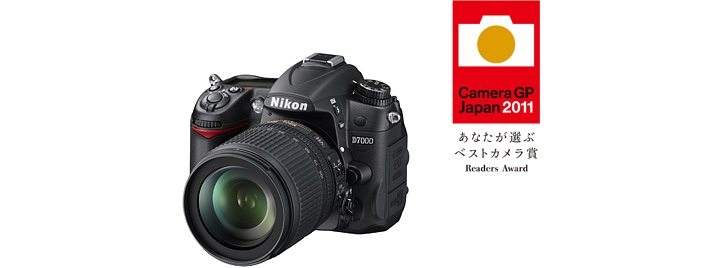
Nikon D7000 Wins the CameraGP2011 Readers Award


TOKYO-Nikon Corporation is pleased to announce that the Nikon D7000 digital-SLR camera is the recipient of the CameraGP2011 Readers Award.


This Readers Award was established in 2008 to commemorate the 25th anniversary of the Camera Grand Prix. The recipient of this year’s award was selected with voting by general users between March 28 and April 10, 2011. With the selection of the Nikon D7000 this year, Nikon digital cameras have received the Readers Award three times in the past four years, proving just how highly regarded the cameras are by a large number of users.

The D7000 was also the recipient of the TIPA Awards 2011 Best D-SLR Advanced award.

Primary reasons for Nikon D7000 selection
Comments received from users who voted this year indicate that the D7000 offers a high level of satisfaction in terms of functions, image quality, flexibility and size; the camera is equipped with the necessary functions and more, all of which surpass expectations; the camera is very easy to use, even for those new to digital-SLR; and so on.

D7000 primary features

  • A new DX-format CMOS image sensor and new image-processing engine, EXPEED 2, enable capture of high-definition images with superior image quality
  • Viewfinder frame coverage of approximately 100% in a compact, elegant body that offers both authenticity and flexibility
  • A new 2,016-pixel RGB sensor
  • A new 39-point AF system
  • D-Movie for recording and editing of full HD movies
  • Live view function that can be smoothly enabled with the dedicated live view switch
  • Double SD memory card slots that enable use of two SD memory cards (SDHC, SDXC also supported)

    www.nikon.co.jp

Posted in Brand: Nikon, Photography Articles & Videos, Uncategorized | Tagged , , | Leave a comment

SONY INTRODUCES WORLD’S SMALLEST, LIGHTEST INTERCHANGEABLE LENS CAMERA WITH APS-C SIZED SENSOR

“Easy-to-use a NEX-C3 Features 16.2 Megapixels, HD Video and Friendly New Interface ”

SAN DIEGO, June 8, 2011 – Sony’s new α NEX-C3 is the world’s smallest, lightest interchangeable lens camera with an APS-C sized sensor.

Offered in a range of stylish colors, the NEX-C3 brings the promise of DSLR-quality photography to the millions of consumers looking to take professional-looking photos without the size and bulk of traditional DSLR cameras.

The NEX-C3 features an attractive new body design that combines a satisfyingly solid metal top casing with an easy-to-use streamlined grip shape.  Reducing the size of its internal circuitry visibly shrinks the camera’s size and achieves a body weight of just 225g (approximately 8 ounces) – nearly six percent lighter than its predecessor, the NEX-3 camera. Image quality, functionality and usability of the NEX-C3 camera also surpass that of the NEX-3 model.

The resolution of the camera’s large Exmor™ APS HD CMOS sensor is boosted to 16.2 effective megapixels, capturing stills and 720p HD video with breath-taking clarity. The large, DSLR-sized sensor also lets users produce pro-quality background defocus effects, whether shooting HD video or stills.

“Building on the success of last year’s α NEX launch, the new NEX-C3 model takes the idea of ‘small camera body, SLR-quality photos’ to a whole new level,” said Kristen Elder, director of the alpha digital imaging business at Sony.  “This camera’s brand new, large CMOS sensor and user-friendly interface will allow all photographers, regardless of experience level, to produce unique, custom-styled photographs. The NEX-C3 is a perfect combination of design, performance and creativity that fits a wide range of activities and shooting styles.”

Photo Creativity
The intuitive new Photo Creativity interface on the NEX-C3 camera puts sophisticated controls within easy reach, whether users are shooting stills or HD Video.   Technical terms like ‘aperture’, ‘exposure value’ and ‘white balance’ are replaced with the friendlier and more intuitive ‘background defocus’, ‘brightness’ and ‘color’, allowing users to easily create custom-styled photographs. A traditional interface with Aperture/Shutter Priority, Manual and custom functions is always available for experienced users, along with highly customizable soft-keys for programming direct access to important controls.

With the NEX-C3 camera, users don’t need to dig into confusing menu options or guess their effect on a composition. They just need to turn the camera’s rear-mounted control wheel and instantly see the effect of their settings previewed on screen. Also, two or more different settings can be combined to create more sophisticated creative effects.

A new in-camera ‘Picture Effect’ setting lets users add extra impact to stills or HD video during shooting, without the worry of editing images afterwards. ‘Picture Effect’ options include Partial Color, Retro Photo, Pop Color, High Contrast Monochrome, Posterization, High-key and Toy Camera. There’s also a ‘Soft Skin’ effect that removes wrinkles and blemishes from portrait subjects.

Tilting for comfortable viewing at any angle, the high contrast 3-inch (measured diagonally) Xtra Fine LCD features TruBlack screen technology for high-contrast images with rich, deep blacks. This is an ideal way to compose shots and judge the effect of adjusting picture settings, even when viewing outdoors in bright sunlight.

Long-Lasting Battery
The NEX-C3 works even harder to capture amazing images and HD video between battery charges. Improved energy efficiency boosts battery life to a generous 400 still shots per charge – a more than 20 percent increase from the both the NEX-5 and NEX-3 cameras.

Multi-Shot Imaging Technologies
Sony’s Advanced multi-shot technologies further broaden the possibilities of the NEX-C3 camera. 3D Sweep Panorama™ mode captures extra-wide images that can be viewed in 3D on a 3D television with compatible 3D glasses. Auto HDR “stacks” a high-speed burst of three successive exposures to capture extreme shadow and highlight details in a single frame. Similarly, Handheld Twilight and Anti-Motion Blur modes automatically combine six exposures to capture smooth, low-noise images. This avoids hand-blur and subject-blur when shooting in available light.

New E-mount 30mm Macro Lens and Other Compatible Accessories
The versatility of the α E-mount compact camera system grows with new style-matched accessories to expand shooting possibilities even further.

Joining the range of E-mount interchangeable lenses, the SEL30M35 is currently the world’s lightest life-size macro lens (approx 4.9 ounces) for interchangeable-lens cameras. This high-quality 30mm F3.5 macro lens features a 1:1 magnification ratio and minimum working distance of just 0.95 inches (2.4 cm), making it ideal for capturing detail-packed close-ups of small subjects like flowers and insects. Despite its extremely compact size, the SEL30M35 employs one ED glass and three aspherical lens elements for excellent optical performance, with minimized aberration and very high edge-to-edge sharpness and contrast. It also offers smooth, quiet autofocus operation whether shooting stills or HD video. The macro lens is supplied with a matching lens hood.

Also available as an option, the new HVL-F20S is a style-matching flash that clips onto the  Smart Accessory Terminal of NEX-C3 and other E-mount cameras. Powered directly by the camera, the flash requires no batteries, making it ultra-compact and light weight for travelling. With a generous GN20 (50mm, at ISO 100, m) flash power rating and adjustable head, it’s ideal for creating natural fill-in and bounce flash effects with portraits and everyday shooting subjects.

The expanded range of coordinating accessories features a new body case/lens jacket and a soft carrying case.

The new camera is also compatible with Sony’s full line of SD memory cards, including the newest Class 10 versions, as well as the Memory Stick PRO-HG Duo HX series.  Available in capacities up to 32 GB, both media enable higher read speeds for more stable and optimal performance by Sony hardware features such as high-speed burst shooting or HD movie shooting.

Firmware update for NEX-5, NEX-3
A firmware upgrade (Version 4) adds the new ‘Picture Effect’ function to existing NEX-5 and NEX-3 cameras. It also adds a Peaking function to assist with more precise manual focusing. This upgrade will be available June 20thand can be downloaded from: (www.esupport.sony.com).

Pricing and Availability
The new NEX-C3 ultra-compact digital camera will be available this August in silver, black and pink with an 18-55mm kit zoom lens (model SEL1855) and will cost about USD$650.  It will also be offered in black only with a 16mm lens (model SEL16F28) for about USD$600.

The new SEL30M35 E-mount Macro lens will be available this October for about USD$250 and the HVL-F20S flash will be available this August for about USD$150.

The camera kits, macro lens and new flash will all be sold at Sony retail stores (www.sonystyle.com ) and other authorized dealers nationwide

Posted in Brand: Sony, Photography Articles & Videos, Uncategorized | Tagged , , , , | Leave a comment

Tamron Wins the first Camera GP 2011 Lens of The Year

(Tamron 60th anniversary model)

World’s smallest and lightest*1 15x zoom lens for digital SLR cameras (APS-C size)

Optical equipment manufacturer Tamron Co., Ltd. (Headquarters: Saitama City, Japan / President and CEO: Morio Ono) that is celebrating its 60th anniversary last year has won the first Camera GP 2011 Lens of The Year held by the Camera Journal Press Club (Japan). That award was won for Tamron’s 18-270mm F/3.5-6.3 Di II VC PZD*2 (Model B008), the world’s smallest and lightest 15x zoom lens.


Winning lens and award of Camera GP 2011 Lens of The Year

The following highly acclaimed aspects are the reasons for selection as Lens of the Year. The lens incorporates the new Piezo Drive (PZD) autofocus drive system. It has a more compact and light optical system, even while achieving high image quality. It is equipped with a vibration compensation (VC) image stabilization mechanism that is even more compact than before. And it is a lens symbolizing Tamron as a pioneer in all-in-one zoom lenses that is always striving for more.

  • *1.For digital SLR all-in-one zoom lenses with a 15x zoom ratio surveyed by Tamron as of May 2011.
  • *2.PZD (Piezo Drive) is a standing wave ultrasonic motor system developed by Tamron. The motor is faster and quieter than DC motors when the AF drive is operated. It also has an actuator that facilitates lens design and reduced size compared with ring type ultrasonic motors.

 Reason for selection (excerpts)

  • ・ Achieves compactness and light weight for excellent portability at 96.4 mm long and 450 g, even though it is a 15x all-in-one zoom lens.
  • ・ Equipped with Tamron’s first Piezo Drive (PZD) standing wave ultrasonic motor system with excellent quietness and quick focusing.
  • ・ Improves optical performance by employing features such as high refractive index aspherical lenses and low dispersion glass that compensate well for various kinds of aberration.
  • ・ Has a 13 group 16 element construction with two fewer lenses than previous models for compactness and lightness.
  • ・ Equipped with the new vibration compensation (VC) image stabilization mechanism that achieves up to approximately four stop compensation effect converted to shutter speed.
  • ・ Made to commemorate the 60th anniversary of Tamron’s founding.

Camera GP 2011 Lens of The Year
The Camera GP held since 1984 is an extremely prestigious award where winners are selected through an open vote by a panel made up of Camera Journal Press Club members, top editorial staff of the member publications, academic experts, camera technical writers, professional photographers, and TIPA as a special member of CJPC. Lens of The Year added this year to Camera GP2011 was given to the best lens out of those released in Japan from April 1, 2010 to March 31, 2011 as selected by a 57-member panel.

Posted in Brand: Tamron, Photography Articles & Videos, Uncategorized | Tagged , , | Leave a comment

SONY INTRODUCES α35 DSLR CAMERA

WITH LEADING VIDEO AND STILL PERFORMANCE POWERED BY TRANSLUCENT MIRROR TECHNOLOGY.


“Light, Compact Camera Delivers 16.2 Megapixels and New In-camera ‘Picture Effect’ Creative Capabilities”

SAN DIEGO, June 8, 2011 — Light, compact and easy to use, Sony’s new α35 (SLT-A35) interchangeable lens camera brings pro-style shooting speeds and diverse creative options to photographers of all abilities.

Building on the acclaimed α33 and α55 models, the α35 camera with Sony’s Translucent Mirror Technology allows responsive, accurate continuous autofocus – whether shooting high-speed still photos or recording full HD movies.


“Our Translucent Mirror Technology continues to push the limits of modern DSLR technology,” said Kristen Elder, director of the alpha digital imaging business at Sony Electronics. “The new α35 camera combines this unique innovation with a newly developed APS HD CMOS sensor and a diverse, user-friendly interface, making it a compelling choice for experienced photographers and first-time SLR buyers alike.”

She added, “Amateur photographers will appreciate the on-screen Help Guide, which gives a clear explanation of selected functions and how they’re used. More advanced photographers will welcome features such as a top panel-mounted button that is fully customizable, allowing instant recall of any one of 14 frequently-used functions according to their preference.”


Premium, High-Speed Performance
Making its debut on the α35 camera, Tele-zoom High Speed Shooting magnifies a central portion of the image area providing an effective 1.4x magnification (appx) while shooting at up to 7 fps. Providing continuous tracking autofocus of still or moving objects, this feature is ideal for capturing fast-moving sports, children’s expressions at just the right moment or distant subjects with a high-speed burst of frames. There’s also a rapid up to5.5 fps drive mode that offers full-resolution continuous shooting with tracking AF.

With a resolution of 16.2 effective megapixels, the Exmor™ APS HD CMOS sensor delivers stunningly detailed, low-noise still and HD video images. Complementing the sensor’s extremely high resolution and sensitivity, the camera’s powerful BIONZ® processor optimizes image data to assure flawless images with rich, natural color reproduction. A maximum sensitivity of ISO 12800 and extension to ISO 25600 makes it possible to capture beautifully natural still images and HD video in low light.

Advanced Quick AF Live View continuously displays a real-time output from the main image sensor during still or Full HD video shooting. Light is partially directed from the translucent mirror to an AF sensor to permit non-stop precision TTL phase-detection autofocus – a benefit not possible with traditional DSLR cameras.

Shooting stills or AVCHD™ video, users can enjoy a superbly detailed view on the high-quality 3-inch Xtra Fine LCD™ display. Sony’s TruBlack™ technology assures high-contrast images with rich, deep blacks – even when shooting outdoors.

The high-resolution Tru-Finder™ display offers a precision alternative to framing shots on the camera’s LCD. Offering an extremely detailed, high contrast image with full 100% field coverage, it’s ideal for live preview of picture effects and exposure adjustments. Accurate composition of landscapes, architecture and other scenes is enhanced by 3 selectable grid line patterns.

Creative New “Picture Effects”
The α35 model offers a new in-camera ‘Picture Effect’ setting that lets users add extra impact to stills or Full HD video during shooting, without the worry of editing images afterwards. Effects can be previewed on the camera screen, allowing photographers to see the result of a chosen effect instantly rather than post-shooting. The inspiring palette of artistic treatments includes Retro Photo, High-key, Toy Camera and Posterization.

It’s also easy to produce dramatic Partial Color effects, with a single color highlighted against the rest of the image in monochrome. This popular effect is normally achieved through a series of painstaking steps using photo editing software. With the new α35 camera it’s both automatic and instant.

Improved Battery Life and Compatible α Accessories
Reductions in power consumption boost the camera’s battery life to a generous 440 still shots (approx. when using the rear LCD panel) between battery charges – a 30 percent increase over its predecessor.

The α35 model is compatible with the full range of 32 A-mount interchangeable lenses that includes six Carl Zeiss® lenses, as well as the full range of alpha accessories including flashes, carrying cases, LCD monitors and more.

 The new camera is compatible with Sony’s full line of SD memory cards, including the newest Class 10 versions, as well as the Memory Stick PRO-HG™ Duo HX series.  Available in capacities up to 32 GB, both media enable higher read speeds for more stable and optimal performance by Sony hardware features such as high-speed burst shooting or HD movie shooting.

 Firmware Upgrade for A33 / A55 Models
 Available beginning June 20th, a firmware update for existing α33 and α55 cameras adds several creative and operational enhancements.

Support for the ‘Picture Effect’ function featured on the new α35 model is now offered. High-Speed Synch is supported during wireless operation with a compatible external flash (α55 only). Ergonomics are further improved with revised menus and a new mode that lets users switch shooting parameters overlaid on-screen for clear, uncluttered composition. The a33 and a55camera’s Digital Level Gauge can also be displayed when shooting via the optional CLM-V55 external LCD monitor. Frequently used features can now be custom-assigned to the D-RANGE button for rapid, menu-free access.

The upgrade can be downloaded from: (www.esupport.sony.com).

 Pricing and Availability
The new α35 interchangeable lens camera will be available this August with an 18-55mm kit zoom lens (model SEL1855) for about USD$700.  It will also be offered as a body-only (without kit lens) for about USD$600. 

Both the camera kit package (model SLT-A35K) and body-only (model SLT-A35) will be sold at Sony retail stores (www.sonystyle.com)  and other authorized dealers nationwide.

Posted in Brand: Sony, Photography Articles & Videos | Tagged , , | Leave a comment

SIGMA Photo Pro 5.0 software – is now available for download

June 10, 2011
The Sigma Corporation is pleased to announce that SIGMA Photo Pro 5.0 (Ver.5.0.0.1) for Windows and SIGMA Photo Pro 5.0 (Ver.5.0.0.2) for Macintosh is available for download.

Users of DP series and SD series cameras can now download the latest Sigma Photo Pro software.

Benefits of the Sigma Photo Pro software update:

SIGMA Photo Pro 5.0 (Ver.5.0.0.1) for Windows

  • The redesigned interface offers greater functionality and convenience to give full expression to your creative ideas.
  • Compatibility with RAW file of SD1

SIGMA Photo Pro 5.0 (Ver.5.0.0.2) for Macintosh

  • The redesigned interface offers greater functionality and convenience to give full expression to your creative ideas.
  • Compatibility with RAW file of SD1

SIGMA Photo Pro 5.0 (Ver.5.0.0.1) for Windows and SIGMA Photo Pro 5.0 (Ver.5.0.0.2) for Macintosh is available for download at the following site: SD1 Special Site
(http://www.sigma-sd.com/SD1/jp/photopro.html)

 
Posted in Brand: Sigma, Photography Articles & Videos, Uncategorized | Tagged , | Leave a comment

Getty Images Completes Acquisition of Photolibrary

Renowned Imagery and Collections will Enable the Company to Meet Growing Demand for Versatile Creative Content

NEW YORK, June 1 2011 – Getty Images, a leading creator and distributor of visual content and other media, today announced that it has successfully completed the acquisition of Photolibrary, a leading provider of creative stills imagery. The acquisition was first announced on April 27 2011 and will bring Photolibrary’s renowned collections, including Peter Arnold and Oxford Scientific, to even more customers around the world.

“The demand for compelling creative content continues to increase around the world and it represents a vital part of the imagery industry. This acquisition positions us to meet and exceed our customers’ demand for this unique content, across both the Asia Pacific region and globally” said Jonathan Klein, co-founder and CEO of Getty Images.


Picture: Jonathan Klein

With the combined resources of Getty Images and Photolibrary, Getty Images will build upon their complementary geographic presence whilst making Photolibrary’s content more widely available for global online distribution.

The acquisition was driven by customers’ growing appetite for a greater choice of both local and global content. The content will be supported by Getty Images’ industry-leading Web site and worldwide imagery distribution platform, which features search in local languages and purchase in local currencies and leads the industry in delivery speed and service.

About Getty Images
Getty Images is one of the world’s leading creators and distributors of still imagery, footage and multimedia products, as well as a recognized provider of other forms of premium digital content, including music.  Getty Images serves business customers in more than 100 countries and is the first place creative and media professionals turn to discover purchase and manage images and other digital content.  Its award-winning photographers and imagery help customers produce inspiring work which appears every day in the world’s most influential newspapers, magazines, advertising campaigns, films, television programs, books and Web sites.  Visit Getty Images at www.gettyimages.com to learn more about how the company is advancing the unique role of digital media in communications and business, and enabling creative ideas to come to life.

Posted in Photography Articles & Videos | Tagged , , | Leave a comment

Sigma Corporation of America to ship SD1 camera in early June

May 20, 2011 – Sigma Corporation of America to ship SD1 camera in early June

46-megapixel DSLR creates new market for medium-format photographers

Ronkonkoma, NY, May 20, 2011 – Sigma Corporation of America, a leading researcher, developer, manufacturer and service provider of some of the world’s most impressive lines of lenses, cameras and flashes, is pleased to announce that its flagship DSLR, the Sigma SD1, will be available for purchase for the MSRP of $9,700 in early June.

This 46-megapixel DSLR is delivered in a splash-proof, easy-to-handle build that is similar to that of a classic 35mm camera. Professional and high-end enthusiast photographers will utilize the SD1’s exclusive Foveon 23.5×15.7mm APS-C X3 direct image sensor to capture exceptionally rich and detailed images that have a film-like quality. Users will also benefit from Sigma’s wide selection of interchangeable lenses that are compatible with the SD1.

“The SD1 will carve out a new category in the market placeby providing high-end photographers with an alternative to very expensive medium-format cameras and digital backs, while offering unrivalled image quality,” said Mark Amir-Hamzeh, president of Sigma Corporation of America.  “By embracing the SD1, serious photographers will also be able to take advantage of Sigma’s extensive line-up of affordable lenses, which are compatible with this new camera. The selections of lenses for medium-format cameras on the market are somewhat limited, so this will be a huge advantage for SD1 users. This is undoubtedly a very special camera, and we’re thrilled to share it with the photo community.”

In addition to the 23.5×15.7mm APS-C X3 direct image sensor, the Sigma SD1 features dual “Three-layer Responsive Ultimate Engine (TRUE) II” image processing engines, which improves processing speed, provides high resolution power and produces high-definition images with richly graduated tones. It also allows simultaneous RAW and JPEG recording, which is a first for Sigma cameras. Additionally, the photographer has the option to select full-size, half-size or quarter-size RAW files making it a more versatile camera for a wide range of photographers. The Foveon sensor uses three silicon-embedded layers of photo detectors, stacked vertically to take advantage of silicon’s ability to absorb red, green and blue light at different respective depths. This technology efficiently reproduces color more accurately and offers sharper resolution, pixel for pixel, than any conventional image sensor. Since color moiré is not generated, the use of a low-pass filter is not required.

The optical format of the Foveon sensor has been upgraded from that which was used in previous SD cameras, and has increased from 1.7x focal length to the 1.5x focal length multiplier. The SD1 also benefits from improved image processing and noise reduction algorithms, with an ISO sensitivity range from 100 to 6400. This is two full stops more sensitivity than the SD15, which has a maximum 1600 ISO. An intuitive user interface and an impressive lightweight, yet solid magnesium alloy body and O-ring sealing connections that make the camera durable and splash proof are also key feature upgrades of the flagship SD1. 

The SD1 adopts the TYPE 1 Compact Flash Card, and is UDMA-compatible enabling fast processing of large amounts of data. The autofocus system features an 11-point shifted twin cross type sensor, which improves AF accuracy. The SD1 features a 3.0 inch TFT color monitor. This 460,000 pixel resolution LCD monitor benefits from a wide viewing angle, making it easy to check focusing and composition. The SD1 can be used with more than 40 Sigma SA mount lenses such as ultra-wide, ultra-telephoto, macro and fisheye.

Sigma’s image processing software, Photo Pro 5.0, comes bundled with the camera and its simple operation allows quick and easy capture of the desired imaged. Additional functions such as Loupe, Slideshow, Print, Convert to JPEG file and Batch White Balance settings are also incorporated into this software.

The Sigma SD1 will be available for the MSRP of $9,700 through select authorized Sigma dealers. For information about Sigma Corporation of America, visit http://www.sigmaphoto.com. For more information about the Sigma SD1 DSLR, visit http://www.sigmaphoto.com/shop/sd1-dslr-sigma or view the camera’s special page at www.sigma-sd.com/SD1.

SIGMA SD1 SPECS AND INFO
46 megapixel 23.5×15.7mm APS-C X3 Full-color image sensor
The 46 effective megapixel (4,800×3,200×3 layers) and 44 recording megapixel (4,704×3,136×3 layers) 23.5×15.7mm APS-C X3 direct image sensor featured in the Sigma SD1 captures all primary RGB colors at each and every pixel location, ensuring the capture of full and complete color. Using three silicon-embedded layers of photo detectors, stacked vertically to take advantage of silicon’s ability to absorb red, green and blue light at different respective depths, it efficiently reproduces color more accurately, and offers sharper resolution, pixel for pixel, than any conventional image sensor. Since color moiré is not generated, the use of a low-pass filter is not required, meaning light and color, generated by the 46 megapixel APS-C X3 direct image sensor is captured with a three-dimensional feel.

Dual TRUE II image processing engine
The SD1 incorporates a dual “TRUE (Three-layer Responsive Ultimate Engine) II” image processing engine which improves the processing speed and overall quality of the final image. The unique image-processing algorithm provides high resolution power and reproduces high definition images with richly graduated tones. In addition, the SD1 is Sigma’s first camera to allow simultanous RAW and JPEG recording.
Advanced DDR III buffer
To handle large volumes of color data at high speed, the SD1 uses DDR III buffer memory technology, which delivers class-leading performance. The SD1 features a continuous shooting speed of 5 frames per second and can capture up to 7 RAW images per sequence in continuous shooting mode.

CF card
The SD1 adopts the TYPE I CF Card. This camera is compatible with the UDMA enabling fast processing of large amounts of data.
* It is not possible to use Microdrives and TYPE II CF cards.

Intuitive user interface
The improved user interface provides faster and more convenient operation. Aperture and shutter speed can be set by their own dials. The exposure compensation button and exposure mode button are on top of the body for quick access. A Quick Set (QS) menu lets you easily change commonly used functions. To display the QS menu, simply press the QS button. QS menu 1 is for ISO setting, flash mode, metering mode and AF mode; QS menu 2 offers white balance, image quality, image size and color mode.

Magnesium body
The Sigma SD1 adopts a lightweight yet solid magnesium alloy body designed to withstand rough use and shocks in harsh conditions.

Splash proof design
Buttons and connections benefit from O-ring sealing connections to prevent dust and water getting inside the camera body.

Bright, wide-coverage viewfinder with integral pentaprism
The SD1 features a pentaprism viewfinder with 98% (vertical and horizontal)coverage, 0.95x magnification and an 18mm eye point. Diopter adjustment is provided over a range of -3 to +1.5 dpt.

Four metering modes
The SD1 features 77-segment Evaluative Metering, Center Weighted Average Metering, Center Area Metering and Spot Metering.Exposure can be manually adjusted to suit your needs. When difficult lighting conditions make appropriate exposure unclear, auto bracketing lets you take a sequence of shots of the same subject at three or five different exposure levels. Bracketing can be set in 1/3EV increments up to ±3EV(3levels) or ±1.7EV(5 levels).

11 point twin cross sensor
The autofocus system features an 11 point twin cross sensor. The shifted twin cross type sensor improves AF accuracy. Selecting the AF point can be done manually or automatically.

77-segment AE sensor
The SD1 features a new 77-segment AE sensor using advanced AE algorithms to improve exposure accuracy. Exact control coordinated with the 11 AF points achieves accurate exposure even in difficult lightning conditions.

Dust Protector
Most digital SLR cameras are vulnerable to dust entering the body. If dust and dirt adhere to the image sensor, it may appear in the photos. The lens mount of the SD1 is equipped with a dust protector and the area around it is sealed to prevent dust from entering the body. Even in the unlikely event of dust adhering to the image sensor, the dust protector can be removed easily for sensor cleaning.

Focal Plane shutter
The durable focal plane shutter mechanism has a life cycle of over 100,000 exposures and dramatically reduces generation of dust. The photographer can enjoy taking pictures with confidence that the image sensor is clean and protected from dust or dirt originating inside or outside the camera.

Two-motor system
Using a two-motor system with dedicated motors for mirror-drive and shutter charge reduces the vibration of mirror movement, thereby preventing camera shake. A mirror lock-up mechanism prevents further vibration when the shutter is released. Preventing camera shake is especially important for macro photography and when using ultra-telephoto lenses.

Noiseless image processing
ISO sensitivity can be selected from 100 to 6400. The SD1 captures light effectively and ensures noiseless image processing. The image sensor provides high definition with rich, graduated tones.

Large, highly visible 3.0” TFT color LCD Monitor
The SD1 camera features a 3.0 inch TFT color monitor. This 460,000 pixel resolution LCD monitor benefits from a wide viewing angle, making it easy to check focusing and composition.

Built-in flash with 17mm angle of coverage
The Sigma SD1 camera’s built-in flash has a guide number of 11 to cover a 17mm lens angle (equivalent to 25.5mm with a 35mm camera). The built-in flash can be synchronized to a shutter speed of up to 1/180 sec. The S-TTL automatic exposure system enables control of advanced flash photography.

SIGMA Photo Pro5.0 (Supplied)
The supplied image processing software, SIGMA Photo Pro 5, converts RAW data quickly and easily and describes full data of 46 megapixel resolution. A renewed interface design provides functional and convenient operation. Sigma PhotoPro allows easy operation, simply by moving a slider from left to right while looking at the particular image you took, you can get a photographic expression just as you like. In addition, other functions such as Loupe, Slideshow, Print, Covert to JPEG file and Batch White Balance settings are incorporated into this software.

Dedicated BP-21 lithium-ion battery
The dedicated BP-21 lithium-ion battery is supplied as standard with the SD1. It takes about 150 minutes to fully charge with the supplied BC-21 battery charger. The optional SAC-4 AC adapter lets the Sigma SD1 run on AC power from a wall socket.

Optional lenses
The SD1 can be used with over 40 Sigma lenses such as ultra-wide, ultra-telephoto, macro and fisheyes which adopt the latest technology such as the FLD (“F” Low Dispersion) glass elements, which have the performance equal to fluorite glass, SLD glass, Aspherical lenses, Sigma’s own unique Optical Stabilizer function, Hyper Sonic Motor and Sigma’s Super Multi Layer Coating. They meet the various and demanding requirements of all types of photographers.

[SIGMA SD1 : Major Specifications]
Format-  Interchangeable lens SLR camera
Storage Media – Compact Flash (Type I, UDMA compatible)
Image Sensor Size- 23.5×15.7mm
Lens Mount-  SIGMA SA bayonet mount
Compatible Lenses- SIGMA SA mount interchangeable lenses
Angle of View-  Equivalent to approx. 1.5 times the focal length of the lens (for 35mm cameras)
Image Sensor-  X3 direct image sensor (CMOS)
Pixels-  Total Pixels 48MP, Effective Pixels 46MP (4,800×3,200×3 layers)
Aspect Ratio- 3 : 2
Still Image Format-  Exif 2.3, DCF 2.0
Recording Mode-  Lossless compression RAW data(12-bit, High, Medium, Low), JPEG(High, Medium, Low)
File Size  
RAW High Approx. 45 MB (4,704×3,136×3) Medium Approx. 24 MB (3,264×2,176×3) Low Approx. 12 MB (2,336×1,568×3)
JPEG High Fine Approx. 10 MB (4,704×3,136) Normal Approx. 5.6 MB (4,704×3,136) Basic Approx. 4.2 MB (4,704×3,136)
Medium Fine Approx. 5 MB (3,264×2,176)  Normal Approx. 2.7 MB (3,264×2,176) Basic Approx. 2 MB (3,264×2,176)
Low Fine Approx. 2.5 MB (2,336×1,568) Normal Approx. 1.4 MB (2,336×1,568) Basic Approx. 1 MB (2,336×1,568)
Continuous shooting speed High:5 frame/sec., Medium:6 frame/sec., Low:6 frame/sec.
Continuous buffer High:Max. 7 frames, Medium:Max. 14 frames, Low:Max. 14 frames
Interface USB(USB2.0), Video Out (NTSC/PAL)
White Balance-  8 types (Auto, Daylight, Shade, Overcast, Incandescent, Fluorescent, Flash and Custom)
Color Mode- 7 types (Standard, Vivid, Neutral, Portrait, Landscape, B&W, Sepia)
Viewfinder Type- Pentaprism SLR viewfinder
Viewfinder Frame-  Coverage 98% vertical, 98% horizontal
Viewfinder Magnification-  0.95x (50mmF1.4 – ∞)
Eye point-  18mm
Diopter Adjustment Range-  -3.0 dpt – +1.5 dpt
Auto Focus Type- TTL phase difference detection system
AF Point- 11 points twin cross sensor
AF Operating Range- EV -1 to +18 (ISO100)
Focus Mode- Single AF, Continuous AF (with AF motion prediction function), Manual
AF Point Selection- Automatic Selection, Manual Selection
Metering Systems- 77 segment Evaluative Metering, Spot Metering, Center Area Metering, Center-Weighted Average Metering
Metering Range- EV 1 to 20 (50mm F1.4 : ISO100)
Exposure Control System- [P] Program AE (Program Shift is possible),[S] Shutter Speed Priority AE,[A] Aperture Priority AE, [M] Manual
ISO Sensitivity- ISO100,200,400,800,1600,3200,6400
Exposure Compensation-  ±3 EV (in 1/3 stop increments)
Auto Bracketing-  Three or Five frames (in 1/3 steps, Appropriate Exposure-Under Exposure-Over Exposure)
Shutter Type- Electronically Controlled Focal Plane Shutter
Shutter Speed- 1/8000 – 30 sec.,Bulb (up to 30 sec. With Extended Mode: 2 min.)
Flash Connectivity- Hot shoe (contact X synchronization at 1/180 sec. or less, with dedicated flash linking contact)
Built-in Flash Manual Pop-up Built-in flash, GN11 (17mm lens angle covered)
LCD Monitor Type- TFT color LCD monitor, Monitor Size : 3.0″, LCD Pixels : Approx. 460,000
Reviewing Images Single frame display, Multi display [9 frames],Zoom, Slide Show
LCD Monitor Language- English / Japanese / German / French / Spanish /Italian / Chinese (Simplified) / Korean / Russian
Power- Li-ion Battery Pack BP-21, Batterry Chager BC-21,AC Adapter SAC-4 (optional)
Dimensions- 145.5 mm/5.7″ (W) × 113.5 mm/4.4″(H) × 80.0 mm/3.1
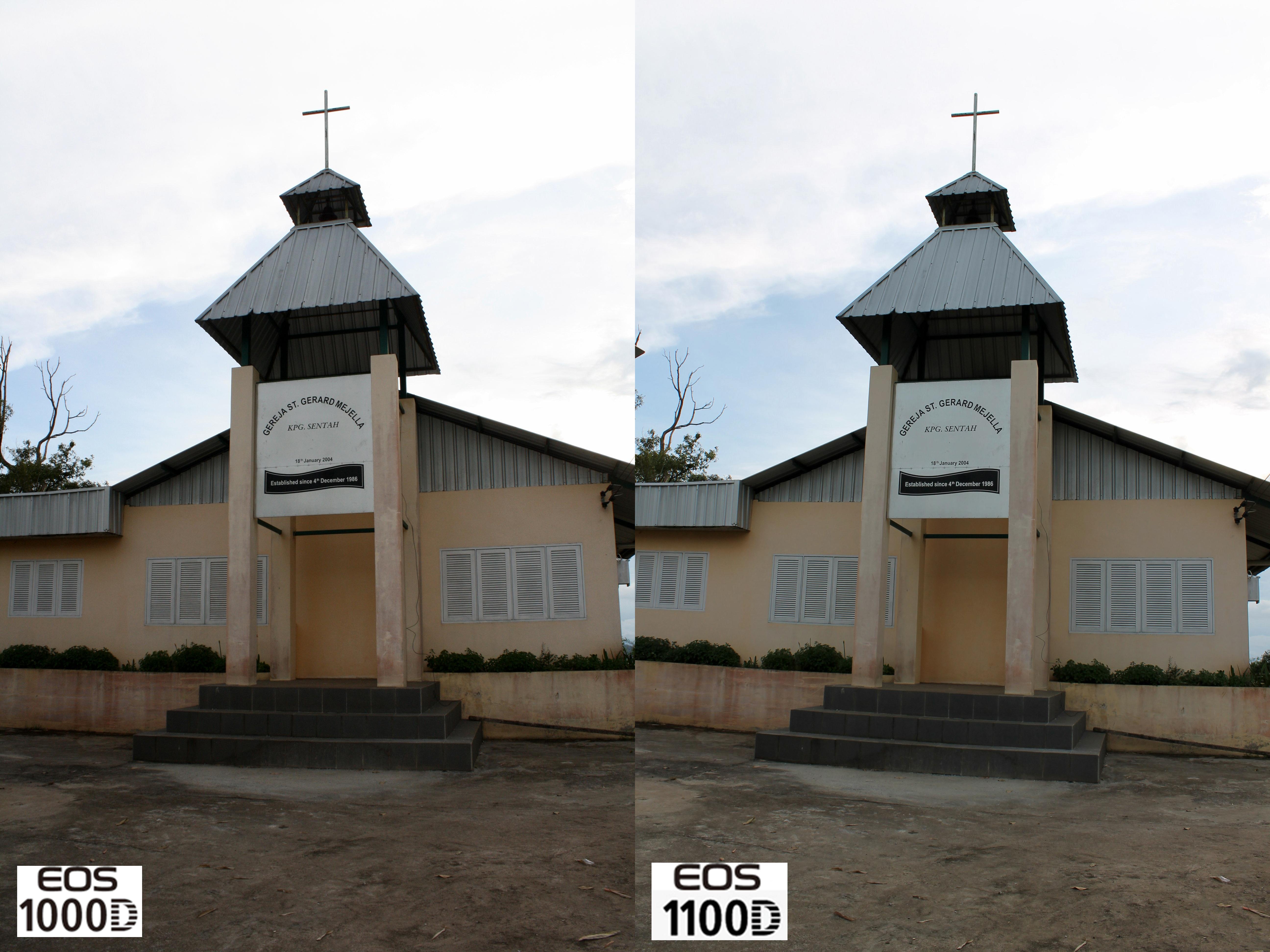
Weight- 700g/24.7oz. (without battery and card)

Accessories
• Li-ion Battery BP-21, • Battery Charger BC-21, • USB Cable, • Video Cable,• Neck Strap • Eye Cap, • Body Cap, • Eyepiece Cap,• SIGMA Photo Pro Disc,   • SD1 Instruction Manual
* The appearance and specifications are subject to change without notice.

About Sigma Corporation
For 50 years, Sigma Corporation’s expertise and innovation has driven the company’s core philosophy of “knowledge, plus experience, plus imagination,”with anemphasis on producing high-quality, high-performance photographic technology at moderate prices. This family-owned organization is the largest, independent SLR lens manufacturer in the world, producing more than 50 lenses that are compatible with most manufacturers, including Sigma, Canon, Sony, Nikon, Olympus and Pentax. Sigma Corporation also produces digital SLR cameras and high-definition digital compact cameras. The company is headquartered in Japan, with offices strategically located throughout Europe, Asia and North America. For information, please visit http://www.sigmaphoto.com.

Posted in Brand: Sigma, Photography Articles & Videos | Tagged , | Leave a comment

Canon EOS 1000D vs EOS 1100D

The Canon EOS 1000D was launched in 10th June 2008 (also known as EOS Kiss F in Japan and the EOS Rebel XS in the rest of the world) – this entry level DSLR was designed and meant to cover the market meant for beginners with their “first DSLR” and those switching from compacts to DSLRs. Manufactured & marketed as the cheapest Canon DSLR money can buy, the EOS 1000D captured the market by surprise with its asking price and built quality. So after 34 months, we get an update.

April 2011, Canon surprised the world again. The Canon EOS 1100D (EOS Kiss X50 in Japan and the EOS Rebel T3 in the rest of the world) was launched with even more surprise! The higher spec-ed EOS 1100D now comes in Maroon Red, Gun Metal Silver, Outdoor Brown & Classic Black.  I was lucky to get the Gun Metal Silver for a review from the local guys.

So what has changed? I shall not state all the technical specs here which might bored you out. Instead, I shall highlight its important changes here. For the full specs, google for yourself.
EOS1000D: Digic III/ 10.1mp/ 7 AF Points/ LCD 2.5″/ ISO100-1600/ LP-E5 Battery/ EFS18-55mm F3.5-5.6 IS.     
EOS1100D: Digic IV/ 12.1mp/ 9 AF Points/ LCD 2.7″/ ISO100-6400/ LP-E10 Battery/ EFS18-55mm F3.5-5.6 IS II.

As a professional photographer based in Singapore, I find it strange to leave my 1D MkIV & 5D MkII at home while lugging both the EOS1000D & EOS1100D for a test trip to Kuching, Sarawak in East Malaysia. Since I’ve never tried this set up before, I went ahead and brought both cameras with me along with a Manfrotto Tripod Rig with 2 ballheads balancing on a tripod. 🙂

So how does the set up looks like? Here it is. (Ignore my tired face, we just got off the flight)

Test 1: Mountain Path at Kuching, Sarawak, East Malaysia with lights from setting sun & partial shade.
Both cameras set to 1/100, F6.3, ISO 200, FR 18mm, Evaluative Metering, AWB, Spot Focus on Centre AF, Manual Exposure.

I picked this scene because this is the perfect place to test to sensor’s light sensitivity & metering. As the setting sun cast the shadows on the mountain path, it gets a little tricky for the camera to read its surrounding. So from the test photos above, it  is obvious that the EOS1100D has a “cleverer” metering on the shaded areas giving a more balanced exposure and the EOS1000D has a slightly under-exposed photo at the same setting. So my take is, EOS1000D: 0/ EOS1100D:1

Test 2: View from the Mountain at Kuching, Sarawak, East Malaysia with lights from setting sun & slight haze.
Both cameras set to 1/100, F6.3, ISO 400, FR 55mm, Evaluative Metering, AWB, Spot Focus on Centre AF, Manual Exposure.


This is one tricky scene for the camera. Light is getting dimmer by the minute when I was setting up for this scene. Using the previous setting, I decided to boost up the ISO to 400. The EOS 1000D exposed the vegetations correctly but over exposed the sky and the mountain in the far end. As for the EOS 1100D, it under exposed the vegetations nearer to the camera but still acceptable on overall especially the mountain at the far end can be seen and the sky remains blue. Looking at both photos, the EOS1100D had an advantage over the predecessor and a safer bet too. So my take is, EOS1000D: 0/ EOS1100D:1.

Test 3: View from the Mountain at Kuching, Sarawak, East Malaysia with lights from setting sun & slight haze.
Both cameras set to 1/320, F9, ISO 200, FR 18mm, Evaluative Metering, AWB, Spot Focus on Centre AF, Manual Exposure.


This is another excellent scene to test the camera. As the sky get darker, both the cameras are put through a comparative test again. The 2 photos above looks very much the same except for the vegetations on the lower left of the photo. The EOS 1100D had metered the vegetations correctly and the scene looks brighter. But it does not really matter as both camera had managed to captured what I had in mind. Looking at both photos, both cams are ok for this scene test. So my take is, EOS1000D: 1/ EOS1100D:1.

Test 4: A church courtyard at the peak of a mountain at Kuching, Sarawak, East Malaysia with lights from setting sun.
Both cameras set to 1/1000, F9, ISO 800, FR 18mm, Evaluative Metering, AWB, Spot Focus on Centre AF, Manual Exposure.


I picked this scene because I want to see if both the cameras can “read” the scene correctly and how it reacts to a partial shaded and partial well lighted surrounding. From the photos above, both cams “reacted” in the same manner, but if you notice, the area near the top left (under the zinc roof) area, the EOS1100D has a better exposure as compared to the one shot with the EOS1000D while the rest of the photo from both camera looks largely the same. I can live with this slight difference, can you?  My take will be , EOS1000D: 1/ EOS1100D:1.

Test 5: A church at the peak of a mountain at Kuching, Sarawak, East Malaysia with back lights from setting sun.
Both cameras set to 1/200, F10, ISO 400, FR 18mm, Evaluative Metering, AWB, Spot Focus on Centre AF, Manual Exposure.


This is an interesting scene bacause the sun is setting from the back (right side) of the church building and the front of the church (scene as above) is getting darker by the minute. The result was surprising in this case because if you look at the the 2 smaller roof right below the Cross at the top, the under-side of these 2 small roofs, the shot by the EOS 1000D was able to accentuate the darker area in this scene but the the shot from the EOS1100D turned out slightly darker. On the other hand, look at the foreground, the EOS1000D was not able to illuminate the scene as good as the EOS 1100D. So putting to commercial sense, what’s more important to me are the photo must look balanced and properly exposed while I can do away with neglegible details. So my take is EOS1000D: 0/ EOS1100D:1.

Test 6: A flower the size of a 20 cents coin at a house garden at Kuching, Sarawak, East Malaysia with direct lights from a 10am sun.
Both cameras set to 1/160, F9, ISO 400, FR 55mm, Evaluative Metering, AWB, Spot Focus on Centre AF, Manual Exposure + Flash.


I went “Wow” when I saw both the photos, they both look sharp, nice color and so on. But when I blew up to 100%, guess what I saw?


It is now apparent that the photo shot with the EOS1000D with the old kit lens has a limit when I comes to sharpness and magnification ration. Though spec-ed as equivalent with “mild” improvement, the EOS1100D with the new mark II kit lens out performs with its sharpness and details. Megapixel could be at play here as I only managed to magnify the EOS1000D photo to a limit so it looks slightly smaller above. Look at the centre of the flower. The new EOS1100D + new kit lens combo is the clear winner here. EOS1000D: 0/ EOS1100D:1.

Test 7: Long exposure at night at a river park facing the Astana Palace at Kuching, Sarawak, East Malaysia.
Both cameras set to 30 seconds, F18, ISO 100, FR 18mm, Evaluative Metering, AWB, Spot Focus on Centre AF, Manual Exposure.

OK, both the photo looks the same right? Read on.

I decided to zoom in. Both cameras set to 30 seconds, F18, ISO 100, FR 55mm, Evaluative Metering, AWB, Spot Focus on Centre AF, Manual Exposure.

Still look the same at 55mm? OK, let’s blow things up a little.


The cut section photo above shows a distinctive difference at 100% when both photos are magnified. The EOS1000D combo is not as sharp as the EOS1100D combo. Noise is apparent for the EOS1000D shot, which I conveniently blamed the Digic III processor as opposed to the EOS 1100D’s Digic IV. New is better, it is very true here. 0:1.

Test 8: Multi-Shot Burst at High speed at night by a river park facing the Astana Palace at Kuching, Sarawak, East Malaysia.
Both cameras set to 1/200 seconds, F3.5, ISO 100, FR 18mm, Evaluative Metering, AWB, Spot Focus on Centre AF, Manual Exposure+flash, set to burst mode. (set to AI Servo)

Well you must be thinking why only 5 shots from the EOS1000D  and 10 shots from the EOS1100D. Well, both cameras were actuated at the same time but the EOS1000D only managed to snap 5 shots while the EOS1100D shot 10, both camera started and ended at the same time. (Thanks Shela for lending your finger.) And out of the 5 shots from the EOS1000D, only 3 are sharp when viewed at 100% and the EOS1100D gave me 10 sharp photos. Oh Wow!
So, EOS1000D: 0/ EOS1100D:1.

The test shots above had the EOS1100D beating the EOS1000D 8:2. Let’s see how both cameras fared in other areas.

Based on the score sheet that I brought along to Kuching to test the cameras with my set of test criterias, the EOS 1000D scored 25/50 while the EOS 1100D scored an impressive 47/50.

My personal view is, the EOS1100D is closer to the slightly “higher classed” XXXD series now. It feels good on my hand (which is more used to 1D-Series cameras) and it does not feels out of place. The finishing for the EOS1100D is of superb quality, the handgrip feels larger and purposeful and well sorted. So the EOS also scores on the ergonomic stats for this. With a little visual orientation of the dials and buttons, I can find all my familar icons and so EOS1100D is not a pain to use even for professional photographers who may wish to have a lighter casual camera when not on commercial jobs. The specs are built to lure and asking price is priced to sell.

If you considering to move from prosumer compact to a DSLR camera, the EOS 1100D is an excellent choice – to start.

Visit http://www.canon-asia.com/eos1100d/

Below are some “Behind the Scene” photos – Courtesy of Ling Tan (Shutter Journey)


Posted in Brand: Canon, Group Test & Reviews, Photography Articles & Videos | Tagged , , , | 30 Comments

Nikon Announce Firmware Update for D7000


Nikon had announced a  new Firmware update for D7000 DSLR.
The new Firmware v1.02 fix the glitches to noise reduction & RAW processing with Capture NX 2 or ViewNX 2.

Update your D7000 Firmware here.

Posted in Brand: Nikon, Photography Articles & Videos | Tagged , , | 1 Comment

Canon Announce Firmware Update for EOS 7D

Canon announce new Firmware for the Semi-Pro Range EOS 7D 2 days ago.

The new firmware Version 1.2.5 fix glitches for both photo & video when using certain CF Cards and also it solves the Image Stablization (IS) error for certain lenses.  This update also improves writing speed for UDMA 7 Compact Flash cards.

This firmware is available for download here.

Posted in Brand: Canon, Photography Articles & Videos | Tagged , , , | Leave a comment

Hercules (Lithium-Ion) Power

Every Camera Owner out there recognize the need to have spare batteries for their systems. Be it an amateur or a professional, batteries determines your “camera life” when you are out on a holiday or on an assignment. So in short (and bluntly), if you run out on a flat battery, that’s the end. So having some spare batteries in your bag for your camera is like a compulsory insurance in every possible situation.

As a professional photographer, I am what the locals considered as “Kiasu” – (Afraid on losing out / Cannot Lose/ Scare lose – Wiki) type of photographer. I carry spares batteries – lots of them, on both commercial work & leisure shoots. Yes, I have at least 4 batteries per camera when I am on assignments and at least 16 AA Batteries per Flash and I usually carries 2 cameras & 2 flashes. So expectedly, there are more gears like a 3rd Camera, more lenses & more batteries on standby in my car boot just in case. From personal experience, I have come to terms that All  photography accidents happened when you least expect them to happened. 🙂 Face it. That’s a fact.

Recently, a supplier introduced me to a new brand of replacement batteries for my cameras. Before I started on a battery buying spree for my 1D Mk IV, 5D MkII, 40D & 500D, I decided to just buy a replacement BP-511A to test out the charge holding power, how many shots it will last me before it is spent and how stable it is on my EOS 40D.

*Pardon my photos on this articles as I shot the below with just an iPhone IV. :)~

Hercules’s replacement batteries comes in a “hard back” plastic packing as above. While the original batteries from proprietory brands usually comes in a nice little box, the hard back packaging looks more purposeful.

On a side by side comparison, the Hercules unit has a lighter shade of gray as compared to the Canon’s original unit. But batteries are rated by their charge and not by their cosmetic right? 🙂

OK, the Hercules design is made exactly 1:1 so that it fits into the battery compartment nicely just like the Canon’s original unit. 🙂

The Hercules unit has a charge rating of 1800mAH while the Canon’s original unit has a lower charge rating of 1390mAH both based 7.4V and both are Lithium-Ion batteries. I was told by fellow professional photographers that charge rating stated on 3rd party batteries cannot be trusted, so I had a Hercules Fully Charged and went on a on few shoots clocking the shutter counts and done the same for the Canon’s unit.

The result?

Hecules’s BP-511A clocked a total of 734 shots while the Canon unit only managed 700 shots before the camera refuse to respond to my CPR. Lolz. Though the Hercules outperformed the Canon’s unit by a mere 34 shots, I believed as I continue to use the Hercules, it will eventually hit a peak of about 780 shots as Lithium-Ion is known to increase it’s performance by per charge until it reaches it peak performance. The Canon unit that I used for the test was a 1 year old unit, so the 700 shots clocked is already the peak output in theory.

With better performance and only priced to 1/3 of the original unit’s asking price, the Hercules is great for photographers who demand excellent performance from their batteries without having to break their bank.  Especially for a battery freak like me, I wouldn’t mind buying a few more to stock up and charge up before the next commercial job or a leisure shoot. And I should be buying at least 2 Hercules for each camera I currently own. 

Now, that is my review through personal usage and testing.

Try it for yourself and decide. After all, it cost only 1/3 of the original price.

🙂

For those interested, you may wish to enquire further at http://www.sgcamerastore.com/.

That’s where I bought my Hercules Batteries.

Posted in Group Test & Reviews, Photography Articles & Videos | Tagged , , | 2 Comments

20 Most “Over-Shot” Photography Places in Singapore

===================================
Rogue_FlashBender_Banner_SJS===================================
20 Most “Over-Shot” Photography Places in Singapore
– And we are still not sick of it.

23rd April 2011, Singapore – Well, face it. Singapore is just too small. If you have been working hard on your shutter, it’s just a matter of time (or weeks) before you ran out of places to shoot. Be it inspirational places or tourist locations, you will still find yourself thinking – where to shoot next. 🙂

I have always told my peers & photography students, it does not matter how many times you return to a same location if the said place offers you many subjects that allows you to go home with a new set of inspirational photos every time, but then again, Singapore is really limited. Very limited. Though I tried to return to some places often to shoot, I do find myself dragging my feet, but if I managed to get some really nice photos, that offers me another (positive) experience altogether. So it is really a luck thingy.

After surveying on Facebook and Google, I have compiled this list of places which almost all the Photographers in Singapore had visited to shoot – some more than once. As for friends who are reading this from outside Singapore – OK, now you can print this article out if you are visiting Singapore for a Photo – Trip. I am serious. 🙂

20 Most “Over-Shot” Photography Places in Singapore.
( all photos are taken from my albums)

1) Marina Bay Sands/ Esplanade/ Helix Bridge.

2) China Town.

3) Little India.

4) KTM Railway.

5) Singapore Zoological Garden.

6) Jurong Bird Park.

7) Botanic Garden.

8) HortPark.

9) Vivo City/ Sentosa Boardwalk/ Universal Studios.

10) Orchard Road.

11) Merlion/ Fullerton/ Raffles Place.

12) Chinese Garden.

13) Japanese Garden.

14) Henderson Waves/ Southern Ridges.

15) Changi Boardwalk.

16) Sungei Buloh Nature Reserve

17) Upper & Lower Peirce Reservoir

18) Singapore Flyer

19) Marina Barrage

20) Bottle Tree Park

The above 20 places are the most visited places for shoots by photographers. There are other favourite places like  Punggol Beach , Bedok Reservoir, Macritchie Reservoir, Katong Dsitrict, Tiong Bahru Estate, Margaret Drive Estate, etc, but none of these beats the visitorship of the list above. 🙂

So, don’t be surprised if you caught me at any of the above 20 places – I could be finding new subjects at an “old place”. For friends visiting Singapore, do visit the top 20 places above.

🙂

=============================
If you would like to talk to us, please join us at SIREN (Singapore InfraRed Enthusiasts Network) https://www.facebook.com/groups/SgInfraRedEntNet/ which is proudly managed by Ourshutterjourney LLP.
===================================
About Ourshutterjourney.com
Follow Us or Contact Us below:
Facebook_logoEmailinternettwitter_icon_2011GooglepluslinkedinLikes Logo wix_logo
SJS Jpg
DSG jpg 1200x1200SIREN Logo1SJS PinkPatP Logo_Black Transparent hi-resMedia OwnersadlibMinox===================================sgbanner===================================

Posted in Photography Articles & Videos, Photography Tours, Uncategorized | Tagged , , , , | 6 Comments

ZKIN – Stylish.Casual.Sophisticated.


Camera Bags can be very subjective. Practicality always translate into bulky and tasteless designs while other manufacturers concentrate on selling their products heavily based on design while useability are compromised.


So where do photographers go from here? To make things worse, there are so many brands in the market right now and photographers are indeed spoilt for choice. Anytime.


Introducing ZKIN. Stylish design coupled with good quality material and designed with the user in mind. Though not really meant for the professional range of DSLRs due to its size and capacity, this is a great bag on those days where you wish to just bring out a smaller DSLR, or a RangeFinder along with some of its accessories – this bag is just perfect.


ZKIN bags are  the beautiful result of fashion integration. It’s made stylish, yet casual, meantime it can be sophisticated too. ZKIN camera bags actually fits itself nicely into any occasion or shoot without the unneccessary attention. Be it a day out at the beach, gathering with friends, doing journalistic work or simply a leisure walkabout, ZKIN has just the right bag for you.


Available Exclusively now at http://www.reddotphoto.com.sg/

Credits:
Client: RedDotPhoto.
Brand: ZKIN Camera Carriers.
Models: Celes Fernandez & Connie Yeo.
Director of Photography: Yu Ling.
Photographer: Allan Lee.
Make Up & Waredrobe: Krist Goh
Photography Assistants: Lin Weibin, Wee Yang & Bryan Ong.
Behind-the-Scene Photographer: Lua Ruiping.
Project Videographer: Wee Yang. 
Photography Studio: Shutter Journey Studios Inc.

Posted in Featured Photography Merchants, Photography Articles & Videos | Tagged , , | 2 Comments