Canon Lens Code aka Date Code

===================================
Advertisement
Joby-Flash-Clamp
===================================
Canon Lens Code aka Date Code

27th July 2011, Singapore – Have you ever wondered what are those letters & numbers at the rear of your Canon lenses stands for?
That row of marking painted in grey?


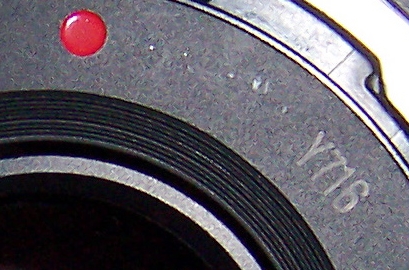
Picture: Canon EF Lens Rear.

Look to the rear of your lens where the lens mount is, you will find a row of Alpha+numeric code there. Why is it important to know what are these numbers? Buying a new lens in the open market can be deceiving. Let me share an example. Some shops may quote you say for a NEW Canon EF 50mm F1.8 MarkII for SGD $130.00, while some may sell you the very same lens, also NEW at a mere SGD $75.00. Why so? Both are new and still in their factory packaging! Well, lens code is at play here. You may wish to translate that to “Date of Production”. The SGD $75.00 lens may be older than you. 🙂

This code, also help those who buy used lens or vintage lenses from the used market as Canon marks their lenses way back from the pre-FD days (1960) till the Film-to-Digital Revolution where EF (now) rules (90s to Present).
So what exactly are those Codes? What they stands for?


Picture: FD Lens Rear with just the Year without the Name of Plant.

I will use EF lenses as the guide here as it is the current line of lenses from Canon. Canon Lenses are made from all over the world. Or should I say assembled. From the lens boxes, usually I see “Made In Japan”, but upon close scrutiny of the lenses, I discover markings like “Malaysia”, “Taiwan”, “Thailand”, “China”, etc. I hope these are just limited to accessories and not the physical lens and its elements though.

According to reliable sources, Canon has 3 main plants for manufacturing lenses. They are Canon Fukushima Plant (est. 1970), Canon Utsunomiya Plant (est. 1977) & Canon Oita Plant (est. 2007).

So,
if your lens code starts with a “F”, it means this lens was manufactured in Canon’s Fukushima Plant.
if your lens code starts with a “U”, it means this lens was manufactured in Canon’s Utsunomiya Plant.
if your lens code starts with a “O”, it means this lens was manufactured in Canon’s Oita Plant.

So now you know the first letter of your lens. So what about the 2nd letter?

Well, it stands for the year the lens was made. Canon used “A” for the first Canon lens in 1960 and it lasted Canon till 1985 when the lens year coding reached “Z”. So from 1986, Canon restarted from the letter “A” again and the last 3 lenses I bought between July 2010 to July 2011 was coded as “UY”. I was told that “UZ” has started too, so very soon, we may see the cycle restarted again. 🙂

Here’s a quick overview of the alphabets and the year they stands for.
1960 – A
1961 – B
1962 -C
1963 – D
1964 – E
1965 – F
1966 – G
1967 – H
1968 – I
1969 – J
1970 – K
1971 – L
1972 – M
1973 – N
1974 – O
1975 – P
1976 – Q
1977 – R
1978 – S
1979 – T
1980 – U
1981 – V
1982 – W
1983 – X
1984 – Y
1985 – Z
1986 – A
1987 – B
1988 – C
1989 – D
1990 – E
1991 – F
1992 – G
1993 – H
1994 – I
1995 – J
1996 – K
1997 – L
1998 – M
1999 – N
2000 – O
2001 – P
2002 – Q
2003 – R
2004 – S
2005 – T
2006 – U
2007 – V
2008 – W
2009 – X
2010 – Y
2011 – Z
2012 – ?

OK, I am unable to confirm that Canon will continue and restart the code system from “A” again for lenses manufactured from year 2012 onwards, but it seems pretty likely they will continue as it had worked well for the last 51 years.

So by now, you know where your Canon lenses were made and in which year they were put together. So what about the numbers?

A quick search on the internet reveals that the next 2 numbers are the “Month” of the manufacturing year. For example;
a lens code with “UT0736” means this lens was manufactured from Canon’s Utsunomiya Plant in year 2005, in July.
Easy isn’t it?

Now as for the last 2 numbers, it is also rumoured & perceived as the batch number in 1,000. So for example,
“UT0736” means this lens is in the 36th batch of lenses between lens number 36,000 to 36,999.

Voila! Now you know what Lens Code stands for.
Hope this article help you in your next Canon Lens purchase from your local retailer or from the used market.

Have fun!

Ed.

https://i0.wp.com/www.bigblogexchange.org/img/promote/bbe_banner_pink.gif

About Ourshutterjourney.com

===================================
Follow Us.

Facebook_logoEmailinternettwitter_icon_2011GooglepluslinkedinLikes Logo wix_logo
SJS Jpg
DSG jpg 1200x1200SIREN Logo1SJS PinkPatP Logo_Black Transparent hi-resMedia OwnersadlibMinox

===================================
Advertisement

sgbanner
===================================

Posted in Brand: Canon, Uncategorized | Tagged , , , , | 2 Comments

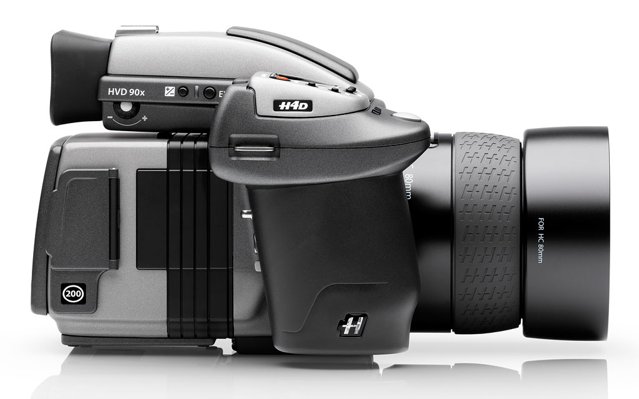
Ventizz Acquires Hasselbald

Originally Announced 30th June 2011, Announced (Singapore) 5th July 2o11.

Hasselblad is now part of the Switzerland- and Germany-based private equity firm’s Ventizz Capital Fund IV .
The premium medium format camera manufacturer, is planning a rapid expansion of cutting edge capture products and is set to target new imaging markets following the company’s acquisition by Ventizz Capital Fund IV, LP, a private equity investor exclusively advised by Swiss- and Germany based Ventizz Capital Partners AG.

Ventizz has said to want to provide new capital for a growth strategy. Ventizz also mentioned they have “no major structural or key management changes” at Hasselblad. They plan to develop Hasselblad cameras to appeal to a wider circle of ambitious photographers.

Announcing the move Dr. Larry Hansen, Hasselblad Chairman & CEO said: “After eight years of ownership by the Hong Kong-based Shriro group, Hasselblad is now moving back to its European roots. History shows that for over half a century we have been the leading manufacturer and partner for photographers working in the medium format environment and seeking highest quality and ongoing innovation. In 2002 we pioneered the revolutionary Hasselblad H-Camera System – the most comprehensive digital camera system of its kind available today, with its unique advancements such as True Focus and instant lens correction in our Phocus software.”

He added: “Ventizz has a very impressive funding pedigree in the technology marketplace and our joint focus now will be on both maintaining our market-leading position with ongoing, advanced high-end camera products and also on exploiting the potential we see in brand new markets.”

Hasselblad has recently launched the H4D-200MS, a top end multi-shot camera delivering unprecedented 200 megapixels.

Locally in Singapore, Shriro (Singapore) Pte Ltd – distributor for Hasselblad ,  Profoto  ,  Linhof  ,  Gossen , Gitzo  , HPRC  , Lastolite  , Tamrac  , Zeiss ikon will remain contracted to distribute Hasseblads for minimum another 5 years.

Posted in Brand: Others (Cosina, Carl Zeiss, Leica, Mamiya, Samyang, Vivitar, Zenitar,etc), Photography Articles & Videos, Uncategorized | Tagged | Leave a comment

Looking for Interesting Place to Shoot?

Singapore is just small.

Face it.

Whether you are a beginner or serious enthusiasts, you will find yourself one day staring at your camera and ponder where to shoot next? Like thousand others, we sometimes returning to a location or site more than once to yield new subjects & perspectives. Now, what about place that can offer you different perspectives & new subjects every time you re-visit?

I know saying the word “Marina Bay” may sounds lame here. Since Marina Bay Sands was constructed, new interests were injected to this part of Singapore with the addition of many photo locations like the MBS Towers, the Helix, the Park by the Esplanade, Art Science Museum, Marina Barrage & even the Singapore Flyer has gotten a new leash of life with the hoards of activities happening everyday at this part of Singapore!

I did mentioned & listed before in one of my earlier article that MBS is one of the photo locations that was (and still is) “shot” to death by thousands of photographers on a daily basis. However, on a personal basis, I’ve returned to this part of Singapore over 10 times in a span of 10 months, each time returning with new photos of different subjects. I have peers who swear by the sunrise in this area as they too, visit Marina Bay more than 4 times a week (that’s 16 times in a month!) just to capture the perfect sunrise, while others compile albums after albums of the Helix, the MBS Towers at different time of the day or simply work their shutters on the largest observation wheel in Asia. (SingaporeFlyer).

Personally, I have discovered & rediscovered Marina Bay as a prime area for photography, there are so much to do apart from just shooting scenic views, people or iconic structures, there are shopping belts, fine F&B outlets, arts events or performances, entertainment happenings & many more things going on at the same time!

You may wish to plan your visit by visiting Marina Bay’s website to check out the happenings before making your way down. Visit http://www.marina-bay.sg/Funfinder/ to get the latest updates, listing of event/ performances and pack your gear appropriately. At least you know you will be well equipped with the right gear and you know what you will shooting for the day. 🙂

See you at Marina Bay!

Posted in Photography Articles & Videos, Uncategorized | Tagged , , | Leave a comment

New Old Stuff

Recently, I have been quietly picking up stuff from used gear stores & eBay.

Looking at the old stuff that I had collected the last few months left me a conclusion, cameras & lenses has a better built quality in the past than now. You don’t have to agree with me, but let me share what led to this conclusion.

It all started when my Dad gave me his Yashica MG-1. I am not into rangefinder but I took the opportunity to learn how to use it and eventually learnt to appreciate it. The camera looks as if it’s from the showroom as my Dad takes extremely good care of it. Along with this camera, he also handed down 2 other old cams to me – an Olympus M-UII & a Nikon EF200. After trying out all the cameras, I found these cams of yesteryears works well even today. Everything is very much mechanical and the material used was solid. Either it comes in full metal or engineering plastic and the plastics seems to last better than those newer DSLRs made from recycled plastic. (Read your Manual).  🙂

These 3 cams got me venturing & understanding deeper into “film culture”, which I soon followed up with a BlackBird Fly – a plastic TLR (Twin Lens Reflex) camera, a Canon EOS 5, EOS 88, a Minolta Dynax 5, a LubitelII, a Lomo FishEyeII & the latest addition being a Nikon F90X (also known as F90s in US) & a digital Nikon D1X from 2001.

I have spent considerable time with each and every cam above and I found 2 things very interesting, film mechanism are fun to meddle with and old cams has very solid construction. These cams (apart from the BlackBird Fly & Lomo Fisheye which are the remake editions of the actual models) have very simple design and basic function (much lesser functions as compared to the newer digital camera) but hey, they works like the way they should and when handled, these cams feels like they will live forever! They produced excellent film photos!

If by now, you are still not sure about cameras of yesteryears, visit your local used gear dealers and pick up one that’s launched before 2000. A Film SLR is a good way to start. A classic cam in your dry cab also starts conversations.

Lastly, I came to know that the Yashica MG-1 was launched & bought in the year that I was born, on this day in 1975.
My Dad bought it to shoot his first born, that’s me.

*Read my review on Yashica MG-1 in the archive.

——————————————————————————————
On a totally unrelated note, I found this photo on the internet & I would like to share it here.
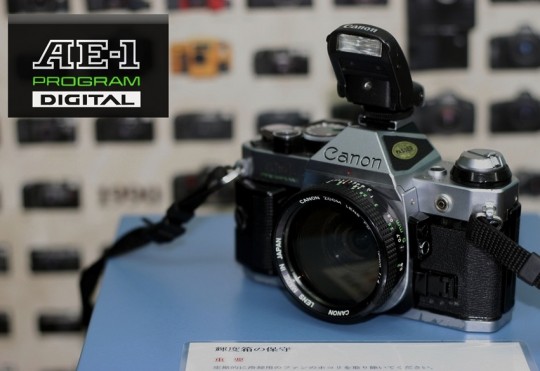
It’s a 1980s Canon SLR,  the famous AE-1 Program – but with a twist.
Check it out.

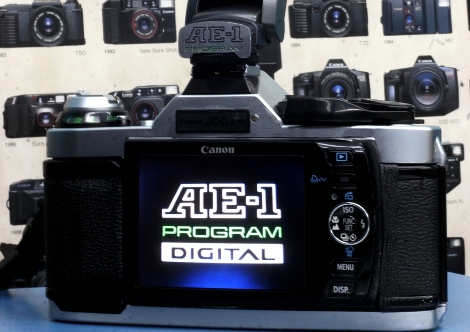
AE-1 Program with Digital Back & LCD Screen? No F**king Way!
But check out the next pic!

Posted in Photography Articles & Videos | Tagged , , , , , , | Leave a comment

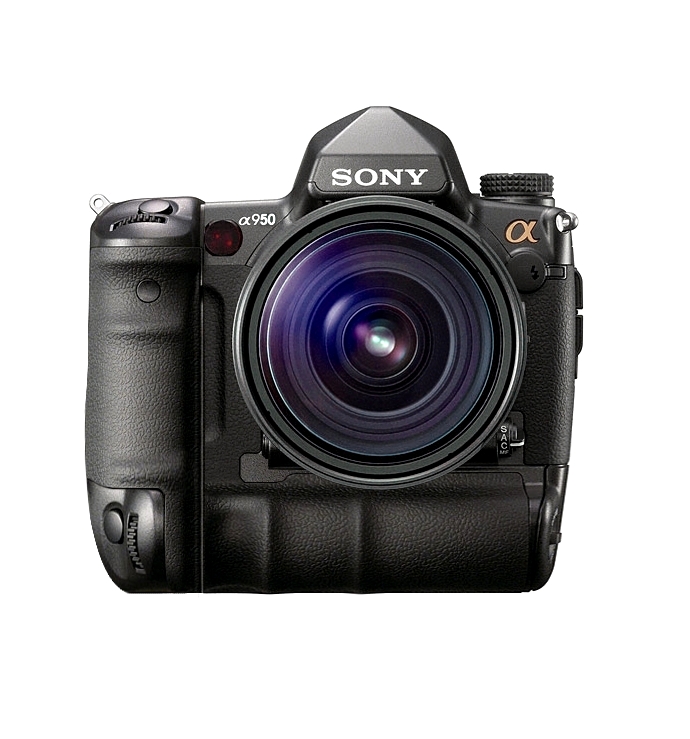
Sony A950/ A99? Following A33, A55 & A77?

As many had predicted, the much anticipated A700 replacement A77 was announced by Sony and it is not too hard to guess what may be next.

A recent update saw the launch “Numeric Replacements” like the A33 to fit into the segment for the intended user group of A3XX series users, the A55 for the A5XX series users and the newly announced A77 for the semi-pro users mostly for the A7XX series group. Though we may not see an A11 or A22 anytime soon (A1XX & A2XX series), what likely to come next is probably an update to the professional line with an A950/A99 with a 35mm sensor.


I will be back with more updates once I gotten more information.

Stay Tuned Alpha Fans.

A Quick Glance at Sony Alpha Product Line & their segmentations:

Beginner Series:
A200, A230, A290.

Beginner Series with more Functions:
A300, A330, A350, A380, A390.

Advanced Beginner Series:
A100 – 1st Sony Alpha after taking over Konica-Minolta. (Advanced Beginner)
SLT33, SLT55.
A450 (Not available in Asia)
A500, A550, A560 (Not Available in Asia), A580.

Semi Professional Series:
A700, A77.

Professional Series:
A900, A850.

Posted in Brand: Sony, Photography Articles & Videos | Tagged , , | Leave a comment

Sony announced the replacement A700, the A77, will be launched this year

Sony has announced that the long awaited replacement of A700, the A77-SLT will arrive in mid-2011, along with a new kit lens, new flash, new battery grip, and more interesting, a 500mm f / 4 G-series lens. Although not officially announced, this is what Sony has to say about the A77 in their media for tradeshow C + photos.


Adopted a semi-transparent mirror “Mirror translucent Technology” and the newly developed “Exmor” CMOS sensor is APS HD will be installed in series A mid-mounted engine concept model (skeleton model) on display.The intermediate unit, will be available later this year and 2011, He worked fast and accurate auto focus at all times, full HD video and still there is always a focus (AVCHD) provides picture.The standard zoom lens suitable for intermediate units, the flash will show along with the vertical grip. Press clips followed by a link showing off a prototype A77.

Also shown is the 7 E-mount lenses are currently being developed:
* Carl Zeiss Lens – Hiroshi Sumi (scheduled for release in 2011, focal length: 24mm)
* Telephoto Zoom lens (available in 2011, focal length :55-200mm)
* Macro lens (scheduled for release in 2011, focal length: 30mm)
* Lens – Portrait (scheduled for release in 2011, focal length: 50mm)
* G – High-performance standard zoom lens (available 2012)
* Zoom wide (scheduled for release in 2012)
* Medium Telephoto lenses (available 2012)

Posted in Brand: Sony, Photography Articles & Videos | Tagged , , | Leave a comment

Olympus Announced 3 New PEN series cameras and 2 New Zuiko lenses (Part 4)

They are the long awaited (if not anticipated) OLYMPUS E-P3, OLYMPUS E-PL3 and OLYMPUS E-PM1 & 2 Zuikos, the Olympus MZ12mm and Olympus MZ45mm lenses.

This is the final Part of a series of 4. I am covering or rather duplicating what was sent to me from Olympus’s Press Releases as I am in not in the position to comment or review the Lenses until I tested it.

I am going to share about the 2 new Zuikos in this episode.

 A long-awaited addition to the M.ZUIKO DIGITAL series of compact lenses — whose outstanding imaging performance is achieved by combining the latest optical technologies with the superior craftsmanship honed over the long history of the legendary ZUIKO lenses — this lens is a single focal length lens with a wide angle of 12mm (equivalent to 24mm of 35mm cameras) and a large aperture of f2.0. In addition to capturing the world with the unique and powerful perspective of the wide-angle lens, this lens also boasts excellent imaging performance, delivering crystal-clear images with high contrast and sharpness throughout the image area. Ideal for both indoor and outdoor shooting, this lens is also provided with the new MSC (Movie & Still Compatible) mechanism that enables fast, quiet autofocusing with both movies and still images. An elegant metallic outer finish gives this lens a classic feel that transcends time when combined with the OLYMPUS PEN E-P3 camera, which will be released simultaneously with the lens. The launch of the M.ZUIKO DIGITAL ED 12mm f2.0 is scheduled for 22nd July, 2011.

 Main Features
1. Co-existence of compact size with high performance and high image quality, thanks to superior craftsmanship supported by the latest technologies

2. Sophisticated textured metallic finish for a stylish, classic look in a highly compact design

3. New Snapshot Focus mechanism that lets you shift the focusing point a specific distance by sliding the focus ring toward the camera body

Main Features
Olympus-proper optical technology that contributed to the establishment of the tradition of ZUIKO lenses

The M.ZUIKO DIGITAL ED 12mm f2.0 is composed of 11 lens elements in 8 groups. These elements include a DSA (Dual Super Aspherical) element that ensures very high accuracy, a Super HR (High Refractive index) element with high spherical aberration correction capability, and an ED (Extra-low Dispersion) element with an excellent chromatic aberration correction effect. The balanced placement of these elements makes it possible for this lens to offer outstanding image quality in a remarkably compact design. Weighing a mere 130 grams, with a maximum diameter of 56 mm and an overall length of just 43 mm, this lens nevertheless provides excellent clarity, contrast and sharpness throughout the image area.

To ensure clear imaging performance even under unfavourable conditions such as when shooting against the light, the lens surfaces are coated with Olympus’s special ZERO (Zuiko Extra-low Reflection Optical) coating, which features high transmittance and the ability to completely eliminate previously hard-to-prevent artifacts such as ghosts and flares. The ZERO coating is an application of the thin film control technology we developed for microscopes.

Development and production of such a lens is not possible without extensive expertise in the design phase, measurement techniques that can evaluate the surface accuracies correctly, advanced ultrahigh-precision aspherical formation technology, sophisticated polishing techniques and ultrahigh-precision assembly technology. Only a manufacturer withOlympus’s expertise and experience could have created such a masterpiece of lens craftsmanship, fusing the essential elements from a wide range of advanced optical technologies into a powerful new lens that will set the standard for years to come.

Large, bright f2.0 aperture that’s really effective under low light + Built-in image stabilization mechanism of the PEN series camera
With previous wide-angle lenses, taking a picture in dimly lit conditions was virtually impossible without a tripod and flash. Thanks to its large aperture of f2.0 and wide angle of 24mm (35mm equivalent), the new M.ZUIKO DIGITAL ED 12mm f2.0 has expanded the range of low-light shooting in a big way. Combine that enhanced light-grabbing capability with the image stabilization mechanism built into PEN series cameras, and you’ve got a lens that serves up sharp, clear images in the dark without requiring a tripod or a flash. Besides typical low-light environments such as in the dusk or indoors, your camera is now able to shoot brilliant wide-angle pictures in locations where a tripod cannot be used such as busy tourist sites or crowded streets, as well as in locations where flash use is prohibited, such as zoos, museums, and aquariums.

MSC (Movie and Still Compatible) mechanism for fast, quiet AF (autofocusing)
The fruit of advanced optical design technology, the MSC (Movie and Still Compatible) mechanism developed to enable fast, quiet autofocusing with a lightweight lens with a small number of lens elements. By driving the focusing lens directly using a metallic shaft and feed screw finished with precision in the sub-micrometric order, rather than using a gear, which is the cause of operating noise, the MSC ensures ultra-quite focusing.

The inner focusing system that incorporates the MSC mechanism adjusts focusing by displacing only one small, lightweight lens element. This enables smooth autofocusing with high speed and low noise. The smooth autofocusing promises comfortable, stress-free shooting of movies as well as still images.

Sophisticated textured metallic finish for a stylish, classic look in a highly compact design
This lens is a precision instrument and it looks like it. Though weighing just 130 grams, it exudes solidity and reliability, while its textured metallic finish expresses superior quality and performance.

Designed to be appreciated and used for years to come, the lens represents the unification of “light”, “technology” and “mineral”. When combined with the OLYMPUS PEN E-P3 camera, which will be released simultaneously with the lens, the result is an exquisite tool, a work of art that transcends the limits of time.

New Snapshot Focus mechanism that lets you shift the focusing point a specific distance by sliding the focus ring towards the camera
The new Snapshot Focus mechanism in the M.ZUIKO DIGITAL ED 12mm f2.0 is designed to allow the user to take snapshots that effectively capitalize of the characteristics of the wide-angle lens. With this mechanism, sliding the focus ring towards you moves the focusing point a specific distance, while rotating the focus ring moves the focal distance within the scale range indicated on the lens cylinder. When, for example, the camera’s mode dial is set to the A or M mode, the aperture to f8.0 and the focal distance to 3m, pan-focus shooting (in which both subject and background are focused) is possible, enabling fun, trouble-free snapshot shooting.

Optional Accessories LH-48 Lens HoodThe lens hood cuts unnecessary light from entering the lens during shooting against light. The LH-48 is made of metal and adopts a rectangular design and metallic finish to match the high-grade texture of the lens. LH-48 Lens Hood
LC-48 Metallic Lens CapTo enhance the unity with the lens and its high-grade texture, a metallic fitting-type lens cap is available. The LC-48 has an anodized surface with the “OLYMPUS PEN” logo etched using diamond cutting, while the planar area on the surface features a mirror finish. LC-48 Metallic Lens Cap
PRF-D46PRO Protect FilterThis thin, ultra-light protect filter has a filter diameter of 46 mm and is treated with multi-coating.


Picture: The New 12mm Zuiko.

Main Specifications

M.ZUIKO DIGITAL ED 12mm f2.0 Mount type Micro Four Thirds System
Focal length 12mm
35mm equivalence 24mm equivalent
Lens construction 8-group, 11 elements (DSA element x 1, aspherical element x 1, Super HR element x 1, ED element x 1, etc.)
Angle of view 84°
AF system High Speed Imager AF (MSC)
Closest focusing distance 0.2 m
Maximum image magnification 0.08X
35mm equivalent 0.16X equivalent
Maximum field size 162 × 216 mm
Number of blades 7 blades (Circular diaphragm)
Maximum aperture f2.0
Minimum aperture f22
Filter size Φ46 mm
Dimensions (Max. diameter x Overall length) Φ56 × 43 mm
Weight 130 grams
Provided accessories Lens cap (LC-46), Lens rear cap (LR-2),Instruction manual, Olympus International Warranty Card

The M.ZUIKO DIGITAL 45mm f1.8 is a medium-telephoto single focal length lens with a focal length of 45mm (equivalent to 90mm of 35mm cameras) and a large aperture of f1.8 that has been specifically designed to make it easy for anyone to take advantage of the background defocusing technique of SLR photography. The combination of excellent lens performance in a light weight of mere 116g and prominent background defocusing is best for the portrait photographs of the family. Also incorporated is the MSC (Movie & Still Compatible) mechanism for fast, quiet autofocusing in both movie and still image shooting. A sophisticated metallic-style finish with high-grade texture and decoration ring gives this lens a clean, classic profile that exudes quality and performance.

 Main Features
1. Large f1.8 aperture and optical design for soft defocusing

2. Sophisticated metallic-style finish with high-grade texture and decoration ring for a classy, unified appearance

3. MSC (Movie & Still Compatible) mechanism for fast, quiet autofocusing drive

Main Features
Large f1.8 aperture and optical design for soft defocusing proper to SLR cameras The M.ZUIKO DIGITAL 45mm f1.8 is a medium-telephoto, single focal length lens with a focal length of 45mm (equivalent to 90mm of 35mm cameras), developed to allow anyone to take advantage of the background defocusing. The brightness of the f1.8 aperture with a shallow depth of field makes it possible for anyone to shoot portrait pictures emphasizing the subject with soft, beautiful defocusing. The lightweight of mere 116g makes it possible to carry everywhere, anytime for occasions such as family events.

To implement perfectly round defocusing, it is necessary to make the vignetting as small as possible, as well as to use a circular diaphragm. Vignetting is a phenomenon in which the defocusing in the image periphery area does not form a perfectly round shape but instead is elliptical like a rugby ball. This deformation occurs because the light incident to the peripheral area obliquely with respect to the optical axis is limited by the diameters of the lens elements before and after the diaphragm.

With this lens, 8 groups of 9 lens elements, including two E-HR (Extra-High Refractive index) elements, are optimally laid out to ensure maximum image quality with high contrast and sharpness from the centre to the peripheral areas, thereby minimising vignetting. The optical design also helps eliminate ugly double-line defocusing caused by colour aberrations.

Sophisticated metallic-style finish with high-grade texture and decoration ring for a classy, unified appearance Simple, yet sophisticated, the textured metallic-style finish gives this lens a clean, classic look that exudes quality and performance. Designed to complement any PEN series camera, this lens also features a decoration ring that can be used to conceal surface irregularities on the hood mount at the front of the lens and create a sense of unity and coherence.

MSC (Movie & Still Compatible) mechanism for fast, quiet autofocusing drive
The fruit of advanced optical design technology, the MSC (Movie and Still Compatible) mechanism developed to enable fast, quiet autofocusing with a lightweight lens with a small number of lens elements. By driving the focusing lens directly using a metallic shaft and feed screw finished with precision in the sub-micrometric order, rather than using a gear, which is the cause of operating noise, the MSC ensures ultra-quite focusing.

The inner focusing system that incorporates the MSC mechanism adjusts focusing by displacing only one group of two small, lightweight lens elements. This enables smooth autofocusing with high speed and low noise. The smooth autofocusing promises comfortable, stress-free shooting of movies as well as still images.

Optional Accessories
LH-40B Lens Hood
The lens hood cuts unnecessary light from entering the lens during shooting against light and also offers effective lens protection. The LH-40B adopts a circular design and the same colour as the lens to match the high-grade texture of the lens.

DR-40 Decoration Ring
The decoration ring provided as a standard accessory is also available as an option. The decoration ring covers the irregularities on the hood mount at the front of the lens to improve the quality and sense of unity of the external view of the lens. The DR-40 can be used with the M.ZUIKO DIGITAL 14-42mm f3.5-5.6 IIR and M.ZUIKO DIGITAL 14-42mm f3.5-5.6 II lenses as well as the M.ZUIKO DIGITAL 45mm f1.8 lens.


Picture: The New 45mm Zuiko.


Picture: The New 45mm Zuiko with dedicated Hood.

Main Specifications

M.ZUIKO DIGITAL 45mm f1.8 Mount type Micro Four Thirds System
Focal length 45mm
35mm equivalence 90mm equivalent
Lens composition 8-group, 9 elements (incl. E-HR element x 2)
Angle of view 27°
AF system High Speed Imager AF (MSC)
Closest focusing distance 0.5 m
Maximum image magnification 0.11X
35mm equivalent 0.22X equivalent
Maximum field size 118 × 157 mm
Number of blades 7 blades (Circular diaphragm)
Maximum aperture f1.8
Minimum aperture f22
Filter size Φ37 mm
Dimensions (Max. diameter x Overall length) Φ56 × 46 mm
Weight 116 grams
Provided accessories Lens cap (LC-37B), Lens rear cap (LR-2), Decoration ring (DR-40), Instruction manual, Olympus International Warranty Card


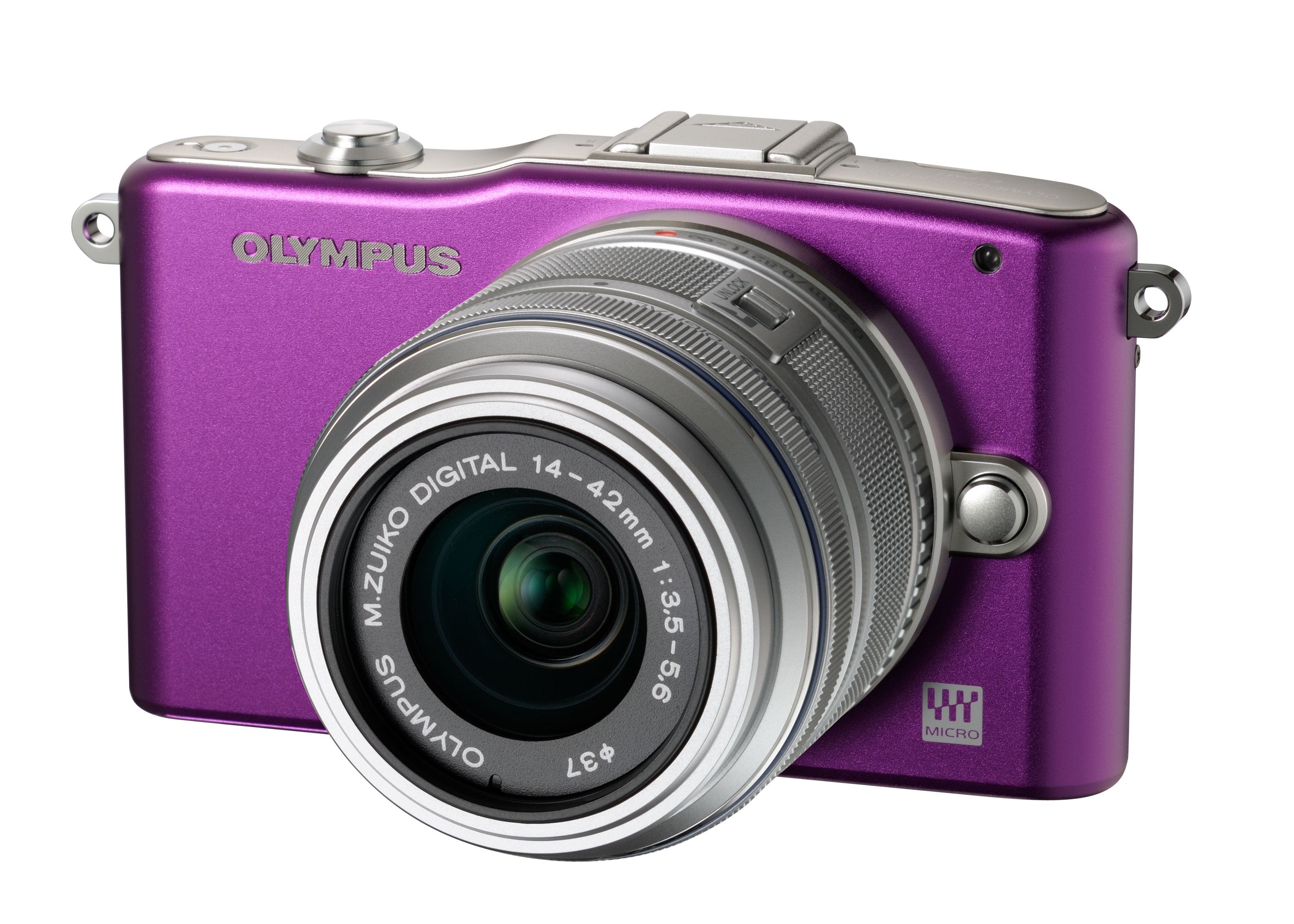
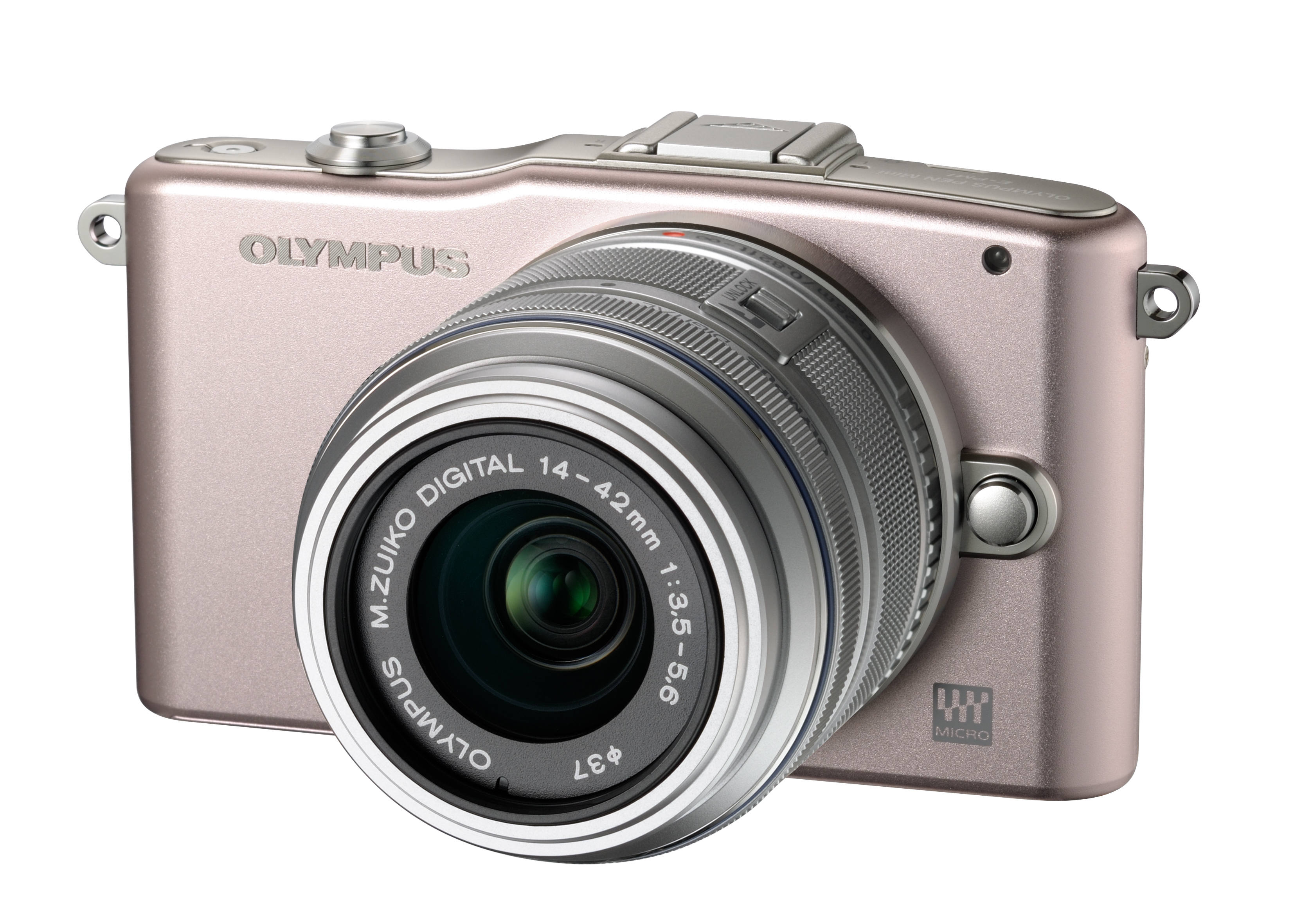
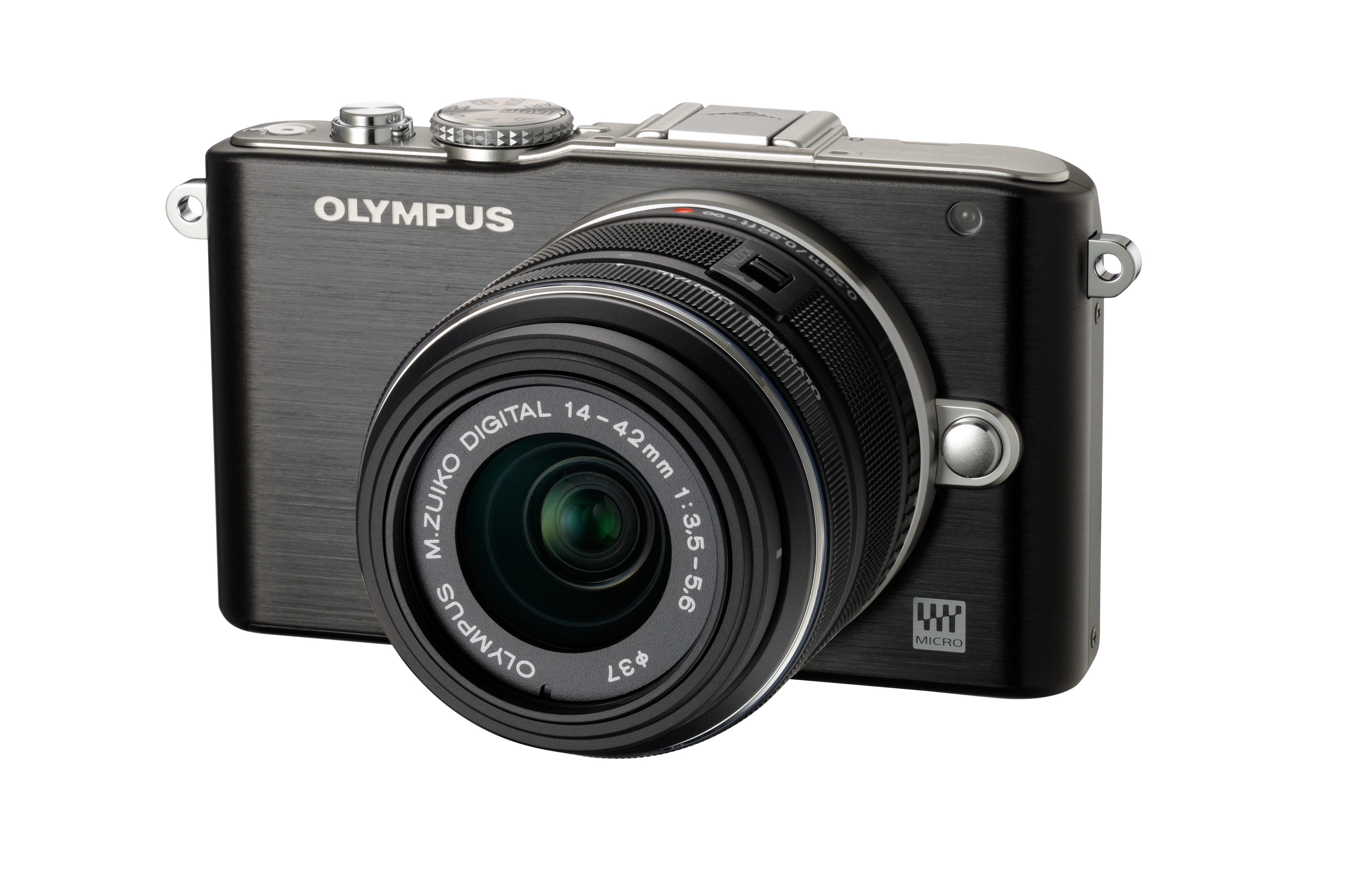
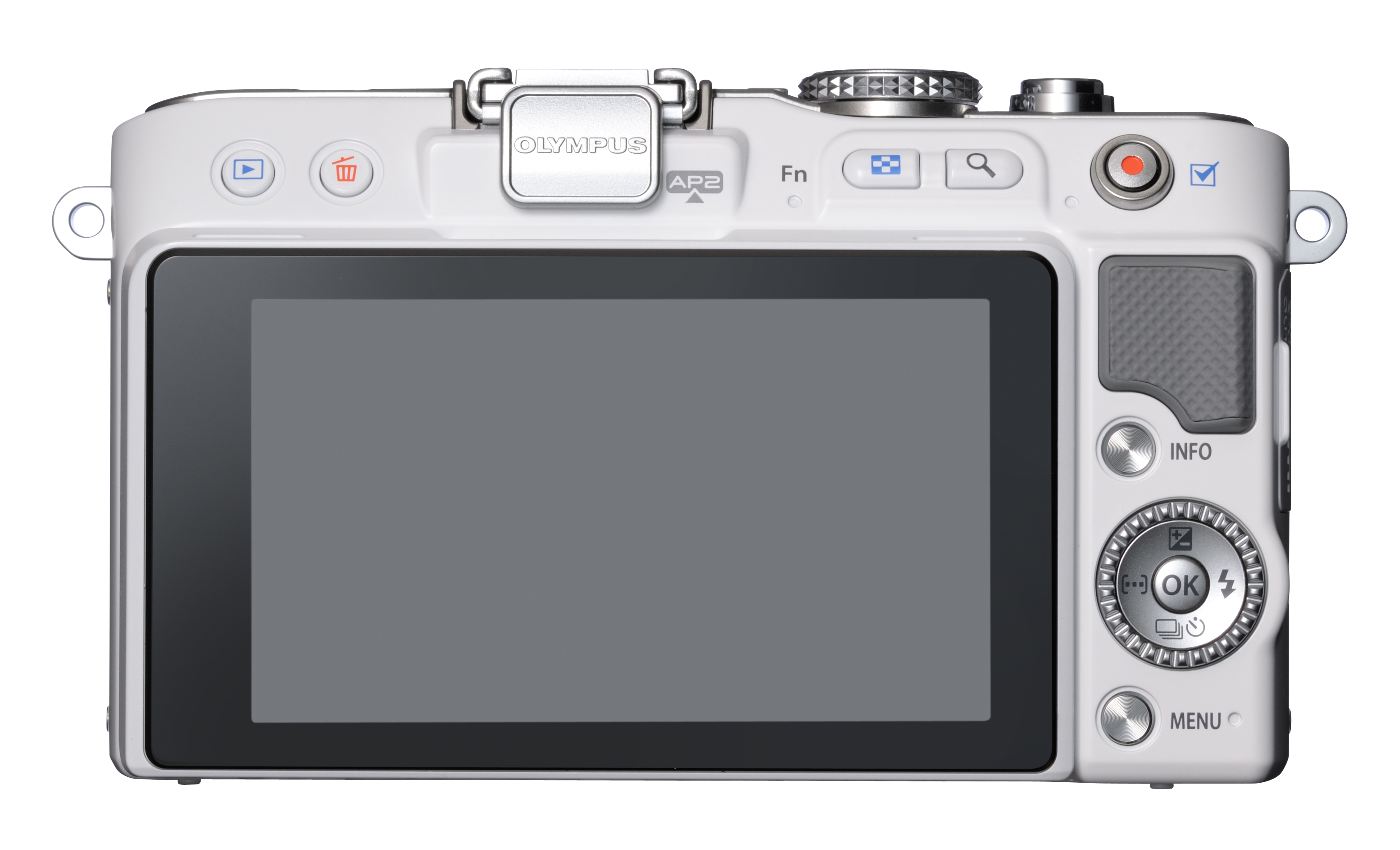
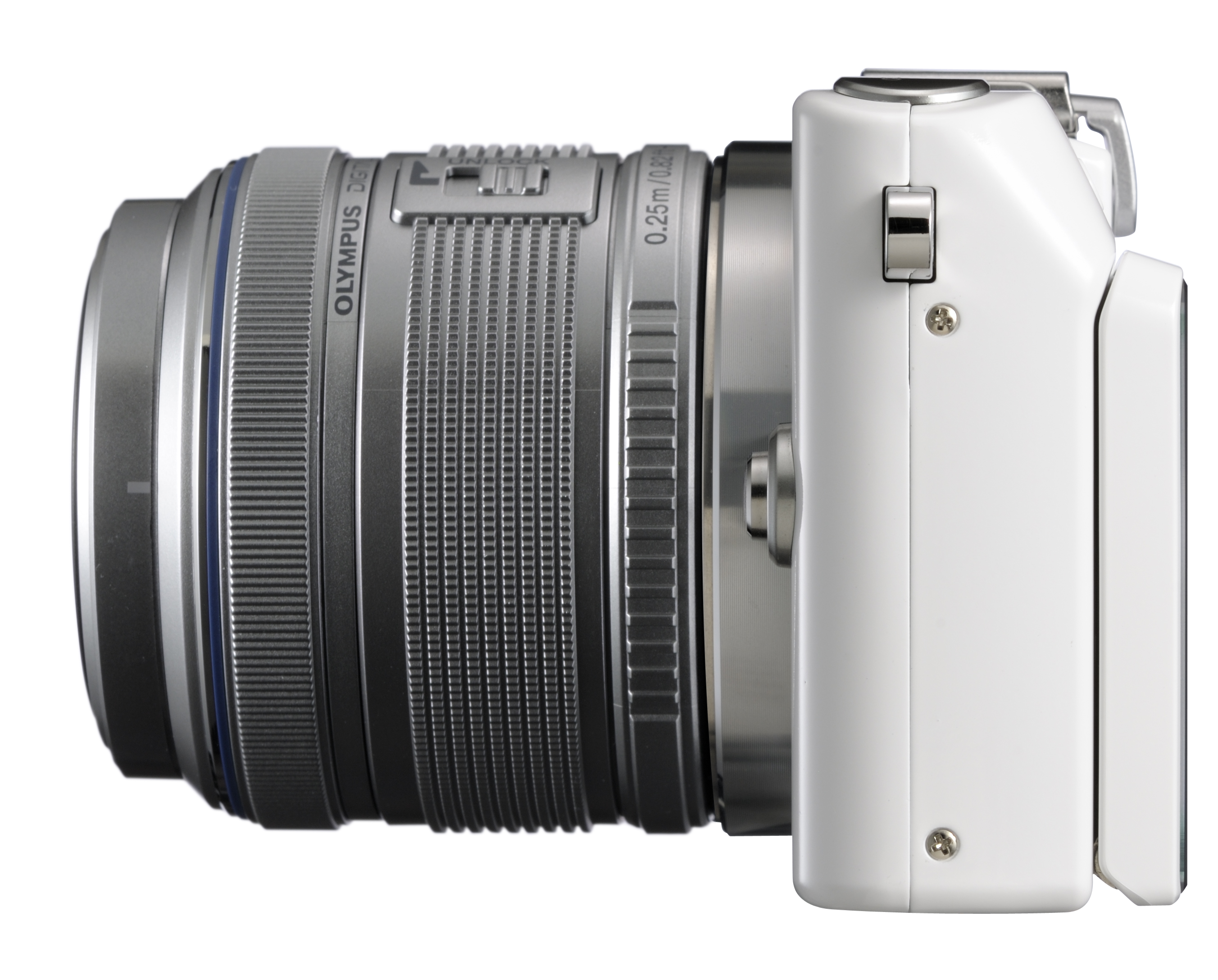
Picture: The NEW14-42mm Zuikos Launched with the EP3, EPL3 & EPM1


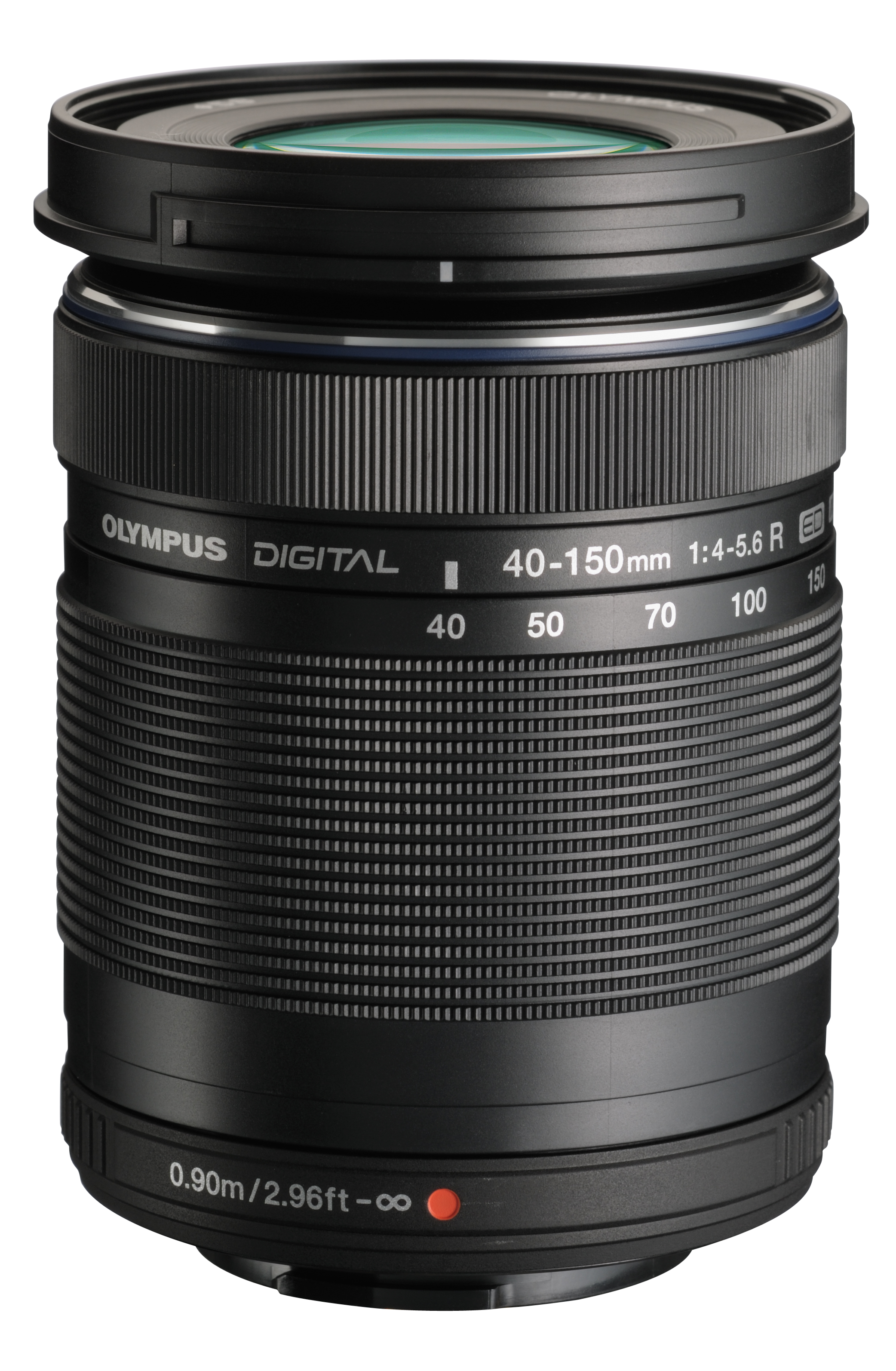
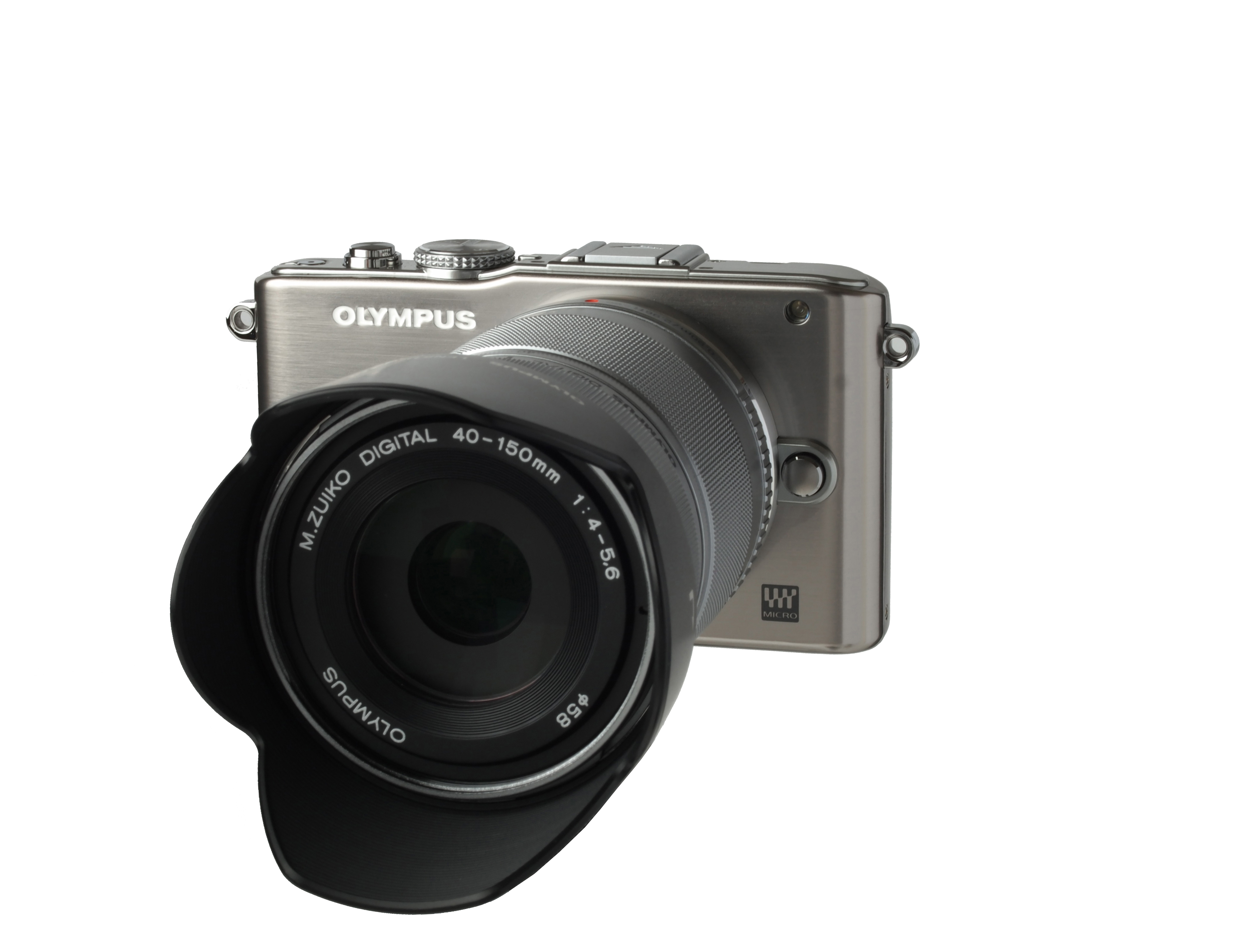
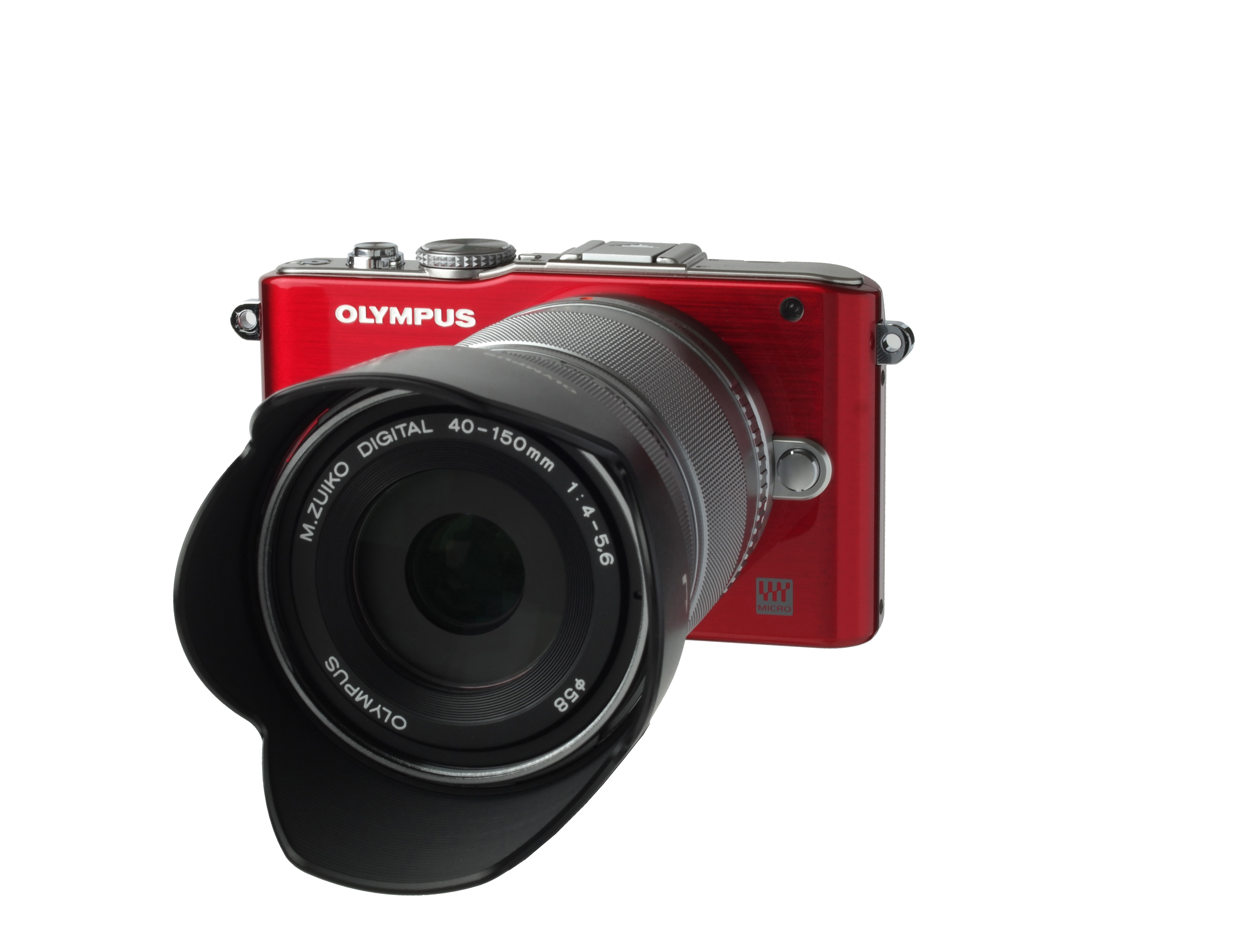
Picture: The New 40-150mm Zuikos Launched with the EP3, EPL3 & EPM1


Picture: The New 40-150mm Zuiko with a Hat, I meant HOOD.


About Olympus Imaging Singapore
Olympus Imaging Singapore is the unparalleled industry leader in opto-digital technologies, delivering award-winning digital imaging products for the consumer and professional markets in Singapore. Driven by a strong commitment in providing innovative products and solutions of the highest quality, Olympus Imaging Singapore works closely with industry partners, customers and other Olympus business units in producing leading-edge products. These include analogue and digital cameras, professional SLR imaging systems, and voice recorders, amongst others. Olympus Imaging Singapore’s unrelenting efforts in superior customer service also bear testimony to its brand promise of delivering the best user experience to all consumers and professional users in the imaging field. For more information, please visit http://www.olympusimage.com.sg.

Posted in Brand: Olympus, Photography Articles & Videos | Tagged , , , , , | Leave a comment

Olympus Announced 3 New PEN series cameras and 2 New Zuiko lenses (Part 3)

They are the long awaited (if not anticipated) OLYMPUS E-P3, OLYMPUS E-PL3 and OLYMPUS E-PM1 & 2 Zuikos, the Olympus MZ12mm and Olympus MZ45mm lenses.

This is Part 3 of a series of 4. I am covering or rather duplicating what was sent to me from Olympus’s Press Releases as I am in not in the position to comment or review the camera until I tested it.

I am going to share about Olympus E-PM1 in this episode.


Main Features
1. The same Art-class SLR quality as the flagship E-P3 condensed in the small/light body weighing only 215 grams. Six body colour variations*1

2. Popular Live Guide user interface for easy, intuitive adjustment of brightness, colour balance, background defocusing and other photographic parameters

3. Six popular Art Filters that make it easy for anyone to express their photographic creativity

*1. The Camera Body and the Twin Lens Kit are available in 6 colour variations while the Lens Kit is available only in three colour variations of Silver/White/Black. 2

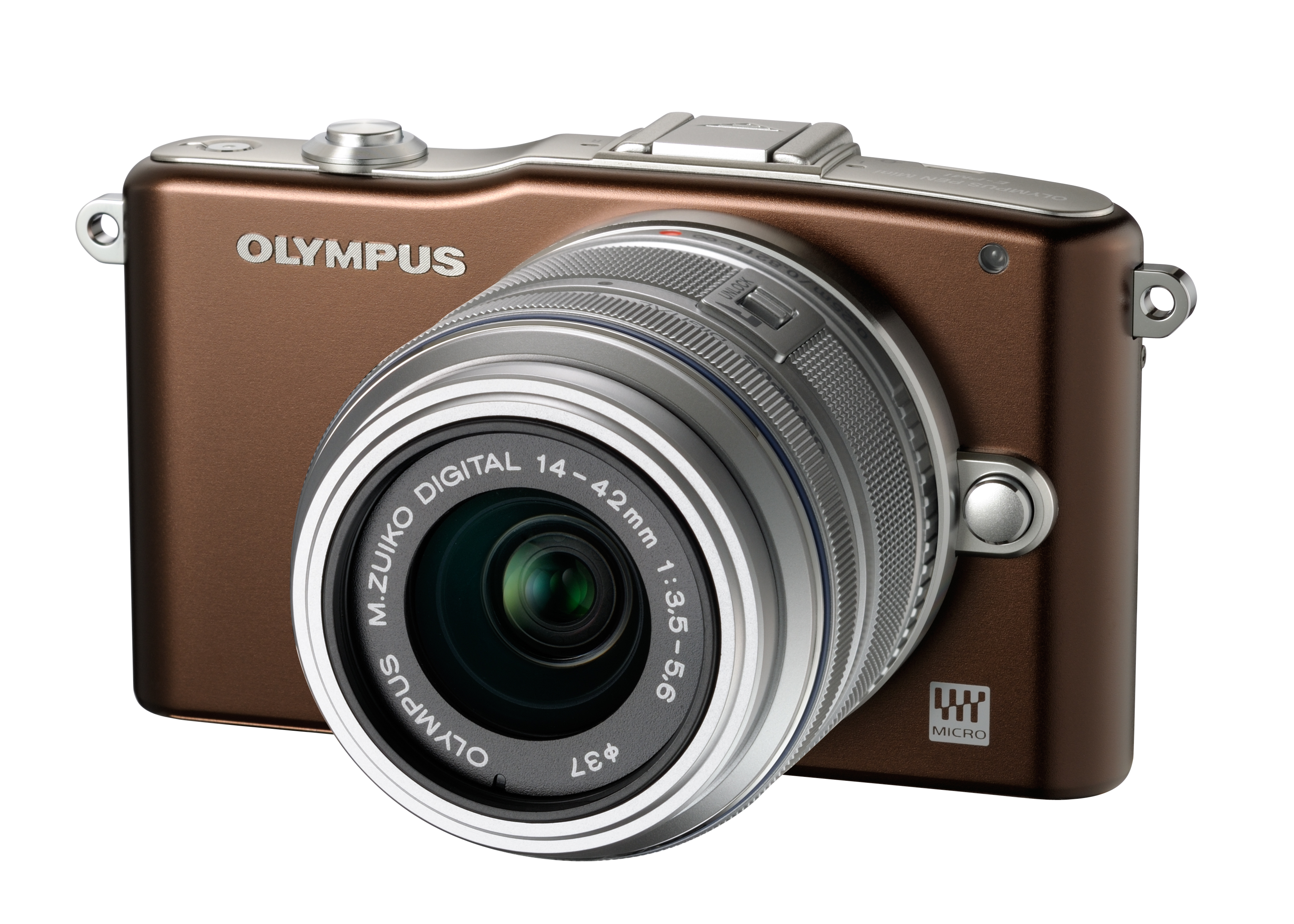
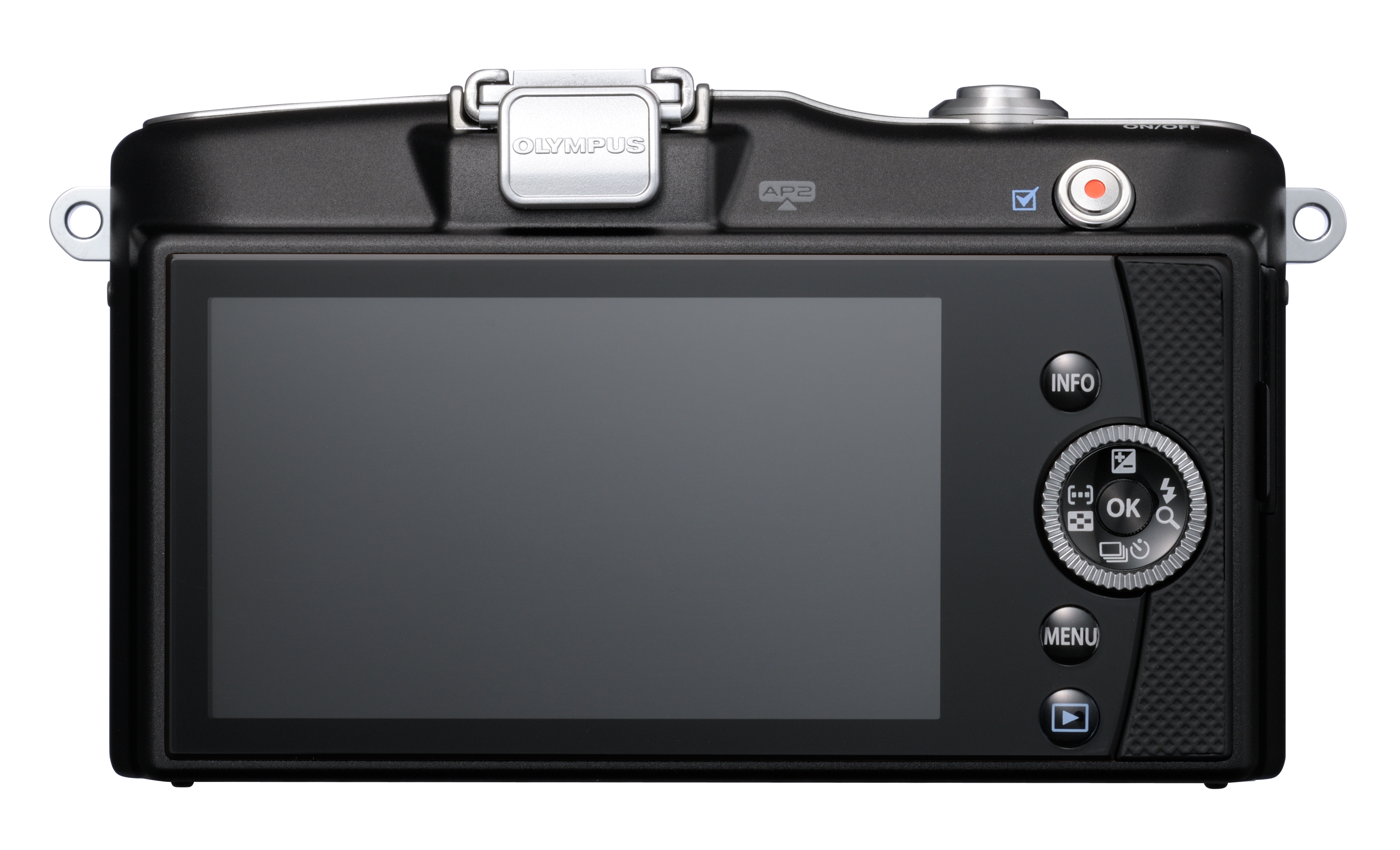
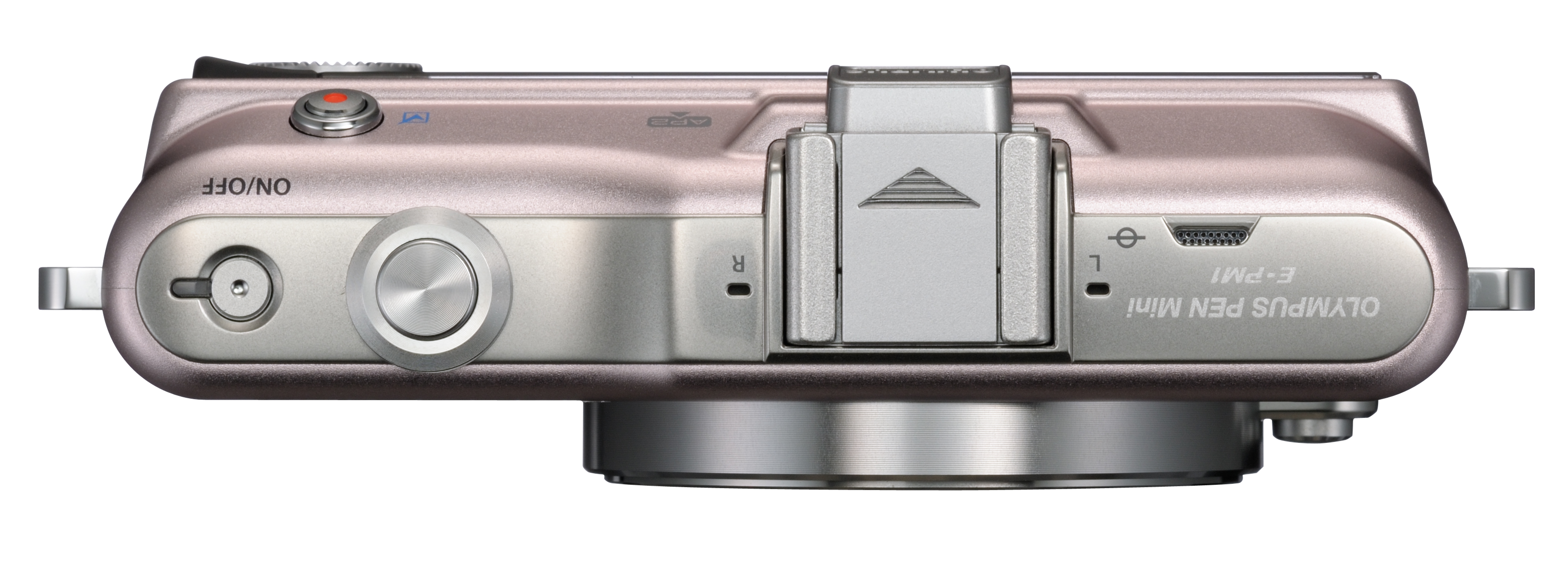
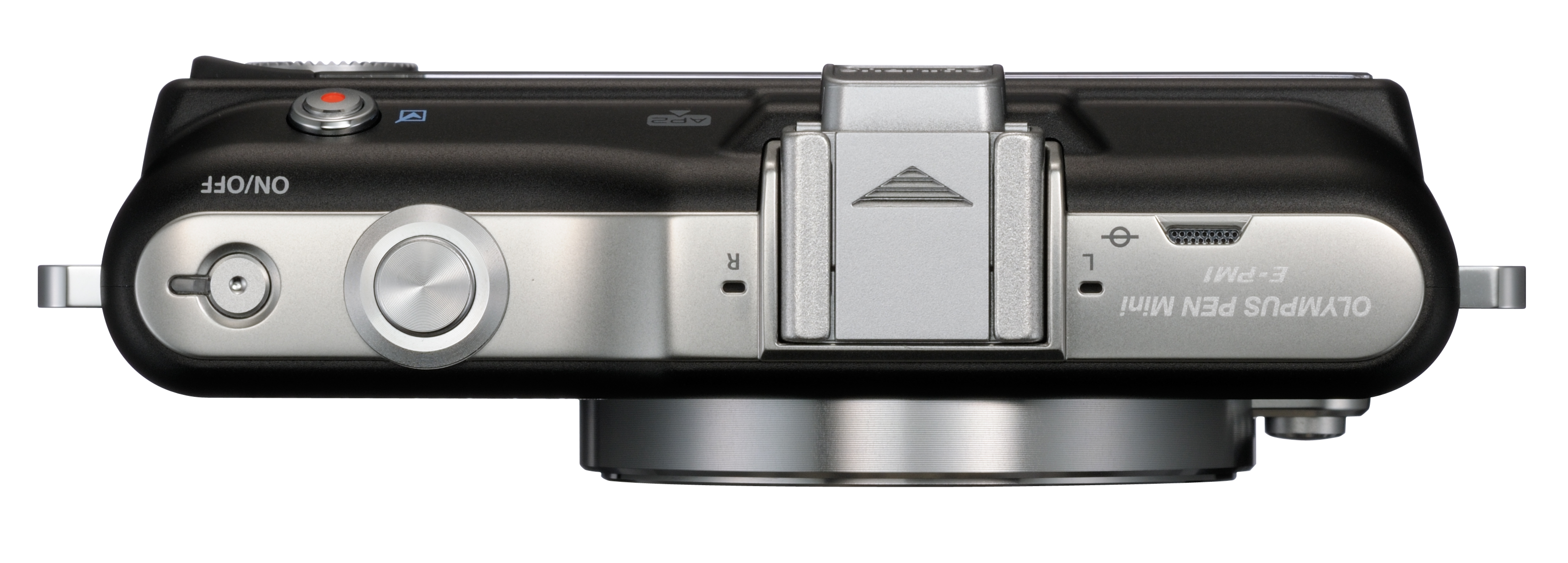
With the new “PEN mini” series,Olympusis bringing the concepts of ultracompactness, simplicity and stylishness to SLR photography, aimed directly at first-time interchangeable lens digital camera users.

The first in this new line of new generation system cameras, the OLYMPUS PEN E-PM1 is an interchangeable lens type digital camera that conforms to the Micro Four Thirds System, which is targeted at the fashion-sensitive younger generation.

The E-PM1 represents the culmination ofOlympus’s quest to maximise the size/weight reduction advantages of the Micro Four Thirds System standard. The ultra compact and light interchangeable-lens type camera, the camera body alone weighs just 215 grams, while the total in actual usage (with the standard zoom lens, flash, memory card and rechargeable battery) is still the world’s lightest at 401 grams. Available in a choice of six different colours, this model will appeal to a wide range of users with many different needs and requirements.

This camera also boasts sequential shooting performance of 5 fps and image quality built on the same advanced technology that powers the Olympus PEN E-P3, the just announced new flagship of the PEN series, continuing withOlympus’s policy of “providing the maximum image quality performance to all PEN models”. Better-than-ever image quality is made possible by the new 12.3-megapixel High Speed Live MOS Sensor with 1080i HD movie compatibility and the new TruePic VI image processing engine. High-sensitivity shooting at ISO12800 is also possible.

This camera also features the Art Filters well acclaimed with otherOlympuscameras so that anyone can easily enjoy photographic expressions that used to require complicated image processing. The E-PM1 incorporates six of the most popular Art Filters, allowing users to express their unique creative vision with both still images and movies.

Another example of Olympus’s commitment to relentlessly enhancing and advancing its line of new generation system cameras, this new camera is certain to expand today’s fast growing market for lens interchangeable type digital cameras.

Other Features
– New control system for easier operation
– Ultrafast autofocus using new FAST AF system inherited from the E-P3
– 35-area multiple AF with group area selection
– High-performance 5 fps sequential shooting
– High image quality inherited from the E-P3
– New 12.3-megapixel High-Speed Live MOS Sensor with full HD movie compatibility
– New TruePic VI image processing engine
– Advanced movie recording
– Incorporates full HD movie shooting (AVCHD)
– Built-in stereo microphones
– Built-in sensor-shift type image stabilization plus electronic movie image stabilisation using the multimotion-compatible movie IS system
– High capability removable flash
– Tone control for individual variations of the tones of bright and dark sections
– One-push digital teleconverter function
– Menu Guide to clarify menu items
– New scene mode: 3D Photo Shooting
– Proven, reliable dust reduction system

Main Feature Details
The same Art-class SLR quality as the flagship E-P3 condensed in the world’s smallest/lightest body*1 weighing only 215 grams. Six body colour variations*2

Ultra compact and lightweight body with a stand-alone weight of 215 grams* The E-PM1 is the result of Olympus’s commitment to maximising the advantages of the Micro Four Thirds System standard, one of which is size/weight reduction while maintaining the high image quality of an SLR. Weighing just 215 grams, the E-PM1 is 27% lighter than the E-PL1 and E-PL1s (296 grams), previouslyOlympus’s lightest cameras. Volume has been reduced by 31%. Even when the camera is fully equipped for actual use with the M.ZUIKO DIGITAL ED14-42mm f3.5-5.6 II R, its removable flash, a rechargeable battery and a memory card, the E-PM1 is still the world’s lightest at 401 grams.

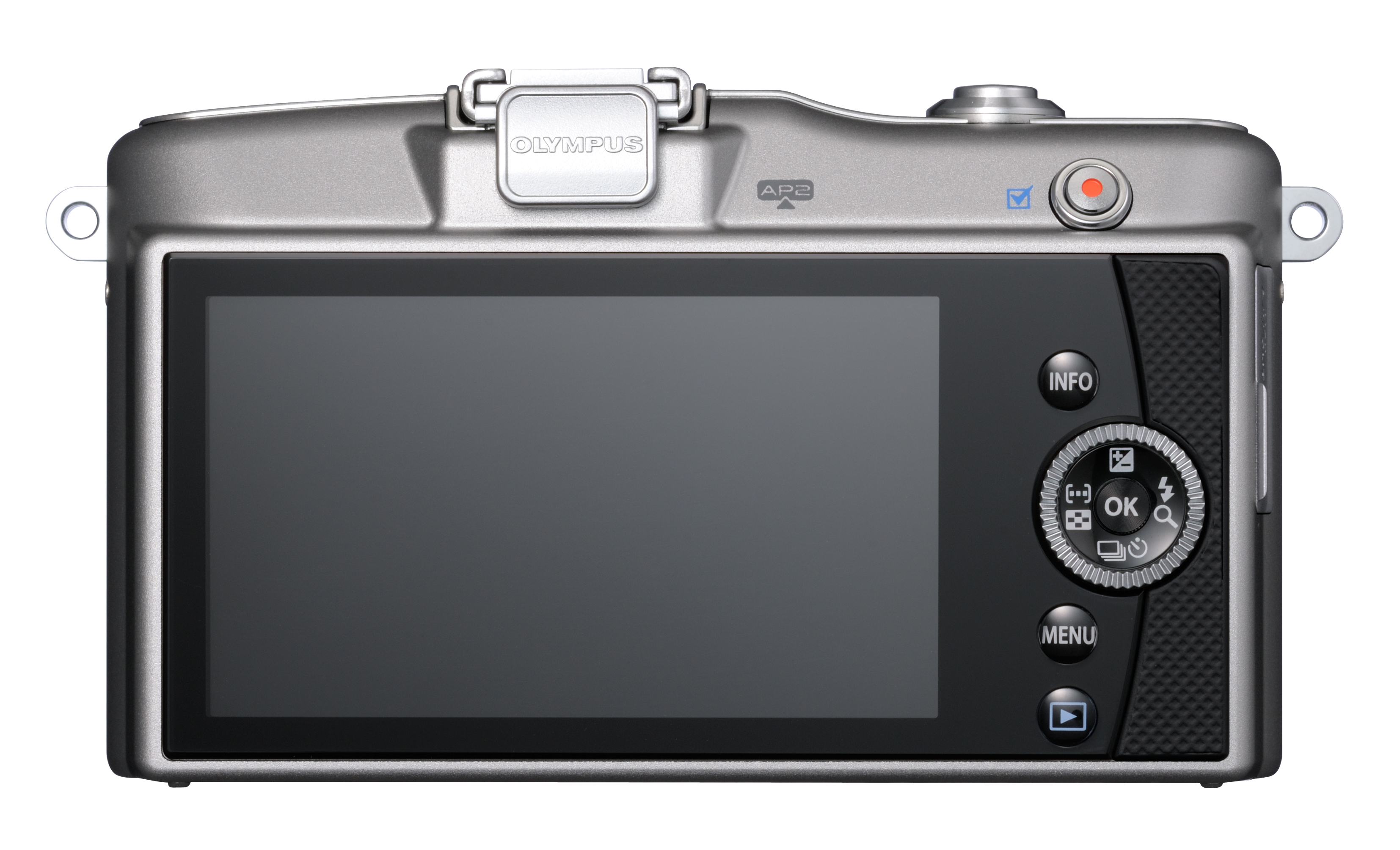
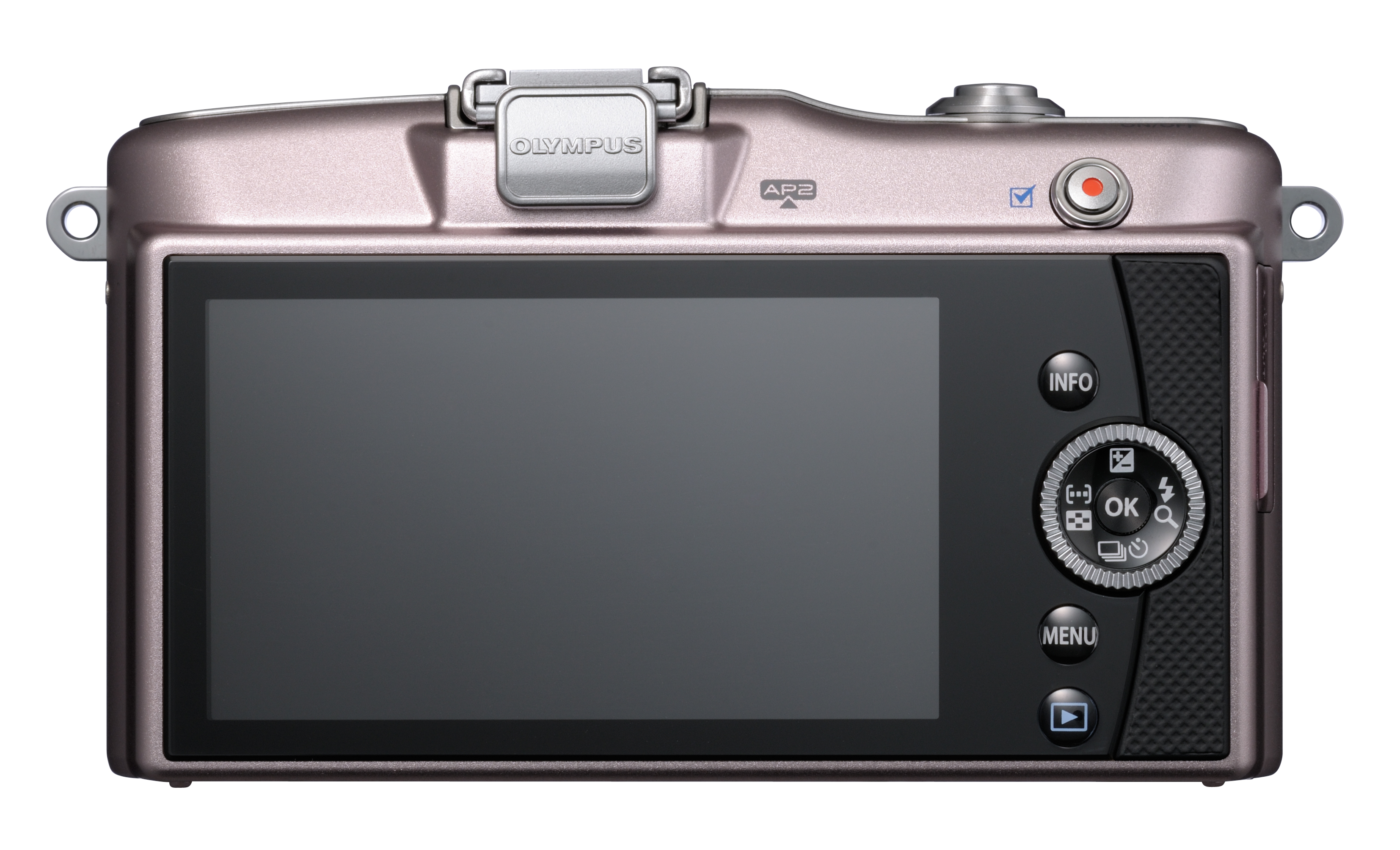
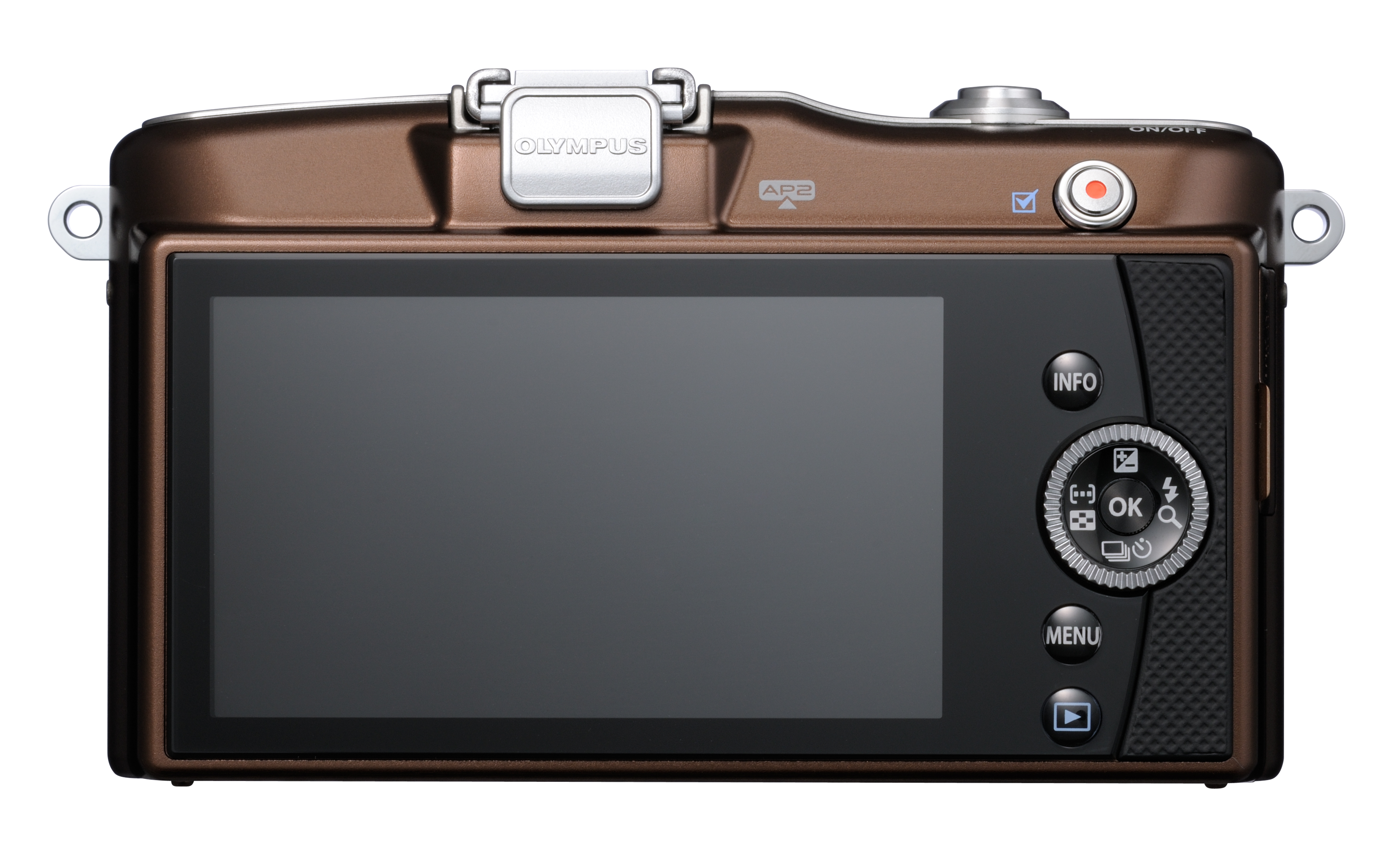
In addition to the traditional colours of Silver, White and Black, the E-PM1 is also available in Pink, Purple and Brown. From cute to classic, these variations make the PEN series even more attractive. Already, the PEN series is to have triggered the “camera girl” phenomenon with which more young girls and now, with even more styles and colours to choose from, the “PEN mini” should attract even more users.

Popular Live Guide user interface for easy, intuitive adjustment of brightness, colour balance, background defocusing and other photographic parameters

Updated Live Guide lets users easily obtain the results they want
Since the E-PL1 (launched on March 2010),Olympushas been incorporating a new user interface called the Live Guide. Designed for users who do not have expert knowledge of photography but want to have creative control over their pictures, Live Guide lets users shoot the pictures they want by selecting an icon and operating a slide bar to control the major factors for the SLR photography including “colour vividness”, “colour balance”, “image brightness”, “depth of field (blur background)” and “subject in motion”. The names of these factors are expressed in daily, easy-to-understand languages without any jargon.

Six popular Art Filters that make it easy for anyone to express their photographic creativity
Ever since the E-30 was introduced (December 2008),Olympushas been supporting the creativity of photographers by incorporating easy-to-use Art Filters in its interchangeable-lens digital cameras. The new E-PM1 incorporates six of the most popular Art Filters. These Art Filters allow the user to enjoy unprecedented creative possibilities with both still images and movies*1.

– Pop Art
Enhances colours, making them stronger and more vivid to create high-impact images with a pop-art feel.

– Soft Focus
Gives images a dream-like quality that creates a romantic and mystical atmosphere.

– Grainy Film
Recreates the classic grainy look and tonality of black & white photography, imparting a dramatic feel to images.

– Pin Hole
Adjusts colour and reduces brightness at the periphery, recreating the distinctive look of photos taken with a pinhole camera.

– Diorama
Creates the look of a miniature diorama by enhancing colour and contrast, and blurring the periphery to distort distance perception.

– Dramatic Tone
Represents real space in a more imaginary way by applying unrealistic tones of light and darkness based on local changes in contrast.

*1. When shooting a movie using an Art Filter, the number of frames and the presence/absence of audio recording are variable depending on the type of the Art Filter.

Art Filter bracketing for recording multiple Art Filtered pictures with a single shot
The Art Filter bracketing function can generate multiple pictures with different Art Filters with a single shot, making it possible to experiment with several different photographic effects at the same time. In addition to the Art Filters, this function can also be used to select multiple picture modes including Vivid, Natural, Flat and Portrait.

3D Art Filter compatible with 3D Photo Shooting scene mode
When the scene mode is set to 3D, the Art Filter can be applied to 3D photos. 5

Other Feature Details
New control system “stripe screen” for easier operation
Designed to be easy for anyone to use, the E-PM1 features a new control system with fewer control buttons and no mode dial. Operation steps have been reduced for maximum simplicity. Changing shooting modes is easy thanks to the new GUI’s “stripe screen”, which can be displayed by pressing the MENU button.

Ultrafast autofocus using new FAST AF system inherited from the E-P3
Like its bigger cousin, the E-P3, the E-PM1 incorporates an all-new autofocusing (AF) system that has been completely re-designed to perform at unprecedented speeds. During AF, the Live MOS Sensor is driven at double the speed (120 fps) of the previous system, facilitating faster acquisition of the image signals required for AF. The speed of AF computation that generates the contrast signal from the image signal to determine the degree of focusing has also been doubled. The advantages made possible by these improvements are further enhanced by the increase in the speed of communication for controlling the lens motion and the synergy of the MSC (Movie & Still Compatible) mechanism, which facilitates fast, quiet movement of the AF system in the lens, as well as faster response time from shutter release to the start-up of AF system. Together, all of these improvements have resulted in a much faster autofocusing than previously.

35-area multiple AF with group area selection
The number of focus selection areas has been increased from 11 to 35, enabling detailed, pinpoint AF across a wider area than before. To capture a moving subject accurately, the group area selection can apply AF to a limited region compose of 3 vertical and 3 horizontal areas.

High-performance 5 fps sequential shooting
A more compact high-speed shutter mechanism has been developed newly to be accommodated in the smaller body. The new shutter succeeded in improving the sequential shooting performance from the previous 3 fps to 5 fps.

High image quality inherited from the E-P3
New 12.3-megapixel High Speed Live MOS Sensor with full HD movie compatibility
New TruePic VI image processing engine

Committed to “providing the maximum image quality performance to all PEN models”, Olympus has generously endowed the E-PM1 with the same new 12.3-megapixel High-Speed Live MOS sensor and new TruePic VI image processing engine incorporated in the new flagship of the PEN series, the E-P3, due for release at the same time as the E-PL3. This has made possible full HD 1080i movie recording and improved the maximum sensitivity to ISO12800. The newly developed TruePic VI image processing engine achieves both improvement of image processing quality and reduction of processing time.

Advanced movie recording
– Incorporates full HD movie shooting (AVCHD)

In addition to the popular Motion JPEG (AVI: approx. 30 fps) format*1, which can be easily played back and edited on a PC, the new E-P3 can record movies in both full HD (AVCHD: 1920 x 1080/59.94i) and HD (AVCHD: 1280 x 720/59.94i) movie formats*2 for extended recording and playback on a large-screen high-definition TV set.

*1 Recording capacity per one file is limited up to approx. 2 GB; max. recording time is approx. 7 minutes.

*2 Recording capacity per one file is limited up to approx. 4 GB; max. recording time is approx. 22 min. in full HD mode, approx. 29 min. in HD mode. Image sensor output is approx. 30 fps.

Built-in stereo microphones
Olympus’s extensive experience in the field of IC recorders has made it possible to develop high-quality recording systems that offer extreme fidelity to the original sound and full presence. The camera body incorporates stereo microphones compatible with the linear PCM format (Motion JPEG mode) for high audio quality without compression, and Dolby Digital format (AVCHD mode). When high-quality external stereo microphones such as the SEMA-1 Microphone Set 1 (optional) is attached to the accessory port, audio input is switched automatically to the external stereo microphones facilitating higher quality stereo sound recording and effectively reducing wind noise.

Built-in sensor-shift type image stabilisation plus electronic movie image stabilisation using the multimotion-compatible movie IS system

The E-PM1 incorporates an image stabilisation mechanism based on image sensor shifting so handheld shooting with reduced image blurs is possible even in low-light scenes or telephoto shooting. This mechanism shifts the image sensor unit instantaneously and precisely, and is built into the camera body so image stabilisation is possible with any lens, including an M.ZUIKO DIGITAL lens as well as an old lens mounted using an adapter if the focal length is input manually.

Furthermore, an electronic movie image stabilisation function with multi-motion compatibility is incorporated to compensate for image blurs due to ordinary camera shakes to those caused by respiration and walking.

High capability Removable flash
A removable flash (GN10 (ISO200)) that can be attached only when needed is provided in the product package.
The E-PM1 is equipped with the wireless flash control capability so external flashes compatible with the Olympus Wireless RC Flash System such as the FL-300R can be controlled from the camera body on which the removable flash is mounted. In addition to the wireless control of three groups of flashes, the mounted flash can be fired as an independent group. The setting of manual firing can be set between 1/1 and 1/64 in 1-step increments to improve the convenience in macro flash shooting, for example.

Tone control for individual variations of the tones of bright and dark sections
As an extension of the brightness adjustment of the Live Guide, functions for individual adjustment of the brightness of only in the “bright section” or “dark section” is added to the exposure compensation function to enable adjustments equivalent to those available with the Live Guide even when this is not activated. These functions make easy the pictures with tight black with a taste of reversal film or advanced expressions for enhancing or eliminating the gradations of white of snow.

Menu Guide to clarify menu items
If two seconds pass without any operations during menu display, the camera enters the explanation display mode, popping up an explanation of each menu item whenever it is changed. As the user can find out what each function is used for and how it is used without the instruction manual, the explanation display is a big help for users who are not familiar with the camera or who have forgotten how to do some operations. Once the user is accustomed to the camera, pressing the INFO button turns the pop-up display off. Whenever an explanation becomes necessary, press the INFO button to start up the display again.

New scene mode: 3D Photo Shooting
The 3D Photo function has been newly added to the scene modes. After the first shot, simply sliding the camera following the guide takes the second shot and records a 3D file (MPO format). The recorded image can be played with powerful 3D playback on a 3D function-compatible PC or TV.

Proven, reliable dust reduction system
If dirt or dust penetrating the camera body during lens replacement attaches to the low-pass filter or image sensor, it will show up in the image. This problem is particularly important with the E-P3 because its mirrorless structure does not cover the image sensor with the shutter screen.Olympushas been aware of the critical nature of this problem since the beginning of development of lens interchangeable type digital SLR cameras and solved it properly. When the camera is turned on, the SSWF (Super-Sonic Wave Filter) installed in front of the image sensor is activated to blast dust away from the image sensor with supersonic vibrations. The tremendous power of the supersonic waves manifests reliable dust reduction performance by even removing dust that cannot be removed merely by shaking the image sensor or dust that is attached by intermolecular force and cannot be removed by merely discharging static electricity.

New Optional Accessories
Interchangeable Lens M.ZUIKO DIGITAL 14-42mm f3.5-5.6 II R (Silver/Black)
The M.ZUIKO DIGITAL 14-42mm f3.5-5.6 II R is the new standard lens for the PEN series cameras. It has newly been designed to match the new line of PEN series while retaining the high performance of the previous M.ZUIKO DIGITAL 14-42mm f3.5-5.6 II standard zoom lens. It incorporates the MSC mechanism and implements fast, quiet AF using the inner focus method. Despite the compact size and light weight, it is applicable in a wide range from street shooting to portrait shooting.

CS-31B Leather Body Jacket
The CS-31B is a genuine leather body jacket designed exclusively for the OLYMPUS PEN Lite E-PL3/E-PM1 . It protects the sensitive parts of the camera body without detracting from its design. In addition to the practical aspect of camera body protection, the body jacket’s genuine leather and rugged construction exude a sense of both traditional craftsmanship and contemporary styling. The mounting screw is recessed to make the jacket bottom flat, thereby improving stability when the camera is set down and enhancing the sleek look of the camera. The grip is made of leather of the same quality as the body jacket, providing an excellent hold, while complementing the design. Naturally, shooting and playback is possible while viewing the rear-panel LCD without taking the camera out of the body jacket.

CSS-S109LLII Leather Shoulder Strap
The CSS-S109LLII is a genuine leather shoulder strap with an increased length adjustment range that makes it even more convenient than the CSS-S109LL shoulder strap. The strap length can now be made short enough to use as a neck strap and long enough to sling over the shoulder and across the chest.

The colour can be coordinated with the body jacket.

CSS-S114 Shoulder Strap
The CSS-S114 (launched on January 2011) is a beige-coloured shoulder strap that’s both fashionable and practical. Now available in brown and green as well, it features a warm, natural design that complements any of the new OLYMPUS PEN models, including the E-P3, E-PL3 and E-PM1. Made of luxuriously textured fabric, this strap can also be customized by attaching pin badges* or other items. The length is about 138 cm, the optimum length to sling the camera over a woman’s shoulder and across her chest.

PT-EP06L Underwater Cases
The PT-EP06L is genuine underwater case designed exclusively for the OLYMPUS PEN E-PM1. This underwater case can create a powerful underwater photography system capable of withstanding water pressure at depths up to 45 metres.

To support the compact, lightweight advantages of the Micro Four Thirds System standard, the thickness of the underwater case has been reduced compared to the PT-EP03 Underwater Case (released in January 2011) for the OLYMPUS PEN Lite E-PL2, which itself was significantly more compact than previous underwater SLR camera cases.

The PT-EP06L is equipped with a new LED light* on the front end of the lens port that is great for helping illuminate small creatures hiding in dark locations — behind a rock, for example — for macro shooting. The underwater case is provided with a diffuser that makes it possible to attach the removable flash on the camera. This flash incorporates a wireless flash control function, enabling operation of the UFL-2 Underwater Flash.

The PTWC-01 Underwater Wide Conversion Lens or PTMC-01 Underwater Macro Conversion Lens can be mounted on the front end of the lens port to facilitate underwater wide-angle or macro shooting.

The OLYMPUS PEN E-PM1 incorporates the same underwater white balance function as the OLYMPUS PEN Lite E-PL2. As this function detects the underwater colour balance, which varies due to various factors such as the depth, weather and seawater condition, and compensates for the image automatically, it is easy to shoot bright underwater pictures with vivid colours. Whether still images or movies, the resulting pictures are free of the bluish colour cast common in underwater shooting.

In addition, the cases can be used on land as well as underwater so troublesome white balance setting adjustment is not necessary before and after diving.

* Usable only when the M.ZUIKO DIGITAL 14-42mm f3.5-5.6 IIR lens is used.

Body / Lens Colour Combinations Available
The following body/lens colour combinations are available.

E-PM1 Lens Kit (3 colour variations)
– When the body colour is Black, the lens colour is Black.
– When the body colour is White or Silver, the lens colour is Silver.

E-PM1 Twin Lens Kit (6 colour variations)
– When the body colour is black, both lenses are Black.
– When the body colour is White/Silver/ Pink/Purple/Brown, both lenses are Silver.

OLYMPUS PEN E-PM1 is available at Olympus authorised retailers. For more information please visit http://home.olympusimage.com.sg/contactus/authorised_retailers.asp 10


About Olympus ImagingSingapore
Olympus Imaging Singapore is the unparalleled industry leader in opto-digital technologies, delivering award-winning digital imaging products for the consumer and professional markets inSingapore. Driven by a strong commitment in providing innovative products and solutions of the highest quality, Olympus Imaging Singapore works closely with industry partners, customers and otherOlympusbusiness units in producing leading-edge products. These include analogue and digital cameras, professional SLR imaging systems, and voice recorders, amongst others. Olympus Imaging Singapore’s unrelenting efforts in superior customer service also bear testimony to its brand promise of delivering the best user experience to all consumers and professional users in the imaging field. For more information, please visit http://www.olympusimage.com.sg.

Posted in Brand: Olympus, Photography Articles & Videos | Tagged , , , , , | 2 Comments

Olympus Announced 3 New PEN series cameras and 2 New Zuiko lenses (Part 2)

They are the long awaited (if not anticipated) OLYMPUS E-P3, OLYMPUS E-PL3 and OLYMPUS E-PM1 & 2 Zuikos, the Olympus MZ12mm and Olympus MZ45mm lenses.

This is Part 2 of a series of 4. I am covering or rather duplicating what was sent to me from Olympus’s Press Releases as I am in not in the position to comment or review the camera until I tested it.

I am going to share about Olympus E-PL3 in this episode.

Main Features
1. First PEN series camera with a swivel type 3.0-inch display. Tilts 80° up and 45° down for improved functionality and compatibility with size reduction

2. The same high image quality as the flagship E-P3, all in a solid little package weighing just 262 grams

3. Six popular Art Filters with more advanced artistic expression capabilities using Variations and Art Effects

Launched in March 2010 with the introduction of the OLYMPUS PEN Lite E-PL1,Olympus’s “PEN Lite” models were originally designed to expand the digital SLR market by focusing on entry-level users. Now, however, that role has been taken over by the new line of “PEN mini” models, allowingOlympusto reboot the “PEN Lite” product concept, emphasising the spirit of innovation and concentrating on putting big-size functionality and performance into a small-size body.

The first of the reborn “PEN Lite” models, the OLYMPUS PEN E-PL3 is an interchangeable lens type digital camera that conforms to the Micro Four Thirds System standard. Combining the attributes of high performance and compact ease of use, the PEN Lite is designed to serve as the centrepiece of the PEN series of new generation system cameras. Its target is the young families who have special tastes for what they possess.

With previous PEN series models, the body size was reduced by eliminating the quick-return mirror while maintaining key SLR advantages such as high performance and high image quality.Olympushas made the E-PL3 even smaller by redesigning all of the internal structures.

One example of the complete redesign is the swivel type 3.0-inch HyperCrystal LCD — the first used in the PEN series. Incorporation of an up-down tilting mechanism gives the E-PL3 real high- and low-angle shooting flexibility without compromising the compact size.

This camera also boasts sequential shooting performance of 5 fps and image quality built on the same advanced technology that powers the Olympus PEN E-P3, the just announced new flagship of the PEN series, continuing withOlympus’s policy of “providing the maximum image quality performance to all PEN models”. Better-than-ever image quality is made possible by the new 12.3-megapixel High Speed Live MOS Sensor with 1080i HD movie compatibility and the new TruePic VI image processing engine. High-sensitivity shooting at ISO12800 is also possible. And all of this incredible performance is packed into a compact, lightweight body with a stand-alone weight of 262 grams.

The Art Filters so popular on previous Olympus cameras have been refined and improved for the new generation with the addition of “variations” that can be used to slightly change the atmosphere of the filter. The Art Effect function, which can add various composition effects to Art Filters, has also been enhanced with new “Starlight” and “White Edge” effects. These composition effects allow the user to utilise individual expressions and obtain more benefits from the Art Filters. Naturally, the expressive power of the provided six Art Filters can be enjoyed with both still images and movies.

Another example of Olympus’s commitment to relentlessly enhancing and advancing its line of new generation system cameras, this new camera is certain to expand today’s fast growing market for lens interchangeable type digital cameras.


Other Features
Ultrafast AF using new AF system inherited from the E-P3
35-area multiple AF and group area selection
High-performance 5 fps sequential shooting
Advanced Live Guide
– Instant recall of Live Guide with Fn button in P/A/S/M modes
Advanced movie recording
– Incorporates full HD movie shooting (AVCHD)
– Built-in stereo microphones
– Built-in sensor-shift type image stabilisation plus electronic movie image stabilization using the multimotion-compatible movie IS system

High capability removable flash
Tone control for individual variations of the tones of bright and dark sections
One-push digital teleconverter function
Menu Guide to clarify menu items
New scene mode: 3D Photo Shooting
Proven, reliable dust reduction system

Main Feature Details
First PEN series camera with a swivel type 3.0-inch display. Tilts 80° up and 45° down for improved functionality and compatibility with size reduction
3.0-inch HyperCrystal LCD with up-down tilting mechanism
This is the first swivel-type LCD mounted on a PEN series model. Compromising neither size nor mobility, this monitor can be freely tilted up or down by up to 80° or 45° respectively, offering real flexibility in high- and low-angle shooting. When the display aspect ratio is set to 3:4, tilting of longitudinal (portrait) pictures is supported.

The LCD is a large, easy-to-view high-definition HyperCrystal LCD with a diagonal size of 3.0 inches and 460,000 dots. The viewing angle is as wide as 176° from all directions and the field of view is 100%. The high-definition HVGA LCD has excellent colour production and reproduction characteristics and makes even outdoor shooting easy and comfortable.

The same high image quality as the flagship “Olympus PEN E-P3”, all in a solid little package weighing just 275 grams

Solid, elegant body weighing 262 grams
The E-PL3 achieves a volume reduction of about 25% and weight reduction of about 17% compared to the E-PL2, without changing popular E-PL2-style controls such as the mode dial and buttons. The high-grade metallic finish exudes a feeling of quality and solidity.

High image quality inherited from the “Olympus PEN E-P3”
– New 12.3-megapixel High Speed Live MOS Sensor with full HD movie compatibility
– New TruePic VI image processing engine

Committed to “providing the maximum image quality performance to all PEN models”, Olympus has generously endowed the E-PL3 with the same new 12.3-megapixel High-Speed Live MOS sensor and new TruePic VI image processing engine incorporated in the new flagship of the PEN series, the E-P3, due for release at the same time as the E-PL3. This has made possible full HD 1080i movie recording and improved the maximum sensitivity to ISO12800. The newly developed TruePic VI image processing engine achieves both improvement of image processing quality and reduction of processing time.


Six popular Art Filters with more advanced artistic expression capabilities using Variations and Art Effects
Ever since the E-30 was introduced (December 2008),Olympushas been supporting the creativity of photographers by incorporating easy-to-use Art Filters in its interchangeable-lens digital cameras. The new E-PL3 incorporates six of the most popular Art Filters, identical to those incorporated in the E-PL2.

– Pop Art
Enhances colors, making them stronger and more vivid to create high-impact images with a pop-art feel.

– Soft Focus
Gives images a dream-like quality that creates a romantic and mystical atmosphere.

– Grainy Film
Recreates the classic grainy look and tonality of black & white photography, imparting a dramatic feel to images.

– Pin Hole
Adjusts colour and reduces brightness at the periphery, recreating the distinctive look of photos taken with a pinhole camera.

– Diorama
Creates the look of a miniature diorama by enhancing colour and contrast, and blurring the periphery to distort distance perception.

– Dramatic Tone
Represents real space in a more imaginary way by applying unrealistic tones of light and darkness based on local changes in contrast.

Addition of new Art Effects (Starlight and White Edge)

The Art Effect function that can add various composition effects to Art Filters has been expanded with the E-PL3. In addition to the existing Art Frame effect, which puts a frame around the image, the Pin Hole effect, which decreases the brightness around the periphery of the image, and the Soft Focus effect, which provides focusing with both sharpness in the center and softness around it, Olympus has added the Starlight effect, which produces an effective trace of light in a night scene and the White Edge effect, which defocuses the four corners of the image in white*1. These effects allow the photographer to more effectively produce exactly the image they desire and provide everyone with the opportunity to utilise exciting new creative expressions in both still images and movies*2.

*1 The number and types of variations and the applicable effect functions are variable between Art Filters.

*2 When a movie is recorded using an Art Filter, the number of frames and presence/absence of audio and Art Effect are variable depending on the type of the Art Filter.

Art Filter bracketing for recording multiple Art Filtered pictures with a single shot
The Art Filter bracketing function can generate multiple pictures with different Art Filters with a single shot, making it possible to experiment with several different photographic effects at the same time. In addition to the Art Filters, this function can also be used to select multiple picture modes including Vivid, Natural, Flat and Portrait.

3D Art Filter*3 compatible with 3D Photo Shooting scene mode
When the scene mode is set to 3D, the Art Filter can be applied to 3D photos*3.

Other Feature Details
Ultrafast AF using new AF system inherited from the Olympus PEN E-P3

Like its bigger cousin, the E-P3, the E-PL3 incorporates an all-new FAST AF (autofocusing) system that has been completely re-designed to perform at unprecedented speeds. During AF, the Live MOS Sensor is driven at double the speed (120 fps) of the previous system, facilitating faster acquisition of the image signals required for AF. The speed of AF computation that generates the contrast signal from the image signal to determine the degree of focusing has also been doubled. The advantages made possible by these improvements are further enhanced by the increase in the speed of communication for controlling the lens motion and the synergy of the MSC (Movie & Still Compatible) mechanism, which facilitates fast, quiet movement of the AF system in the lens, as well as faster response time from shutter release to the start-up of AF system. Together, all of these improvements have resulted in a much faster autofocusing than previously.

35-area multiple AF with group area selection
The number of focus selection areas has been increased from 11 to 35, enabling detailed, pinpoint AF across a wider area than before. To capture a moving subject accurately, the group area selection can apply AF to a limited region compose of 3 vertical and 3 horizontal areas.

High-performance 5 fps sequential shooting
A more compact high-speed shutter mechanism has been developed newly to be accommodated in the smaller body. The new shutter succeeded in improving the sequential shooting performance from the previous 3 fps to 5 fps.

Advanced Live Guide
Instant recall of Live Guide with Fn button in P/A/S/M modes

Since the E-PL1 (launched on March 2010),Olympushas been incorporating a new user interface called the Live Guide. Designed for users who do not have expert knowledge of photography but want to have creative control over their pictures, Live Guide lets users shoot the pictures they want by selecting an icon and operating a slide bar to control the major factors for the SLR photography including “colour vividness”, “colour balance”, “image brightness”, “depth of field (blur background)” and “subject in motion”. The names of these factors are expressed in daily, easy-to-understand languages without any jargon.

With the new E-PL3, the Live Guide function, which previously was only available in iAUTO mode, can now be accessed with the Fn button in any of the P/S/A/M exposure modes.

Advanced movie recording
Incorporates full HD movie shooting (AVCHD)

In addition to the popular Motion JPEG (AVI: approx. 30 fps) format*1, which can be easily played back and edited on a PC, the new E-P3 can record movies in both full HD (AVCHD: 1920 x 1080/59.94i) and HD (AVCHD: 1280 x 720/59.94i) movie formats*2 for extended recording and playback on a large-screen high-definition TV set.

*1 Recording capacity per one file is limited up to approx. 2 GB; max. recording time is approx. 7 minutes. *2 Recording capacity per one file is limited up to approx. 4 GB; max. recording time is approx. 22 min. in full HD mode, approx. 29 min. in HD mode. Image sensor output is approx. 30 fps.

Built-in stereo microphones
Olympus’s extensive experience in the field of IC recorders has made it possible to develop high-quality recording systems that offer extreme fidelity to the original sound and full presence. The camera body incorporates stereo microphones compatible with the linear PCM format (Motion JPEG mode) for high audio quality without compression, and Dolby Digital format (AVCHD mode). When high-quality external stereo microphones such as the SEMA-1 Microphone Set 1 (optional) is attached to the accessory port, audio input is switched automatically to the external stereo microphones facilitating higher quality stereo sound recording and effectively reducing wind noise.

Built-in sensor-shift type image stabilisation plus electronic movie image stabilization using the multimotion-compatible movie IS system

The E-PL3 incorporates an image stabilisation mechanism based on image sensor shifting so handheld shooting with reduced image blurs is possible even in low-light scenes or telephoto shooting. This mechanism shifts the image sensor unit instantaneously and precisely, and is built into the camera body so image stabilisation is possible with any lens, including an M.ZUIKO DIGITAL lens as well as an old lens mounted using an adapter if the focal length is input manually.

Furthermore, an electronic movie image stabilisation function with multi-motion compatibility is incorporated to compensate for image blurs due to ordinary camera shakes to those caused by respiration and walking.

High capability Removable flash
A removable flash (GN10 (ISO200)) that can be attached only when needed is provided in the product package.

The E-PL3 is equipped with the wireless flash control capability so external flashes compatible with the Olympus Wireless RC Flash System such as the FL-300R can be controlled from the camera body on which the removable flash is mounted. In addition to the wireless control of three groups of flashes, the mounted flash can be fired as an independent group.

The setting of manual firing can be set between 1/1 and 1/64 in 1-step increments to improve the convenience in macro flash shooting, for example.

Tone control for individual variations of the tones of bright and dark sections

As an extension of the brightness adjustment of the Live Guide, functions for individual adjustment of the brightness of only in the “bright section” or “dark section” is added to the exposure compensation function to enable adjustments equivalent to those available with the Live Guide even when this is not activated. These functions make easy the pictures with tight black with a taste of reversal film or advanced expressions for enhancing or eliminating the gradations of white of snow.

One-push digital teleconverter function
The One-Push Digital Teleconverter function magnifies the captured image by 2X with digital processing for easy telephoto shooting. Assigning this function to the Fn button allows you to take 2X close-up photos at the touch of a button. And when you use it in combination with an optional M.ZUIKO DIGITAL ED 40-150mm f4.0-5.6R lens, you’ll be able to capture amazing super telephoto pictures with a focal length of 600mm (35mm camera equivalent). The captured image is output as a high-quality signal with all the original pixels ensuring the superior image quality thanks to superior image complement performance of the new TruePic VI image processing engine.

Menu Guide to clarify menu items
If two seconds pass without any operations during menu display, the camera enters the explanation display mode, popping up an explanation of each menu item whenever it is changed. As the user can find out what each function is used for and how it is used without the instruction manual, the explanation display is a big help for users who are not familiar with the camera or who have forgotten how to do some operations. Once the user is accustomed to the camera, pressing the INFO button turns the pop-up display off. Whenever an explanation becomes necessary, press the INFO button to start up the display again.

New scene mode: 3D Photo Shooting
The 3D Photo function has been newly added to the scene modes. After the first shot, simply sliding the camera following the guide takes the second shot and records a 3D file (MPO format). The recorded image can be played with powerful 3D playback on a 3D function-compatible PC or TV. 8

Proven, reliable dust reduction system
If dirt or dust penetrating the camera body during lens replacement attaches to the low-pass filter or image sensor, it will show up in the image. This problem is particularly important with the E-P3 because its mirrorless structure does not cover the image sensor with the shutter screen.Olympushas been aware of the critical nature of this problem since the beginning of development of lens interchangeable type digital SLR cameras and solved it properly. When the camera is turned on, the SSWF (Super-Sonic Wave Filter) installed in front of the image sensor is activated to blast dust away from the image sensor with supersonic vibrations. The tremendous power of the supersonic waves manifests reliable dust reduction performance by even removing dust that cannot be removed merely by shaking the image sensor or dust that is attached by intermolecular force and cannot be removed by merely discharging static electricity.

New Optional Accessories

– Interchangeable Lens M.ZUIKO DIGITAL 14-42mm f3.5-5.6 II R (Silver/Black)
– Interchangeable Lens M.ZUIKO DIGITAL ED 40-150mm f4.0-5.6 R (Silver/Black)

The M.ZUIKO DIGITAL 14-42mm f3.5-5.6 II R and M.ZUIKO DIGITAL ED 40-150mm f4.0-5.6 R are high-performance zoom lenses featuring new designs matching the designs of the new line of PEN models and launched at the same timing as the E-PL3 camera body. Retaining the high performances of the previous M.ZUIKO DIGITAL 14-42mm f3.5-5.6 II standard zoom lens and M.ZUIKO DIGITAL ED 40-150mm f4.0-5.6 telephoto zoom lenses, both of the new lenses incorporate the MSC (Movie & Still Compatible) mechanism and achieve fast, quiet AF using the inner focus method. The combination of these two zoom lenses cover a range of focal lengths equivalent to 28mm to 300mm of 35mm cameras, which means almost all of the usually encountered scenes whether it is a still image or movie that is being shot.

CS-31B Leather Body Jacket
The CS-31B is a genuine leather body jacket designed exclusively for the OLYMPUS PEN E-PL3/E-PM1. It protects the sensitive parts of the camera body without detracting from its design. In addition to the practical aspect of camera body protection, the body jacket’s genuine leather and rugged construction exude a sense of both traditional craftsmanship and contemporary styling. The mounting screw is recessed to make the jacket bottom flat, thereby improving stability when the camera is set down and enhancing the sleek look of the camera. The grip is made of leather of the same quality as the body jacket, providing an excellent hold, while complementing the design. Naturally, shooting and playback is possible while viewing the rear-panel LCD without taking the camera out of the body jacket.

CSS-S109LLII Leather Shoulder Strap
The CSS-S109LLII is a genuine leather shoulder strap with an increased length adjustment range that makes it even more convenient than the CSS-S109LL shoulder strap. The strap length can now be made short enough to use as a neck strap and long enough to sling over the shoulder and across the chest. The colour can be coordinated with the body jacket.

CSS-S114 Shoulder Strap
The CSS-S114 (launched on January 2011) is a beige-colored shoulder strap that’s both fashionable and practical. Now available in brown and green as well, it features a warm, natural design that complements any of the new OLYMPUS PEN models, including the E-P3, E-PL3 and E-PM1. Made of luxuriously textured fabric, this strap can also be customized by attaching pin badges* or other items. The length is about 138 cm, the optimum length to sling the camera over a woman’s shoulder and across her chest.

PT-EP05L Underwater Cases
The PT-EP05L is genuine underwater case designed exclusively for the OLYMPUS PEN E-PL3 respectively. This underwater case can create a powerful underwater photography system capable of withstanding water pressure at depths up to 45 metres.

To support the compact, lightweight advantages of the Micro Four Thirds System standard, the thickness of the underwater case has been reduced, compared to the PT-EP03 Underwater Case (released in January 2011) for the OLYMPUS PEN Lite E-PL2, which itself was significantly more compact than previous underwater SLR camera cases.

The PT-EP05L is equipped with a new LED light* on the front end of the lens port that is great for helping illuminate small creatures hiding in dark locations — behind a rock, for example — for macro shooting. The underwater case is provided with a diffuser that makes it possible to attach the removable flash on the camera. This flash incorporates a wireless flash control function, enabling operation of the UFL-2 Underwater Flash.

The PTWC-01 Underwater Wide Conversion Lens or PTMC-01 Underwater Macro Conversion Lens can be mounted on the front end of the lens port to facilitate underwater wide-angle or macro shooting. The OLYMPUS PEN E-PL3 incorporates the same underwater white balance function as the OLYMPUS PEN Lite E-PL2. As this function detects the underwater colour balance, which varies due to various factors such as the depth, weather and seawater condition, and compensates for the image automatically, it is easy to shoot bright underwater pictures with vivid colours. Whether still images or movies, the resulting pictures are free of the bluish colour cast common in underwater shooting.

In addition, the cases can be used on land as well as underwater, so troublesome white balance setting adjustment is not necessary before and after diving.
* Usable only when the M.ZUIKO DIGITAL 14-42mm f3.5-5.6 IIR lens is used.

Body / Lens Colour Combinations Available
The following body/lens colour combinations are available.

– When the body colour is Silver, White or Red, the lens colour is Silver.

– When the body colour is Black, the lens colour is Black.

OLYMPUS PEN E-PL3 is available atOlympusauthorised retailers. For more information please visit http://home.olympusimage.com.sg/contactus/authorised_retailers.asp


About Olympus ImagingSingapore
Olympus Imaging Singapore is the unparalleled industry leader in opto-digital technologies, delivering award-winning digital imaging products for the consumer and professional markets inSingapore. Driven by a strong commitment in providing innovative products and solutions of the highest quality, Olympus Imaging Singapore works closely with industry partners, customers and otherOlympusbusiness units in producing leading-edge products. These include analogue and digital cameras, professional SLR imaging systems, and voice recorders, amongst others. Olympus Imaging Singapore’s unrelenting efforts in superior customer service also bear testimony to its brand promise of delivering the best user experience to all consumers and professional users in the imaging field. For more information, please visit http://www.olympusimage.com.sg.

Posted in Brand: Olympus, Photography Articles & Videos | Tagged , , , , , | 1 Comment

Olympus Announced 3 New PEN series cameras and 2 New Zuiko lenses (Part 1)

They are the long awaited (if not anticipated) OLYMPUS E-P3, OLYMPUS E-PL3 and OLYMPUS E-PM1 & 2 Zuikos, the Olympus MZ12mm and Olympus MZ45mm lenses.

For the sake of reading ease, I have decided to break this news to you by breaking it into 4 parts.

I am covering or rather duplicating what was sent to me from Olympus’s Press Releases as I am in not in the position to comment or review the camera until I tested it.

Let’s Start with Olympus E-P3.

Main Features
1. World’s fastest AF (autofocusing)* achieved through the FAST (Frequency Acceleration Sensor) AF system and a lens incorporating the MSC (Movie & Still Compatible) mechanism

2. Higher-than-ever image quality and high ISO12800 sensitivity, thanks to the new 12.3-megapixel High Speed Live MOS Sensor with full HD movie compatibility and new TruePic VI image processing engine

3. Advanced graphical user interface featuring a 3.0-inch OLED display with touchscreen panel. High-quality design with full-metal body and sophisticated detachable camera grip

*Among interchangeable lens type digital cameras available as of June 30, 2011. Focusing time between infinite and 1 meter, measured at the 35mm (70mm at 35mm camera equivalent) of an M.ZUIKO DIGITAL 14-42mm f3.5-5.6 II R lens mounted on the OLYMPUS PEN E-P3 camera. According to Olumpus in-house test conditions.

The OLYMPUS PEN E-P3 is an interchangeable lens type digital camera that conforms to the Micro Four Thirds System standard. Designed as the new flagship of the PEN series of new generation system cameras, the E-P3 is aimed at camera buffs looking for a camera that combines traditional style and functionality with advanced digital capabilities and top-notch performance.

Like previous models in the PEN series, the E-P3’s remarkably compact design has been made possible by the elimination of the quick-return mirror, while maintaining key SLR advantages such as high performance and high image quality.

In fact, the E-P3 easily outperforms any other camera on the market with its powerful new FAST AF system. When combined with a lens incorporating the new MSC (Movie & Still Compatible) mechanism, which increases the speed and decreases the noise of autofocusing, the combination of AF’s double-speed sensor drive and the double-speed detection processing allows the E-P3 to achieve the world’s highest AF speed. At the same time, better-than-ever image quality is made possible by the new 12.3-megapixel High Speed Live MOS Sensor with 1080i full HD movie compatibility and the new TruePic VI image processing engine. High-sensitivity shooting at ISO12800 is also possible.

Simplicity and ease of use have always been the hallmark of the PEN series, and the E-P3 is no exception. In addition to its convenient Main and Sub dials, the new E-P3 is equipped with a 3.0-inch, 610,000-dot OLED display whose excellent colour reproduction and touchscreen panel provide the superior display capability and intuitive operability needed for creative image composition. The user interface’s high-definition text and graphics support attractive graphical menus that are easy to see, easy to understand, and easy to use.

Recreating the timeless style of the classic Olympus PEN series, the E-P3’s advanced performance is housed in an elegant, retro design with a durable metallic finish that exudes quality, reliability, and performance. A work of art in itself, the E-P3 features a new detachable grip, giving the user the opportunity to choose a grip most suitable to his or her shooting style; for example, an optional large grip can be used in place of the provided standard grip or the grip can simply be detached for a simpler look. Available in a choice of three colours — Silver, Black and White — the OLYMPUS PEN E-P3 brings a new level of performance to the world’s most stylish line of cameras.
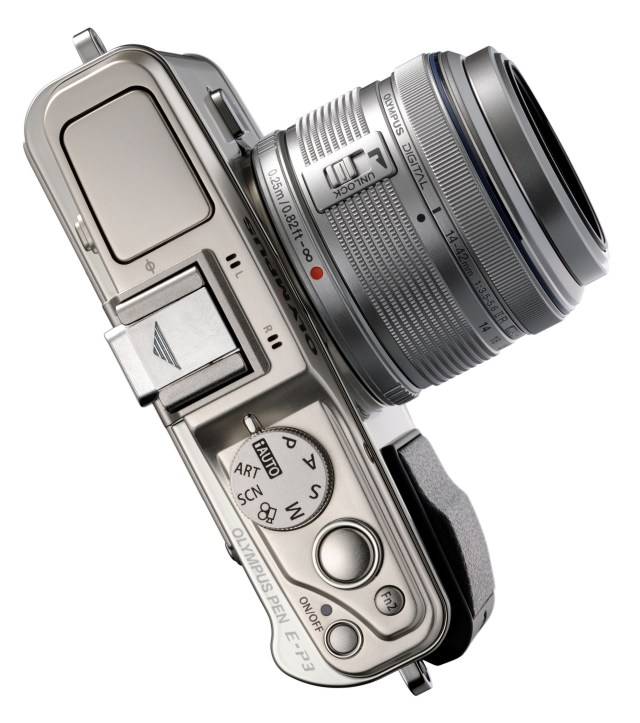
Another example of Olympus’s commitment to relentlessly enhancing and advancing its line of new generation system cameras, this new camera is certain to expand today’s fast growing market for lens interchangeable type digital cameras.
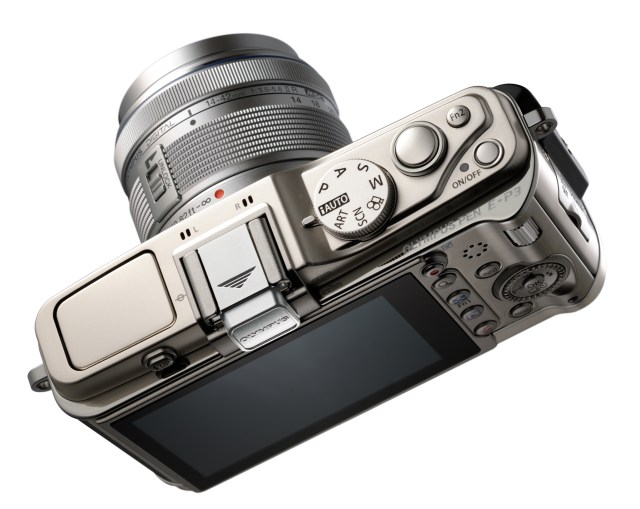

Other Features
Advanced Art Filters
– Incorporates ten Art Filters (with variations and Art Effects)
– Addition of a new variation (Pale & Light Colour II) and new Art Effects (Starlight and White Edge)
– Art Filter bracketing for recording multiple Art Filter pictures with a single shot
– Full HD Art Filter compatible with full HD movie (AVCHD)
– 3D Art Filter compatible with 3D Photo Shooting scene mode

Advanced Live Guide
– Instant recall of Live Guide with Fn button in P/A/S/M modes 3

Advanced movie recording
– Incorporates full HD movie shooting (AVCHD)
– Built-in stereo microphones

– Built-in GN10 (ISO200) flash with wireless controllability
– Built-in sensor-shift type image stabilization plus electronic movie image stabilization using the multimotion-compatible movie IS system 
– Tone control for individual variations of the tones of bright and dark sections 
– One-push digital teleconverter function
– Two Fn buttons (Fn1/Fn2) 
– Menu Guide to clarify menu items
– New scene mode: 3D Photo Shooting
– Proven, reliable dust reduction system
– Level Gauge display on Live View monitor

Main Feature Details
– World’s fastest AF (autofocusing)* achieved through the FAST AF system and lens incorporating the MSC (Movie & Still Compatible) mechanism

– New AF system boasts world’s highest speed
One of the primary areasOlympus concentrated on when developing the E-P3 was the AF (autofocusing) system. The result is the world’s highest AF speed, faster than any traditional SLR with mirrors. Because the new FAST AF system drives the Live MOS Sensor at double the previous speed (120 fps), image signals can be obtained more quickly than with previous systems. The speed of the AF computations that generate the contrast signal from the image signal in order to determine the degree of focusing has also been doubled. The advantages made possible by these improvements are further enhanced by the increase in the speed of communication for controlling the lens motion and the synergy of the MSC (Movie & Still Compatible) mechanism which facilitates fast, quiet movement of the AF system in the lens, as well as faster response time from shutter release to the start-up of AF system. Together, all of these improvements have resulted in imager AF speed that is almost three times faster than before, making it by far the world’s fastest.

*Among interchangeable lens type digital cameras available as of June 30, 2011. According to our in-house test conditions, with an M.ZUIKO DIGITAL 14-42mm f3.5-5.6 II R lens mounted on the OLYMPUS PEN E-P3 camera, with the lens at the infinity position, and with the subject at a distance of 1 meter and the lens focal length at 35mm (70mm at 35mm camera equivalent), AF calculation time is the time between when the shutter button is pressed and the start of exposure, focus to shutter release.

– 35-area multiple AF with group area selection
The number of focus selection areas has been increased from 11 to 35, enabling detailed, pinpoint AF across a wider area than before. To capture a moving subject accurately, the group area selection can apply AF to a limited region compose of 3 vertical and 3 horizontal areas.

– Full-time AF
The full-time AF function keeps the Live View image focused even when the release button is not pressed. As the camera always remains focused on whatever subject it is pointed at, S-AF shooting, which is initiated by a half-press of the shutter release button, can be engaged more quickly.

– Improved tracking AF performance keeps moving subject in focus
The functionality of the tracking AF that automatically tracks and focuses on a moving subject has been improved. Unlike the previous method, which tracked the feature points of the luminance signal and tended to lose the tracked subject when the shapes of the feature points changed, the new system used in the E-P3 employs an advanced detection method that uses the chroma signal and face detection data as well as the luminance signal, allowing it to continue focusing on the subject even when its shape changes or temporarily disappears during tracking.

– AF illuminator
The E-P3 is the first PEN series camera incorporating an AF illuminator to support autofocusing in low light. The light covers a range of about 3 metres and can be switched ON/OFF.

– Improved face & iris detection AF
The iris detection AF introduced on the E-PL2 has been made more versatile, allowing users to choose from “OFF”, “nearer-eye priority”, “left-eye priority” and “right-eye priority”. This facility is provided because the orientation of the face in portrait shooting is fixed so the focused eye is also usually fixed. Some photographers may prefer to be able to deliberately focus on the farther eye instead. These selections can be activated directly with a button.

– Higher-than-ever image quality and high ISO12800 sensitivity thanks to the new 12.3-megapixel High Speed Live MOS Sensor with full HD movie compatibility and new TruePic VI image processing engine

New 12.3-megapixel High Speed Live MOS Sensor with full HD movie compatibility
Based on the 12.3-megapixel High Speed Live MOS Sensor used with the previous PEN series cameras, the new High Speed Live MOS image sensor is now capable of recording a full HD, or 1960 x 1080/60i movie. It is also driven at a double speed for AF as described above. Furthermore, the use of the line addition method for readout of lines in movies and Live

– View images improves image reproduction, reducing jaggy oblique lines and other noise. Maximum sensitivity has also been boosted to as high as ISO12800.

– New TruePic VI image processing engine
The E-P3 incorporates the newly developed TruePic VI image processing engine. It achieves both improvement of the image processing quality as well as reduction of processing time.

– Advancement of image processing quality
Fine Detail Processing and Real Colour Technology
In addition to inheriting the Fine Detail processing that provided the E-5, our DSLR flagship, with extremely high resolution, the E-P3 incorporates Real Colour Technology to improve reproduction of colours that are hard to be reproduced accurately. This technology improves the reproduction and gradation expressions of previously hard-to-reproduce colours such as emerald green, yellow, thereby also increasing the 3D feeling of the image.

– Advanced Shadow Adjustment Technology (ASAT) for improved back light correction
The Shadow Adjustment Technology (SAT) used to improve gradations in dark areas when the Gradation Auto is set (manually, iAUTO, etc.) has been further enhanced to provide optimal performance even under extreme high contrast conditions such as shooting against the light. As a result, this new ASAT technology produces a natural image like that seen by the naked eye, optimizing the brightness of the under-lit area with respect to the highlight area to prevent both over- and under-exposure.

– MPEG4 (H.264) movie codec
The E-P3 incorporates the MPEG4 (H.264) movie codec to record AVCHD-format movies that can be played back on living-room AV components such as HDTVs and Blu-ray players.

Improved movie quality: Inter-frame flicker noise reduction
The inter-frame flicker noise reduction function reduces the flickering noise in motion JPEG movies and Live View display, as well as in AVCHD movies.

Improved processing speed

– Enhanced Art Engine
The Art Engine that handles image processing for the Art Filters has been further refined to speed up frame rates in Live View, provide faster response after shooting, as well as making possible such new functions as Art Filter bracketing and 3D Art Filter shooting. The result is a sophisticated Art Filter system that’s easier to use, as well as more flexible and creative.

– Improved sequential shooting response with faster return to Live View
As the previous image processing engines were designed based on viewfinder shooting, a single image processing core processed the recorded image and Live View image in sequence and was not capable of outputting the Live View image until the recorded image had been processed. The TruePic VI engine newly designed exclusively for the Micro Four Thirds System incorporates a Live View-dedicated image processing core so that it can output the Live View image during recorded image processing. This has dramatically reduced the time it takes to return to Live View after shooting, enabling faster response during sequential shooting and rapid SLR-style shooting.

– Advanced user interface featuring a 3.0-inch OLED display with touchscreen panel, high-definition text and graphics. High-quality design with full-metal body and sophisticated detachable camera grip

3.0-inch OLED display with touchscreen panel
The 3.0-inch OLED (organic EL) display used as the rear-panel monitor of the E-P3 can display video data equivalent to VGA (approx. 920,000 dots) using a special layout of 610,000 dots. With the ability to reproduce tight black and vivid colours thanks to OLED’s wide colour reproduction characteristic, this display provides a wide angle of view, rich colour expression and high resolution, all of which are sure to enhance the joy of photography. With two colour tone options of “VIVID” and “NATURAL”, the user can take advantage of the properties of the OLED for a vivid picture, or reproduce a tone similar to the LCD display used on PC monitors.

The monitor also features an electrostatic capacitance type touchscreen control in addition to the traditional button and dial control facilities. This allows the following operations to be performed simply by touching the panel surface.
– During recording: Touch shutter release, Touch AF, Touch enlargement, Touch Live Guide, AF area selection
– During playback: Frame advance/backward, enlargement/index (calendar) playback, one-touch enlargement by double-tapping

Of course, these operations are also available using conventional buttons and dials, as well as via the touchscreen panel, which can also be switched OFF if not needed. Long-term durability is assured by solid construction with the space between the cover and the panel sealed with optical adhesive that suppresses reflections due to airspace. The screen itself is treated with Anti-Fingerprint coating to minimize the diffused reflections due to finger oil. The result is excellent visibility, indoors and out.

– Advanced user interface with high-definition text and graphics
The E-P3’s user interface has been completely redesigned. The font and graphics used in the menus offer improved visibility and quality to render elegant graphical menus that are 7 attractive, easy to see, easy to understand, and easy to use.

– High-quality design with full-metal body
In spite of the built-in flash and accessory port, the E-P3 recreates the sophisticated design of original PEN, retaining the simple, elegant profile made popular by the E-P1. The full-metal body includes metallic rear panel button controls and effectively balances ruggedness and light weight. The mode dial has a metallic pear-skin finish, and metallic dials and buttons, particularly the power button and blue power indicator feel solid and durable. The cool touch of metal in the palm of hand, the comfortable weight, and excellent balance will satisfy any lover of cameras.

– Two types of detachable grip
To better satisfy the demands of camera buffs, the E-P3 features a detachable grip that can be changed or removed to suit the shooting style of each user. The user can detach the provided standard grip and replace with the optional MCG-2 Camera Grip to hold the camera more firmly or just use the camera without a grip for a simpler look.

– Other Feature Details

Advanced Art Filters
– Incorporates ten Art Filters (with variations and Art Effects)

Ever since the E-30 was introduced (December 2008), Olympushas been supporting the creativity of photographers by incorporating easy-to-use Art Filters in its lens interchangeable type digital cameras. The new E-P3 incorporates all ten Art Filters, as well as all the Art Filter variations and Art Effects developed by Olympus.

– Pop Art
Enhances colours, making them stronger and more vivid to create high-impact images with a pop-art feel.

-Soft Focus
Gives images a dream-like quality that creates a romantic and mystical atmosphere.

– Pale & Light Colour
Subdues highlights and shadows to assure muted colour tonalities that evoke a mood of reflection and nostalgia.

– Light Tone
Brightens the image to reveal more shadow detail and evoke a lighter mood.

– Grainy Film
Recreates the classic grainy look and tonality of black & white photography, imparting a 8 dramatic feel to images.

– Pin Hole
Adjusts colour and reduces brightness at the periphery, recreating the distinctive look of photos taken with a pinhole camera.

– Diorama
Creates the look of a miniature diorama by enhancing colour and contrast, and blurring the periphery to distort distance perception.

– Cross Process
Simulates the unexpected colour transpositions and look that result when negative film is processed with a positive film emulsion, or vice versa.

– Gentle Sepia
Gives images the look of a vintage sepia-tone print, with gentle contrast and well-defined shadows.

– Dramatic Tone
Represents real space in a more imaginary way by applying unrealistic tones of light and darkness based on local changes in contrast.

Addition of a new variation (Pale & Light Colour II) and new Art Effects (Starlight and White Edge)

With the PEN Lite E-PL2 (launched on January 2011), variations were introduced for the Pop Art, Grainy Film and Pin Hole Art Filters that slightly change the atmosphere of each filter. With the E-P3, a new variation is also available for the Pale & Light Colour filter. The Pale & Light Colour II variation is more reddish than the original Pale & Light Colour I and helps the user select a photographic expression closer to his or her own image

The Art Effect function that can add various composition effects to Art Filters has also been expanded with the E-P3. In addition to the existing Art Frame effect, which puts a frame around the image, the Pin Hole effect, which decreases the brightness around the periphery of the image, and the Soft Focus effect, which provides focusing with both sharpness in the centre and softness around it, Olympus has added the Starlight effect, which produces an effective trace of light in a night scene and the White Edge effect, which defocuses the four corners of the image in white
*1. These effects allow the photographer to more effectively produce exactly the image they desire and provide everyone with the opportunity to utilize exciting new creative expressions in both still images and movies*2
*1 The number and types of variations and the applicable effect functions are variable between Art Filters.
*2 When a movie is recorded using an Art Filter, the number of frames and presence/absence of audio and Art Effect are variable depending on the type of the Art Filter.

Art Filter bracketing for recording multiple Art Filtered pictures with a single shot
The Art Filter bracketing function can generate multiple pictures with different Art Filters with a single shot, making it possible to experiment with several different photographic effects at the same time. In addition to the Art Filters, this function can also be used to select multiple picture modes including Vivid, Natural, Flat and Portrait.

– Full HD Art Filter
*3 compatible with full HD movie (AVCHD)
Movie shooting with Art Filter is possible in full HD (AVCHD) format
*3 , allowing users to enjoy full HD Art Filtered movies on a large-screen TV with family or friends.

3D Art Filter
*3 compatible with 3D Photo Shooting scene mode
When the scene mode is set to 3D, the Art Filter can be applied to 3D photos
*3 Not available with the Starlight effect.

– Advanced Live Guide
Instant recall of Live Guide with Fn button in P/A/S/M modes
Since the E-PL1 (launched on March 2010), Olympus has been incorporating a new user interface called the Live Guide. Designed for users who do not have expert knowledge of photography but want to have creative control over their pictures, Live Guide lets users shoot the pictures they want by selecting an icon and operating a slide bar to control the major factors for the SLR photography including “colour vividness”, “colour balance”, “image brightness”, “depth of field (blur background)” and “subject in motion”. The names of these factors are expressed in daily, easy-to-understand languages without any jargon.

With the new E-P3, the Live Guide function, which previously was only available in iAUTO mode, can now be accessed with the Fn button in any of the P/S/A/M exposure modes. The touchscreen panel on the Live View monitor makes it possible to recall the Live Guide and operate the slide bar in a more intuitive manner.

– Advanced movie recording
Incorporates full HD movie shooting (AVCHD)
In addition to the popular Motion JPEG (AVI: approx. 30 fps) format
*1, which can be easily played back and edited on a PC, the new E-P3 can record movies in both full HD (AVCHD: 1920 x 1080/59.94i) and HD (AVCHD: 1280 x 720/59.94i) movie formats*2 for extended recording and playback on a large-screen high-definition TV set.
*1 Recording capacity per one file is limited up to approx. 2 GB; max. recording time is approx. 7 minutes.*2 Recording capacity per one file is limited up to approx. 4 GB; max. recording time is approx. 22 min. in full HD mode, approx. 29 min. in HD mode. Image sensor output is approx. 30 fps.

– Built-in stereo microphones
Olympus’s extensive experience in the field of IC recorders has made it possible to develop high-quality recording systems that offer extreme fidelity to the original sound and full presence. The camera body incorporates stereo microphones compatible with the linear PCM format (Motion JPEG mode) for high audio quality without compression, and Dolby Digital format (AVCHD mode). When high-quality external stereo microphones such as the SEMA-1 Microphone Set 1 (optional) is attached to the accessory port, audio input is switched automatically to the external stereo microphones facilitating higher quality stereo sound recording and effectively reducing wind noise.

– Built-in GN10 (ISO200) flash with wireless controllability
The E-P3 incorporates a GN10 (ISO200) electronic flash with built-in TTL metering. When the FL-50R, FL-36R and/or FL-300R external flashes are used, wireless control of multiple flashes is possible without an external commander. Firing mode and firing intensity settings for each of up to three groups and a built-in flash can be set easily on the LCD panel on the rear of the body. The built-in flash intensity can be set between 1/1 and 1/64 in 1-step increments.

– Built-in sensor-shift type image stabilization plus electronic movie image stabilization using the multi-motion-compatible movie IS system
The E-P3 incorporates an image stabilization mechanism based on image sensor shifting so handheld shooting with reduced image blurs is possible even in low-light scenes or telephoto shooting. This mechanism shifts the image sensor unit instantaneously and precisely, and is built into the camera body so image stabilization is possible with any lens, including an M.ZUIKO DIGITAL lens as well as an old lens mounted using an adapter if the focal length is input manually.

Furthermore, an electronic movie image stabilization function with multi-motion compatibility is incorporated to compensate for image blurs due to ordinary camera shakes to those caused by respiration and walking.

– Tone control for individual variations of the tones of bright and dark sections
As an extension of the brightness adjustment of the Live Guide, functions for individual adjustment of the brightness of only in the “bright section” or “dark section” is added to the exposure compensation function to enable adjustments equivalent to those available with the Live Guide even when this is not activated. These functions make easy the pictures with tight black with a taste of reversal film or advanced expressions for enhancing or eliminating the gradations of white of snow.

– One-push digital teleconverter function
The One-Push Digital Teleconverter function magnifies the captured image by 2X with digital processing for easy telephoto shooting. Assigning this function to the Fn button allows you to take 2X close-up photos at the touch of a button. And when you use it in combination with an optional M.ZUIKO DIGITAL ED 40-150mm f4.0-5.6R lens, you’ll be able to capture amazing super telephoto pictures with a focal length of 600mm (35mm camera equivalent). The captured image is output as a high-quality signal with all the original pixels ensuring the superior image quality thanks to superior image complement performance of the new TruePic VI image processing engine. 11

– Two Fn buttons (Fn1/Fn2)
For added convenience, more functions can be assigned to the Fn button. Conventionally, only one Fn button is provided, but the new E-P3 is equipped two Fn buttons, allowing you to assign a different frequently used function to each button.

– Menu Guide to clarify menu items
If two seconds pass without any operations during menu display, the camera enters the explanation display mode, popping up an explanation of each menu item whenever it is changed. As the user can find out what each function is used for and how it is used without the instruction manual, the explanation display is a big help for users who are not familiar with the camera or who have forgotten how to do some operations. Once the user is accustomed to the camera, pressing the INFO button turns the pop-up display off. Whenever an explanation becomes necessary, press the INFO button to start up the display again.

– Proven, reliable dust reduction system
If dirt or dust penetrating the camera body during lens replacement attaches to the low-pass filter or image sensor, it will show up in the image. This problem is particularly important with the E-P3 because its mirrorless structure does not cover the image sensor with the shutter screen.Olympushas been aware of the critical nature of this problem since the beginning of development of lens interchangeable type digital SLR cameras and solved it properly. When the camera is turned on, the SSWF (Super-Sonic Wave Filter) installed in front of the image sensor is activated to blast dust away from the image sensor with supersonic vibrations. The tremendous power of the supersonic waves manifests reliable dust reduction performance by even removing dust that cannot be removed merely by shaking the image sensor or dust that is attached by intermolecular force and cannot be removed by merely discharging static electricity.

– New scene mode: 3D Photo Shooting
The 3D Photo function has been newly added to the scene modes. After the first shot, simply sliding the camera following the guide takes the second shot and records a 3D file (MPO format). The recorded image can be played with powerful 3D playback on a 3D function-compatible PC or TV.

– Level Gauge display on Live View monitor
Using the dual axis sensor incorporated in the camera, a 2-direction level gauge corresponding to vertical and horizontal directions can be displayed on the Live View monitor.

– New Optional Accessories

FL-300R Electronic Flash
The FL-300R is a compact, lightweight external flash with a slim profile that matches any PEN camera. Featuring bounce and remote control capabilities, this flash achieves a GN (Guide Number) of 28 (ISO200-m) despite its compact, pocket-sized design. A tilting mechanism with max. 60° upward and 30° downward capability enables bounce flashing so that a soft expression with high-quality and deeper feelings can be enjoyed easily. Close-up flash shooting impossible with the camera’s built-in flash is also possible using the FL-300R.

The FL-300R is also compatible with remote flashing. The firing intensities of up to two groups of flashes can be controlled independently with wireless control.

The flash is equipped with a built-in wide panel, which can be used to cover an ultra-wide angle with a focal length of 9mm (equivalent to 18mm of 35mm cameras).

– Interchangeable Lens M.ZUIKO DIGITAL 14-42mm f3.5-5.6 II R (Silver/Black)
The M.ZUIKO DIGITAL 14-42mm f3.5-5.6 II R is the new standard lens for the PEN series cameras, launched at the same time as the E-P3. It has newly been designed to match the new line of PEN series while retaining the high performance of the previous M.ZUIKO DIGITAL 14-42mm f3.5-5.6 II standard zoom lens. It incorporates the MSC mechanism and implements fast, quiet AF using the inner focus method. Despite the compact size and light weight, it is applicable in a wide range from street shooting to portrait shooting.

– MCG-1/MCG-2 Camera Grips (Black/White)
These are the detachable camera grips optionally available for the E-P3. The MCG-1 is the same grip as the one standard as provided with the camera body, while the MCG-2 is a large-sized grip that can be interchanged easily with the standard type. The large grip will improve holding of the camera when the user needs to hold it more firmly, for example when using a telephoto lens.

– CS-29FBC Leather Front & Body Case
The CS-29FBC is a genuine leather full cover case designed exclusively for the OLYMPUS PEN E-P3. It can accommodate the camera together with the M.ZUIKO DIGITAL 14-42mm f3.5-5.6 IIR standard zoom lens, the M.ZUIKO DIGITAL ED 9-18mm f4.0-5.6 wide-angle zoom lens or the M.ZUIKO DIGITAL 17mm f2.8, M.ZUIKO DIGITAL ED 12mm f2.0 or M.ZUIKO DIGITAL 45mm f1.8 thin pancake lens mounted. Designed to enable quick shooting without taking the camera out of the case, it provides reliable protection for the lens and camera body.

– CS-30B Leather Body Jacket
The CS-30B is a genuine leather body jacket designed exclusively for the OLYMPUS PEN E-P3. It protects the sensitive parts of the camera body without detracting from its design. In addition to the practical aspect of camera body protection, the body jacket’s genuine leather and rugged construction exude a sense of both traditional craftsmanship and contemporary styling. The ideal complement for the OLYMPUS PEN E-P3, this jacket makes the camera even more fun to carry. Naturally, shooting and playback is possible while viewing the rear-panel LCD without taking the camera out of the body jacket.

– CSS-S109LLII Leather Shoulder Strap
The CSS-S109LLII is a genuine leather shoulder strap with an increased length adjustment range that makes it even more convenient than the CSS-S109LL shoulder strap. The strap length can now be made short enough to use as a neck strap and long enough to sling over the shoulder and across the chest. The colour can be coordinated with the body jacket.

– CSS-S114 Shoulder Strap
The CSS-S114 (launched on January 2011) is a beige-coloured shoulder strap that’s both fashionable and practical. Now available in brown and green as well, it features a warm, natural design that complements any of the new OLYMPUS PEN models, including the E-P3, E-PL3 and E-PM1. Made of luxuriously textured fabric, this strap can also be customized by attaching pin badges or other items. The length is about 138 cm, the optimum length to sling the camera over a woman’s shoulder and across her chest.

Body / Lens Colour Combinations Available
The following body/lens colour combinations are available.

 When the body colour is Silver or White, the lens colour is Silver.·
 When the body colour is Black, the lens colour is Black.·

OLYMPUS PEN E-P3 is available at Olympus authorised retailers.
For more information please visit http://home.olympusimage.com.sg/contactus/authorised_retailers.asp

Look out for Part II when I return with the specs for OLYMPUS E-PL3 .

Stay Tuned.

About Olympus Imaging Singapore
Olympus Imaging Singapore is the unparalleled industry leader in opto-digital technologies, delivering award-winning digital imaging products for the consumer and professional markets inSingapore. Driven by a strong commitment in providing innovative products and solutions of the highest quality, Olympus Imaging Singapore works closely with industry partners, customers and otherOlympusbusiness units in producing leading-edge products. These include analogue and digital cameras, professional SLR imaging systems, and voice recorders, amongst others. Olympus Imaging Singapore’s unrelenting efforts in superior customer service also bear testimony to its brand promise of delivering the best user experience to all consumers and professional users in the imaging field. For more information, please visit http://www.olympusimage.com.sg.

Posted in Brand: Olympus, Photography Articles & Videos | Tagged , , , , , | Leave a comment

HOYA PRO1 Digital ND16 Filter

Hoya Corporation Announces the new HOYA PRO1 Digital ND16 Neutral Density filter. 
 
The ND16 is a dark neutral density filter with a filter factor of 16, meaning there is 4 stop light loss. This is a great filters for slowing down shutter speeds to capture motion. An example: In daylight, maybe the slowest shutter speed possible without a filter could be 1/60 sec at F/22 By adding the HOYA PRO1 ND16, a shutter speed of 1/4 sec would be possible.

Another use of the ND16 would be controlling depth of field. With a strong ND16, a much wider aperture can be used. Wide apertures like F/1.4 and F1.8 create a very shallow depth of field and have the effect of isolating the subject from the background. Creative possibilities are endless with this type of filter.

The HOYA PRO1 Digital ND16 has all the features of the PRO1 Digital series such as DMC multi-coating to reduce reflections and a low profile.


Product packaging Identifyer.
(Don’t buy Fakes.)

How to identify a real distributor/ dealer selling genuine goods? 
Most dealers carries all 4 brands stated here within the same shop!
(Tokina lenses, Hoya filters, Kenko photo accessories and SLIK camera support systems.)
Posted in Brand: Others (Cosina, Carl Zeiss, Leica, Mamiya, Samyang, Vivitar, Zenitar,etc), Photography Articles & Videos, Uncategorized | Tagged , , , | 2 Comments

SIGMA APO 70-200mm F2.8 EX DG OS HSM receives TIPA Best Expert Lens Award

The Sigma Corporation (COO: Kazuto Yamaki) is pleased to announce that the SIGMA APO 70-200mm F2.8 EX DG OS HSM, a large aperture telephoto zoom lens optimized for use with the latest digital SLR camera and incorporating Sigma’s original OS function, has won the “TIPA Best Expert Lens” award. This lens was introduced to market in July 2010.
Name of Award :TIPA Awards 2011 Best Expert Lens
Product :SIGMA APO 70-200mm F2.8 EX DG OS HSM

This bright, high quality telephoto zoom lens contains 22 elements (including 3 SLD and 2 FLD glass elements) in 17 groups. The lens is designed to cover 24x36mm ”full-frame “sensors and has an optical image stabilisation system (OS) that compensates approximately four stops. Its HSM function assures smooth and silent auto focusing. Chromatic aberration is reduced to a minimum and sharpness is at a very high level over the entire focal length range.
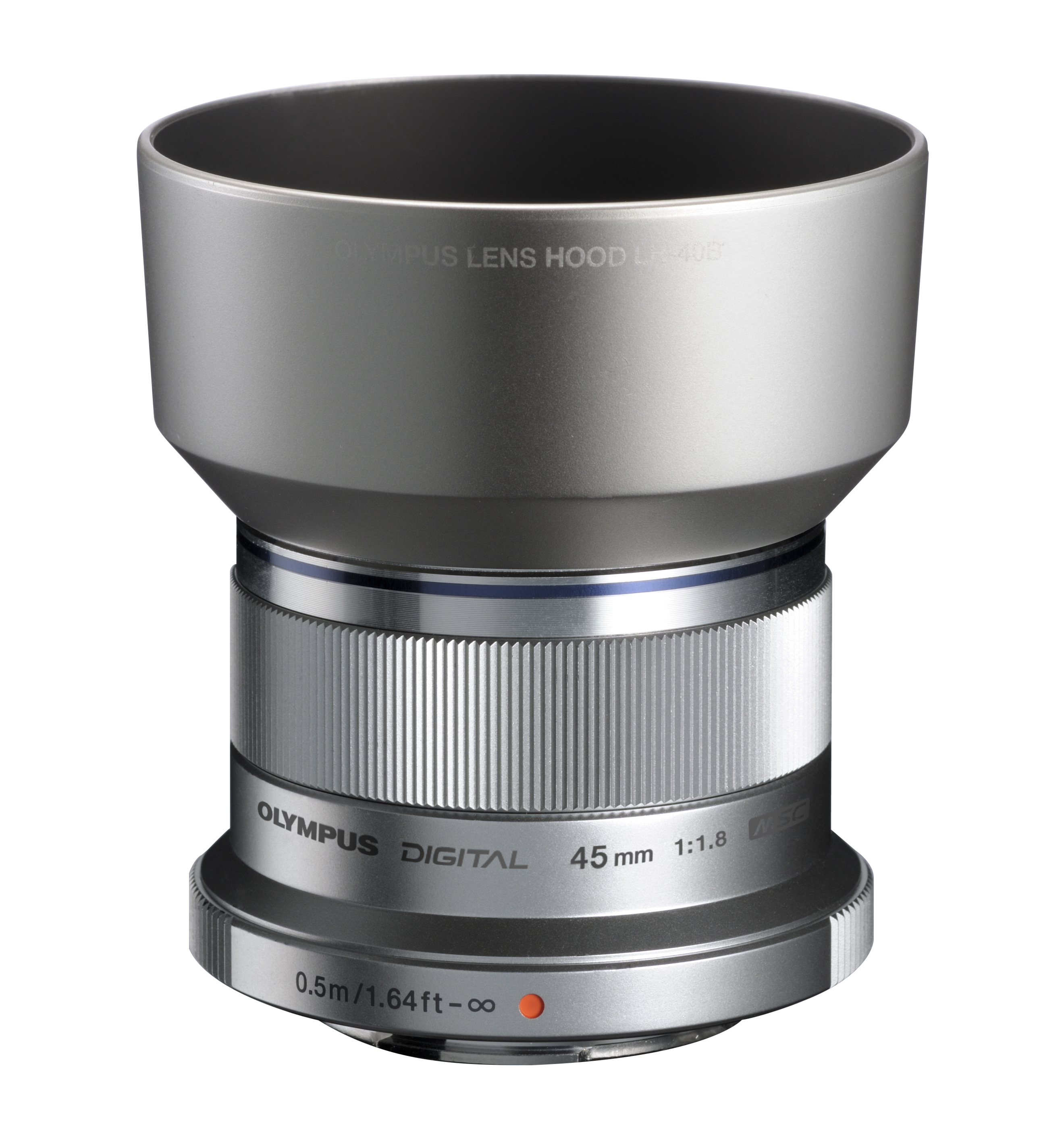
The Sigma Corporation is committed to continue the development of outstanding products that will answer the wide variety of customers` needs in the future.

*Currently, 29 publication from Europe, South Africa, Canada and USA are members of the TIPA (Technical Image Press Association) organization and chief editors and technical editors of these publications constitute this organization. Since 1991, TIPA has presented many awards in several sectors, including imaging.
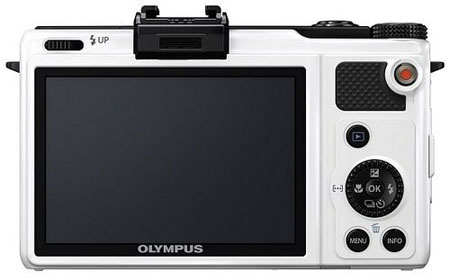
Posted in Brand: Sigma, Photography Articles & Videos, Uncategorized | Tagged , , | 3 Comments

OLYMPUS Wins Germany’s Red Dot Design Award for the Second Year in a Row

With Olympus XZ-1, a New Flagship Compact Digital Camera.

Olympus Corporation (President: Michael Woodford) is pleased to announce that, for the second year in a row, the OLYMPUS XZ-1 compact digital camera from Olympus Group has won the prestigious Red Dot Design award.

The award is given to designs in production for no more than two years, and judges those designs across nine categories, including degree of innovation, functionality, ergonomics, ecological compatibility, and durability. The “red dot” that is the mark of this award means that, whether in business or design, the product has been recognized as the best of the best.
(http://www.red-dot.de)

The OLYMPUS XZ-1 is the first compact digital camera to incorporate a ZUIKO-brand lens. Beginning with its use in Olympus’s first camera, the Semi-Olympus I of 1936, the ZUIKO lens has, for 75 years, continued to carry on the Olympus tradition of high-performance lenses.

However, not everyone who wants the high picture quality of an SLR is prepared to deal with changing lenses. Other users want a camera with high picture quality and lower size and weight than an SLR as a sub-camera for their SLR cameras, but don’t need it to be of the interchangeable lens type. For these people, Olympus has developed a compact camera that, unlike the PEN series, offers a fixed zoom lens and near-SLR picture quality.

The wide-angle 4X zoom lens (equivalent to 28 to 112mm on a 35mm camera) is very bright, with an open f-value of 1.8, while in the telescopic position, excellent brightness is achieved with an aperture of 2.5. This new flagship compact camera offers sharp imaging performance from the center to the periphery, in both wide-angle and telescopic modes.

Olympus Design
“Your Vision, Our Future” is the corporate slogan of the Olympus Group. Our design vision is “creating the future by realizing dreams”, and our design philosophy is “products that make people happy”. We believe that by consistently producing products with good design, we can send out the same message throughout the world and establish our brand identity.

Posted in Brand: Olympus, Photography Articles & Videos, Uncategorized | Tagged | 1 Comment

PENTAX 645D WINS GP JAPAN 2011 CAMERA OF THE YEAR

PENTAX 645D Medium-format Digital SLR Camera Wins “Camera of The Year” at Camera GP Japan 2011 Awards  
GOLDEN, CO.  PENTAX Imaging Company announced on behalf of PENTAX Japan that the PENTAX 645D medium-format digital SLR camera, first launched in June 2010, was selected as Camera of The Year at Camera GP Japan 2011 Awards. The winning camera features exceptional reliability and superb operability, along with remarkable, super-fine image quality assured by approximately 40 effective megapixels.
   The Camera Grand Prix Awards is held annually under the sponsorship of the Camera Journal Press Club (CJPC), a group of photography writers from the top 11 photo and camera magazines in Japan. This is one of the most prestigious camera awards in the country, representing the CJPC’s selection of the most distinguished still cameras introduced to the Japanese market during the year. In addition to Camera of The Year, the group also selected winners in three different categories: the Readers Award, with voting by magazine readers; the Editors Award, a selection by professional writers from all photographic and imaging products; and the Lens Award, a new award established this year.
  
Winners are decided by a 57member selection panel consisting of the editors and publishers of club-member magazines, photographic experts, technical writers and professional photographers, as well as CJPC members. The PENTAX 645D was selected over 172 other new products introduced in Japan from April 1, 2010 to March 31, 2011.
The panel concluded that, as the first medium-format digital SLR camera launched by PENTAX, the 645D represented a  combination of many advanced and photographer-friendly features, including an extra-large CCD image sensor, designed to deliver super-fine images and all housed within a highly dependable dust-proof, weather resistant body. It further praised PENTAX for never abandoning the development of the 645D, bringing it through a series of trials and errors over many years to perfect it as a super-high-resolution, multi-featured medium-format digital camera that is far more affordable than competitive models. The camera’s compatibility with conventional lenses also played a crucial role in the decision of this year’s Camera of The Year.
  
Founded in 1984, the Camera Grand Prix Awards this year celebrated the 28th Camera of The Year winner. PENTAX has had three winners in the past: the PENTAX Z-1 Quartz Date in 1992; the PENTAX 645N in 1998; and the PENTAX K10D in 2007. The 645D now joins them as PENTAX’s fourth winner of this prestigious award.
  
 The PENTAX 645D has already been selected as the Best D-SLR Professional in Europe 2011 by the prestigious Technical Image Press Association (TIPA) as well as an AMERICAN PHOTO Magazine’s Editor’s Choice.  These highly coveted  awards in Japan, Europe and the United States help demonstrate the 645D’s outstanding performance and technical excellence. 
Posted in Brand: Pentax, Photography Articles & Videos | Tagged | Leave a comment

Canon U.S.A. Provides Updates On Highly Anticipated EF Lens Availability For 2011


LAKE SUCCESS, N.Y., May, 2011
– Canon U.S.A., Inc., a leader in digital imaging, today announced updated availability dates for five of its EF lenses.

  • Canon EF 8-15mm f/4L Fisheye USM lens is scheduled to be available in late July 2011
  • Canon EF 300mm f/2.8L IS II USM lens is scheduled to be available in late August 2011
  • Canon EF 400mm f/2.8L IS II USM lens is scheduled to be available in late August 2011
  • Canon EF 500mm F4L IS II USM lens is scheduled to be available in December 2011
  • Canon EF 600mm F4L IS II USM lens is also scheduled to be available in December 2011
Canon EF 8-15mm f/4L Fisheye USM lens

With its unique focal length range, the EF 8-15mm f/4L USM is the world’s widest fisheye zoom lens. It delivers 180-degree diagonal angle of view images for all EOS SLR cameras with imaging formats ranging from full-frame to APS-C, and provides 180-degree circular fisheye images for full-frame EOS models. Professional photographers and cinematographers will revel in the unique perspectives afforded to them through this lens, particularly when coupled with the highly popular full-frame EOS 5D Mark II DSLR camera.

The Canon EF 8-15mm f/4L Fisheye USM lens is expected to be available in late July for an estimated retail price of USD$1,399.

Canon EF 300mm f/2.8L IS II USM lens

The Canon EF 300mm f/2.8L IS II USM is the sixth generation of a venerable family of Canon 300mm f/2.8 lenses that began in 1974, and have become famous for their exceptional sharpness, contrast and color fidelity. Ideal for a wide range of applications ranging from professional photojournalism and sports photography to nature and wildlife, Canon’s 300mm f/2.8 lenses have always led the industry with new technical advances in every generation. The EF 300mm f/2.8L IS II USM lens carries on this tradition with improved image quality, lighter weight, improved Image Stabilization and enhanced durability, making it a great option for handheld work in the field. The optical formula of the new lens has been upgraded with the inclusion of two fluorite lens elements for improved image quality and reduced chromatic aberration. Canon has reduced the overall weight of the lens by 8 percent to 82.9 oz., making it the lightest weight lens in the Canon EF 300mm f/2.8 series.

The Canon EF 300mm f/2.8L IS USM lens is expected to be available in late August for an estimated retail price of USD$6,599.

Canon EF 400mm f/2.8L IS II USM lens

Quintessential for many sports assignments including baseball, football, soccer and golf, Canon’s professional 400mm f/2.8 lenses provide the light-gathering capability and long telephoto reach that photographers need to freeze the action and fill the frame. The Canon EF 400mm f/2.8L IS II USM is the fifth generation in Canon’s 400mm f/2.8 series and the successor to the current EF 400mm introduced in 1999. The new lens has been engineered for the ultimate in optical performance through the use of two fluorite lens elements for improved quality and reduced chromatic aberration. Canon has reduced the overall weight of the lens by a substantial 28 percent from 189.4 oz to 135.8 oz, making it Canon’s lightest weight 400mm f/2.8 lens ever.

The Canon EF 400mm f/2.8L IS USM lens is expected to be available in late August for an estimated retail price of USD$10,499.

Canon EF 500mm f/4L IS II USM Lens for Sports and Nature Photography

The Canon EF 500mm f/4L IS II USM offers professional photographers a lighter weight option for those situations that require a long focal length with improved image quality and enhanced durability over its predecessor. Great for a wide range of applications, the EF 500mm f/4L IS II USM lens is ideal for professional photojournalism, sports photography and nature and wildlife photography. The optical formula of the new lens has been enhanced to include two fluorite lens elements for improved image quality and reduced chromatic aberration. Canon has reduced the overall weight of the lens by 18 percent from 136.5 oz to 112.5 oz.

The Canon EF 500mm f/4L IS II USM lens is expected to be available in December for an estimated retail price of USD$9,499.

Canon EF 600mm f/4L IS II USM Lens for Wildlife and Photojournalism

The Canon EF 600mm f/4L IS II USM is the successor to the current EF 600mm IS lens first introduced in 1999. This new lens has been engineered for outstanding optical performance and durability and includes two new fluorite lens elements for improved quality and reduced chromatic aberration. Helping photographers in the field, Canon has reduced the overall weight of the lens by a substantial 27 percent from 189.1 oz to 138.3 oz.

The Canon EF 600mm f/4L IS II USM lens is expected to be available in December for an estimated retail price of USD$11,999.

About Canon U.S.A., Inc.

Canon U.S.A., Inc., is a leading provider of consumer, business-to-business, and industrial digital imaging solutions. Its parent company, Canon Inc. (NYSE:CAJ), a top patent holder of technology, ranked fourth overall in the U.S. in 2010†, with global revenues of more than US $45 billion and is listed as number five in the computer industry on Fortune Magazine’s World’s Most Admired Companies 2011 list. Canon U.S.A. is committed to the highest levels of customer satisfaction and loyalty, providing 100 percent U.S.-based consumer service and support for all of the products it distributes. At Canon, we care because caring is essential to living together in harmony. Founded upon a corporate philosophy of Kyosei – “all people, regardless of race, religion or culture, harmoniously living and working together into the future” – Canon U.S.A. supports a number of social, youth, educational and other programs, including environmental and recycling initiatives. Additional information about these programs can be found at www.usa.canon.com/kyosei. To keep apprised of the latest news from Canon U.S.A., sign up for the Company’s RSS news feed by visiting www.usa.canon.com/rss.

Posted in Brand: Canon, Photography Articles & Videos | Tagged , , , , | Leave a comment

Samyang 35mm 1:1.4 AS UMC with Pentax K and Sony Alpha mount!

Delta company – sole distributor of  Samyang brand for Europe announces that two new models of Samyang 35 mm 1:1.4 AS UMC are released for sale today. The lens is now available with Pentax K and Sony Alfa mounts.

The list of currently available Samyang 35mm 1:1.4 AS UMC lens includes four mounts: Canon EF, Pentax K, Sony Alpha and one version of Nikon AE mount equipped with micro-processor. Retail price for Pentax and Sony Alfa model is on the level of Canon EF version – EUR 399 gross.

Check with your local Samyang Dealers on Availability. :)~

Posted in Brand: Others (Cosina, Carl Zeiss, Leica, Mamiya, Samyang, Vivitar, Zenitar,etc), Photography Articles & Videos, Uncategorized | Tagged , , , , , | Leave a comment

Nikon D7000 Wins the CameraGP2011 Readers Award


TOKYO-Nikon Corporation is pleased to announce that the Nikon D7000 digital-SLR camera is the recipient of the CameraGP2011 Readers Award.


This Readers Award was established in 2008 to commemorate the 25th anniversary of the Camera Grand Prix. The recipient of this year’s award was selected with voting by general users between March 28 and April 10, 2011. With the selection of the Nikon D7000 this year, Nikon digital cameras have received the Readers Award three times in the past four years, proving just how highly regarded the cameras are by a large number of users.

The D7000 was also the recipient of the TIPA Awards 2011 Best D-SLR Advanced award.

Primary reasons for Nikon D7000 selection
Comments received from users who voted this year indicate that the D7000 offers a high level of satisfaction in terms of functions, image quality, flexibility and size; the camera is equipped with the necessary functions and more, all of which surpass expectations; the camera is very easy to use, even for those new to digital-SLR; and so on.

D7000 primary features

  • A new DX-format CMOS image sensor and new image-processing engine, EXPEED 2, enable capture of high-definition images with superior image quality
  • Viewfinder frame coverage of approximately 100% in a compact, elegant body that offers both authenticity and flexibility
  • A new 2,016-pixel RGB sensor
  • A new 39-point AF system
  • D-Movie for recording and editing of full HD movies
  • Live view function that can be smoothly enabled with the dedicated live view switch
  • Double SD memory card slots that enable use of two SD memory cards (SDHC, SDXC also supported)

    www.nikon.co.jp

Posted in Brand: Nikon, Photography Articles & Videos, Uncategorized | Tagged , , | Leave a comment

SONY INTRODUCES WORLD’S SMALLEST, LIGHTEST INTERCHANGEABLE LENS CAMERA WITH APS-C SIZED SENSOR

“Easy-to-use a NEX-C3 Features 16.2 Megapixels, HD Video and Friendly New Interface ”

SAN DIEGO, June 8, 2011 – Sony’s new α NEX-C3 is the world’s smallest, lightest interchangeable lens camera with an APS-C sized sensor.

Offered in a range of stylish colors, the NEX-C3 brings the promise of DSLR-quality photography to the millions of consumers looking to take professional-looking photos without the size and bulk of traditional DSLR cameras.

The NEX-C3 features an attractive new body design that combines a satisfyingly solid metal top casing with an easy-to-use streamlined grip shape.  Reducing the size of its internal circuitry visibly shrinks the camera’s size and achieves a body weight of just 225g (approximately 8 ounces) – nearly six percent lighter than its predecessor, the NEX-3 camera. Image quality, functionality and usability of the NEX-C3 camera also surpass that of the NEX-3 model.

The resolution of the camera’s large Exmor™ APS HD CMOS sensor is boosted to 16.2 effective megapixels, capturing stills and 720p HD video with breath-taking clarity. The large, DSLR-sized sensor also lets users produce pro-quality background defocus effects, whether shooting HD video or stills.

“Building on the success of last year’s α NEX launch, the new NEX-C3 model takes the idea of ‘small camera body, SLR-quality photos’ to a whole new level,” said Kristen Elder, director of the alpha digital imaging business at Sony.  “This camera’s brand new, large CMOS sensor and user-friendly interface will allow all photographers, regardless of experience level, to produce unique, custom-styled photographs. The NEX-C3 is a perfect combination of design, performance and creativity that fits a wide range of activities and shooting styles.”

Photo Creativity
The intuitive new Photo Creativity interface on the NEX-C3 camera puts sophisticated controls within easy reach, whether users are shooting stills or HD Video.   Technical terms like ‘aperture’, ‘exposure value’ and ‘white balance’ are replaced with the friendlier and more intuitive ‘background defocus’, ‘brightness’ and ‘color’, allowing users to easily create custom-styled photographs. A traditional interface with Aperture/Shutter Priority, Manual and custom functions is always available for experienced users, along with highly customizable soft-keys for programming direct access to important controls.

With the NEX-C3 camera, users don’t need to dig into confusing menu options or guess their effect on a composition. They just need to turn the camera’s rear-mounted control wheel and instantly see the effect of their settings previewed on screen. Also, two or more different settings can be combined to create more sophisticated creative effects.

A new in-camera ‘Picture Effect’ setting lets users add extra impact to stills or HD video during shooting, without the worry of editing images afterwards. ‘Picture Effect’ options include Partial Color, Retro Photo, Pop Color, High Contrast Monochrome, Posterization, High-key and Toy Camera. There’s also a ‘Soft Skin’ effect that removes wrinkles and blemishes from portrait subjects.

Tilting for comfortable viewing at any angle, the high contrast 3-inch (measured diagonally) Xtra Fine LCD features TruBlack screen technology for high-contrast images with rich, deep blacks. This is an ideal way to compose shots and judge the effect of adjusting picture settings, even when viewing outdoors in bright sunlight.

Long-Lasting Battery
The NEX-C3 works even harder to capture amazing images and HD video between battery charges. Improved energy efficiency boosts battery life to a generous 400 still shots per charge – a more than 20 percent increase from the both the NEX-5 and NEX-3 cameras.

Multi-Shot Imaging Technologies
Sony’s Advanced multi-shot technologies further broaden the possibilities of the NEX-C3 camera. 3D Sweep Panorama™ mode captures extra-wide images that can be viewed in 3D on a 3D television with compatible 3D glasses. Auto HDR “stacks” a high-speed burst of three successive exposures to capture extreme shadow and highlight details in a single frame. Similarly, Handheld Twilight and Anti-Motion Blur modes automatically combine six exposures to capture smooth, low-noise images. This avoids hand-blur and subject-blur when shooting in available light.

New E-mount 30mm Macro Lens and Other Compatible Accessories
The versatility of the α E-mount compact camera system grows with new style-matched accessories to expand shooting possibilities even further.

Joining the range of E-mount interchangeable lenses, the SEL30M35 is currently the world’s lightest life-size macro lens (approx 4.9 ounces) for interchangeable-lens cameras. This high-quality 30mm F3.5 macro lens features a 1:1 magnification ratio and minimum working distance of just 0.95 inches (2.4 cm), making it ideal for capturing detail-packed close-ups of small subjects like flowers and insects. Despite its extremely compact size, the SEL30M35 employs one ED glass and three aspherical lens elements for excellent optical performance, with minimized aberration and very high edge-to-edge sharpness and contrast. It also offers smooth, quiet autofocus operation whether shooting stills or HD video. The macro lens is supplied with a matching lens hood.

Also available as an option, the new HVL-F20S is a style-matching flash that clips onto the  Smart Accessory Terminal of NEX-C3 and other E-mount cameras. Powered directly by the camera, the flash requires no batteries, making it ultra-compact and light weight for travelling. With a generous GN20 (50mm, at ISO 100, m) flash power rating and adjustable head, it’s ideal for creating natural fill-in and bounce flash effects with portraits and everyday shooting subjects.

The expanded range of coordinating accessories features a new body case/lens jacket and a soft carrying case.

The new camera is also compatible with Sony’s full line of SD memory cards, including the newest Class 10 versions, as well as the Memory Stick PRO-HG Duo HX series.  Available in capacities up to 32 GB, both media enable higher read speeds for more stable and optimal performance by Sony hardware features such as high-speed burst shooting or HD movie shooting.

Firmware update for NEX-5, NEX-3
A firmware upgrade (Version 4) adds the new ‘Picture Effect’ function to existing NEX-5 and NEX-3 cameras. It also adds a Peaking function to assist with more precise manual focusing. This upgrade will be available June 20thand can be downloaded from: (www.esupport.sony.com).

Pricing and Availability
The new NEX-C3 ultra-compact digital camera will be available this August in silver, black and pink with an 18-55mm kit zoom lens (model SEL1855) and will cost about USD$650.  It will also be offered in black only with a 16mm lens (model SEL16F28) for about USD$600.

The new SEL30M35 E-mount Macro lens will be available this October for about USD$250 and the HVL-F20S flash will be available this August for about USD$150.

The camera kits, macro lens and new flash will all be sold at Sony retail stores (www.sonystyle.com ) and other authorized dealers nationwide

Posted in Brand: Sony, Photography Articles & Videos, Uncategorized | Tagged , , , , | Leave a comment

Tamron Wins the first Camera GP 2011 Lens of The Year

(Tamron 60th anniversary model)

World’s smallest and lightest*1 15x zoom lens for digital SLR cameras (APS-C size)

Optical equipment manufacturer Tamron Co., Ltd. (Headquarters: Saitama City, Japan / President and CEO: Morio Ono) that is celebrating its 60th anniversary last year has won the first Camera GP 2011 Lens of The Year held by the Camera Journal Press Club (Japan). That award was won for Tamron’s 18-270mm F/3.5-6.3 Di II VC PZD*2 (Model B008), the world’s smallest and lightest 15x zoom lens.


Winning lens and award of Camera GP 2011 Lens of The Year

The following highly acclaimed aspects are the reasons for selection as Lens of the Year. The lens incorporates the new Piezo Drive (PZD) autofocus drive system. It has a more compact and light optical system, even while achieving high image quality. It is equipped with a vibration compensation (VC) image stabilization mechanism that is even more compact than before. And it is a lens symbolizing Tamron as a pioneer in all-in-one zoom lenses that is always striving for more.

  • *1.For digital SLR all-in-one zoom lenses with a 15x zoom ratio surveyed by Tamron as of May 2011.
  • *2.PZD (Piezo Drive) is a standing wave ultrasonic motor system developed by Tamron. The motor is faster and quieter than DC motors when the AF drive is operated. It also has an actuator that facilitates lens design and reduced size compared with ring type ultrasonic motors.

 Reason for selection (excerpts)

  • ・ Achieves compactness and light weight for excellent portability at 96.4 mm long and 450 g, even though it is a 15x all-in-one zoom lens.
  • ・ Equipped with Tamron’s first Piezo Drive (PZD) standing wave ultrasonic motor system with excellent quietness and quick focusing.
  • ・ Improves optical performance by employing features such as high refractive index aspherical lenses and low dispersion glass that compensate well for various kinds of aberration.
  • ・ Has a 13 group 16 element construction with two fewer lenses than previous models for compactness and lightness.
  • ・ Equipped with the new vibration compensation (VC) image stabilization mechanism that achieves up to approximately four stop compensation effect converted to shutter speed.
  • ・ Made to commemorate the 60th anniversary of Tamron’s founding.

Camera GP 2011 Lens of The Year
The Camera GP held since 1984 is an extremely prestigious award where winners are selected through an open vote by a panel made up of Camera Journal Press Club members, top editorial staff of the member publications, academic experts, camera technical writers, professional photographers, and TIPA as a special member of CJPC. Lens of The Year added this year to Camera GP2011 was given to the best lens out of those released in Japan from April 1, 2010 to March 31, 2011 as selected by a 57-member panel.

Posted in Brand: Tamron, Photography Articles & Videos, Uncategorized | Tagged , , | Leave a comment

SONY INTRODUCES α35 DSLR CAMERA

WITH LEADING VIDEO AND STILL PERFORMANCE POWERED BY TRANSLUCENT MIRROR TECHNOLOGY.


“Light, Compact Camera Delivers 16.2 Megapixels and New In-camera ‘Picture Effect’ Creative Capabilities”

SAN DIEGO, June 8, 2011 — Light, compact and easy to use, Sony’s new α35 (SLT-A35) interchangeable lens camera brings pro-style shooting speeds and diverse creative options to photographers of all abilities.

Building on the acclaimed α33 and α55 models, the α35 camera with Sony’s Translucent Mirror Technology allows responsive, accurate continuous autofocus – whether shooting high-speed still photos or recording full HD movies.


“Our Translucent Mirror Technology continues to push the limits of modern DSLR technology,” said Kristen Elder, director of the alpha digital imaging business at Sony Electronics. “The new α35 camera combines this unique innovation with a newly developed APS HD CMOS sensor and a diverse, user-friendly interface, making it a compelling choice for experienced photographers and first-time SLR buyers alike.”

She added, “Amateur photographers will appreciate the on-screen Help Guide, which gives a clear explanation of selected functions and how they’re used. More advanced photographers will welcome features such as a top panel-mounted button that is fully customizable, allowing instant recall of any one of 14 frequently-used functions according to their preference.”


Premium, High-Speed Performance
Making its debut on the α35 camera, Tele-zoom High Speed Shooting magnifies a central portion of the image area providing an effective 1.4x magnification (appx) while shooting at up to 7 fps. Providing continuous tracking autofocus of still or moving objects, this feature is ideal for capturing fast-moving sports, children’s expressions at just the right moment or distant subjects with a high-speed burst of frames. There’s also a rapid up to5.5 fps drive mode that offers full-resolution continuous shooting with tracking AF.

With a resolution of 16.2 effective megapixels, the Exmor™ APS HD CMOS sensor delivers stunningly detailed, low-noise still and HD video images. Complementing the sensor’s extremely high resolution and sensitivity, the camera’s powerful BIONZ® processor optimizes image data to assure flawless images with rich, natural color reproduction. A maximum sensitivity of ISO 12800 and extension to ISO 25600 makes it possible to capture beautifully natural still images and HD video in low light.

Advanced Quick AF Live View continuously displays a real-time output from the main image sensor during still or Full HD video shooting. Light is partially directed from the translucent mirror to an AF sensor to permit non-stop precision TTL phase-detection autofocus – a benefit not possible with traditional DSLR cameras.

Shooting stills or AVCHD™ video, users can enjoy a superbly detailed view on the high-quality 3-inch Xtra Fine LCD™ display. Sony’s TruBlack™ technology assures high-contrast images with rich, deep blacks – even when shooting outdoors.

The high-resolution Tru-Finder™ display offers a precision alternative to framing shots on the camera’s LCD. Offering an extremely detailed, high contrast image with full 100% field coverage, it’s ideal for live preview of picture effects and exposure adjustments. Accurate composition of landscapes, architecture and other scenes is enhanced by 3 selectable grid line patterns.

Creative New “Picture Effects”
The α35 model offers a new in-camera ‘Picture Effect’ setting that lets users add extra impact to stills or Full HD video during shooting, without the worry of editing images afterwards. Effects can be previewed on the camera screen, allowing photographers to see the result of a chosen effect instantly rather than post-shooting. The inspiring palette of artistic treatments includes Retro Photo, High-key, Toy Camera and Posterization.

It’s also easy to produce dramatic Partial Color effects, with a single color highlighted against the rest of the image in monochrome. This popular effect is normally achieved through a series of painstaking steps using photo editing software. With the new α35 camera it’s both automatic and instant.

Improved Battery Life and Compatible α Accessories
Reductions in power consumption boost the camera’s battery life to a generous 440 still shots (approx. when using the rear LCD panel) between battery charges – a 30 percent increase over its predecessor.

The α35 model is compatible with the full range of 32 A-mount interchangeable lenses that includes six Carl Zeiss® lenses, as well as the full range of alpha accessories including flashes, carrying cases, LCD monitors and more.

 The new camera is compatible with Sony’s full line of SD memory cards, including the newest Class 10 versions, as well as the Memory Stick PRO-HG™ Duo HX series.  Available in capacities up to 32 GB, both media enable higher read speeds for more stable and optimal performance by Sony hardware features such as high-speed burst shooting or HD movie shooting.

 Firmware Upgrade for A33 / A55 Models
 Available beginning June 20th, a firmware update for existing α33 and α55 cameras adds several creative and operational enhancements.

Support for the ‘Picture Effect’ function featured on the new α35 model is now offered. High-Speed Synch is supported during wireless operation with a compatible external flash (α55 only). Ergonomics are further improved with revised menus and a new mode that lets users switch shooting parameters overlaid on-screen for clear, uncluttered composition. The a33 and a55camera’s Digital Level Gauge can also be displayed when shooting via the optional CLM-V55 external LCD monitor. Frequently used features can now be custom-assigned to the D-RANGE button for rapid, menu-free access.

The upgrade can be downloaded from: (www.esupport.sony.com).

 Pricing and Availability
The new α35 interchangeable lens camera will be available this August with an 18-55mm kit zoom lens (model SEL1855) for about USD$700.  It will also be offered as a body-only (without kit lens) for about USD$600. 

Both the camera kit package (model SLT-A35K) and body-only (model SLT-A35) will be sold at Sony retail stores (www.sonystyle.com)  and other authorized dealers nationwide.

Posted in Brand: Sony, Photography Articles & Videos | Tagged , , | Leave a comment