SIGMA Photo Pro 5.0 software – is now available for download

June 10, 2011
The Sigma Corporation is pleased to announce that SIGMA Photo Pro 5.0 (Ver.5.0.0.1) for Windows and SIGMA Photo Pro 5.0 (Ver.5.0.0.2) for Macintosh is available for download.

Users of DP series and SD series cameras can now download the latest Sigma Photo Pro software.

Benefits of the Sigma Photo Pro software update:

SIGMA Photo Pro 5.0 (Ver.5.0.0.1) for Windows

  • The redesigned interface offers greater functionality and convenience to give full expression to your creative ideas.
  • Compatibility with RAW file of SD1

SIGMA Photo Pro 5.0 (Ver.5.0.0.2) for Macintosh

  • The redesigned interface offers greater functionality and convenience to give full expression to your creative ideas.
  • Compatibility with RAW file of SD1

SIGMA Photo Pro 5.0 (Ver.5.0.0.1) for Windows and SIGMA Photo Pro 5.0 (Ver.5.0.0.2) for Macintosh is available for download at the following site: SD1 Special Site
(http://www.sigma-sd.com/SD1/jp/photopro.html)

 
Posted in Brand: Sigma, Photography Articles & Videos, Uncategorized | Tagged , | Leave a comment

Getty Images Completes Acquisition of Photolibrary

Renowned Imagery and Collections will Enable the Company to Meet Growing Demand for Versatile Creative Content

NEW YORK, June 1 2011 – Getty Images, a leading creator and distributor of visual content and other media, today announced that it has successfully completed the acquisition of Photolibrary, a leading provider of creative stills imagery. The acquisition was first announced on April 27 2011 and will bring Photolibrary’s renowned collections, including Peter Arnold and Oxford Scientific, to even more customers around the world.

“The demand for compelling creative content continues to increase around the world and it represents a vital part of the imagery industry. This acquisition positions us to meet and exceed our customers’ demand for this unique content, across both the Asia Pacific region and globally” said Jonathan Klein, co-founder and CEO of Getty Images.


Picture: Jonathan Klein

With the combined resources of Getty Images and Photolibrary, Getty Images will build upon their complementary geographic presence whilst making Photolibrary’s content more widely available for global online distribution.

The acquisition was driven by customers’ growing appetite for a greater choice of both local and global content. The content will be supported by Getty Images’ industry-leading Web site and worldwide imagery distribution platform, which features search in local languages and purchase in local currencies and leads the industry in delivery speed and service.

About Getty Images
Getty Images is one of the world’s leading creators and distributors of still imagery, footage and multimedia products, as well as a recognized provider of other forms of premium digital content, including music.  Getty Images serves business customers in more than 100 countries and is the first place creative and media professionals turn to discover purchase and manage images and other digital content.  Its award-winning photographers and imagery help customers produce inspiring work which appears every day in the world’s most influential newspapers, magazines, advertising campaigns, films, television programs, books and Web sites.  Visit Getty Images at www.gettyimages.com to learn more about how the company is advancing the unique role of digital media in communications and business, and enabling creative ideas to come to life.

Posted in Photography Articles & Videos | Tagged , , | Leave a comment

Sigma Corporation of America to ship SD1 camera in early June

May 20, 2011 – Sigma Corporation of America to ship SD1 camera in early June

46-megapixel DSLR creates new market for medium-format photographers

Ronkonkoma, NY, May 20, 2011 – Sigma Corporation of America, a leading researcher, developer, manufacturer and service provider of some of the world’s most impressive lines of lenses, cameras and flashes, is pleased to announce that its flagship DSLR, the Sigma SD1, will be available for purchase for the MSRP of $9,700 in early June.

This 46-megapixel DSLR is delivered in a splash-proof, easy-to-handle build that is similar to that of a classic 35mm camera. Professional and high-end enthusiast photographers will utilize the SD1’s exclusive Foveon 23.5×15.7mm APS-C X3 direct image sensor to capture exceptionally rich and detailed images that have a film-like quality. Users will also benefit from Sigma’s wide selection of interchangeable lenses that are compatible with the SD1.

“The SD1 will carve out a new category in the market placeby providing high-end photographers with an alternative to very expensive medium-format cameras and digital backs, while offering unrivalled image quality,” said Mark Amir-Hamzeh, president of Sigma Corporation of America.  “By embracing the SD1, serious photographers will also be able to take advantage of Sigma’s extensive line-up of affordable lenses, which are compatible with this new camera. The selections of lenses for medium-format cameras on the market are somewhat limited, so this will be a huge advantage for SD1 users. This is undoubtedly a very special camera, and we’re thrilled to share it with the photo community.”

In addition to the 23.5×15.7mm APS-C X3 direct image sensor, the Sigma SD1 features dual “Three-layer Responsive Ultimate Engine (TRUE) II” image processing engines, which improves processing speed, provides high resolution power and produces high-definition images with richly graduated tones. It also allows simultaneous RAW and JPEG recording, which is a first for Sigma cameras. Additionally, the photographer has the option to select full-size, half-size or quarter-size RAW files making it a more versatile camera for a wide range of photographers. The Foveon sensor uses three silicon-embedded layers of photo detectors, stacked vertically to take advantage of silicon’s ability to absorb red, green and blue light at different respective depths. This technology efficiently reproduces color more accurately and offers sharper resolution, pixel for pixel, than any conventional image sensor. Since color moiré is not generated, the use of a low-pass filter is not required.

The optical format of the Foveon sensor has been upgraded from that which was used in previous SD cameras, and has increased from 1.7x focal length to the 1.5x focal length multiplier. The SD1 also benefits from improved image processing and noise reduction algorithms, with an ISO sensitivity range from 100 to 6400. This is two full stops more sensitivity than the SD15, which has a maximum 1600 ISO. An intuitive user interface and an impressive lightweight, yet solid magnesium alloy body and O-ring sealing connections that make the camera durable and splash proof are also key feature upgrades of the flagship SD1. 

The SD1 adopts the TYPE 1 Compact Flash Card, and is UDMA-compatible enabling fast processing of large amounts of data. The autofocus system features an 11-point shifted twin cross type sensor, which improves AF accuracy. The SD1 features a 3.0 inch TFT color monitor. This 460,000 pixel resolution LCD monitor benefits from a wide viewing angle, making it easy to check focusing and composition. The SD1 can be used with more than 40 Sigma SA mount lenses such as ultra-wide, ultra-telephoto, macro and fisheye.

Sigma’s image processing software, Photo Pro 5.0, comes bundled with the camera and its simple operation allows quick and easy capture of the desired imaged. Additional functions such as Loupe, Slideshow, Print, Convert to JPEG file and Batch White Balance settings are also incorporated into this software.

The Sigma SD1 will be available for the MSRP of $9,700 through select authorized Sigma dealers. For information about Sigma Corporation of America, visit http://www.sigmaphoto.com. For more information about the Sigma SD1 DSLR, visit http://www.sigmaphoto.com/shop/sd1-dslr-sigma or view the camera’s special page at www.sigma-sd.com/SD1.

SIGMA SD1 SPECS AND INFO
46 megapixel 23.5×15.7mm APS-C X3 Full-color image sensor
The 46 effective megapixel (4,800×3,200×3 layers) and 44 recording megapixel (4,704×3,136×3 layers) 23.5×15.7mm APS-C X3 direct image sensor featured in the Sigma SD1 captures all primary RGB colors at each and every pixel location, ensuring the capture of full and complete color. Using three silicon-embedded layers of photo detectors, stacked vertically to take advantage of silicon’s ability to absorb red, green and blue light at different respective depths, it efficiently reproduces color more accurately, and offers sharper resolution, pixel for pixel, than any conventional image sensor. Since color moiré is not generated, the use of a low-pass filter is not required, meaning light and color, generated by the 46 megapixel APS-C X3 direct image sensor is captured with a three-dimensional feel.

Dual TRUE II image processing engine
The SD1 incorporates a dual “TRUE (Three-layer Responsive Ultimate Engine) II” image processing engine which improves the processing speed and overall quality of the final image. The unique image-processing algorithm provides high resolution power and reproduces high definition images with richly graduated tones. In addition, the SD1 is Sigma’s first camera to allow simultanous RAW and JPEG recording.
Advanced DDR III buffer
To handle large volumes of color data at high speed, the SD1 uses DDR III buffer memory technology, which delivers class-leading performance. The SD1 features a continuous shooting speed of 5 frames per second and can capture up to 7 RAW images per sequence in continuous shooting mode.

CF card
The SD1 adopts the TYPE I CF Card. This camera is compatible with the UDMA enabling fast processing of large amounts of data.
* It is not possible to use Microdrives and TYPE II CF cards.

Intuitive user interface
The improved user interface provides faster and more convenient operation. Aperture and shutter speed can be set by their own dials. The exposure compensation button and exposure mode button are on top of the body for quick access. A Quick Set (QS) menu lets you easily change commonly used functions. To display the QS menu, simply press the QS button. QS menu 1 is for ISO setting, flash mode, metering mode and AF mode; QS menu 2 offers white balance, image quality, image size and color mode.

Magnesium body
The Sigma SD1 adopts a lightweight yet solid magnesium alloy body designed to withstand rough use and shocks in harsh conditions.

Splash proof design
Buttons and connections benefit from O-ring sealing connections to prevent dust and water getting inside the camera body.

Bright, wide-coverage viewfinder with integral pentaprism
The SD1 features a pentaprism viewfinder with 98% (vertical and horizontal)coverage, 0.95x magnification and an 18mm eye point. Diopter adjustment is provided over a range of -3 to +1.5 dpt.

Four metering modes
The SD1 features 77-segment Evaluative Metering, Center Weighted Average Metering, Center Area Metering and Spot Metering.Exposure can be manually adjusted to suit your needs. When difficult lighting conditions make appropriate exposure unclear, auto bracketing lets you take a sequence of shots of the same subject at three or five different exposure levels. Bracketing can be set in 1/3EV increments up to ±3EV(3levels) or ±1.7EV(5 levels).

11 point twin cross sensor
The autofocus system features an 11 point twin cross sensor. The shifted twin cross type sensor improves AF accuracy. Selecting the AF point can be done manually or automatically.

77-segment AE sensor
The SD1 features a new 77-segment AE sensor using advanced AE algorithms to improve exposure accuracy. Exact control coordinated with the 11 AF points achieves accurate exposure even in difficult lightning conditions.

Dust Protector
Most digital SLR cameras are vulnerable to dust entering the body. If dust and dirt adhere to the image sensor, it may appear in the photos. The lens mount of the SD1 is equipped with a dust protector and the area around it is sealed to prevent dust from entering the body. Even in the unlikely event of dust adhering to the image sensor, the dust protector can be removed easily for sensor cleaning.

Focal Plane shutter
The durable focal plane shutter mechanism has a life cycle of over 100,000 exposures and dramatically reduces generation of dust. The photographer can enjoy taking pictures with confidence that the image sensor is clean and protected from dust or dirt originating inside or outside the camera.

Two-motor system
Using a two-motor system with dedicated motors for mirror-drive and shutter charge reduces the vibration of mirror movement, thereby preventing camera shake. A mirror lock-up mechanism prevents further vibration when the shutter is released. Preventing camera shake is especially important for macro photography and when using ultra-telephoto lenses.

Noiseless image processing
ISO sensitivity can be selected from 100 to 6400. The SD1 captures light effectively and ensures noiseless image processing. The image sensor provides high definition with rich, graduated tones.

Large, highly visible 3.0” TFT color LCD Monitor
The SD1 camera features a 3.0 inch TFT color monitor. This 460,000 pixel resolution LCD monitor benefits from a wide viewing angle, making it easy to check focusing and composition.

Built-in flash with 17mm angle of coverage
The Sigma SD1 camera’s built-in flash has a guide number of 11 to cover a 17mm lens angle (equivalent to 25.5mm with a 35mm camera). The built-in flash can be synchronized to a shutter speed of up to 1/180 sec. The S-TTL automatic exposure system enables control of advanced flash photography.

SIGMA Photo Pro5.0 (Supplied)
The supplied image processing software, SIGMA Photo Pro 5, converts RAW data quickly and easily and describes full data of 46 megapixel resolution. A renewed interface design provides functional and convenient operation. Sigma PhotoPro allows easy operation, simply by moving a slider from left to right while looking at the particular image you took, you can get a photographic expression just as you like. In addition, other functions such as Loupe, Slideshow, Print, Covert to JPEG file and Batch White Balance settings are incorporated into this software.

Dedicated BP-21 lithium-ion battery
The dedicated BP-21 lithium-ion battery is supplied as standard with the SD1. It takes about 150 minutes to fully charge with the supplied BC-21 battery charger. The optional SAC-4 AC adapter lets the Sigma SD1 run on AC power from a wall socket.

Optional lenses
The SD1 can be used with over 40 Sigma lenses such as ultra-wide, ultra-telephoto, macro and fisheyes which adopt the latest technology such as the FLD (“F” Low Dispersion) glass elements, which have the performance equal to fluorite glass, SLD glass, Aspherical lenses, Sigma’s own unique Optical Stabilizer function, Hyper Sonic Motor and Sigma’s Super Multi Layer Coating. They meet the various and demanding requirements of all types of photographers.

[SIGMA SD1 : Major Specifications]
Format-  Interchangeable lens SLR camera
Storage Media – Compact Flash (Type I, UDMA compatible)
Image Sensor Size- 23.5×15.7mm
Lens Mount-  SIGMA SA bayonet mount
Compatible Lenses- SIGMA SA mount interchangeable lenses
Angle of View-  Equivalent to approx. 1.5 times the focal length of the lens (for 35mm cameras)
Image Sensor-  X3 direct image sensor (CMOS)
Pixels-  Total Pixels 48MP, Effective Pixels 46MP (4,800×3,200×3 layers)
Aspect Ratio- 3 : 2
Still Image Format-  Exif 2.3, DCF 2.0
Recording Mode-  Lossless compression RAW data(12-bit, High, Medium, Low), JPEG(High, Medium, Low)
File Size  
RAW High Approx. 45 MB (4,704×3,136×3) Medium Approx. 24 MB (3,264×2,176×3) Low Approx. 12 MB (2,336×1,568×3)
JPEG High Fine Approx. 10 MB (4,704×3,136) Normal Approx. 5.6 MB (4,704×3,136) Basic Approx. 4.2 MB (4,704×3,136)
Medium Fine Approx. 5 MB (3,264×2,176)  Normal Approx. 2.7 MB (3,264×2,176) Basic Approx. 2 MB (3,264×2,176)
Low Fine Approx. 2.5 MB (2,336×1,568) Normal Approx. 1.4 MB (2,336×1,568) Basic Approx. 1 MB (2,336×1,568)
Continuous shooting speed High:5 frame/sec., Medium:6 frame/sec., Low:6 frame/sec.
Continuous buffer High:Max. 7 frames, Medium:Max. 14 frames, Low:Max. 14 frames
Interface USB(USB2.0), Video Out (NTSC/PAL)
White Balance-  8 types (Auto, Daylight, Shade, Overcast, Incandescent, Fluorescent, Flash and Custom)
Color Mode- 7 types (Standard, Vivid, Neutral, Portrait, Landscape, B&W, Sepia)
Viewfinder Type- Pentaprism SLR viewfinder
Viewfinder Frame-  Coverage 98% vertical, 98% horizontal
Viewfinder Magnification-  0.95x (50mmF1.4 – ∞)
Eye point-  18mm
Diopter Adjustment Range-  -3.0 dpt – +1.5 dpt
Auto Focus Type- TTL phase difference detection system
AF Point- 11 points twin cross sensor
AF Operating Range- EV -1 to +18 (ISO100)
Focus Mode- Single AF, Continuous AF (with AF motion prediction function), Manual
AF Point Selection- Automatic Selection, Manual Selection
Metering Systems- 77 segment Evaluative Metering, Spot Metering, Center Area Metering, Center-Weighted Average Metering
Metering Range- EV 1 to 20 (50mm F1.4 : ISO100)
Exposure Control System- [P] Program AE (Program Shift is possible),[S] Shutter Speed Priority AE,[A] Aperture Priority AE, [M] Manual
ISO Sensitivity- ISO100,200,400,800,1600,3200,6400
Exposure Compensation-  ±3 EV (in 1/3 stop increments)
Auto Bracketing-  Three or Five frames (in 1/3 steps, Appropriate Exposure-Under Exposure-Over Exposure)
Shutter Type- Electronically Controlled Focal Plane Shutter
Shutter Speed- 1/8000 – 30 sec.,Bulb (up to 30 sec. With Extended Mode: 2 min.)
Flash Connectivity- Hot shoe (contact X synchronization at 1/180 sec. or less, with dedicated flash linking contact)
Built-in Flash Manual Pop-up Built-in flash, GN11 (17mm lens angle covered)
LCD Monitor Type- TFT color LCD monitor, Monitor Size : 3.0″, LCD Pixels : Approx. 460,000
Reviewing Images Single frame display, Multi display [9 frames],Zoom, Slide Show
LCD Monitor Language- English / Japanese / German / French / Spanish /Italian / Chinese (Simplified) / Korean / Russian
Power- Li-ion Battery Pack BP-21, Batterry Chager BC-21,AC Adapter SAC-4 (optional)
Dimensions- 145.5 mm/5.7″ (W) × 113.5 mm/4.4″(H) × 80.0 mm/3.1
Weight- 700g/24.7oz. (without battery and card)

Accessories
• Li-ion Battery BP-21, • Battery Charger BC-21, • USB Cable, • Video Cable,• Neck Strap • Eye Cap, • Body Cap, • Eyepiece Cap,• SIGMA Photo Pro Disc,   • SD1 Instruction Manual
* The appearance and specifications are subject to change without notice.

About Sigma Corporation
For 50 years, Sigma Corporation’s expertise and innovation has driven the company’s core philosophy of “knowledge, plus experience, plus imagination,”with anemphasis on producing high-quality, high-performance photographic technology at moderate prices. This family-owned organization is the largest, independent SLR lens manufacturer in the world, producing more than 50 lenses that are compatible with most manufacturers, including Sigma, Canon, Sony, Nikon, Olympus and Pentax. Sigma Corporation also produces digital SLR cameras and high-definition digital compact cameras. The company is headquartered in Japan, with offices strategically located throughout Europe, Asia and North America. For information, please visit http://www.sigmaphoto.com.

Posted in Brand: Sigma, Photography Articles & Videos | Tagged , | Leave a comment

Canon EOS 1000D vs EOS 1100D

The Canon EOS 1000D was launched in 10th June 2008 (also known as EOS Kiss F in Japan and the EOS Rebel XS in the rest of the world) – this entry level DSLR was designed and meant to cover the market meant for beginners with their “first DSLR” and those switching from compacts to DSLRs. Manufactured & marketed as the cheapest Canon DSLR money can buy, the EOS 1000D captured the market by surprise with its asking price and built quality. So after 34 months, we get an update.

April 2011, Canon surprised the world again. The Canon EOS 1100D (EOS Kiss X50 in Japan and the EOS Rebel T3 in the rest of the world) was launched with even more surprise! The higher spec-ed EOS 1100D now comes in Maroon Red, Gun Metal Silver, Outdoor Brown & Classic Black.  I was lucky to get the Gun Metal Silver for a review from the local guys.

So what has changed? I shall not state all the technical specs here which might bored you out. Instead, I shall highlight its important changes here. For the full specs, google for yourself.
EOS1000D: Digic III/ 10.1mp/ 7 AF Points/ LCD 2.5″/ ISO100-1600/ LP-E5 Battery/ EFS18-55mm F3.5-5.6 IS.     
EOS1100D: Digic IV/ 12.1mp/ 9 AF Points/ LCD 2.7″/ ISO100-6400/ LP-E10 Battery/ EFS18-55mm F3.5-5.6 IS II.

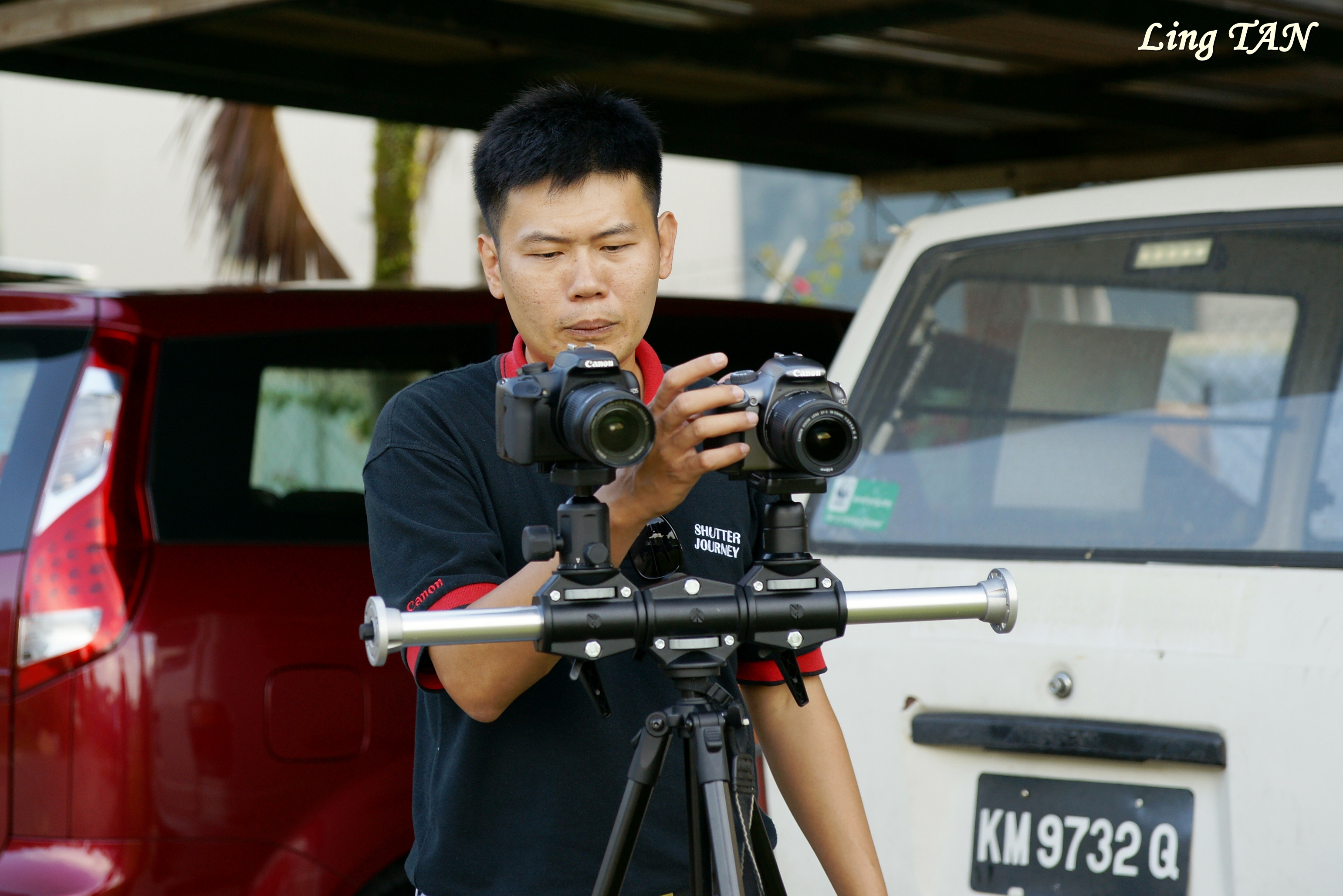
As a professional photographer based in Singapore, I find it strange to leave my 1D MkIV & 5D MkII at home while lugging both the EOS1000D & EOS1100D for a test trip to Kuching, Sarawak in East Malaysia. Since I’ve never tried this set up before, I went ahead and brought both cameras with me along with a Manfrotto Tripod Rig with 2 ballheads balancing on a tripod. 🙂

So how does the set up looks like? Here it is. (Ignore my tired face, we just got off the flight)

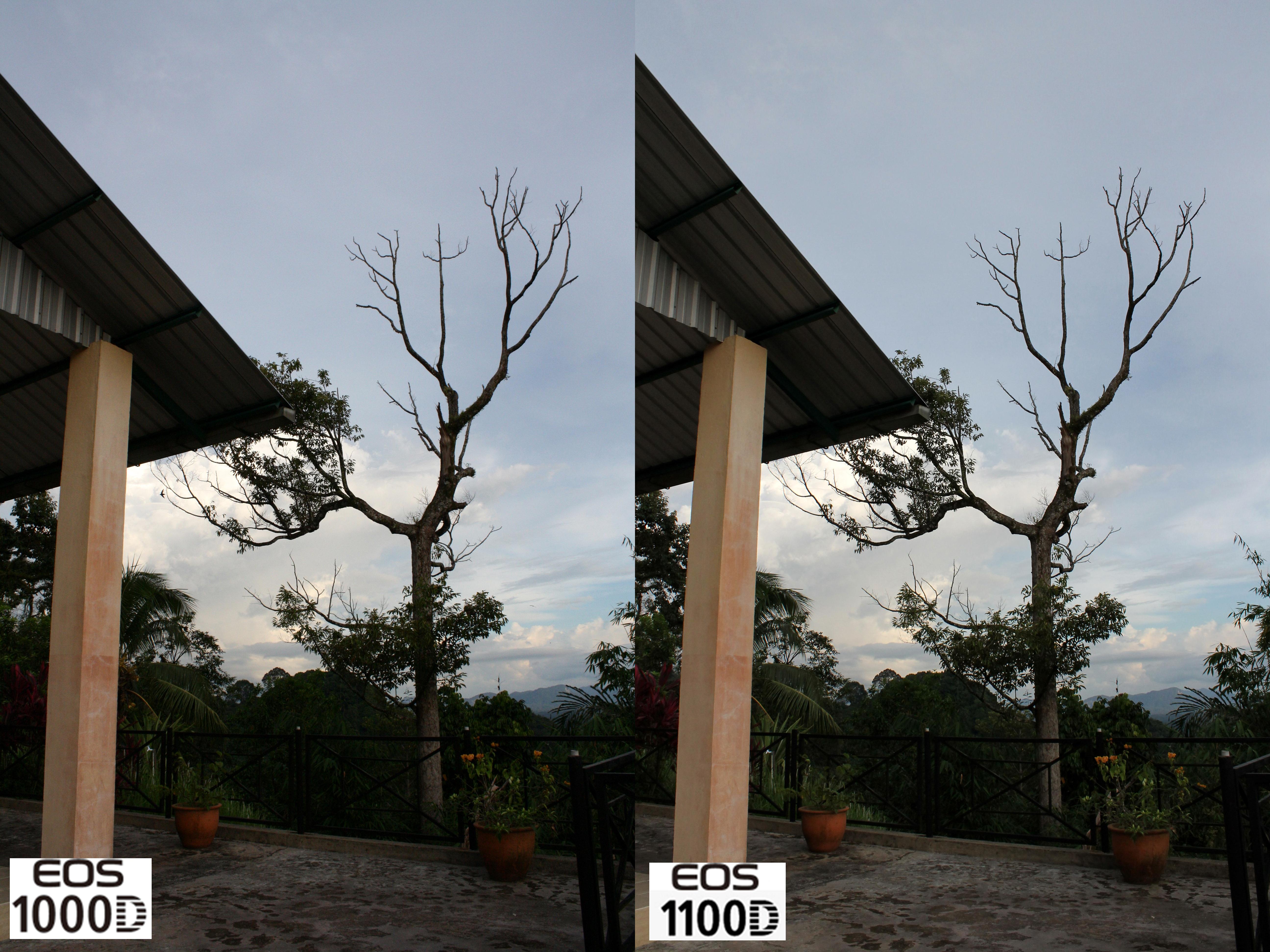
Test 1: Mountain Path at Kuching, Sarawak, East Malaysia with lights from setting sun & partial shade.
Both cameras set to 1/100, F6.3, ISO 200, FR 18mm, Evaluative Metering, AWB, Spot Focus on Centre AF, Manual Exposure.

I picked this scene because this is the perfect place to test to sensor’s light sensitivity & metering. As the setting sun cast the shadows on the mountain path, it gets a little tricky for the camera to read its surrounding. So from the test photos above, it  is obvious that the EOS1100D has a “cleverer” metering on the shaded areas giving a more balanced exposure and the EOS1000D has a slightly under-exposed photo at the same setting. So my take is, EOS1000D: 0/ EOS1100D:1

Test 2: View from the Mountain at Kuching, Sarawak, East Malaysia with lights from setting sun & slight haze.
Both cameras set to 1/100, F6.3, ISO 400, FR 55mm, Evaluative Metering, AWB, Spot Focus on Centre AF, Manual Exposure.


This is one tricky scene for the camera. Light is getting dimmer by the minute when I was setting up for this scene. Using the previous setting, I decided to boost up the ISO to 400. The EOS 1000D exposed the vegetations correctly but over exposed the sky and the mountain in the far end. As for the EOS 1100D, it under exposed the vegetations nearer to the camera but still acceptable on overall especially the mountain at the far end can be seen and the sky remains blue. Looking at both photos, the EOS1100D had an advantage over the predecessor and a safer bet too. So my take is, EOS1000D: 0/ EOS1100D:1.

Test 3: View from the Mountain at Kuching, Sarawak, East Malaysia with lights from setting sun & slight haze.
Both cameras set to 1/320, F9, ISO 200, FR 18mm, Evaluative Metering, AWB, Spot Focus on Centre AF, Manual Exposure.


This is another excellent scene to test the camera. As the sky get darker, both the cameras are put through a comparative test again. The 2 photos above looks very much the same except for the vegetations on the lower left of the photo. The EOS 1100D had metered the vegetations correctly and the scene looks brighter. But it does not really matter as both camera had managed to captured what I had in mind. Looking at both photos, both cams are ok for this scene test. So my take is, EOS1000D: 1/ EOS1100D:1.

Test 4: A church courtyard at the peak of a mountain at Kuching, Sarawak, East Malaysia with lights from setting sun.
Both cameras set to 1/1000, F9, ISO 800, FR 18mm, Evaluative Metering, AWB, Spot Focus on Centre AF, Manual Exposure.


I picked this scene because I want to see if both the cameras can “read” the scene correctly and how it reacts to a partial shaded and partial well lighted surrounding. From the photos above, both cams “reacted” in the same manner, but if you notice, the area near the top left (under the zinc roof) area, the EOS1100D has a better exposure as compared to the one shot with the EOS1000D while the rest of the photo from both camera looks largely the same. I can live with this slight difference, can you?  My take will be , EOS1000D: 1/ EOS1100D:1.

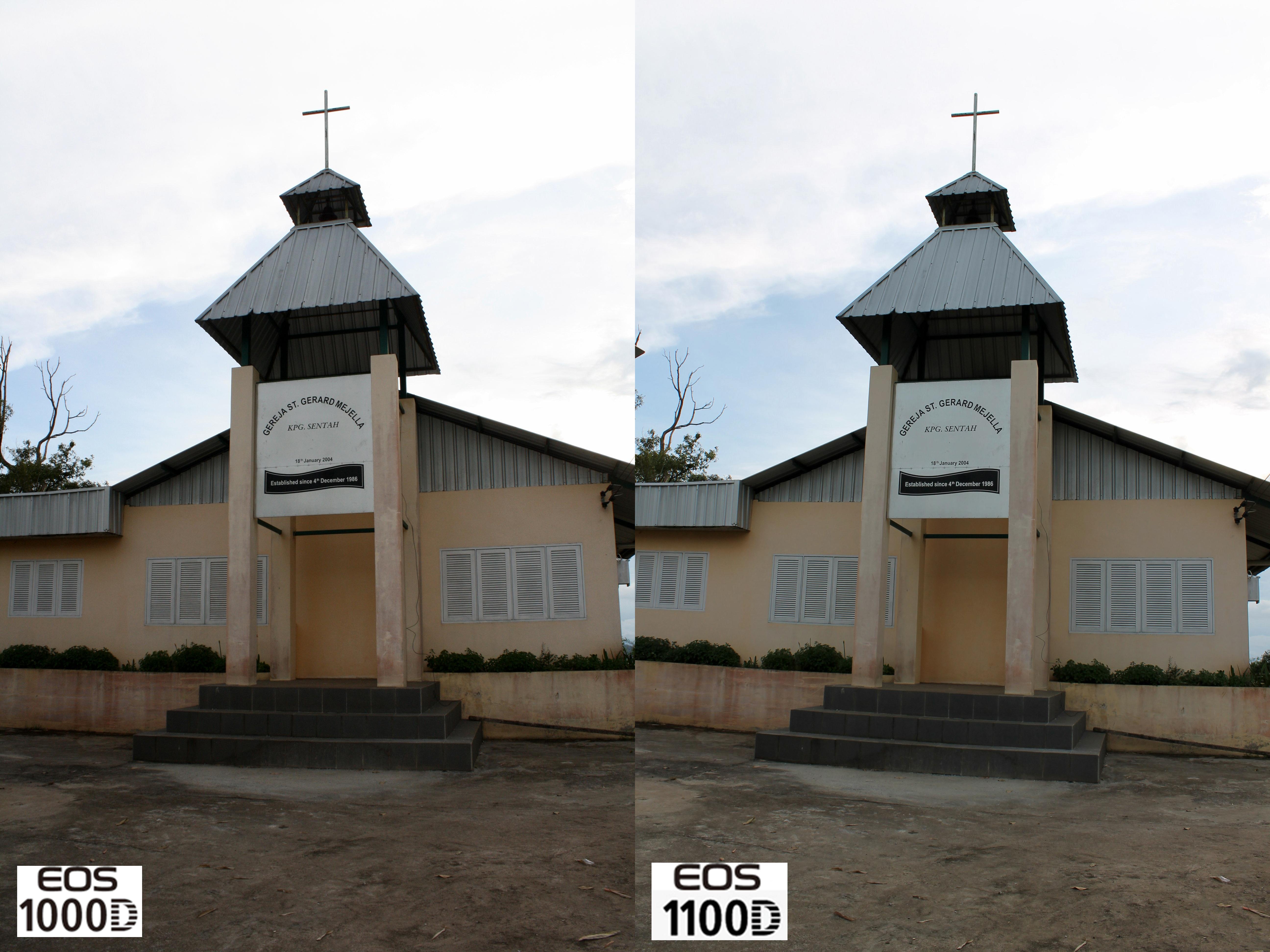
Test 5: A church at the peak of a mountain at Kuching, Sarawak, East Malaysia with back lights from setting sun.
Both cameras set to 1/200, F10, ISO 400, FR 18mm, Evaluative Metering, AWB, Spot Focus on Centre AF, Manual Exposure.


This is an interesting scene bacause the sun is setting from the back (right side) of the church building and the front of the church (scene as above) is getting darker by the minute. The result was surprising in this case because if you look at the the 2 smaller roof right below the Cross at the top, the under-side of these 2 small roofs, the shot by the EOS 1000D was able to accentuate the darker area in this scene but the the shot from the EOS1100D turned out slightly darker. On the other hand, look at the foreground, the EOS1000D was not able to illuminate the scene as good as the EOS 1100D. So putting to commercial sense, what’s more important to me are the photo must look balanced and properly exposed while I can do away with neglegible details. So my take is EOS1000D: 0/ EOS1100D:1.

Test 6: A flower the size of a 20 cents coin at a house garden at Kuching, Sarawak, East Malaysia with direct lights from a 10am sun.
Both cameras set to 1/160, F9, ISO 400, FR 55mm, Evaluative Metering, AWB, Spot Focus on Centre AF, Manual Exposure + Flash.


I went “Wow” when I saw both the photos, they both look sharp, nice color and so on. But when I blew up to 100%, guess what I saw?


It is now apparent that the photo shot with the EOS1000D with the old kit lens has a limit when I comes to sharpness and magnification ration. Though spec-ed as equivalent with “mild” improvement, the EOS1100D with the new mark II kit lens out performs with its sharpness and details. Megapixel could be at play here as I only managed to magnify the EOS1000D photo to a limit so it looks slightly smaller above. Look at the centre of the flower. The new EOS1100D + new kit lens combo is the clear winner here. EOS1000D: 0/ EOS1100D:1.

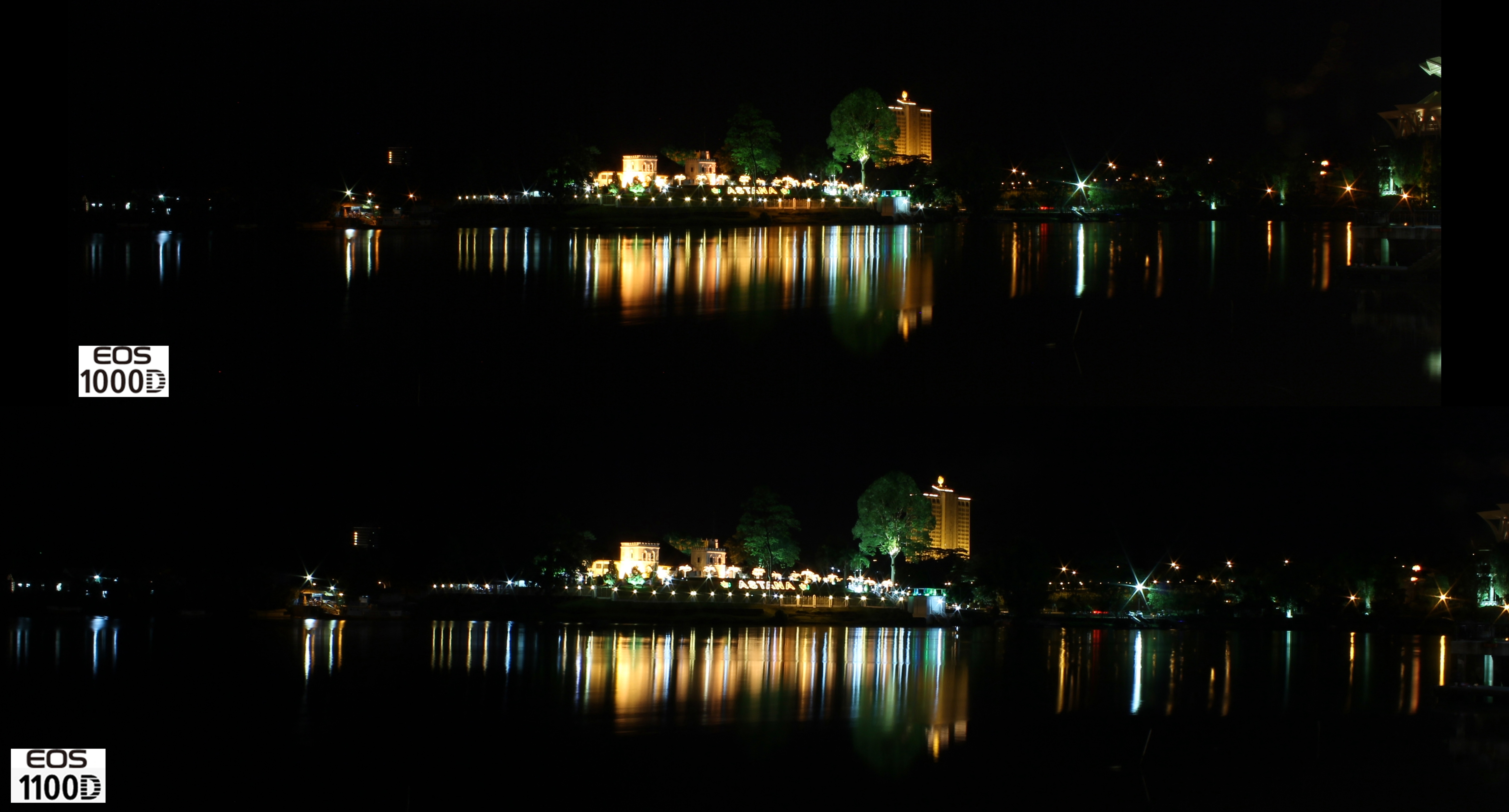
Test 7: Long exposure at night at a river park facing the Astana Palace at Kuching, Sarawak, East Malaysia.
Both cameras set to 30 seconds, F18, ISO 100, FR 18mm, Evaluative Metering, AWB, Spot Focus on Centre AF, Manual Exposure.

OK, both the photo looks the same right? Read on.

I decided to zoom in. Both cameras set to 30 seconds, F18, ISO 100, FR 55mm, Evaluative Metering, AWB, Spot Focus on Centre AF, Manual Exposure.

Still look the same at 55mm? OK, let’s blow things up a little.


The cut section photo above shows a distinctive difference at 100% when both photos are magnified. The EOS1000D combo is not as sharp as the EOS1100D combo. Noise is apparent for the EOS1000D shot, which I conveniently blamed the Digic III processor as opposed to the EOS 1100D’s Digic IV. New is better, it is very true here. 0:1.

Test 8: Multi-Shot Burst at High speed at night by a river park facing the Astana Palace at Kuching, Sarawak, East Malaysia.
Both cameras set to 1/200 seconds, F3.5, ISO 100, FR 18mm, Evaluative Metering, AWB, Spot Focus on Centre AF, Manual Exposure+flash, set to burst mode. (set to AI Servo)

Well you must be thinking why only 5 shots from the EOS1000D  and 10 shots from the EOS1100D. Well, both cameras were actuated at the same time but the EOS1000D only managed to snap 5 shots while the EOS1100D shot 10, both camera started and ended at the same time. (Thanks Shela for lending your finger.) And out of the 5 shots from the EOS1000D, only 3 are sharp when viewed at 100% and the EOS1100D gave me 10 sharp photos. Oh Wow!
So, EOS1000D: 0/ EOS1100D:1.

The test shots above had the EOS1100D beating the EOS1000D 8:2. Let’s see how both cameras fared in other areas.

Based on the score sheet that I brought along to Kuching to test the cameras with my set of test criterias, the EOS 1000D scored 25/50 while the EOS 1100D scored an impressive 47/50.

My personal view is, the EOS1100D is closer to the slightly “higher classed” XXXD series now. It feels good on my hand (which is more used to 1D-Series cameras) and it does not feels out of place. The finishing for the EOS1100D is of superb quality, the handgrip feels larger and purposeful and well sorted. So the EOS also scores on the ergonomic stats for this. With a little visual orientation of the dials and buttons, I can find all my familar icons and so EOS1100D is not a pain to use even for professional photographers who may wish to have a lighter casual camera when not on commercial jobs. The specs are built to lure and asking price is priced to sell.

If you considering to move from prosumer compact to a DSLR camera, the EOS 1100D is an excellent choice – to start.

Visit http://www.canon-asia.com/eos1100d/

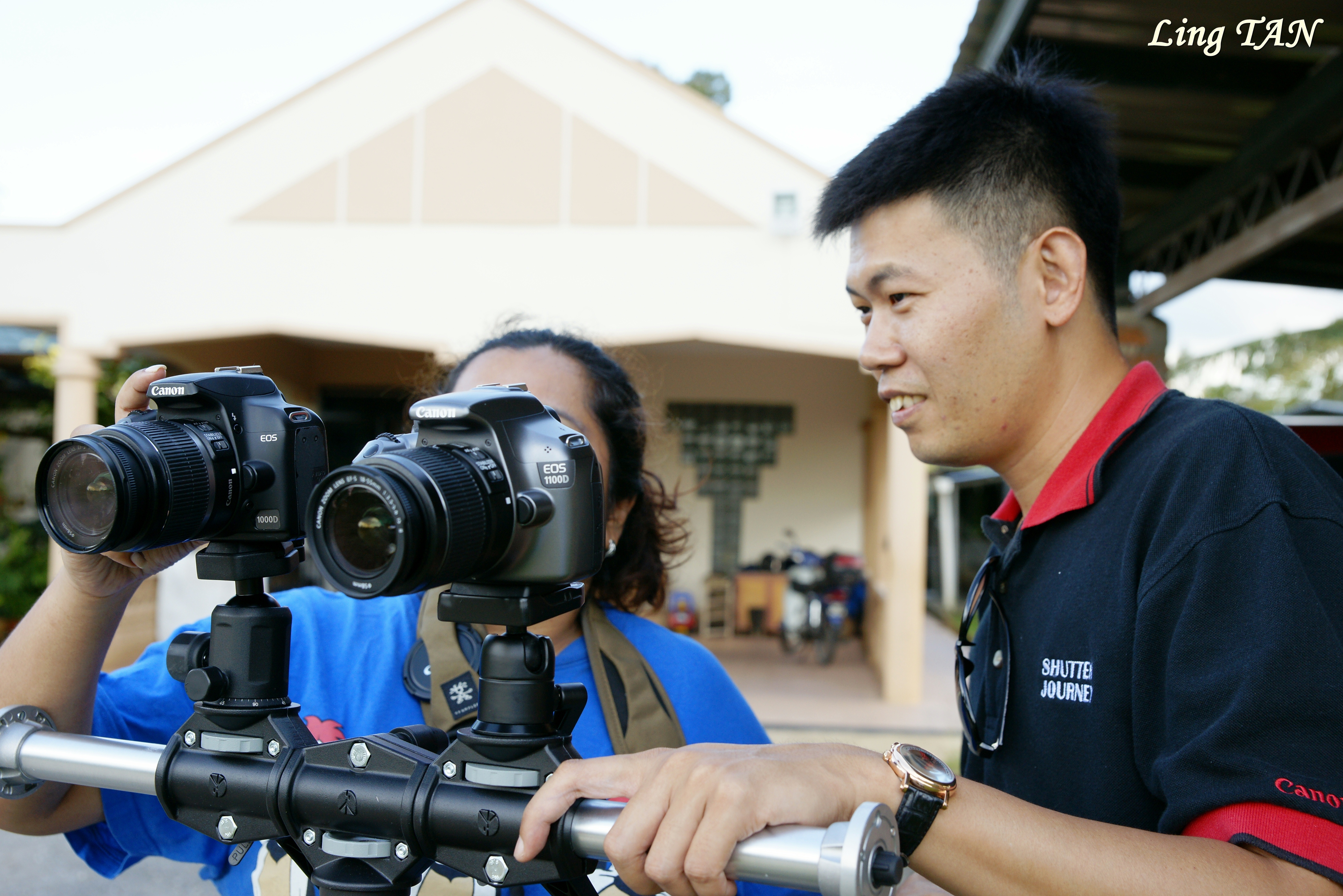
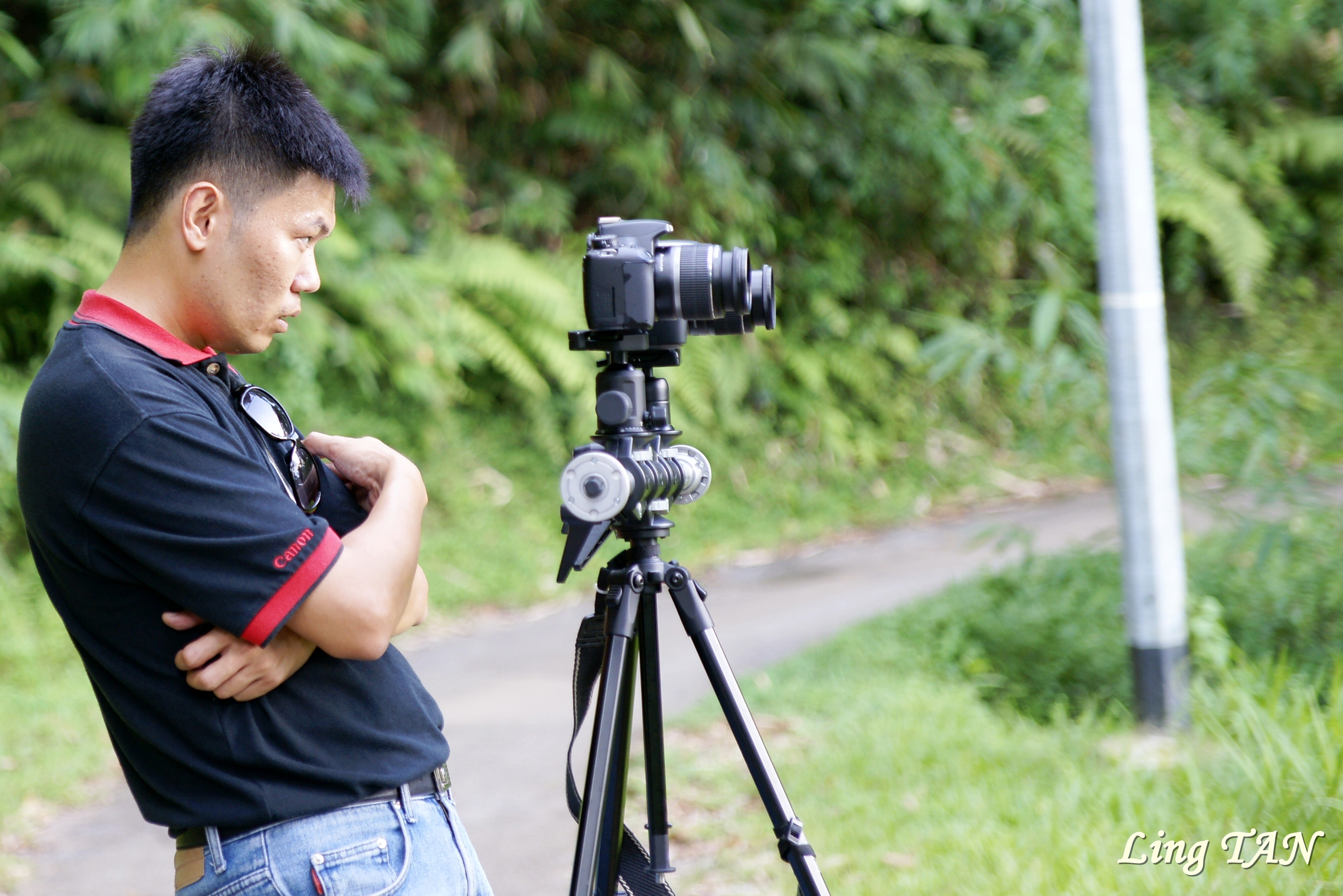
Below are some “Behind the Scene” photos – Courtesy of Ling Tan (Shutter Journey)


Posted in Brand: Canon, Group Test & Reviews, Photography Articles & Videos | Tagged , , , | 30 Comments

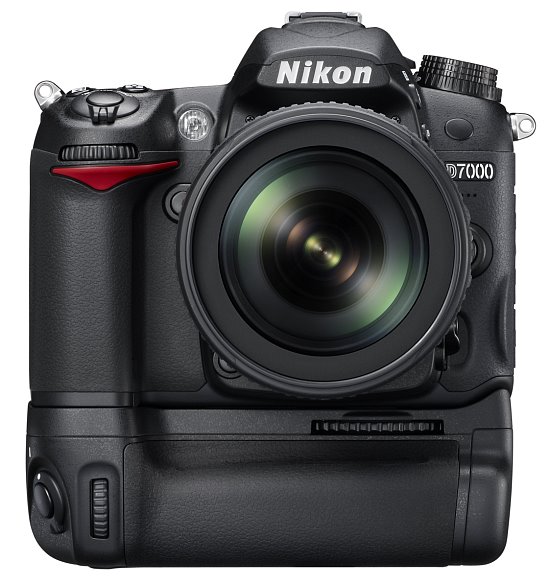
Nikon Announce Firmware Update for D7000


Nikon had announced a  new Firmware update for D7000 DSLR.
The new Firmware v1.02 fix the glitches to noise reduction & RAW processing with Capture NX 2 or ViewNX 2.

Update your D7000 Firmware here.

Posted in Brand: Nikon, Photography Articles & Videos | Tagged , , | 1 Comment

Canon Announce Firmware Update for EOS 7D

Canon announce new Firmware for the Semi-Pro Range EOS 7D 2 days ago.

The new firmware Version 1.2.5 fix glitches for both photo & video when using certain CF Cards and also it solves the Image Stablization (IS) error for certain lenses.  This update also improves writing speed for UDMA 7 Compact Flash cards.

This firmware is available for download here.

Posted in Brand: Canon, Photography Articles & Videos | Tagged , , , | Leave a comment

Hercules (Lithium-Ion) Power

Every Camera Owner out there recognize the need to have spare batteries for their systems. Be it an amateur or a professional, batteries determines your “camera life” when you are out on a holiday or on an assignment. So in short (and bluntly), if you run out on a flat battery, that’s the end. So having some spare batteries in your bag for your camera is like a compulsory insurance in every possible situation.

As a professional photographer, I am what the locals considered as “Kiasu” – (Afraid on losing out / Cannot Lose/ Scare lose – Wiki) type of photographer. I carry spares batteries – lots of them, on both commercial work & leisure shoots. Yes, I have at least 4 batteries per camera when I am on assignments and at least 16 AA Batteries per Flash and I usually carries 2 cameras & 2 flashes. So expectedly, there are more gears like a 3rd Camera, more lenses & more batteries on standby in my car boot just in case. From personal experience, I have come to terms that All  photography accidents happened when you least expect them to happened. 🙂 Face it. That’s a fact.

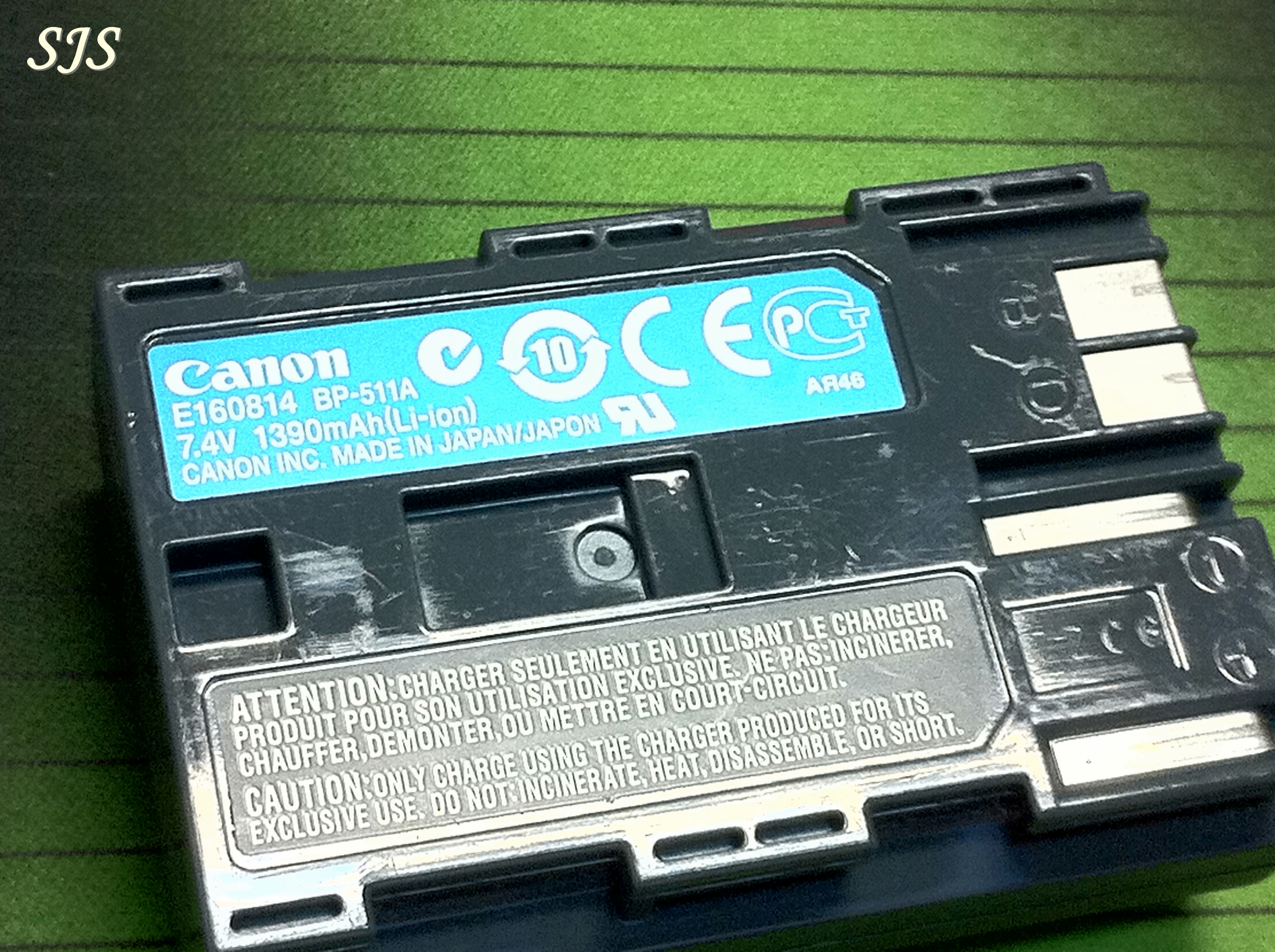
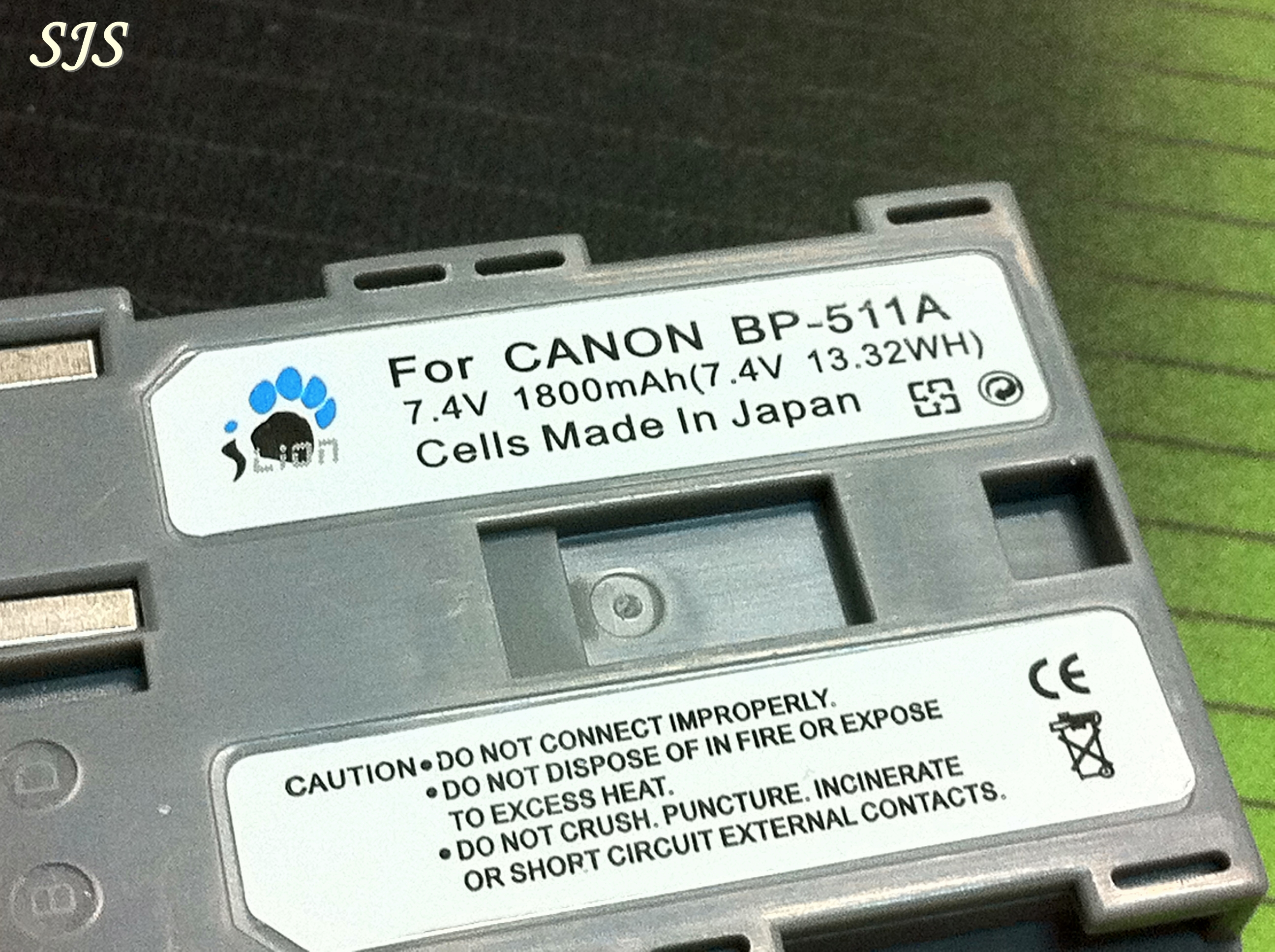
Recently, a supplier introduced me to a new brand of replacement batteries for my cameras. Before I started on a battery buying spree for my 1D Mk IV, 5D MkII, 40D & 500D, I decided to just buy a replacement BP-511A to test out the charge holding power, how many shots it will last me before it is spent and how stable it is on my EOS 40D.

*Pardon my photos on this articles as I shot the below with just an iPhone IV. :)~

Hercules’s replacement batteries comes in a “hard back” plastic packing as above. While the original batteries from proprietory brands usually comes in a nice little box, the hard back packaging looks more purposeful.

On a side by side comparison, the Hercules unit has a lighter shade of gray as compared to the Canon’s original unit. But batteries are rated by their charge and not by their cosmetic right? 🙂

OK, the Hercules design is made exactly 1:1 so that it fits into the battery compartment nicely just like the Canon’s original unit. 🙂

The Hercules unit has a charge rating of 1800mAH while the Canon’s original unit has a lower charge rating of 1390mAH both based 7.4V and both are Lithium-Ion batteries. I was told by fellow professional photographers that charge rating stated on 3rd party batteries cannot be trusted, so I had a Hercules Fully Charged and went on a on few shoots clocking the shutter counts and done the same for the Canon’s unit.

The result?

Hecules’s BP-511A clocked a total of 734 shots while the Canon unit only managed 700 shots before the camera refuse to respond to my CPR. Lolz. Though the Hercules outperformed the Canon’s unit by a mere 34 shots, I believed as I continue to use the Hercules, it will eventually hit a peak of about 780 shots as Lithium-Ion is known to increase it’s performance by per charge until it reaches it peak performance. The Canon unit that I used for the test was a 1 year old unit, so the 700 shots clocked is already the peak output in theory.

With better performance and only priced to 1/3 of the original unit’s asking price, the Hercules is great for photographers who demand excellent performance from their batteries without having to break their bank.  Especially for a battery freak like me, I wouldn’t mind buying a few more to stock up and charge up before the next commercial job or a leisure shoot. And I should be buying at least 2 Hercules for each camera I currently own. 

Now, that is my review through personal usage and testing.

Try it for yourself and decide. After all, it cost only 1/3 of the original price.

🙂

For those interested, you may wish to enquire further at http://www.sgcamerastore.com/.

That’s where I bought my Hercules Batteries.

Posted in Group Test & Reviews, Photography Articles & Videos | Tagged , , | 2 Comments

20 Most “Over-Shot” Photography Places in Singapore

===================================
Rogue_FlashBender_Banner_SJS===================================
20 Most “Over-Shot” Photography Places in Singapore
– And we are still not sick of it.

23rd April 2011, Singapore – Well, face it. Singapore is just too small. If you have been working hard on your shutter, it’s just a matter of time (or weeks) before you ran out of places to shoot. Be it inspirational places or tourist locations, you will still find yourself thinking – where to shoot next. 🙂

I have always told my peers & photography students, it does not matter how many times you return to a same location if the said place offers you many subjects that allows you to go home with a new set of inspirational photos every time, but then again, Singapore is really limited. Very limited. Though I tried to return to some places often to shoot, I do find myself dragging my feet, but if I managed to get some really nice photos, that offers me another (positive) experience altogether. So it is really a luck thingy.

After surveying on Facebook and Google, I have compiled this list of places which almost all the Photographers in Singapore had visited to shoot – some more than once. As for friends who are reading this from outside Singapore – OK, now you can print this article out if you are visiting Singapore for a Photo – Trip. I am serious. 🙂

20 Most “Over-Shot” Photography Places in Singapore.
( all photos are taken from my albums)

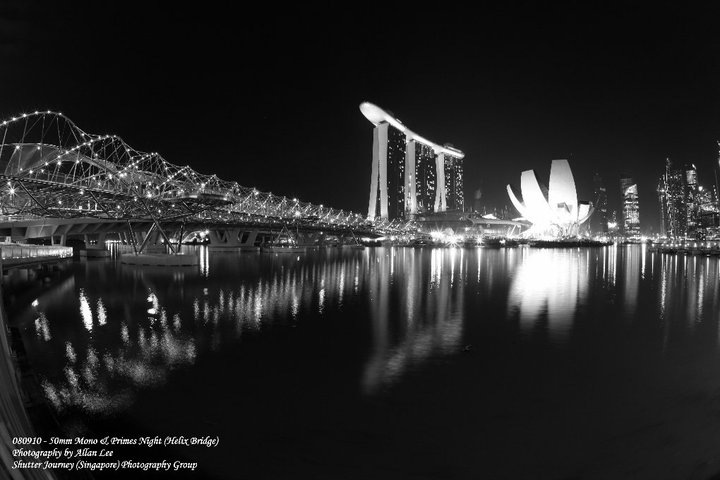
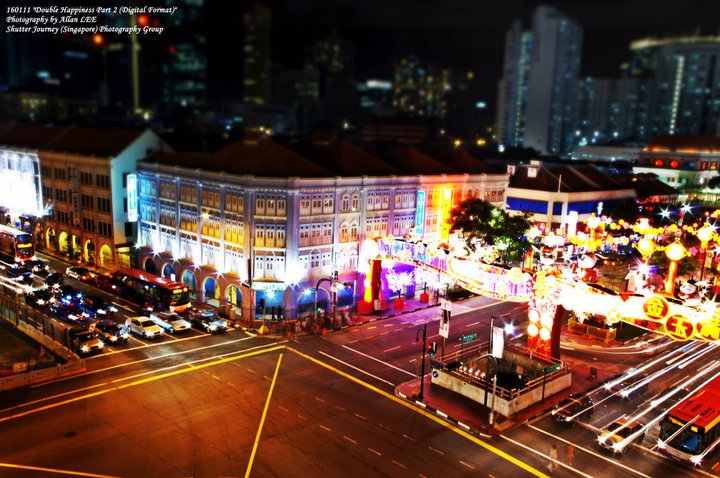
1) Marina Bay Sands/ Esplanade/ Helix Bridge.

2) China Town.

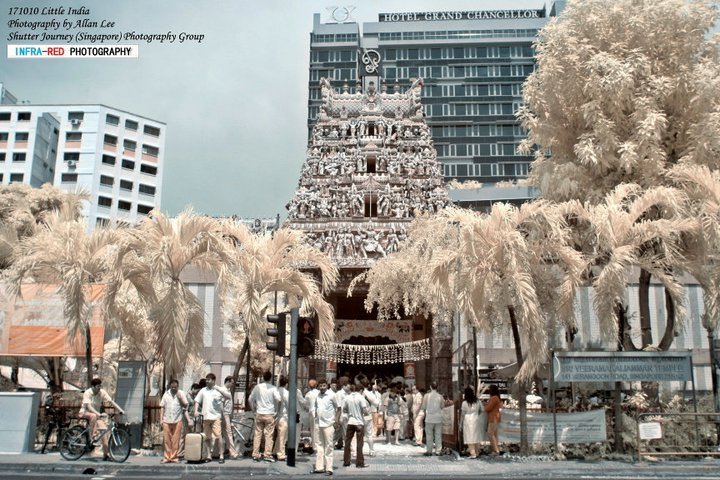
3) Little India.

4) KTM Railway.

5) Singapore Zoological Garden.

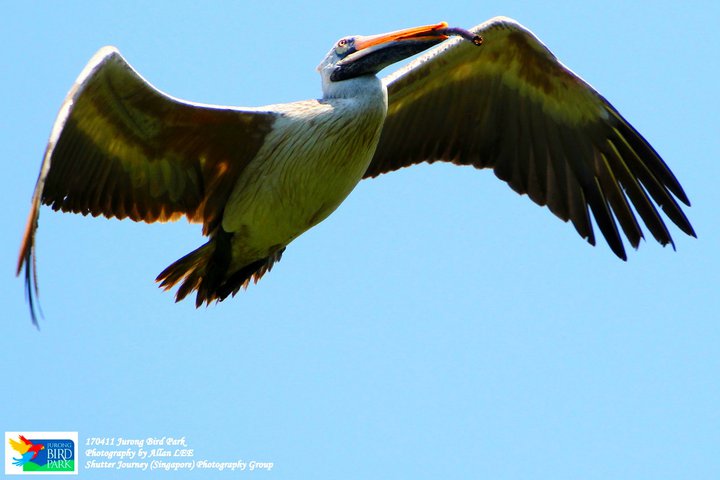
6) Jurong Bird Park.

7) Botanic Garden.

8) HortPark.

9) Vivo City/ Sentosa Boardwalk/ Universal Studios.

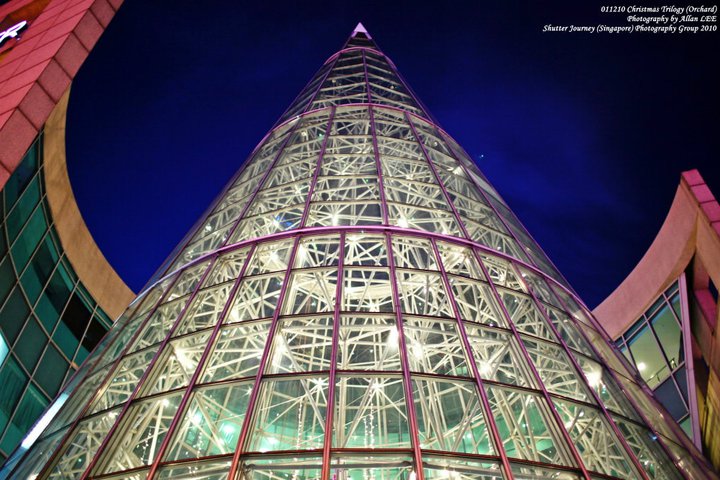
10) Orchard Road.

11) Merlion/ Fullerton/ Raffles Place.

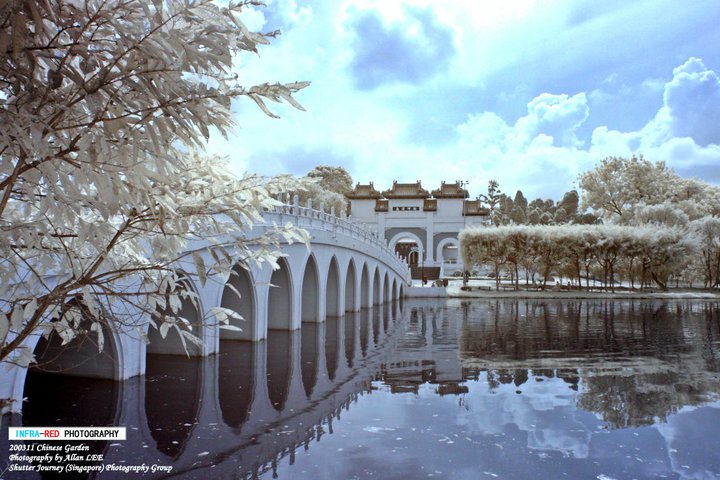
12) Chinese Garden.

13) Japanese Garden.

14) Henderson Waves/ Southern Ridges.

15) Changi Boardwalk.

16) Sungei Buloh Nature Reserve

17) Upper & Lower Peirce Reservoir

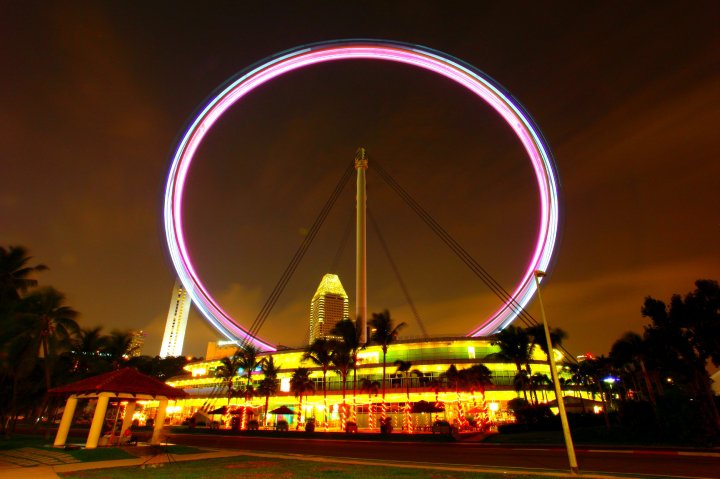
18) Singapore Flyer

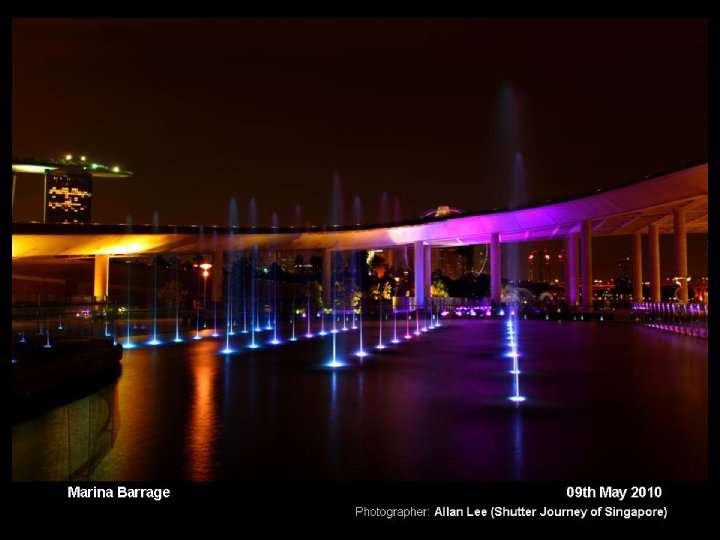
19) Marina Barrage

20) Bottle Tree Park

The above 20 places are the most visited places for shoots by photographers. There are other favourite places like  Punggol Beach , Bedok Reservoir, Macritchie Reservoir, Katong Dsitrict, Tiong Bahru Estate, Margaret Drive Estate, etc, but none of these beats the visitorship of the list above. 🙂

So, don’t be surprised if you caught me at any of the above 20 places – I could be finding new subjects at an “old place”. For friends visiting Singapore, do visit the top 20 places above.

🙂

=============================
If you would like to talk to us, please join us at SIREN (Singapore InfraRed Enthusiasts Network) https://www.facebook.com/groups/SgInfraRedEntNet/ which is proudly managed by Ourshutterjourney LLP.
===================================
About Ourshutterjourney.com
Follow Us or Contact Us below:
Facebook_logoEmailinternettwitter_icon_2011GooglepluslinkedinLikes Logo wix_logo
SJS Jpg
DSG jpg 1200x1200SIREN Logo1SJS PinkPatP Logo_Black Transparent hi-resMedia OwnersadlibMinox===================================sgbanner===================================

Posted in Photography Articles & Videos, Photography Tours, Uncategorized | Tagged , , , , | 6 Comments

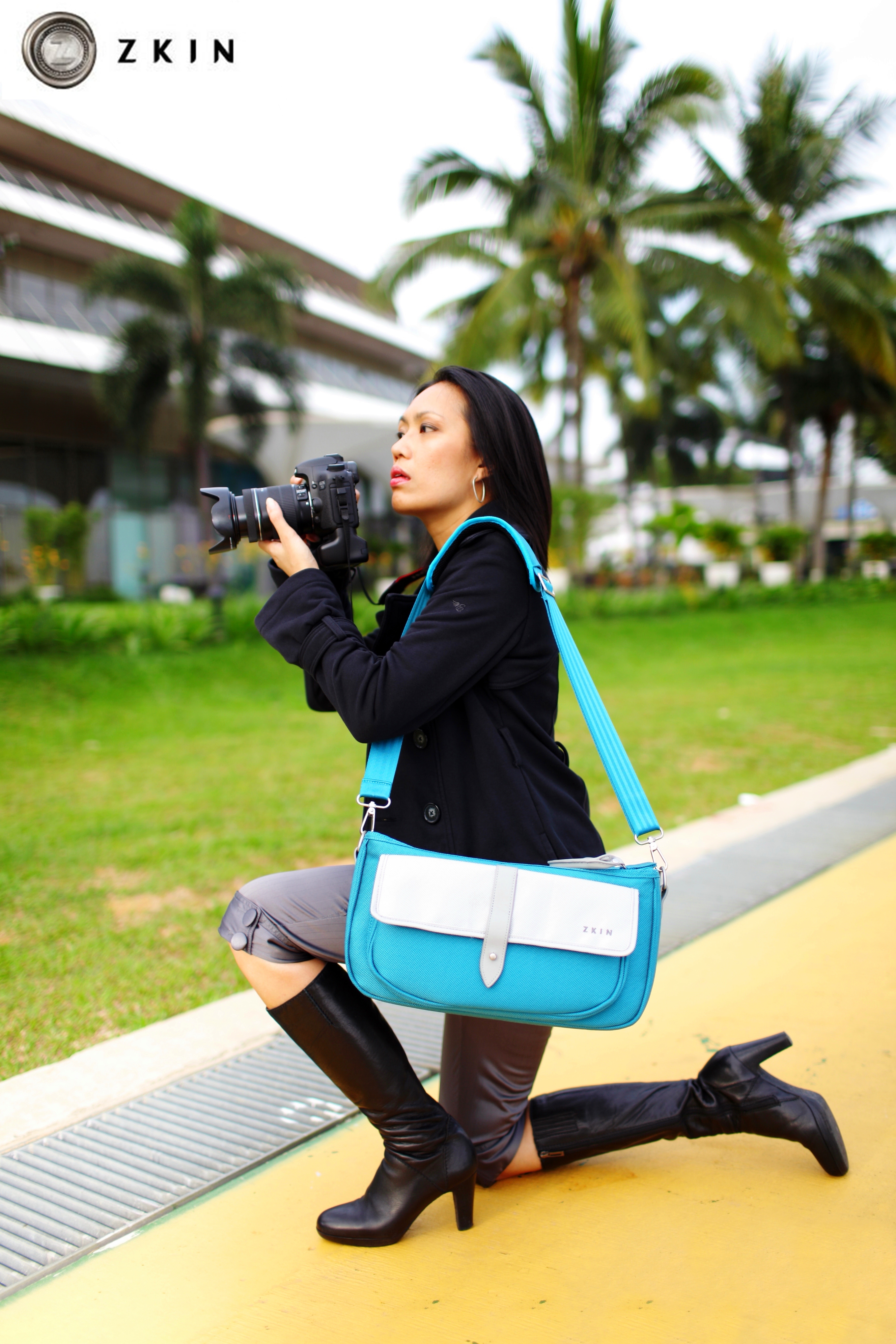
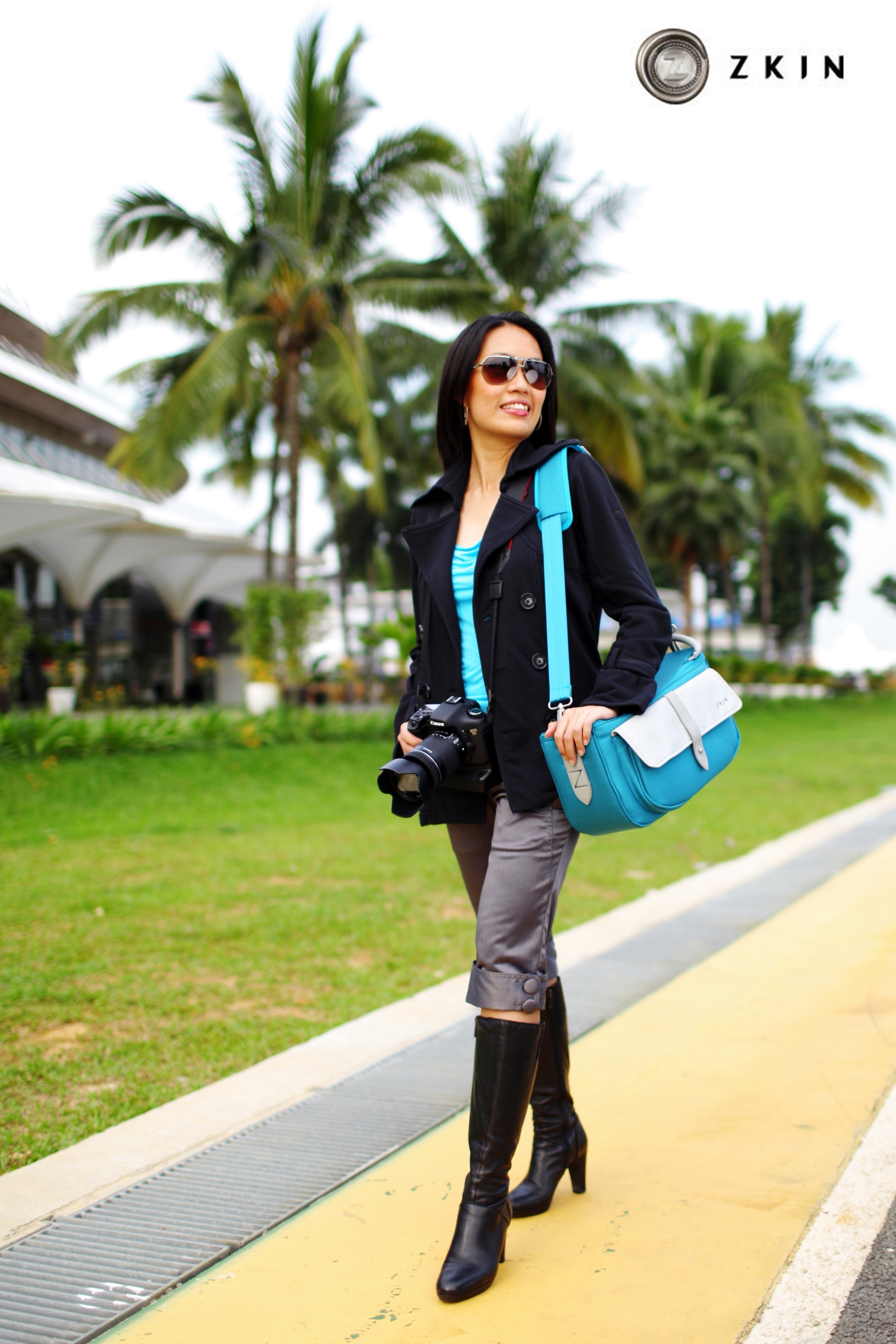
ZKIN – Stylish.Casual.Sophisticated.


Camera Bags can be very subjective. Practicality always translate into bulky and tasteless designs while other manufacturers concentrate on selling their products heavily based on design while useability are compromised.


So where do photographers go from here? To make things worse, there are so many brands in the market right now and photographers are indeed spoilt for choice. Anytime.


Introducing ZKIN. Stylish design coupled with good quality material and designed with the user in mind. Though not really meant for the professional range of DSLRs due to its size and capacity, this is a great bag on those days where you wish to just bring out a smaller DSLR, or a RangeFinder along with some of its accessories – this bag is just perfect.


ZKIN bags are  the beautiful result of fashion integration. It’s made stylish, yet casual, meantime it can be sophisticated too. ZKIN camera bags actually fits itself nicely into any occasion or shoot without the unneccessary attention. Be it a day out at the beach, gathering with friends, doing journalistic work or simply a leisure walkabout, ZKIN has just the right bag for you.


Available Exclusively now at http://www.reddotphoto.com.sg/

Credits:
Client: RedDotPhoto.
Brand: ZKIN Camera Carriers.
Models: Celes Fernandez & Connie Yeo.
Director of Photography: Yu Ling.
Photographer: Allan Lee.
Make Up & Waredrobe: Krist Goh
Photography Assistants: Lin Weibin, Wee Yang & Bryan Ong.
Behind-the-Scene Photographer: Lua Ruiping.
Project Videographer: Wee Yang. 
Photography Studio: Shutter Journey Studios Inc.

Posted in Featured Photography Merchants, Photography Articles & Videos | Tagged , , | 2 Comments

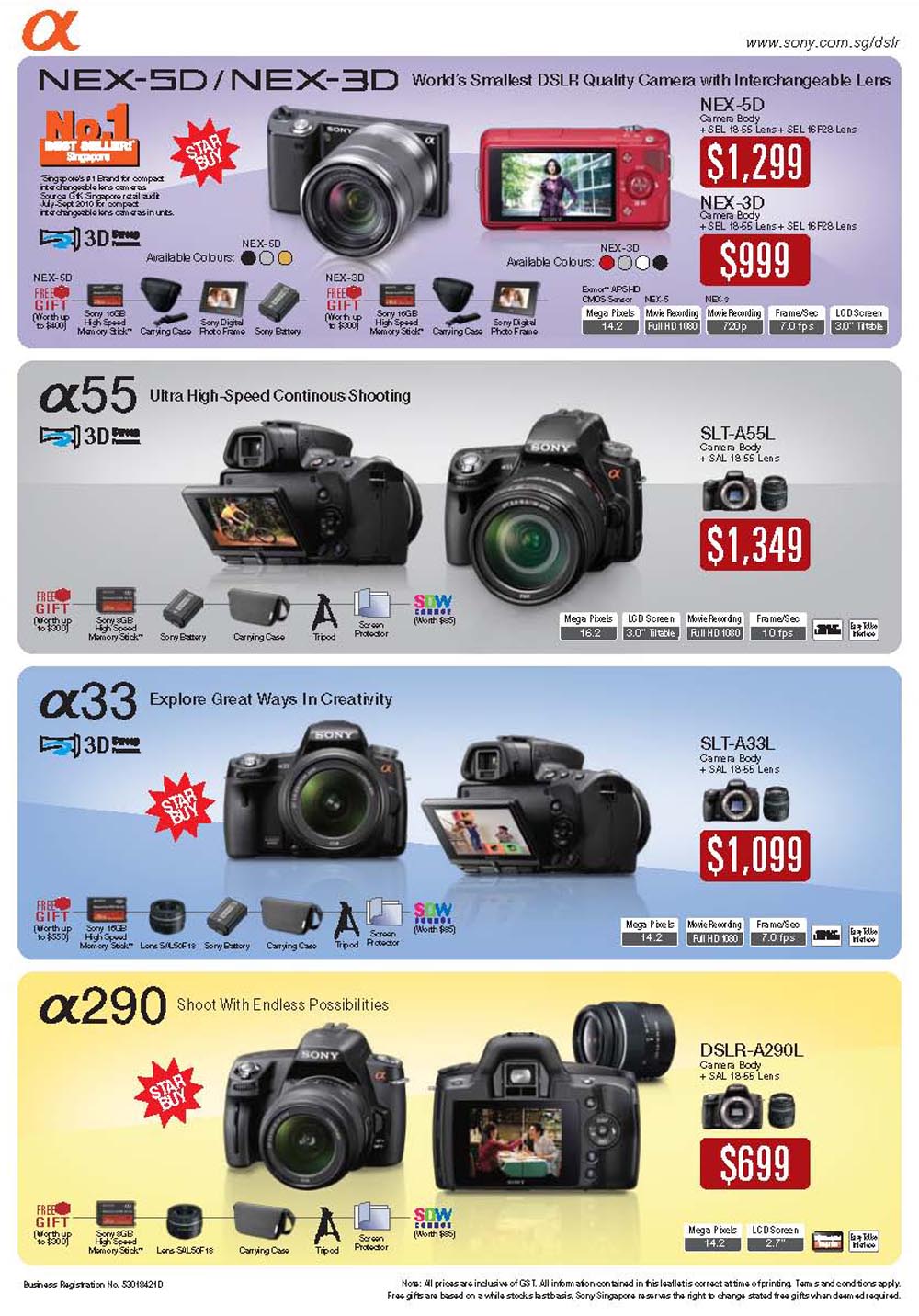
Sony Announce New External flash for Alpha DSLRs

Sony introduces powerful, compact HVL-F43AM external flash for Alpha DSLRs with Quick Shift Bounce.(Singapore, 13 April 2011) With a powerful output of GN43 (105mm ISO100 m), the compact yet versatile HVL-F43AM flash from Sony is optimised for superb results with all A-mount cameras.

,

HVL-F43AM external flash
As featured on the HVL-F58AM, the innovative Quick Shift Bounce system allows flash head position to be adjusted instantly when switching between horizontal and vertical compositions. This maintains consistent shadow positions regardless of camera orientation, allowing easy creation of natural-looking ‘bounce’ effects.

Smart flash functions open up even broader creative lightning possibilities. Wireless Ratio Control makes it easy to select light emission ratios for up to three separate flash units[1]. This allows quick creation of sophisticated multi-point lighting effects without the need for complex professional equipment.

Ideal for everyday shooting and more serious applications, its dust- and moisture-resistant design makes the HVL-F43AM ideal for demanding assignments, indoors or outside.

Flash power levels are switchable in 22 increments, from 1/1 through to 1/128 level in 1/3 steps. High output power is complemented by a quick 2.9 second (approx.) recycling time. Despite the flash’s extensive functions, operation is refreshingly clear and simple via the high-quality LCD screen and direction buttons.

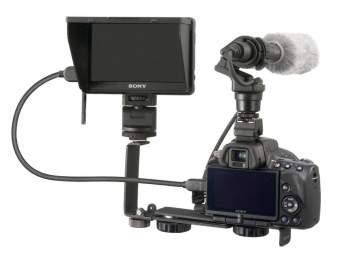
VCT-55LH bracket
The VCT-55LH is a versatile mounting bracket that offers space for mounting additional ISO cold shoe accessories. A useful add-on for all A-mount cameras by Sony, the bracket can also be used with E-mount cameras such as the NEX-5/NEX-3 and the Handycam® NEX-VG10E HD camcorder.

Other accessories – like a shotgun microphone – can be securely mounted while the camera’s main shoe is occupied. The VCT-55LH is ideal for use with the CLM-V55 clip-on LCD monitor that offers a clear, high-resolution view of images during video and still shooting.
* Wireless ratio control available when using DSLR-A900, DSLR-A850 or DSLR-A700.

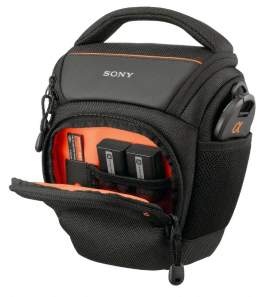
Soft Carrying Case LCS-AMB

The LCS-AMB soft carry case protects your A-mount camera and attached standard zoom lens while you’re travelling. A special suspended partition cradles the camera securely while allowing quick access. Finished in durable black polyester material, the case can be slung over a shoulder using the supplied strap, carried by the grab handle or attached to a belt. It also features handy pockets with space for up to two extra batteries, spare memory card and lens cap. (NB: Not compatible with DSLR-A900/A850).

Lens Hood ALC-SH111
Compatible with DT 35mm F1.8 SAM and 85mm F2.8 SAM lenses, this round-profile hood shades from direct sunlight to prevent glare and lens flare.

The new HVL-F43AM external flash, VCT-55LH bracket, LCS-AMB soft carrying case and ALC-SH111 lens hood for α cameras by Sony are available from May 2011.

“Sony”, “WALKMAN”, “VAIO”, “Cyber-shot”, “Handycam”, “α”, “BRAVIA” and “XDCAM” are registered trademarks or trademarks of Sony Corporation. All other trademarks or registered trademarks are the property of their respective owners.

Main specification for external flash HVL-F43AM

Model Name HVL-F43AM 
Guide Number 43 (105mm, ISO100・m)
Flash Coverage 24-105mm (15mm focal length covered with built-in wide panel)
Flash Control Pre-flash control, manual flash control selectable, direct through-the-lens (TTL) flash metering
Bounce Flash Click positions: up (30°/45°/60°/75°/90°/120°/150°); down (8°); right (30°/45°/60°/90°); left (30°/45°/60°/90°)
Recycling time (based on Sony measurement) Approx. 2.9 seconds (with alkaline battery)
Battery performance (based on Sony measurement) Approx. more than 200 flash cycles (with alkaline battery)
Power level switching 22 levels: (1/1, 1/2, 1/4, 1/8, 1/16, 1/32, 1/64, 1/128), 1/3 steps
Wireless Ratio Control Available to control by 3 groups when used with DSLR-A900/A850/A700
Other features Auto WB Adjustment with Colour Temperature Info; Auto zoom control optimised for image sensor size; High-Speed Synchro; Modelling Lighting; Test Lighting; Multi Lighting. Supports camera’s Red-eye reduction feature. Built-in wide panel and bounce sheet. High quality LCD screen.
Compatible Shoe Auto-lock Accessory Shoe
Included items Mini-stand, Case
Dimensions (WxHxD) Approx. 75 x 129 x 87 mm
Weight Approx. 340g (without batteries)
Power source Four AA-size cells of the same type, either alkaline or Ni-MH 

About Sony Electronics Asia Pacific Pte. Ltd.
Based in Singapore, Sony Electronics Asia Pacific Pte. Ltd. is a subsidiary of Sony Corporation.  It serves as the regional management and marketing headquarters for Sony’s consumer as well as broadcasting and professional products, overseeing Asia Pacific, Middle East and Africa regions. For more information on Sony’s products and services in Asia Pacific, please visit www.sony-asia.com

About Sony Corporation
Sony Corporation is a leading manufacturer of audio, video, game, communications, key device and information technology products for the consumer and professional markets. With its music, pictures, computer entertainment and on-line businesses, Sony is uniquely positioned to be the leading electronics and entertainment company in the world. Sony recorded consolidated annual sales of approximately US$77.5 billion for the fiscal year ended March 31, 2010. Sony Global Web Site: http://www.sony.net/

About make.believe
“make.believe” (make dot believe) is a Group-wide brand message that unites Sony’s communications initiatives across electronics, games, movies, music, mobile phones and network services. “make.believe” symbolises the spirit of Sony – the power of creativity, the ability to turn ideas into reality and the belief that anything you can imagine, you can make real.

Posted in Brand: Sony, Photography Articles & Videos | Tagged , , , , | Leave a comment

Sony Launches Faster Yet More Affordable Memory Stick PRO-HG Duo HX With High Speed Data Transfer

Consumers can now enjoy top performance when capturing images and video with data transfer speeds of up to 50MB/s and 32GB storage capacity


(Singapore, 12 April 2011) – Sony Electronics Asia Pacific announces the new Memory Stick PRO-HG Duo HX, offering even faster data transfer speeds at an affordable price. Meeting the demands of Sony’s best digital imaging technologies, the Memory Stick PRO-HG Duo HX features high performance with speedy data transfers of up to 50MB/s, making it the ideal companion when taking burst shots with an Alpha DSLR or shooting Full HD and even 3D movies and photos with Sony’s new range of Cyber-shot cameras and Handycam camcorders.

 “The discerning users of today seek to capture only the best quality images and HD videos. Thus, they will also need compatible high-speed, high-capacity storage media that will allow them to make the most of the advanced features Sony’s cameras and camcorders,” says Mr. Takayuki Takemura, Deputy Director, Consumer Business Group, Recording Media & Energy Centre, Sony Electronics Asia Pacific. “The Memory Stick PRO-HG Duo HX was specially developed to meet this demand. With its quicker data transfer speeds and greater storage capabilities, users now have the freedom to create and capture best possible shot, at an even lower cost.”

In addition to using high-speed, high-quality flash memory, the Memory Stick PRO-HG Duo HX features a new and intelligent flash memory controller called the “HX Engine” which maximizes the capability of high-performance flash memory and enhances data-transfer efficiency by increasing the internal clock that handles data processing. Besides the faster data transfer speed, the HX Engine is also highly reliable, with an anti-error functionality optimized for Sony hardware features such as high-speed burst shooting, or HD movie shooting. It also possesses intelligent data control for increased stability when reading and writing data of significant sizes. This is done by balancing the allocation of writing data to the flash memory and by avoiding writing data to same area repeatedly, thus reducing risks of errors in writing data. This is further enhanced by the use of an Enhanced Error-Correcting Code that seamlessly detects and corrects errors.

With its improved transfer speed, the Memory Stick PRO-HG Duo HX is perfect for high resolution action photography in continuous burst shooting modes, with the ability to capture up to 190 shots with NEX-5 in a minute[1]. Furthermore, it handles the speed and capacity requirements for not just the Handycam, but also the new demands of AVCHD video and 3D capture capabilities for the new Alpha and Cyber-shot models. This ensures stable, fuss-free recording of large full HD movies, and 3D videos and photos for users.

Not only is the Memory Stick PRO-HG Duo HX able to capture all special yet fleeting moments, its enhanced performance also enables users to rapidly transfer storage-intensive high-resolution photos and videos from the memory card to a computer. At transfer speeds of up to 1.6 times faster than the current models, users can now view freshly taken photos and videos even quicker and more efficiently. Additionally, the large storage capability of the Memory Stick PRO-HG Duo HX makes it ideal for the back-up of data, photos and videos.

Data recovery is also hassle-free as the Memory Stick PRO-HG Duo HX features the AVCHD Memory Card File Rescue software. Available as a free download, the software enables the retrieval of photos, music and movies that were deleted by mistake for greater peace of mind.

Users of the Memory Stick PRO-HG Duo HX can also download x-Pict Story™ for free. This fun and easy-to-use software allows users to create unique slideshows of their favourite pictures, synced to effects and music. These moving photo albums can then be shared with friends and loved ones.

Featuring storage capacities in 8GB, 16GB and 32GB, the new Memory Stick HX will be available in Asia Pacific from end April 2011.

About Sony Electronics Asia Pacific Pte. Ltd.
Based in Singapore, Sony Electronics Asia Pacific Pte. Ltd. is a subsidiary of Sony Corporation.  It serves as the regional management and marketing headquarters for Sony’s consumer as well as broadcasting and professional products, overseeing Asia Pacific, Middle East and Africa regions. For more information on Sony’s products and services in Asia Pacific, please visit www.sony-asia.com

About Sony Corporation
Sony Corporation is a leading manufacturer of audio, video, game, communications, key device and information technology products for the consumer and professional markets. With its music, pictures, computer entertainment and on-line businesses, Sony is uniquely positioned to be the leading electronics and entertainment company in the world. Sony recorded consolidated annual sales of approximately US$77.5 billion for the fiscal year ended March 31, 2010. Sony Global Web Site: http://www.sony.net/

About make.believe
“make.believe” (make dot believe) is a Group-wide brand message that unites Sony’s communications initiatives across electronics, games, movies, music, mobile phones and network services. “make.believe” symbolises the spirit of Sony – the power of creativity, the ability to turn ideas into reality and the belief that anything you can imagine, you can make real.

Posted in Brand: Sony, Photography Articles & Videos | Tagged , , , | Leave a comment

The Best Canon DSLR Lenses That I Will Personally Pick.

Welcome back after the long wait!

This is the 8th article in this series of lens articles and the last. If you have missed the past articles, this is a series of articles about me sharing what are the lenses from the various manufacturers that I will pick & use on a personal basis. Today, I am going to pick my lenses from the Canon EOS DSLR Lens line-up.

You are reminded again that this is NOT a ”buying guide” or a technical review of each lenses. You can easily find those all over the internet. However, I am sharing based on personal experience, usability and how well these lenses compliment your work.

My Pick for Best Canon Zoom lens (General Lens).

This is the lens that I will probably bring it everywhere I go, for commercial shoot or leisure walkabouts.

My pick will be the EF 24-70mm F2.8L USM. Introduced since 2002, covering from a wide angle to medium telelphoto at a constant bright apeture at F2.8, this is the lens that I used most often for my commercial work ranging from weddings to events coverage. Trusted by professionals worldwide, this lens certainly lives up to its reputation. Sharpness is redefined with this premium zoom lens as it produces photos comparable to those shot with L Primes. This is not a light lens at 950gm, and when mounted on my 5D Mark II or 1D Mark IV plus the addition of a EX580II Flash on either unit, the combined weight can be a little too heavy for some. 🙂 Positioned as the “Top of the Line” (And the most expensive) Standard Zoom Lens, the lens build is very solid, handling ergos are well sorted and no wonder this the favourite lens for most wedding & event photographers. Though tagged with a “Macro”, this lens only managed a magnification ratio of 1:0.29X, so it gives closer focusing distance and this is not a real macro lens. (Real Macro lens is 1:1). Focusing is extremely fast with Canon’s proven Ultrasonic Motor (USM) and the color reproduction is probably the best in Canon’s Standard Zoom family. I never regretted buying this lens.

Some Quick Information:
Canon EF 24-70mm F2.8L USM
Format: Full Frame, but can be used on cropped bodies with a corresponding 1.6X increase (1.3x for 1D series).
Focal Range: Wide Angle to Medium Telephoto 24mm-70mm or 38.4mm-112mm on 1.6X APSC. (1.3X APSH 31.3mm-91mm)
Filter Diameter: 77mm
Supplied with Box: Instruction, Lens Pouch & Lens Hood EW-83F.
Suggested Alternative Lens: Canon EF24-105mm F4L IS USM.

My Pick for Best Canon Telephoto Zoom lens (Telephoto Lens).
This is the lens that I will use for portraiture work, short range wildlife shots & street photography.

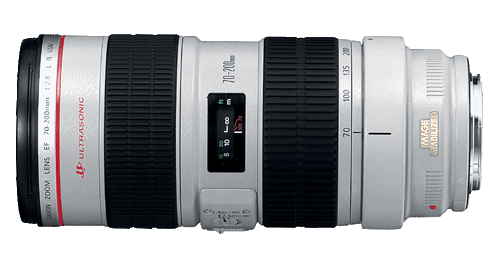
My pick for this category has to be the EF70-200mm F2.8L IS USM. A super popular “L” Series Lens (before the Mark II arrived), this lens is built top-grade-solid, precisely put together and designed for professionals. Portrait Photographers swear by this lens utilizing the sweet spot from 70mm-150mm while Sports or wildlife photographer love the flexibility of adding on a 2X extender to have a light & compact super telephoto lens that doubles the focal range. The image stabilizer (IS) work superbly well for all handheld applications as the weight distribution of this lens is very well balanced. The IS comes in 2 modes, where mode 1 is strictly for handheld use (so switch it off or to mode 2 when used on tripod) and mode 2 offers a panning mode where the compensation shift is horizontal suitable for tripod use. With 23 elements in 18 groups including 4 UD elements, this large lens is 1570gm so it is slightly on the heavy class but delivers sharp & high quality images that had set the benchmark for industry standard. Well, if all the professionals love this lens, they can’t be wrong. 🙂

Some Quick Information:
Canon EF70-200mm F2.8L IS USM.
Format: Full Frame, but can be used on cropped bodies with a corresponding 1.6X increase (1.3x for 1D series).
Focal Range: Medium Telephoto to Super Telephoto 70mm-200mm or 112mm-320mm on 1.6X APSC. (1.3X APSH 91mm-260mm)
Filter Diameter: 77mm
Supplied with Box: Instruction, Lens Pouch, Tripod Ring Mount & Lens Hood ET-86.
Suggested Alternative Lens: Canon EF70-200mm F2.8L IS USM II (If you have the extra cash)

 My Pick for Best Canon Standard lens (Prime Lens).
This is the lens that I will use for a wide variety of applications when zooming is not everything.

This will come as a surprise to many. My choice for this category is the Canon EF35mm F1.4L USM. In my view, this is the most versatile lens in the prime lenses line up and one of the most popular L Series primes. Why so? Personally I use this lens for a variety of applications. I use this lens as a walkabout lens on my 5D MkII as the 35mm standard wide is good enough for landscape shots, great for doing portraits that do not requires too tight a crop and plus its bright constant apeture of F1.4, this is a great lens for applications where flash is not allowed. Amazing fast focusing lens running on USM so no moments are missed or blurred 🙂 .
Sitting on the L Family Line, lens build is expectedly solid, and this lens is light at 580gm and compact making it a good choice to carry it everywhere. Picture quality is among the best in the competition and if I can only bring one lens out, I will only bring this gem.
Some Quick Information:
Canon EF35mm F1.4L USM.
Format: Full Frame, but can be used on cropped bodies with a corresponding 1.6X increase (1.3x for 1D series).
Focal Range: Standard Wide 35mm or 56mm on 1.6X APSC. (1.3X APSH 45.5mm)
Filter Diameter: 72mm
Supplied with Box: Instruction, Lens Pouch & Lens Hood EW-78C.
Suggested Alternative Lens: Canon EF35mm F2.

The above 3 Canon lenses are the lenses that I will ONLY buy if I can only have 3 lenses for my Canon system. (I have these lenses. :)). The selected lenses above are not your buying guide, but instead, what I will want to have in my camera bag. Canon L-Series Lenses are legendary and seriously they are excellent. Though on the pricey end, I am sure many Canon fans will buy up the scale for the best of image quality and hardware quality. Best of both worlds if you ask me.

Disclaimer:
The above reviews/statement/ findings/ comparisons/ claims are solely personal views consolidated, compiled & based on personal surveys, usage experience, feedbacks from fellow users. This article is NOT PAID by the Brand owner and this article is presented as a reading reference from 1st person point of view.

Posted in Brand: Canon, Photography Articles & Videos | Tagged , , , | 3 Comments

The Best Tokina DSLR Lenses That I Will Personally Pick.

Welcome back!

This is the 7th article in this series about me sharing what are the lenses from the various manufacturers that I will pick & use on a personal basis. The last article was about the Tamron Lenses that I will buy for my system.

Today, I am going to pick my lenses from the Tokina DSLR Lens line-up. It is a known fact that Tokina’s strength lies greatly on its Ultra Wide Angle lenses. Landscape photographers swear by Tokina’s lenses and this is definitely something which I agreed. Strength to strength, 3rd party manufacturers does have a niche that puts them apart from each other. Tokina’s ultra wide angle lenses are among the best while Tamron is famous for their general zoom which had set a certain benchmark for quality & useability while Sigma is top for Super Telephoto zoom lenses. Like all 3rd party manufacturers, Tokina makes a good range of compatible lenses for other brands like Canon & Nikon. For those new to 3rd party manufacturers, here’s a quick start.

Some terms –
Canon – (Image Stabilizer=IS/ EF=Full Frame/ EF-S=APSC/ Ultrasonic Motor=USM)
Nikon – (Vibration Reduction=VR/ FX=Full Frame/ DX=APSC/ Silent Wave Motor=SWM)
Sony – (Steady Shot=SS/ SAL=Full Frame/ SAL+DT=APSC/ Super Sonic Motor=SSM)
Pentax – (Shake Reduction=SR/ D=DSLR/ FA=SLR/ Supersonic Drive Motor=SDM)
Olympus – (Image Stabilization=IS/ Zuiko=APSC/ M.Zuiko=M43/ Silent Wave Drive=SWD) 
Sigma – (Optical Stabilizer=OS/DG=Full Frame/ DC=APSC/ Hyper Sonic Motor=HSM)
Tamron – (Vibration Compensation=VC, Di=Full Frame/ Di II=APSC/  Piezo Drive = PZD)
Tokina – ( Nil/ FX=Full Frame/ DX=APSC/ Internal Focusing System using Silent DC Motor= IFS)
*There are other Lens Manufacturers covering smaller markets, so will not be featuring or mentioning here.

You are reminded once again that this is NOT a ”buying guide” or a technical review of each lenses. You can easily find those all over the internet. However, I am sharing based on personal experience, usability and how well these lenses compliment your work.

My Pick for Best Tokina Zoom lens (General Lens).

This is the lens that I will probably bring it everywhere I go, for commercial shoot or leisure walkabouts.

My pick has to be the Tokina AT-X 124 PRO DX II(AF12-24mm F4.0). (This is the Mark II version)
Taking its design cue and lens design from its award-winning predecessor, this lens is sharp and the Mark II now features improved multi-coating that reduces ghosting or flares. Designed as a DX, this lens is targeted at the mass market which comprises of mostly APSC users, and this lens is priced lower than proprietory brands of the same or similar range to attract users to buy Tokina as the alternative option. Today, even the most hardcore of brand fans has a Tokina in their bags. (I am saying most photographers, not all.) If you have not tried doing portraits at 24mm, you must try this lens then. Though it is not a F2.8 (like its more premium brother the Tokina 11-16mm), the bright constant F4 is already more than adequate to give beautiful bokehs and when it comes to landscape, this lens do outperforms the Tokina 11-16mm at sharpness on most F stops. For those wondering what is the difference of a 11mm wide and a 12mm wide, my answer is, 6 more steps backwards. 🙂 

Some Quick Information:
Tokina AT-X 124 PRO DX II(AF12-24mm F4.0).
Format: APS-C ONLY with a corresponding 1.5X increase cropped factor (1.6x for Canon).
Focal Range: Ultra Wide angle to Wide angle 12mm-24mm or 18mm-36mm (Canon 19.2-38.4mm) on 35mm formats.
Filter Diameter: 77mm
Supplied with Box: Instruction, Lens Hood BH-777.
Suggested Alternative Lens : Tokina AT-X 124 AF PRO DX (AF12-24mm F4.0) – Mark I Version.

My Pick for Best Tokina Telephoto Zoom lens (Telephoto Lens).

This is the lens that I will use for portraiture work, short range wildlife shots & street photography

My Pick, the Tokina AT-X 840 AF (AF 80-400mm F4.5-5.6). Probably the smallest zoom lens that has a super telephoto range of 400mm, this lens is the only lens currenly covering this focal range in Tokina’s lenses line up. Even though this lens has been in the market for about 5 years now (and no replacement was announced yet), it had proven itself to be a performer when it comes to practical uses. It produces sharp portraits and it is also good for wildlife and street photography. Before you start to complain about the 8 blades apeture, you don’t really use F5.6 for wildlife or sports would you? If you do, well, ask the Pros, they will tell you a little story about F16, but that’s another story altogether. Built solid but not too heavy (1020gm), this is lens is great to carry about and to increase practicality, it comes with a built in Tripod ring, a zoom lock that totally eliminates lens creep. All Tokina lenses now comes with multi-coated elements as standard including this lens, plus a specially designed hood (BH-725) which allows the user to adjust the filter or use a CPL without having to remove the lens hood. This lens is sensible and well priced, well designed and a lens that most people forget. You are now reminded. 🙂 

Some Quick Information:
Tokina AT-X 840 AF (AF 80-400mm F4.5-5.6). (Mark I)
Format: APS-C cameras ONLY with a corresponding 1.5X increase.(Canon 1.6X)
Focal Range: Medium Telephoto to Super Telephoto 80mm-400mm or (APSC 120-600mm for 1.5X & 128-640mm for 1.6x).
Filter Diameter: 72mm
Supplied with Box: Instruction, Tripod Ring & Lens Hood  BH-725.
Suggested Alternative Lens: Tokina AT-X 840 AF (AF 80-400mm F4.5-5.6). (Mark II)

My Pick for Best Tokina Standard lens (Prime Lens).
This is the lens that I will use for a wide variety of applications when zooming is not everything.

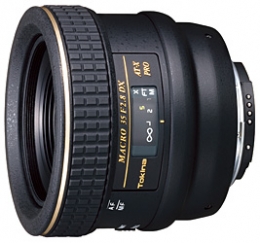
My Pick this time is the Tokina AT-X M35 PRO DX (AF 35mm F2.8 Macro). This is by far the smallest lens that Tokina produce and this is super compact. A real macro lens that gives a magnification ratio of 1:1 plus a minimum focusing distance of only 14cm, this lens is great for super close up macro and when wide open at F2.8, this lens is great for portraits with nice bokehs. When stop down to F7.1, this is one of the best landscape lens (in my view) as it gives sharp & contrasty reproduction of what I see through the viewfinder. Comes with Water repellent coating (WR), this is one lens made for outdoors. So if you are thinking of a 2-in-1 lens, get this lens. (Before it is discontinued). 

Some Quick Information:
Tokina AT-X M35 PRO DX (AF 35mm F2.8 Macro). 
Format: APS-C cameras ONLY with a corresponding 1.5X increase.(Canon 1.6X)
Focal Range: Wide Angle 35mm or (52.5mm for 1.5X & 56mm for 1.6x) on 35mm formats.
Filter Diameter: 52mm
Supplied with Box: Instruction, Lens Hood  HM-522.
Suggested Alternative Lens: Nil.

The above 3 Tokina lenses are the lenses that I will buy if I can ONLY buy 3 lenses for my system. The selected lenses above are not your buying guide, but instead, what I will want to have in my camera bag. 

Tokina has build its reputation over the years with their Ultra Wide angle offerings. Used by beginners to professionals, the lens quality and the optical quality has never failed to impress the user. Though Tokina’s focusing is still not as fast as the competition, it is adequate for the purpose it is built for. Priced to sell and designed for practical use, Tokina remains as one of the Top 3 “3rd Party” brands. I was sceptical about Tokina in my earlier days, but after owning, using (& testing) Tokina lenses, my impression of Tokina has changed. Just like how I was impressed with Sigma’s Telephoto Zooms and Tamron’s Compact and well build lenses.

Disclaimer:
The above reviews/statement/ findings/ comparisons/ claims are solely personal views consolidated, compiled & based on personal surveys, usage experience, feedbacks from fellow users. This article is NOT PAID by the Brand owner and this article is presented as a reading reference from 1st person point of view.

Posted in Brand: Tokina, Photography Articles & Videos | Tagged , , | 2 Comments

The Best Tamron DSLR Lenses That I Will Personally Pick.

Welcome back!

This is the 6th article in this series about me sharing what are the lenses from the various manufacturers that I will pick & use on a personal basis. The last article was about the Sigma Lenses that I will buy for my system.

Today, I am going to pick my lenses from the Tamron DSLR Lens line-up. It is a known fact fact that Tamron is also an OEM Manufacture for many other camera brands for body parts & lenses. Tamron also makes a good range of compatible lenses for other brands like Canon, Nikon, Pentax & Sony. For those new to 3rd party manufacturers, here’s a quick start.

Some terms –
Canon – (Image Stabilizer=IS/ EF=Full Frame/ EF-S=APSC/ Ultrasonic Motor=USM)
Nikon – (Vibration Reduction=VR/ FX=Full Frame/ DX=APSC/ Silent Wave Motor=SWM)
Sony – (Steady Shot=SS/ SAL=Full Frame/ SAL+DT=APSC/ Super Sonic Motor=SSM)
Pentax – (Shake Reduction=SR/ D=DSLR/ FA=SLR/ Supersonic Drive Motor=SDM)
Olympus – (Image Stabilization=IS/ Zuiko=APSC/ M.Zuiko=M43/ Silent Wave Drive=SWD)
Sigma – (Optical Stabilizer=OS/DG=Full Frame/ DC=APSC/ Hyper Sonic Motor=HSM)
Tamron – (Vibration Compensation=VC, Di=Full Frame/ Di II=APSC/  Piezo Drive = PZD)
Tokina – ( Nil/ FX=Full Frame/ DX=APSC/ Internal Focusing System using Silent DC Motor= IFS)
*There are other Lens Manufacturers covering smaller markets, so will not be featuring or mentioning here.

You are reminded once again that this is NOT a ”buying guide” or a technical review of each lenses. You can easily find those all over the internet. However, I am sharing based on personal experience, usability and how well these lenses compliment your work.

My Pick for Best Tamron Zoom lens (General Lens).

This is the lens that I will probably bring it everywhere I go, for commercial shoot or leisure walkabouts.


My Pick, will definitely be the Tamron SP AF28-75mm F/2.8 XR Di LD ASPHERICAL [IF] MACRO. This versatile lens is one of the most compact “F2.8 Zoom” out there today. Covering a reasonable wide angle of 28mm to a portrait range of 75mm, this lens is very suitable for a wide range of applications. This light weight (510gm) and compact lens (length 92mm) is easy to fit into any camera bag! With that as an added bonus, this lens’ build is solid, very well put together.  So apart from the cosmetic, this lens is one of the few “lucky” Tamron lens to get all 3 types of glass (XR Glass, LD Glass & Aspherical Glass)! Photographers can be assured of quality images produced by this lens. Manufactured as a “Di” Lens, this means it can be used on both Full frame & smaller APSC cameras, and it has a zoom lock button typical of Tamron culture, this award-winning lens encompassed almost all the “know-hows” from Tamron. My only complain is, though it has a “Macro” tag to it, this is not a real macro lens (1:3.9), just a good F2.8 zooms lens that allows you to focus nearer to your subjects. :)~

Some Quick Information:
Tamron SP AF28-75mm F/2.8 XR Di LD ASPHERICAL [IF] MACRO
Format: Full Frame or APS-C with a corresponding 1.5X increase cropped factor (1.6x for Canon).
Focal Range: Wide Angle to Light telephoto 28mm-75mm or 42mm-112.5mm (Canon 44.8-120mm) on 35mm formats.
Filter Diameter: 67mm
Supplied with Box: Instruction, Lens Hood, RHAFA09.
Suggested Alternative Lens (For Cropped Bodies): Tamron SP AF17-50mm F/2.8 XR Di II

My Pick for Best Tamron Telephoto Zoom lens (Telephoto Lens).
This is the lens that I will use for portraiture work, short range wildlife shots & street photography

Easy to guess, my PICK surely has to be the Tamron SP AF 70-200mm F/2.8 Di LD [IF] Macro. Like all the “70-200mm” from other manufacturers, this zoom range is very popular with professional photographers as it allows the use for portraits to wildlife. Tamron’s version is a good challenger to proprietory brands. It has a solid build, sensible design, weights only at 1150gm – probably the lightest in its class, and it produces incredibly sharp photos while giving the option of a creamy bokeh from it’s 9 blades constant apeture of F2.8 sweetened with 03 LD elements. Touted as a “buddy” lens to the SP28-75mm F2.8, their combined weight and size becomes really attractive for the photographer who hates to carry all that weight. 🙂 With a magnification ration of 1:3.1, again, this is not a real Macro lens, but when used on a tripod with a remote switch, it can still produce great Macro-like photos! Best of all, the price is the friendliest among the competition. :)~

Some Quick Information:
Tamron SP AF 70-200mm F/2.8 Di LD [IF] Macro
Format: Full Frame, but can be used for APS-C cameras with a corresponding 1.5X increase.(Canon 1.6X)
Focal Range: Light Telephoto to Mid Super Telephoto 70mm-200mm or (APSC 105-300mm for 1.5X & 112-320mm for 1.6x).
Filter Diameter: 77mm
Supplied with Box: Instruction, Lens Bag, Tripod Ring & Lens Hood  AF001C-700.
Suggested Alternative Lens: Tamron SP AF 17-50mm F/2.8 XR Di II VC LD Aspherical [IF]

My Pick for Best Tamron Standard lens (Prime Lens).
This is the lens that I will use for a wide variety of applications when zooming is not everything.

OK, yet another surprise. My Pick this round will be the Tamron SP AF90mm F/2.8 Di MACRO. Tamron do not make a lot of prime lenses to start with, however, one of the very best fixed focal range lens has to be the 90mm Macro, a real Macro lens. (1:1). Doubling up as a good portrait lens, the F2.8 gives incredible bokehs comparable to more expensive counterparts. At a mere 405gm, this lens is feather weight and but does not mean the lens is plasticky. In fact it feels solid when used and handled, but weights next to nothing when it is inside the camera bag. This is one of the sharpest macro lens available in the market now with a very friendly price tag. Try it for yourself to believe.

Some Quick Information:
Tamron SP AF90mm F/2.8 Di MACRO
Format: Full Frame, but can be used for APS-C cameras with a corresponding 1.5X increase.(Canon 1.6X)
Focal Range: Telephoto 100mm or (APSC 150mm for 1.5X & 160mm for 1.6x).
Filter Diameter: 55mm
Supplied with Box: Instruction, Lens Hood  98FH.
Suggested Alternative Lens: Tamron SP AF 60mmF/2 Di II.

The above 3 Tamron lenses are the lenses that I will buy if I can ONLY buy 3 lenses for my system. The selected lenses above are not your buying guide, but instead, what I will want to have in my camera bag.

Tamron remained the Top 3  third party lens brand in the photography world and they have never stop continuing to research & innovate new optical products making them a popular brand among today’s photographers. Though new models are mostly replacement models for the outgoing and dated ones, the excellent lens build quality & the friendly price tags on most Tamrons sure earned them lots of fans. I am one of them by the way. :)~

Disclaimer:
The above reviews/statement/ findings/ comparisons/ claims are solely personal views consolidated, compiled & based on personal surveys, usage experience, feedbacks from fellow users. This article is NOT PAID by the Brand owner and this article is presented as a reading reference from 1st person point of view.

Posted in Brand: Tamron, Photography Articles & Videos | Tagged , , | 10 Comments

The Best Sigma DSLR Lenses That I Will Personally Pick.

Welcome back!

This is the 5th article in this series about me sharing what are the lenses from the various manufacturers that I will pick & use on a personal basis. The last article was about the Pentax Lenses that I will buy for a Pentax system.

Today, I am going to pick my lenses from the Sigma DSLR Lens line-up. Apart from manufacturing lenses for Sigma’s own system, Sigma also makes a good range of compatible lenses for other brands like Canon, Nikon, Pentax & Sony. For those new to 3rd party manufacturers, here’s a quick start.

Some terms –
Canon – (Image Stabilizer=IS/ EF=Full Frame/ EF-S=APSC/ Ultrasonic Motor=USM)
Nikon – (Vibration Reduction=VR/ FX=Full Frame/ DX=APSC/ Silent Wave Motor=SWM)
Sony – (Steady Shot=SS/ SAL=Full Frame/ SAL+DT=APSC/ Super Sonic Motor=SSM)
Pentax – (Shake Reduction=SR/ D=DSLR/ FA=SLR/ Supersonic Drive Motor=SDM)
Olympus – (Image Stabilization=IS/ Zuiko=APSC/ M.Zuiko=M43/ Silent Wave Drive=SWD)
Sigma – (Optical Stabilizer=OS/DG=Full Frame/ DC=APSC/ Hyper Sonic Motor=HSM)
Tamron – (Vibration Compensation=VC, Di=Full Frame/ Di II=APSC/  Piezo Drive = PZD)
Tokina – ( Nil/ FX=Full Frame/ DX=APSC/ Internal Focusing System using Silent DC Motor= IFS)
*There are other Lens Manufacturers covering smaller markets, so will not be featuring or mentioning here.

You are reminded once again that this is NOT a ”buying guide” or a technical review of each lenses. You can easily find those all over the internet. However, I am sharing based on personal experience, usability and how well these lenses compliment your work.

My Pick for Best Sigma Zoom lens (General Lens).

This is the lens that I will probably bring it everywhere I go, for commercial shoot or leisure walkabouts.

My Pick, is none other than the 17-70mm F2.8-4 DC Macro OS HSM. Marketed as one of the standard grade lens in Sigma Lens line-up, this lens is far from “standard”. Covering a wide angle to a portrait range, this well built lens promises surprises for the user. At a bright apeture of F2.8 at wide angle to a F4.0, this lens is much suited to do landscapes, close up portraits and everything else in between. Featuring Sigma’s signature Optical Stabilizer (OS) and super fast Hyper Sonic Drive motor (HSM) for quiet and fast internal focusing (IF), user can be assused of sharp handheld photos with this lens. Though marked as a “Zoom Macro” (magnification ratio 1:2.7), this is more like a lens that can do “closer- than-others” than a real 1:1 macro. Still no one will really complain given its array of positive features. Optical quality are well-controlled with ELD & Aspherical elements, along with its “Super Multi-Layer Coating” on its glass, this is one of the best lens from Sigma.

Some Quick Information:
Sigma 17-70mm F2.8-4 DC Macro OS HSM
Format: APS-C with a corresponding 1.5X increase cropped factor (1.6x for Canon).*Not for Full Frame.
Focal Range: Ultra Wide Angle to Light telephoto 17mm-70mm or 25.5mm-105mm (Canon 27.2-112mm) on 35mm formats.
Filter Diameter: 72mm
Supplied with Box: Instruction, Lens Hood LH780-04.
Suggested Alternative Lens: Sigma 18-50mm F2.8-4.5 DC OS HSM

My Pick for Best Sigma Telephoto Zoom lens (Telephoto Lens).
This is the lens that I will use for portraiture work, short range wildlife shots & street photography

My pick, SIGMA APO 120-300mm F2.8 EX DG OS HSM. This is a very new lens from Sigma as it was only launched in September 2010. Priced slightly on the high side, we can easily understand why. Featuring a weather-proofed lens body (EX Range) with Sigma’s Super Mutli-Layer Coating, Optical Stabilizer (OS), 1SLD & 2 FLD elements for high quality images, runs on Hyper Sonic Motor (HSM) and 9 blade apeture with a bright contant F2.8 throughout the zoom range. Designed with the portrait & wild life photographers in mind, this is lens was intended for hand held shooting! Given its specs and when compared the other brands’ counterparts, you may probably think this lens is not that expensive anymore. 🙂 At least that was what I thought so.

Some Quick Information:
SIGMA APO 120-300mm F2.8 EX DG OS HSM
Format: Full Frame, but can be used for APS-C cameras with a corresponding 1.5X increase.(Canon 1.6X)
Focal Range: Telephoto to Mid Super Telephoto 120mm-300mm or (APSC 180-450mm for 1.5X & 192-480mm for 1.6x).
Filter Diameter: 105mm
Supplied with Box: Instruction, Lens Bag, Tripod Ring & Lens Hood LH1128-01.
Suggested Alternative Lens: Sigma 120-400mm F4.5-5.6 DG APO OS HSM

My Pick for Best Sigma Standard lens (Prime Lens).
This is the lens that I will use for a wide variety of applications when zooming is not everything.


My pick for this category has to be the Sigma 20mm F1.8 EX DG ASP RF. This may not be a “Top of the Line”  lens judging from it’s price, but this EX lens is a definite performer. By far, this is the fastest Super Wide Angle lens at F1.8 in the compeition so that set this lens apart from other similar lenses. A favourite with landscape photographers & journalist, this rear focusing (RF)  lens is also widely used for portraits, and even close up photography. (Magnification Ratio 1:4). Though not equipped with a HSM or Super Multi-Layer Coating for its glass plus this lens is not exactly light (52ogm), the bright 9 bladed apeture and a lens angle this wide, Sigma fans and other users will not complain. I am sure.

Some Quick Information:
Sigma 20mm F1.8 EX DG ASP RF
Format: Full Frame, but can be used for APS-C cameras with a corresponding 1.5X increase.(Canon 1.6X)
Focal Range: Super Wide Angle 20mm or (APSC 30mm for 1.5X & 32mm for 1.6x).
Filter Diameter: 82mm
Supplied with Box: Instruction, Lens Pouch  & Lens Hood LH875-02 548.
Suggested Alternative Lens: Sigma 24mm F1.8 EX DG ASP Macro

The above 3 Sigma lenses are the lenses that I will buy if I can ONLY buy 3 lenses for my system. The selected lenses above are not your buying guide, but instead, what I will want to have in my camera bag.

Sigma remained the Top 3  third party lens brand in the photography world and continuing to research & innovate new optical products making them a popular brand among photographers. Sigma is famed for their telelphoto zooms lenses and the excellent lens build quality that is value for money. Have not used a Sigma? Try it.

Disclaimer:
The above reviews/statement/ findings/ comparisons/ claims are solely personal views consolidated, compiled & based on personal surveys, usage experience, feedbacks from fellow users. This article is NOT PAID by the Brand owner and this article is presented as a reading reference from 1st person point of view.

(2013)
For the Latest Sigma Lenses That I Personally Loves, check out the below links.
1) Sigma 35mm F1.4 DG HSM (ART)


2) Sigma APO Macro 180mm F2.8 EX DG OS HSM

Posted in Brand: Sigma, Photography Articles & Videos, Uncategorized | Tagged , , | 4 Comments

The Best Pentax DSLR Lenses That I Will Personally Pick.

Welcome back!

This is the 4th article in this series about me sharing what are the lenses from the various manufacturers that I will pick & use on a personal basis. The last article was about the Olympus-Zuiko Lenses that I will buy for an Olympus system. Today, I am going to pick my lenses from the Pentax DSLR Lens line-up. *Surprised.

You are reminded once again that this is NOT a ”buying guide” or a technical review of each lenses. You can easily find those all over the internet. However, I am sharing based on personal experience, usability and how well these lenses compliment your work.

My Pick for Best Pentax Zoom lens (General Lens).

This is the lens that I will probably bring it everywhere I go, for commercial shoot or leisure walkabouts.

My Pick, the SMC PENTAX DA Star 16-50mm F2.8 ED/AL (IF) SDM or nothing. Listed under the highest grade “DA*” series, these lenses are top-of-the-lines optics. Built solid and weather proofed, the lens well-thought design is elegant & purposeful. Using both Aspherical (03) & ED (02) elements, this lens produces high contrast photos & unsurpassed sharpness even when compared to its own counterparts within the stable. Featuring a ultra wide angle to standard angle, this lens can be used a big variety of genre. The bright apeture of constant F2.8 make this lens a fast performer and beautiful bokeh is guaranteed. From Landscape to portrait, this lens is all you need. Focusing runs on supersonic drive motor (SDM) which gives the lens a fast, accurate and quiet focus, this lens is also pretty light to carry everywhere at only a mere 565gm. Though the price of this lens is a little on the high side, looking at the specs, I will say it is well worth every dollar in your wallet. This is a must get for all Pentax Professionals.

Some Quick Information:
SMC PENTAX DA Star 16-50mm F2.8 ED/AL (IF) SDM
Format: APS-C with a corresponding 1.5X increase cropped factor.
Focal Range: Ultra Wide Angle to Standard 16mm-50mm or 24mm-75mm on 35mm formats.
Filter Diameter: 77mm
Supplied with Box: Instruction, Lens Pouch & Lens Hood PH-RBK 77mm.
Suggested Alternative Lens: SMC Pentax DA 16-45MM F4.0 ED AL

My Pick for Best Pentax Telephoto Zoom lens (Telephoto Lens).
This is the lens that I will use for portraiture work, short range wildlife shots & street photography


SMC PENTAX DA Star 50-135mm F2.8 ED (IF) SDM will be my pick. This is the “70-200mm” of Pentax (75-202.5mm on 35mm format) and DA Star (DA*) series lens, in short, this is a premium lens by Pentax. Expected of all DA* lenses, this lens is weather-proofed, solid built and the best “buddy” lens to SMC PENTAX DA Star 16-50mm F2.8 ED/AL (IF) SDM! Bright constant apeture of F2.8 promises performance for portraits, events or even wildlife. Hard ware aside, this lens (by far) is also the sharpest telephoto zoom in the whole of Pentax’s medium to telelphoto zoom range. It uses the same Supersonic focusing motor as the 16-50mm – (better known as SDM in Pentax language) that are fast, quiet and highly accurate. Even the weight of 685gm is light when compared to the competition! If you already have the 16-50mm, this the lens that you must have. 

Some Quick Information:
SMC PENTAX DA Star 50-135mm F2.8 ED (IF) SDM
Format: APS-C with a corresponding 1.5X increase cropped factor.
Focal Range: Ultra Wide Angle to Standard 50mm-135mm or 75mm-202.5mm on 35mm formats.
Filter Diameter: 67mm
Supplied with Box: Instruction, Lens Pouch & Lens Hood PH-RBK 67mm. (Tripod Ring NOT Included)
Suggested Alternative Lens: SMC Pentax DA 50-200mm F4-5.6 ED WR

My Pick for Best Pentax Standard lens (Prime Lens).
This is the lens that I will use for a wide variety of applications when zooming is not everything.

 My pick for this category has to be the SMC PENTAX DA 40mm F2.8 Limited. This little “Pancake” weights only 90 gm and it is compactly designed. This is one crazy little lens that offers the photographer sharpness, high optical quality and well put together except that this is not weather proofed. 😦 Look at it as the Novelty Pentax Lens and you will enjoy the additional (sometimes unwanted) attention from other photographers. This lens is good for portraits and mild close ups, at F2.8 on a 9 blades apeture, the bokeh should be interesting. 

Some Quick Information:
SMC PENTAX DA 40mm F2.8 Limited
Format: M43, with a corresponding 2X increase.
Format: APS-C with a corresponding 1.5X increase cropped factor.
Focal Range: Standard 40mm or 60mm on 35mm formats.
Filter Diameter: 49mm
Supplied with Box: Instruction, Lens Pouch & Lens Hood MH-RC 49mm.
Suggested Alternative Lens: SMC Pentax DA 35MM F2.4 AL

The above 3 Pentax lenses are the lenses that I will buy if I can ONLY have just 3 lenses for a Pentax system. The selected lenses above are not your buying guide, but instead, what I will want to have in my camera bag. 
Pentax remained strong among the “ruling brands” to the likes of Canon, Nikon & Sony and still continues to produce
wonderful products that retains it’s followers and attracting more young users to the brand by introducing interesting models, editions to offer more options for photographers. Just look at the K-X & its replacement model K-R, isn’t that telling you something? Start saving for DA* lense please.

Disclaimer:
The above reviews/statement/ findings/ comparisons/ claims are solely personal views consolidated, compiled & based on personal surveys, usage experience, feedbacks from fellow users. This article is NOT PAID by the Brand owner and this article is presented as a reading reference from 1st person point of view.

Posted in Brand: Pentax, Photography Articles & Videos | Tagged , , | 16 Comments

The Best Olympus DSLR Lenses That I Will Personally Pick.

Welcome back!

If you have read the last 2 articles, this is a series of articles about me sharing what are the lenses from the various manufacturers that I will pick & use on a personal basis. The last article was about the Sony Alpha Lenses that I will buy for my Sony system. Today, I am going to pick my lenses from the Olympus DSLR Lens line-up.

You are reminded once again that this is NOT a ”buying guide” or a technical review of each lenses. You can easily find those all over the internet. However, I am sharing based on personal experience, usability and how well these lenses compliment your work.

My Pick for Best Olympus Zoom lens (General Lens).

This is the lens that I will probably bring it everywhere I go, for commercial shoot or leisure walkabouts.

My pick will be the Olympus-Zuiko Digital 11-22mm F/2.8-3.5.  Categorized as “High Grade” Series (Olympus has 3 grades, Super High Grade, High Grade & Standard), this lens stands out among the same graders which in fact, I feel that it should have been given a “Super High Grade” rating. Why? This “drip proofed” & dust proofed lens feels solid on one’s hand (485gm) but not exactly heavy, and the width of the zoom ring rubber feels good during operation making this lens’ build quality that “feels” much more expensive than it really is.  On image quality, Zuiko is famed for their flawless rendering of colors and image sharpness through their lens construction. This lens has 12 Elements in 10 Groups, including 2 Aspherical Lens Elements (where similar models from other brands has about 10 elements in an average of 8 Groups) and this is definitely a professional grade lens. Though this lens has a moving apeture range between F2.8 to F3.5, this is a fast & bright lens, come on, it’s not even F4 so what are you complaining about? 🙂  Professional users had swear (and still swearing) about the high contrast & sharp photos produced from this lens, try it, and judge it for yourself.

Some Quick Information:
Olympus-Zuiko Digital 11-22mm F/2.8-3.5
Format: M43, with a corresponding 2X increase.
Focal Range: Ultra Wide Angle to Medium Telephoto 11mm-22mm or 22mm-44mm equivalent on 35mm format.
Filter Diameter: 72mm
Supplied with Box: Instruction, Lens Pouch & Lens Hood LH-75.
Suggested Alternative Lens:  Olympus-Zuiko Digital ED 9-18mm f4.0-5.6 (18-36mm on 35mm Format)

My Pick for Best Olympus Telephoto Zoom lens (Telephoto Lens).
This is the lens that I will use for portraiture work, short range wildlife shots & street photography


Many of you would have already guessed my pick will be the Olympus-Zuiko ED 35-100mm F2.0 (70-200mm on 35mm format).  In case you are not aware, this lens is the heaviest among all the “70-200mm” range at 1650gm (1800gm with tripod ring)! Categorized as a “Super High Grade” Series lens, this lens is somewhat a showcase model that Olympus wants the world to know. Designed as the world’s fastest “70-200mm” with a bright apeture of F2.0 (Other brands manages at F2.8) and with 1 “Super ED” and 4 ED glass elements for absolute lowest possible chromatic aberration, this is a monster of lenses. As a Super High Grader, this contrasty portrait lens comes splash & dust proofed as standard so it is also a great wildlife lens, (and certainly ready for abuse). Wondering about the bokehs? With 9 circular blades apeture + F2.0, you will never look back at F2.8 portraits again. (OK, I am mainly a Canon user, and hoping Canon will give us a 70-200mm F2.0 someday too).

Some Quick Information:
Olympus-Zuiko ED 35-100mm F2.0
Format: M43, with a corresponding 2X increase.
Focal Range: Medium Telephoto to Telephoto 35mm-100mm or 70mm-200mm equivalent on 35mm format.
Filter Diameter: 77mm
Supplied with Box: Instruction, Lens Pouch & Lens Hood LH-82. (Tripod Ring may not be included in some Countries)
Suggested Alternative Lens:  Olympus- Zuiko Digital 40-150mm F4.0-5.6 (80-300mm on 35mm Format)

 My Pick for Best Olympus Standard lens (Prime Lens).
This is the lens that I will use for a wide variety of applications when zooming is not everything.


Ok, I picked a Macro lens this time. The  Olympus-Zuiko ED 50mm f/2 Macro is like no other. Small & compact, this “High Grade” lens gives sharp close ups photos when stop down (tell you why below, read on) and when wide open, it double up as one of the best prime portrait lens available today in the market. Made “drip & dust” proofed, this quality & elegant lens is built for performance. Weighing at only 300gm, this is one lens that you may wish to carry it around in your bag. This macro lens has a minimum focusing distance of 24cm and the focus speed is fast – probably due to the floating system, but sadly it has a magnification ratio of 1:2, which really means, this is not a real macro lens even though Olympus calls it one. This lens will be more appropriate if called a good “close focusing lens”. However when used for portraiture work, an apeture of F2.0 does produce wonderful photos with creamy bokeh. You gain some, you lose some. 🙂

Some Quick Information:
Olympus-Zuiko ED 50mm f/2 Macro
Format: M43, with a corresponding 2X increase.
Focal Range: Medium Telephoto 50mm or 100mm equivalent on 35mm format.
Filter Diameter: 52mm
Supplied with Box: Instruction, Lens Pouch & Lens Hood LH-55.
Suggested Alternative Lens:  Olympus Zuiko 35mm f/3.5 Macro (70mm on 35mm Format)

The above 3 Olympus-Zuiko lenses are the lenses that I will buy if I must have just 3 lenses for an Olympus system. The selected lenses above are not your buying guide, but instead, what I will want to have in my camera bag. In the light and era of Canon, Nikon & Sony, Olympus remained focused on their committment to photographers by innovating and designing cameras & lenses that are of high quality, user-friendly and still produces high optical quality images. Though Olympus has a slightly smaller following today as compared to just 10 years ago, I will attribute Olympus as the “Victim” of marketing. While the other big boys are sizing up on each other with millions of dollars spent on advertising all these years, Olympus chose to stay low, use the cash for more in-depth R&D and quietly winning fans back with products that others can only imagine. Start googling. 🙂

Disclaimer:
The above reviews/statement/ findings/ comparisons/ claims are solely personal views consolidated, compiled & based on personal surveys, usage experience, feedbacks from fellow users. This article is NOT PAID by the Brand owner and this article is presented as a reading reference from 1st person point of view.

Posted in Brand: Olympus, Photography Articles & Videos | Tagged , , , | Leave a comment

The Best Sony Alpha DSLR Lenses That I Will Personally Pick.

Welcome back!

If you have missed the last article, this is a series of articles about me sharing what are the lenses from the various manufacturers that I will pick & use on a personal basis. The last article was about the Nikkor (Nikon) Lenses that I will buy for my Nikon system. Today, I am going to pick my lenses from the Sony A-Mount DSLR Lens line-up.

You are reminded again that this is NOT a ”buying guide” or a technical review of each lenses. You can easily find those all over the internet. However, I am sharing based on personal experience, usability and how well these lenses compliment your work.

My Pick for Best Sony Zoom lens (General Lens).

This is the lens that I will probably bring it everywhere I go, for commercial shoot or leisure walkabouts.

My pick will be the Sony Carl Zeiss Vario-Sonnar T* 2470mm F2.8 ZA SSM. Covering from a wide angle to medium telelphoto at a constant bright apeture at F2.8, this is one of the excellent lenses from Sony that does almost everything that professionals need. Being a Carl Zeiss unit, this lens boost quality on both the lens build as well as the optical quality. Colors are accurately reproduced and the use of 2 ED glass + 2 Aspherical glass does make a huge difference when compared to other manufacturers’ equivalent. Not to forget the T* Coating from Carl Zeiss that gives  a special touch to create superb image quality. Focus is powered by Sony’s quiet Super Sonic Motor (SSM) with fast focusing that quickly lock its subject into focus correctly. At 995gm, this is a heavy lens. But one that is worth lugging around especially when it produce quality photos that are out of this world.

Some Quick Information:
Sony Carl Zeiss Vario-Sonnar T* 2470mm F2.8 ZA SSM (SAL2470Z)
Format: Full Frame SAL, but can be used on cropped bodies (DT) with a corresponding 1.5X increase.
Focal Range: Wide Angle to Medium Telephoto 24mm-70mm or 36mm-105mm on cropped (DT) Bodies.
Filter Diameter: 77mm
Supplied with Box: Instruction, Lens Pouch & Lens Hood ALC-SH101.
Suggested Alternative Lens for cropped (DT) Bodies: Sony Carl Zeiss Vario-Sonnar T* DT16-80mm F3.5-4.5 ZA (SAL1680Z)

My Pick for Best Sony Telephoto Zoom lens (Telephoto Lens).
This is the lens that I will use for portraiture work, short range wildlife shots & street photography
My pick for this category has to be the Sony AF 70-200 F2.8 G SSM. A “G” Series Lens, this lens is built solid, precised and designed for professionals. I will rate this G Lens to be equal with Canon’s L-Series Lenses. Employing 4 ED Glass in the lens elements, this lens is optically designed for contrasty & razor sharp photography. Although this lens is one of the heaviest (1340gm) among the “70-200mm” range, this is also one of the best among the competition. Using 9 apeture blades, this lens gives creamy bokeh when used for portraiture work and a fast performer when it comes to sports & wildlife. Thanks to the Super Sonic Motor (SSM), this lens is ultra fast at focusing and this lens even comes with 3 additional focus hold/ lock button near the focus ring which adds to operational ease for the photographer. And using the lens, this G Lens feels like nothing hailing from the Konica-Minolta days and it feels better than the Canon EF 70-200mm F2.8L IS USM. Though optically both lenses offers similar image quality, the G Lens feels current while the Canon unit feels dated. (The Mark II feels better though). The G-Series seats below the Carl Zeiss Series in Sony’s line up of premium lenses, but not neccessary worse than its CZ counterparts. Well worth every dollar spent on this lens. 

Some Quick Information:
Sony AF 70-200 F2.8 G SSM (SAL70200G)
Format: Full Frame but can be used on cropped bodies (DT) with a corresponding 1.5X increase.
Focal Range: Medium Telephoto to Super Telephoto 70mm-200mm or 105mm-300mm on DT Bodies.
Filter Diameter: 77mm
Supplied with Box: Instruction, Tripod Mount, Lens Pouch & Lens Hood ALC-SH0010.
Suggested Alternative Lens for DT Bodies: Sony 70-300mm f/4.5-5.6 SSM G (SAL-70300G)

 My Pick for Best Sony Standard lens (Prime Lens).
This is the lens that I will use for a wide variety of applications when zooming is not everything.

Interestingly, my pick for this category is the Sony Carl Zeiss Planar T* 85mm F1.4ZA lens. This is one of the sharpest lens in the whole of Sony’s line up and one of the best Carl Zeiss lens ever made for Sony. This large apeture medium telephoto lens is excellent for portrait works and general photography. Among all the F1.4 lenses in the Sony line, this 85mm has the best bokehs and some say it can be compared to Canon’s EF 85mm F1.2L USM or Nikon’s  AF-S NIKKOR 85mm f/1.4G. Since this is a Carl Zeiss, it has to be good (as marketed), well it certainly lives up to its name. It comes equipped with a Focus Hold Button and it runs on Sony’s super fast Super Sonic Motor (SSM) & not to forget the signature T* coating from Carl Zeiss. Though the physical size of this lens is huge, it is a must to have and a must to use if you wish to experience the excellent image quality & handling of this Carl Zeiss Lens. Though more walking is required. 🙂

Some Quick Information:
Sony Carl Zeiss Planar T* 85mm F1.4ZA (SAL85F14Z)
Format: Full Frame but can be used on cropped bodies (DT) with a corresponding 1.5X increase.
Focal Range: Standard 85mm medium telephoto or 127.5mm on DT Bodies.
Filter Diameter: 72mm
Supplied with Box: Instruction, Lens Pouch & Lens Hood ALC-SH0002 .
Suggested Alternative Lens for DT Bodies: Sony 50mm f/1.4 ( SAL-50F14 )

The above 3 Sony lenses are the lenses that I will ONLY buy if I can only have 3 lenses for a Sony Alpha system. The selected lenses above are not your buying guide, but instead, what I will want to have in my camera bag. Sony is famed for their constant effort to move away slowly from the Konica-Minolta legacy and their evolution has started to make their way into the Alpha lenses.
The G-Series lenses are no longer a joke and the Carl Zeiss lenses served to prove that Sony is serious about reaching out to the professionals who wants quality, precision and operational ease with their Sony System. Have you tried using an Alpha Lens lately?

Disclaimer:
The above reviews/statement/ findings/ comparisons/ claims are solely personal views consolidated, compiled & based on personal surveys, usage experience, feedbacks from fellow users. This article is NOT PAID by the Brand owner and this article is presented as a reading reference from 1st person point of view.

Posted in Brand: Sony, Photography Articles & Videos | Tagged , , , , | 8 Comments

The Best Nikon DSLR Lenses That I Will Personally Pick.

OK, by now you have build up a little collection of lenses. This series of articles are about the Best Lenses that I will personally pick from each brand and this is NO “buying guide” or a technical review of each lenses. You can find those all over the internet. However, I am sharing based on personal experience, usability and how well it compliment your work.

My Pick for Best Nikon Zoom lens (General Lens).
This is the lens that I will probably bring it everywhere I go, for commercial shoot or leisure walkabouts.

 
I will take the AF-S NIKKOR 24-120mm f/4G ED VR anytime. It’s a 5xZoom equivalent at a constant user-friendly apeture at F4 throughout the zoom range, and it runs on Nikon’s sweet Silent Wave Motor (SWM). Though not exactly a light lens at 710gm, but it is certainly worth the weight if you only can bring ONE lens with you. From wide angle to medium telephoto, this is also the focal range that most commercial photographers & journalists loved! This wonder lens covers almost all the range that these photographers required. The Vibration Reduction (VR) function just complete the package for the ultimate “walkabout working lens”. The lens build is solid (as expected from Nikon) and the handling is good. Price wise, I will say it is value for money!

Some Quick Information:
AF-S NIKKOR 24-120mm f/4G ED VR
Format: FX (Full Frame) but can be used on cropped bodies with a corresponding 1.5X increase.
Focal Range: Wide Angle to Medium Telephoto 24mm-120mm or 36mm-180mm on DX Bodies.
Filter Diameter: 77mm
Supplied with Box: Instruction, Lens Pouch & Lens Hood HB-53.
Suggested Alternative Lens for DX Bodies: AF-S DX Zoom-Nikkor 18-135mm f/3.5-5.6G IF-ED

My Pick for Best Nikon Telephoto Zoom lens (Telephoto Lens).
This is the lens that I will use for portraiture work, short range wildlife shots & street photography.

My pick, the AF-S NIKKOR 70-200mm f/2.8G ED VR II. This is a MUST GET Nikkor. Probably Nikon’s best lens ever. This lens incorporated the “best of know-hows” from years of experience in lens design and manufacturing. Using superb quality material for the lens body, the lens elements matched up with an optical design that uses 7 ED glass! Yes 7! If that is not enough, it’s good to know that Nikon swear by their Nano Crystal Coat on their glass, an ultra fast Silent Wave Motor (SWM) that gives ridiculously accurate focusing, plus a Vibration Reduction (VR) unit, now in its 2nd incarnation at “VRII”, a constant 9 blades apeture of F2.8 throughout the zoom range that give smooth and soft bokeh, this is every Nikon Fan Boys’ Dream lens!

Some Quick Information:
AF-S NIKKOR 70-200mm f/2.8G ED VR II
Format: FX (Full Frame) but can be used on cropped bodies with a corresponding 1.5X increase.
Focal Range: Medium Telephoto to Super Telephoto 70mm-200mm or 105mm-300mm on DX Bodies.
Filter Diameter: 77mm
Supplied with Box: Instruction, Tripod Mount, Lens Pouch & Lens Hood HB-48.
Suggested Alternative Lens for DX Bodies: AF-S DX NIKKOR 55-300mm f/4.5-5.6G ED VR

 My Pick for Best Nikon Standard lens (Prime Lens).
This is the lens that I will use for a wide variety of applications when zooming is not everything.

My Pick – the Nikkor AF 35mm f/2D is a little wonder lens. Those not familiar with Nikon (Nikkor) lenses, this 16 years old lens have been around since 1995. Though many other manufacturers had “upgraded” their lens (SLR to DSLR) line-up to cope with the higher resolution produced by digital sensors of today, this lens continue its presence for a simple reason. It works just as well with the latest Nikon DSLRs and optical quality has not been compromised in any way. Color reproduction with this little wonder is wonderful, and on fixed apeture at F2, this is a good bright lens that allows the photographer to use it for many applications. Nice bokehs are harvested from this lens, so those starting out portraitures but do not really like the “tightness” from 50mm, 85mm, etc will find this lens a joy to use. I am sure many of you will not mind having this sharp feather-weight (205gm)  wonder lens in your camera bag.  

Some Quick Information:
Nikkor AF 35mm f/2D
Format: FX (Full Frame) but can be used on cropped bodies with a corresponding 1.5X increase.
Focal Range: Standard 35mm wide angle or 52.5mm on DX Bodies.
Filter Diameter: 52mm
Supplied with Box: Instruction.
Suggested Alternative Lens for DX Bodies: AF-S DX NIKKOR 35mm f/1.8G 

The above 3 Nikkor (Nikon) lenses are the lenses that I will personally pick if I have to choose just 3 lenses to buy for a Nikon system. The combination above is not your buying guide, but what I think is best to have in your camera bag. Nikon is famed for their meticulous details into making their lenses. The arrangement of switches, the shape & design, the “feel” when using it, and the touch of the focus/zoom rings surely puts Nikon/ Nikkor lenses among the bests.  

Disclaimer:
The above reviews/statement/ findings/ comparisons/ claims are solely personal views consolidated, compiled & based on personal surveys, usage experience, feedbacks from fellow users. This article is NOT PAID by the Brand owner and this article is presented as a reading reference from 1st person point of view.

Posted in Brand: Nikon, Photography Articles & Videos | Tagged , , , | 8 Comments

Highlights of IT Show 2011 Brought to you by RedDotPhoto

Guys,
Do make a beeline to Suntec City for the IT Show 2011.
Visit our Group-Approved Merchant,  RedDotPhoto’s Booth at the show for great bargains!

Below are some of the Highlights from the Show, brought to you by RedDotPhoto.

1) Canon Offers

2) Nikon Offers

3) Sony Offers


4) Olympus Offers

All Information above are brought to you by

Posted in Featured Photography Merchants | Tagged , | Leave a comment