Featured Photographer – Maureen Ow


Maureen Ow

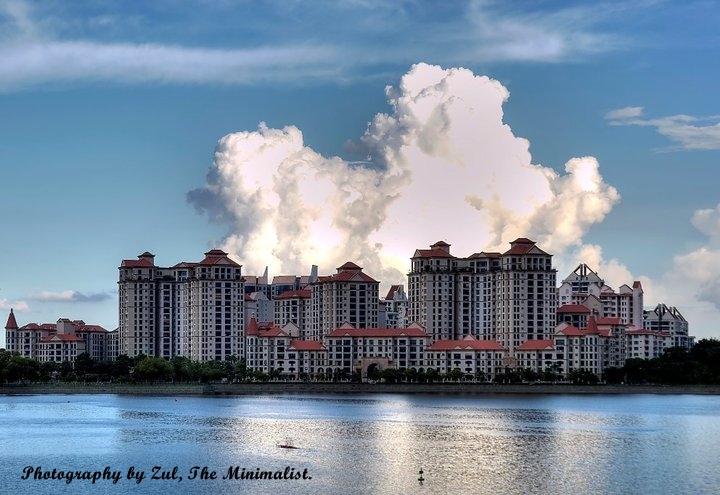
We first met Maureen at an organized shoot titled "ToyArt". She came across to us as a very bubbly and fun person. Her easy-going personality and bright smiles sure added lots of "X Factors" to outings & shoots. Browsing through her works, I found "gems" among her albums. She may claimed to be an amateur photographer, but some of her works are certainly of professional standards. I personaly felt Maureen is exceptionally good at framing and composition, she is darn good at angles. Today, I’ve hand picked a few of her works to be featured here (without her permission of course! Lolz).

Ways to Contact Maureen;
Email: dreamangel05@yahoo.com – Web: http://www.misstamchiak.com – Facebook: http://www.facebook.com/chiannhuey.ow

——————————————————
Add Us on Facebook: http://www.facebook.com/ourshutterjourney
Join Us on Facebook Group: http://www.facebook.com/group.php?gid=104720569560391#!/group.php?gid=104720569560391
——————————————————
Posted in Featured Photographers | Tagged , | Leave a comment

Flowers of Lamentation: POPPY TEARS

 
FOL-EDMlongb.jpg picture by Viviobluerex

Flowers of Lamentation: POPPY TEARS

Presented by The ARTS FISSION Company


19 – 21 August 2010 (08:30pm)

Drama Centre Black Box @ National Library


The poppy flower conjures up stunning images of time past and present:

bygone empires in distant lands; smoke-filled dens and war cannons spitting thunderous black clouds.  Amidst fresh poppy fields sprout soldiers and militia with machine guns. These are no hallucination but real-life events taking place today.


How could fragile beauty harbor such violence and destruction?


POPPY TEARS is a new collaborative performance between ARTS FISSION Choreographer Angela Liong and the art & design collective, :phunk (hail as one of Asia’s most hip and provocative design collectives).


Merging contemporary dance with music from Afghanistan, Syria, and Persia, and cutting-edge graphics through multi-angle projections that carved intriguing theatre space, the performance compresses fractured narrative from the everyday and the imagined to present a movement story from the realm of dreams.


Performance concept: 

The performance begins at the Drama Centre Black Box lobby with a huge tent that casts patterned shadows on the floor.  A DJ spins traditional music for the dance.  The audience is then guided through a mini maze like path to enter into the pitch dark theatre where they are greeted with multimedia visual narrative. 


The black box theatre is staged like a dark gallery to accommodate slow milling of the audience.  They can choose to take up their own vantage points around the performing area either by standing or sitting on the floor.   They can also rove slowly to change their viewing angles throughout the performance. 


The presentation format aims to give the audience a physical spatial sensation that is intimate and enclosing.  The near proximity of the projection and performers with the audience at the same time provides a highly charged experience similar to standing in a club’s dance floor with moving lights and visual images and sound vibration as the performance unfolds.     

EVENT INFORMATION

Event name

Flowers of Lamentation: POPPY TEARS

Genre (Music, Theatre, Dance, etc.)

Contemporary Dance

Date(s)

19 – 21 August 2010

Time(s)

08:30:00 PM

Venue

Drama Centre Black Box @ National Library

Ticket prices

$19.00 – $35

Where tickets may be purchased (SISTIC, tickets.com, etc.)

SISTIC

Website: www.sistic.com.sg

Hotline: (65) 6348 5555

Enquiry tel line (if applicable)

6238 6469 / tafcl@singnet.com.sg

  * Photography Prohibited by Public except Official Photographers (Shutter Journey (Singapore) Photography Group).

“The Arts Fission Company is Singapore’s blossoming performing arts scene at its best

—innovative, eclectic, willing to take risks, richly human.”

Brian Mertens, WINGSPAN ANA Magazine

FOL-EDMlongd.jpg picture by Viviobluerex

—————————————————————————————-

Artfission.jpg picture by Viviobluerex

About The Arts Fission Company (TAFC)

ARTS FISSION is a Singapore based dance laboratory with the vision to rekindle human spirit by a new genre of dance theatre informed by Asian traditions, cultures, and aesthetics.  Poised in Southeast Asia, ARTS FISSION creates its dance works in sync with the pulses of new Asia. 


Many of ARTS FISSION’s original creations are acute responses to the emerging contemporary Asian identity amidst the rapid developing urban environment.   These works aim to experiment and reinvent vernacular gesture and movement into a new dance vocabulary that cross-references between urban Asia and old Asia.  This artistic direction marks ARTS FISSION with a distinct dance profile. The 16-year-old company has presented over 60 full-length productions locally and internationally to date. www.artsfission.org


About :phunk

Described as The Champion of Singapore’s Graphic Scene, :phunk began its life in 1994 when its members were fellow design students of LASALLE College of the Arts.


:phunk has propagated a visual signature that seamlessly blends and reinterprets their diverse influences such as traditional Chinese mythology, craft, philosophy and folklore, Hong Kong wuxia, Japanese manga and otaku subculture, Western popular culture, art and design movements into a singular creative thought that reflects their multi-cultural identity, background and environment. The concept of "universality" in the age of modern globalization is a constant theme in their works.


About Brandon Tay

Brandon Tay is a motion designer and interactive designer for non-web spaces based in Melbourne and Singapore. With 6 years commercial experience in the field of music videos, motion graphics, and visual programming, he has worked with music video collective KROZM on clips for bands like Cut Copy, Van She and the Midnight Juggernauts. He has also worked on commercial projects for MTV Asia, Sci-Fi Channel and Animax. In Singapore, he has created the visual accompaniment for bands like the Observatory and participated in the Singapore Design Festival 2009.


He has worked on projects with noted media artists Ulf Langheinrich and Gina Czarneki on large- scale media installation works. A project “LAND” which he assisted Langheinrich with has been featured among others, the Liverpool Biennial and the Shanghai EArts festival 2009.


——————————————————
Add Us on Facebook: http://www.facebook.com/ourshutterjourney
Join Us on Facebook Group: http://www.facebook.com/group.php?gid=104720569560391#!/group.php?gid=104720569560391
——————————————————
Posted in Photography Courses & Events | Tagged , | Leave a comment

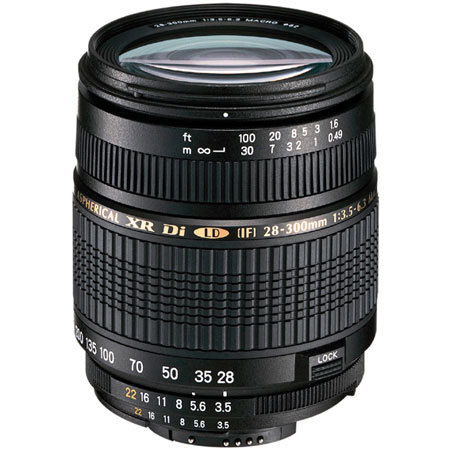
Tamron 28-300mm F/3.5-6.3 XRDi LD Aspherical IF Macro

Finally completed my "Aliens Lens" Collection today. Got my Lens Number 14 (should have been 17th – gave 2 spare kits lens to 2 colleagues weeks ago and gave one spare to an expert repairer a month ago). This time, it’s a Tamron – to complete my "Famous Four" of Cosina, Sigma, Tamron & Tokina. Of course, there are other Canon-Mount Lens like Vivitar (Cosina Made), Mamiya, Carl Zesis, Zenitar, Samyang and a few other lesser brands, but the "Famous Four" is probably the most popular among the 3rd party brands. This Tamron is a Di lens, that means it is compatible with my 5D Mark II & my cropped bodies like the 500D & 350D-IR (with corresponding increased range to 44-465mm) . Best of all, it can also be used on my film SLR EOS 88 (3000QD) (also using EF Series Lens)!


* picture:  Tamron 28-300mm F/3.5-6.3 XRDi LD Aspherical IF Macro

First impression of the lens was really good. The build quality is better than Tokina but slightly lower than of Sigma. What I like is the range (and price) of this lens which made this lens a super walk about lens covering a wide angle to super telephoto. Photos turned out sharp and crisp and when the apeture is wide open at F3.5 (28mm stop), this lens gives very nice bokeh when the subject is about 4 metres away. At the 300mm end, picture quality suffer a bit unless you are shooting in bright-lighting-sunny condition. At F6.3, the widest at 300mm stop, pictures can be good if compensated with ISO as this lens has no Vibration Control (VC – similar to IS, VR, SS, OS, etc.) So it is a tad challenging if the subject is moving and you don’t have a tripod with you. For the price I paid, this can be ignored or somewhat negligible. Just compare this lens with the Canon’s nearer equivalent, the Canon EF 28-300mm F3.5-5.6L IS USM, this Canon multi-purpose zoom is selling at a RRP of SGD $4599 (Street Price Differs) and I paid less than 10% of the Canon’s RRP. And weight/ size wise, this medium sized Tamron is way smaller than Canon’s EF.

EF 28-300mm F3.5-5.6L IS USM
Diameter 92mm x Length 184mm
Weight 1670gm.

Tamron 28-300mm F/3.5-6.3 XRDi LD Aspherical IF Macro
Diameter 54.6mm x Length 91mm
Weight 420gm


* picture:  Tamron 28-300mm F/3.5-6.3 XRDi LD Aspherical IF Macro

Though this lens is built much smaller than most of its competing counterparts, this lens is solid in build and the feel of the lens is good. Zoom is smooth (smoother than Tokina) and it feels more expensive than it really is. However, when zooming to 300mm, the lens erects out "extensively" and it became much longer than other similar lenses in the same category. This is however, a like or hate thing depending on individuals. Oh yes, this Tamron can do Macro too. Though not exactly a real macro lens (Real Macro Lens are Prime Lenses) , the magnification capability is close to the real thing (1:2.9). Focusing speed is not super fast, but acceptable as "quite fast".  

For Infra Red Photography, this lens is average. Hotspot sometimes appears randomly. Most of the time hotspots appear when the lens is at 28mm, when zoomed, hotspot does not appear – please note.

Some User Facts/ Information:
(If you are looking for the specs, please google yourself, it’s all over the internet.)
– Filter Size 62mm
– Lens Hood AD06 or 1D4FH (Supplied with Box).

– Average lens for Infra-red Photography (IR), Random Hotspot.
– AF Runs on fast mechanical motor – Can be noisy sometimes when it hunts more than it should. 
– Focal Range when used on bodies with smaller APS-C sensors – 44mm to 465mm.
– Tamron’s "Canon EF-Mount -Di (Digitally Integrated)" is designed for use on Canon’s EOS Full Frame & Cropped Bodies (with corresponding increase x1.6 APS-C or x1.3 APS-H).
– Understanding Tamron Terms for Tamron 28-300mm F/3.5-6.3 XRDi LD Aspherical IF Macro; 
XR = Extra Refractive Glass Elements used in the construction of lens group. (used to reduce Chromatic abberation)
Di = Digitally Integrated (compatible on FF, APS-C, APS-H, 35mm Film)
LD = Low Dispersion Glass used in the construction. (Reduce area of image plane for sharper photos)
ASL = Aspherical (Used for creating great zoom range while maintaining the compact size of the lens construction)
IF = Internal Focusing (For creating a shorter minimum focusing distance and faster focusing)
Macro = High Magnification Capability (Possible for good close up shots, near real macro).
ZL = Zoom Lock. (This lens comes with a Zoom Lock for preventing lens strays, but not reflected on Lens Model Name) 

What I Like:
– Super walkabout range when used on any EOS Bodies.
– Good image quality produced.
– Suitable for Infra Red photography.
– Great Bokeh for portraiture shoot.
– Solid Build and feels more expensive than it cost.
– Supplied Hood.
– Smooth Zooming on all ranges.
– Nicely Priced.
– Zoom Lock prevent Lens Stray.

What I Hate:
– No Distance Scale Meter.

– Focusing is not very fast.

*Picture Source Internet.

——————————————————
Add Us on Facebook: http://www.facebook.com/ourshutterjourney
Join Us on Facebook Group: http://www.facebook.com/group.php?gid=104720569560391#!/group.php?gid=104720569560391

——————————————————
Posted in Brand: Tamron | Tagged , , | Leave a comment

SJS Appointed Official Photography Team for “Poppy Tears”.

 
Shutter Journey (Singapore) Photography Group has been appointed by The Arts Fission Company for their upcoming performance "Poppy Tears" as the Official Photography Team. The team will cover the rehearsal and 3 days performance at the Drama Centre Black Box @National Library from 18th August to 21st August 2010. (19th-21st August performance days). Featuring a Roaming performance covering the Lobby and Theatre, this will be one photography challenge.

This is a 60 minute performance with no intermission and photography is NOT Allowed by the public. Ticketing by SISTIC and More details below.

For Ticketing (SISTC): 6348 5555 or www.sistic.com.sg

 
For Performance Details: 6238 6469 or admin@artsfission.org

FOL-EDMlongA.jpg picture by Viviobluerex
FOL-EDMlongb.jpg picture by Viviobluerex
FOL-EDMlongc.jpg picture by Viviobluerex
FOL-EDMlongd.jpg picture by Viviobluerex

For the last Performance by The Arts Fission Company shot by SJS Photography Team, please visit:
http://www.facebook.com/album.php?aid=6701&id=100000916546037

 
——————————————————
Add Us on Facebook: http://www.facebook.com/ourshutterjourney
Join Us on Facebook Group: http://www.facebook.com/group.php?gid=104720569560391#!/group.php?gid=104720569560391
——————————————————
Posted in Photography Courses & Events | Tagged , | Leave a comment

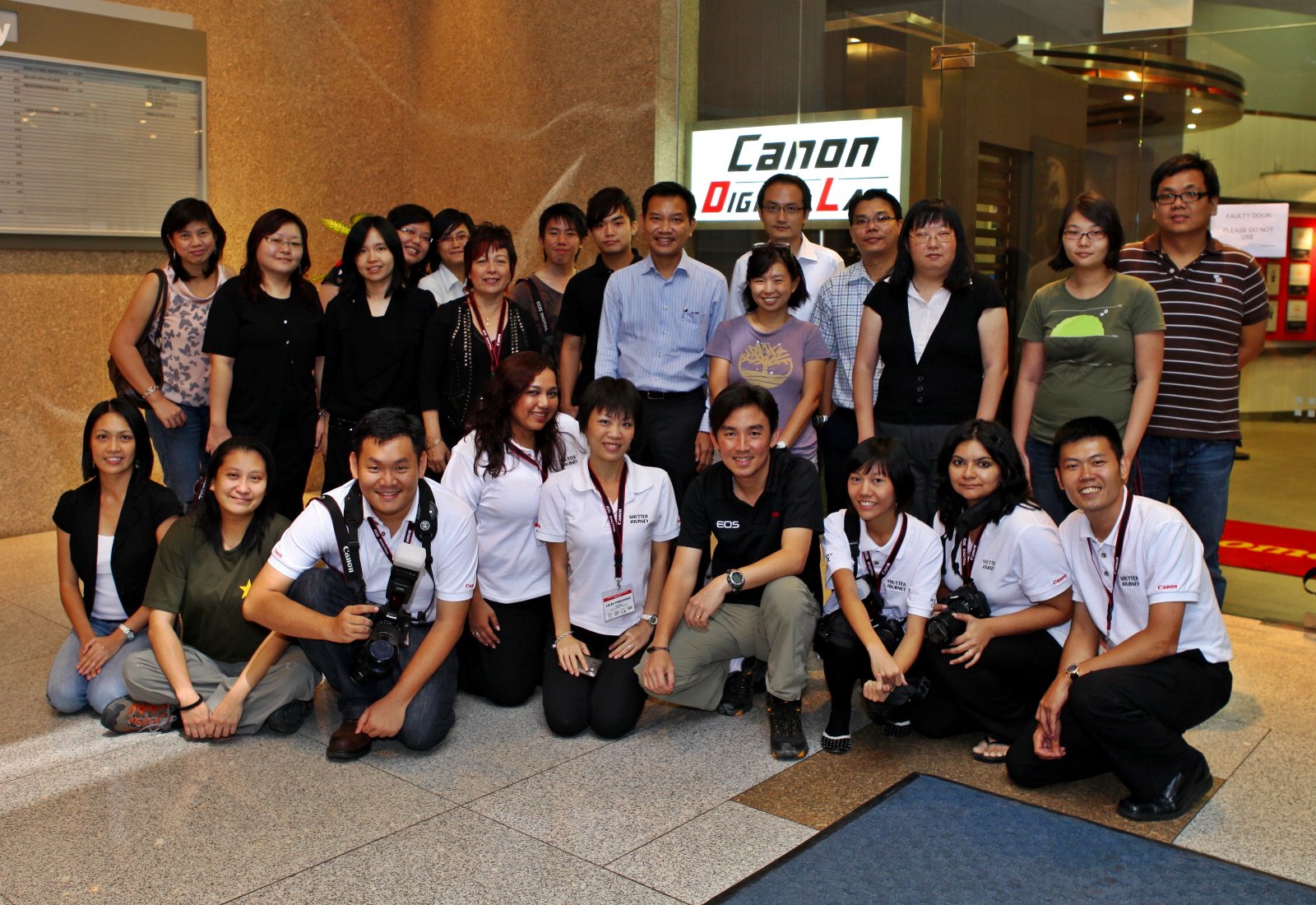
Travel Photography Talk by Jino Lee

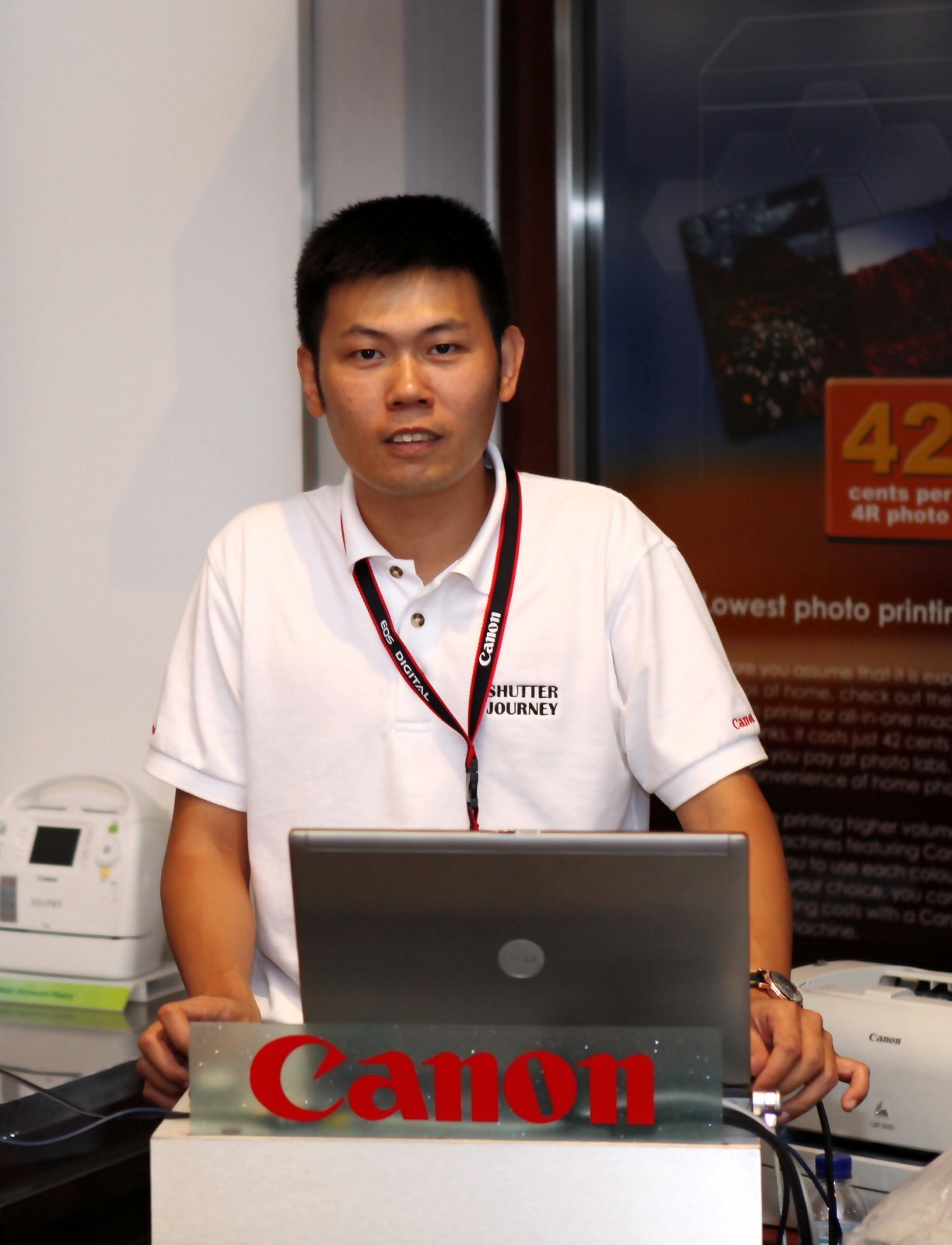
On 28th July 2010, Shutter Journey (Singapore) Photography Group held a Photography Talk at Canon DigitalLab. Featuring Jino Lee (Canon Singapore), a renowned Travel Photographer, he shared about the important tips & fundamentals on Travel Photography. It had been an informative and valuable learning experience for all the attendees. The moderating committee had work hard to make this event possible, and thanks to our sponsors: Canon Singapore, Mrs. Ergul, Johnny Camera Accessories, Singapore Media Owners Hub & Adlib Magazine Singapore.

Here’s some photos from the event.

*Picture: Group Photo after the Talk.

*Picture: Jino Lee, Travel Photographer & Lecturer for the Talk.


*Picture: Allan Lee, Founder of SJS.


*Picture: The Moderating Committee left-right – Noel Ong, Allan Lee, Ling Tan, Sheladina Joseph, Celes Fernandez, Julaiha Batcha.


To view the full album for this event, please visit
http://www.facebook.com/album.php?aid=15566&id=100000916546037
 
——————————————————
Add Us on Facebook: http://www.facebook.com/ourshutterjourney
Join Us on Facebook Group: http://www.facebook.com/group.php?gid=104720569560391#!/group.php?gid=104720569560391
——————————————————
Posted in Photography Courses & Events | Tagged , , | Leave a comment

New Logo for the Group & Our Facebook Profile

We are changing the Group Logo.

We are replacing the below logo with a New design.


*Picture: Existing Group Logo.

Not exactly sure what or how the next design will look like.

Meantime, A moderators’ group shot is used to represent the group.


* Picture: New Temporary Group Logo.

If you have a design in mind and would like to share with us, please email or PM me.

Meantime, we have decided to change our Facebook Profile Picture to better reflect our unified interest in photography. I selected a photo which we took while kissing against a BALI Sunrise.


*Picture: New Facebook Profile Picture – BALI SUNRISE.

Thank you.

Allan.

——————————————————
Add Us on Facebook: http://www.facebook.com/ourshutterjourney
Join Us on Facebook Group: http://www.facebook.com/group.php?gid=104720569560391#!/group.php?gid=104720569560391

——————————————————
Posted in Group Announcements & Notices | Tagged | Leave a comment

Outings – by Brian Seah

Originally Published on http://outofframe.sg/2010/07/08/outings/ by Photographer Brian Seah.
——————————————————————-

OUTINGS! – Brian Seah

For me, I believe that though shooting weddings are fun and all that, with events providing interesting photos, there always can be more ways to enjoy and enhance photography skills. Seminars are one. Workshops. Classes. But one of the ways that has the greatest impact in my life is going on photography outings.

Recently, I’ve joined this online Facebook Group “Shutter Journey of Singapore” created by this couple, Allan and Ling, who’ve started photography a year ago. Interesting thing about the couple is that they use cameras of different systems, Sony Alpha and Canon. WEIRD COMBINATION! But they work around it pretty well!

Been spending some time going for various outings and joining them for different shoots, and through it, I not only met different people from various backgrounds and levels of photography, but I begin to see the world through a different perspective and even learn new things.

Group Shot (Boat Quay)

Group Shot (Boat Quay)

The common misconception that some “senior-ish” photographers have is the mentality that they have been through it all, seen all types of styles, angles and whatnot. But I honestly would like to say my point of view: I am MARVELED by the passion, dedication, creativity and perspective of this group. Going through different area shoots with them, with its Limited Series (Limited Lenses or Limited Equipment Style-ed) and its Location Series (Kallang Stadium), I not only shot and “practiced” what I read in books and magazines, but even try new styles and head-ed back to Post Processing to increase the effectiveness and message of my pictures

Dont Learn All Alone :D

Dont Learn All Alone :D

In fact, one of the simplest pictures that I like from the outings was this picture taken by my girlfriend, Rachel. Simple, a easy shot. But to me, never saw it this way before. In fact, this is one the styles that I am going to adapt to.

Rachel's Shoot at Barrage

Rachel’s Shoot at Barrage

Hope to blog again soon with more wonderful pictures!
——————————————————
Visit Brian’s Web Page at http://outofframe.sg/

Thanks a lot Brian!

From Allan & Ling.
——————————————————
Add Us on Facebook: http://www.facebook.com/ourshutterjourney
Join Us on Facebook Group: http://www.facebook.com/group.php?gid=104720569560391#!/group.php?gid=104720569560391

——————————————————


Posted in Photography Articles & Videos | Tagged , | Leave a comment

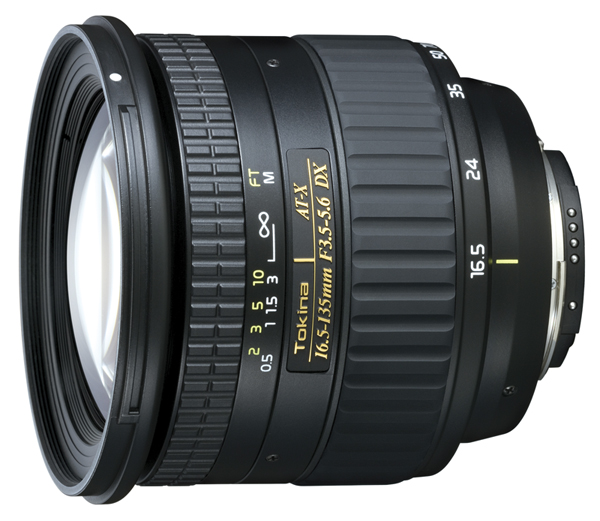
Tokina AT-X 16.5-135mm DX

 
This is lens number 13. Initially wanted to buy the Tokina 35mm Macro (M35) to try out for IR suitabilty and also to add to my "Alien Lens" collection (adding to the Sigma & Cosina) but was told by the local distributor that the 35mm will no longer be shipped to Singapore – at least not anytime soon. So the next lens to consider will be the fairly new and slightly more expensive Tokina AT-X 16.5-135mm DX. This lens is designed and made for use on cropped bodies only. Using in on my 350D-IR or 500D, this lens is wide and the zoom is adequate for most applications. (equivalent to a Full Frame range of 26mm to 220mm) This range naturally made this lens a great landscape lens or a general walkabout lens covering from wide angle to medium telephoto.


* picture:  Tokina AT-X 16.5-135mm DX

On the infra red 350D, this lens is a little inconsistent. It produces very, very slight hotspots randomly. (I did not use the hood at all) Image sharpness are increased with zoom, at 16.5mm, the corners appears slightly soft and sometimes CA is visible. However when zoomed out, the image gets better contrast and sharper. The apeture range of this lens is F/3.5-5.6 which is class-standard for lens with such a range at this price (RRP SGD$799, Street Price about $100 to $150 cheaper). At F3.5, the 9 apeture blades works well to get good bokehs making it suitable for portrait shots. But be warned, magnification is bad so forget about doing any form of macro with this lens. Even at F14, tiny things you shoot will end up with blurred or NO details at all!


* picture:  Tokina AT-X 16.5-135mm DX

The lens feels solid enough given its half metal and half "engineered plastic" construction. It does look like it can take some abuse and survive harsh shooting conditions too. If you have a cropped EOS body and need a good general or travelling lens, do consider the Tokina AT-X 16.5-135mm DX.

It serves the purpose it was built for.


* picture:  Tokina AT-X 16.5-135mm DX (with the supplied hood mounted)

 
Some User Facts/ Information:
(If you are looking for the specs, please google yourself, it’s all over the internet.)
– Filter Size 77mm
– Lens Hood BH777 (Supplied with Box).

– Average lens for Infra-red Photography (IR), Random Hotspot.
– AF Runs on mechanical motor – but surprisingly quiet. 
– Focal Range Equivalent on Full Frame Sensors – 26mm to 220mm.
– Tokina’s "Canon EF-Mount -DX" is designed for use on Canon’s EOS Cropped Bodies.

What I Like:
– Good walkabout range when used on all my Cropped EOS Bodies.
– Good image quality produced.
– Suitable for Infra Red photography.
– Great Bokeh for portraiture shoot.
– Solid Build and feels more expensive than it cost.
– Supplied Hood.

What I Hate:
– No Distance Scale Meter.

– Zoom ring not smooth when zooming out to 135mm.
– Focusing is not very fast.

*Picture Source Internet.
 
——————————————————
Add Us on Facebook: http://www.facebook.com/ourshutterjourney
Join Us on Facebook Group: http://www.facebook.com/group.php?gid=104720569560391#!/group.php?gid=104720569560391
——————————————————
Posted in Brand: Tokina | Tagged , , | Leave a comment

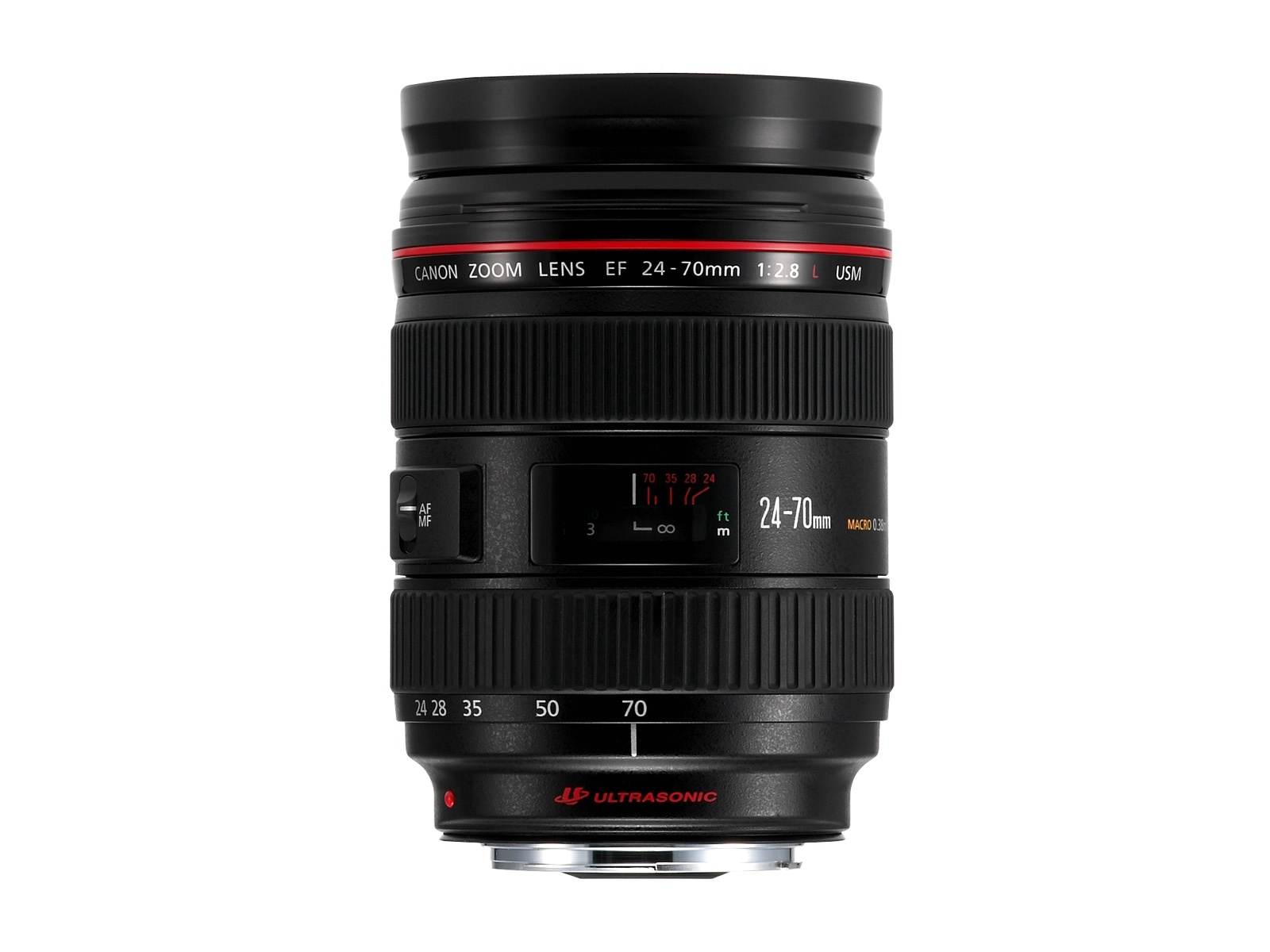
Canon EF 24-70mm F2.8L USM

 
The EF 24-70mm F2.8L USM is the “Dream Zoom Lens” for many Canon fans. This lengendary zoom lens is the fastest zoomer in the EF series and it sits in the L-Series line as the “King of Zoom”. Like every other Canon user, I too, dreamt about this lens often. Till recently I gave up and decided to stop dreaming and make my dream comes true. The EF 24-70mm F2.8L USM became my 12th Lens (and my 3rd L-series EF Lens) in the dry cabinet. At a constant apeture of F2.8 throughout the whole zoom range, this lens is a top performer in all possible lighting environments and situations. Pictures are sharp and colors are well reproduced – expected from a L-lens. The Ultrasonic Motor (USM) moves at break-neck speed and it is almost silent unless you strain your ears to catch the ring USM in action, otherwise, you won’t hear a thing. This is also due to the weather sealing incorporated in the lens construction that helps to mask out any audible operation noise.
* picture:  EF 24-70mm F2.8L USM.

As expected from a L-Series EF Lens, the lens body construction are solid metal, the finishing looks luxurious indeed with a weather-proofed compound – great feature but I found the body coating to be attracting lots of fingerprints. (Ha Ha Ha). This is one heavy lens (950g), very heavy and huge. However, it covers the most effective range for most photography needs when used on my 5D Mark II. On my 350D-IR & 500D, the range increased to 38-110mm which still makes a good walkabout range. (But be warned, when mounted on a cropped body like the XXXD & XXXXD series, the body looks ridiculously small, but looks balanced on XXD series). when mounted with the supplied petal-like hood, this lens looks even larger than life and you may wish to hold on to your lens when you are walking about as someone may accidentally hit your lens + camera combo and get hurt. (Just kidding!)


* picture:  EF 24-70mm F2.8L USM.

On the down side, those looking for a “All-Rounder” lens will discover the “Macro” printed on the lens body does not really gives you good magnification capability, but instead, now you have a super zoom that allows you to focus nearer to your subject. Enough have been said about this lens. Since this is the fastest zoom lens in the whole of Canon’s EF & L-Series lens, you know the rest of the story. 


* picture:  EF 24-70mm F2.8L USM. (When mounted with the supplied hood)

 
Some User Facts/ Information:
(If you are looking for the specs, please google yourself, it’s all over the internet.)
– Filter Size 77mm
– Lens Hood EW-83F (Supplied with Box).

– Great lens for Infra-red Photography (IR), Zero Hotspot.
– AF Runs on Super Fast Ring-Ultrasonic Motor (USM). 
– The fastest zoom lens from Canon.
– Focal Range when used on bodies with smaller APS-C sensors – 38-110mm .
– Canon EF Mount is designed for use on Canon’s EOS Full Frame & Cropped Bodies (with corresponding increase x1.6 APS-C or x1.3 APS-H)What I Like:
– Good walkabout range when used on all my EOS Bodies – Cropped or Full Frame.
– Legendary image quality produced.
– Suitable for Infra Red photography.
– Great Bokeh for portraiture shoot.
– Solid Build and weather proofing.
– Supplied Hood.
– Distance Scale.

What I Hate:
– Supplied Lens Pouch adds another white elephant to my storage.
– Very heavy.

*Picture Source Internet.

 
——————————————————
Add Us on Facebook: http://www.facebook.com/ourshutterjourney
Join Us on Facebook Group: http://www.facebook.com/group.php?gid=104720569560391#!/group.php?gid=104720569560391
——————————————————
Posted in Brand: Canon | Tagged , , , | 2 Comments

Canon EF 28mm F2.8

 
I was really looking for a better & wider lens for my EOS 350D-IR (Infra Red Converted). Was doing lots of reading up on forums and on IR-Dedicated Websites, many IR Photographers mentioned positively about this lens and some even sing praises of it, the EF 28mm F2.8. I immediately bought this lens following a visit to the photo store within days. This became my 11th lens and also my 3rd Canon Prime lens. (after 50mm & 100mm). This prime lens is cheap to begin with, below SGD $500 mark and when used on my EOS 5D Mark II, this lens offers sharp pictures and great colors with zero distortion. Wide open, the bokeh are creamy and smooth, nowhere near the quality of "cheap Canon lenses". When used on my 500D or 350D-IR, the focal range increased to 45mm which makes this lens a great walkabout lens for cropped EOS bodies too.


* picture:  EF 28mm F2.8.

The EF 28mm F2.8 is a cute & petite lens. Constructed in full metal, the lens felt purposeful when I held it for the first time and it actually feels good. I got a little irritated with the focusing motor which came in the form of AFD (Arc Form Drive Motor). This motor is known for its "squeals" during focusing. Noisy it may be, it worked well and focusing is faster than most AFD powered lens. The focusing ring (right behind the Distance Scale meter) near the front element feels a little out of place and a little thin to be used comfortably. Overall build quality is excellent.

The real test came when I fixed the EF 28mm F2.8 on my 350D-IR and went for a nature walk. (IR Photography revolves around nature) This lens performed well in IR with no hotspotting except the occasional odd photo. (Took 100+ photo and 5 were found with Hotspot) I blamed the lack of a hood that could have probably caused the hotspot effect. Other wise, this would have been a top IR Compatible EF lens. Those photos that turned out well were full of colors and contrast were well controlled. The photos are sharp and beautiful. I will recommend this lens to anyone who are starting out at Infra Red Photography or looking to buy their 2nd Prime lens (usually after the 50mm F1.8 II). Trust me, the EF 28mm F2.8 is a really decent lens to invest in.


* picture:  EF 28mm F2.8.
 
Some User Facts/ Information:
(If you are looking for the specs, please google yourself, it’s all over the internet.)
– Filter Size 52mm
– Lens Hood EW-65II (Sold separately).

– Great lens for Infra-red Photography (IR), Hotspotting appears occasionally, but rarely.
– AF Runs on Arc Form Drive Motor (AFD) – Not exactly quiet. 
– 2nd cheapest EF Prime lens after the 50mm F1.8 II.
– Focal Range when used on bodies with smaller APS-C sensors – 45mm.
– Canon EF Mount is designed for use on Canon’s EOS Full Frame & Cropped Bodies (with corresponding increase x1.6 APS-C or x1.3 APS-H)

What I Like:
– Good walkabout range when used on my 500D & 350D-IR.
– Wide on my 5D Mark II.
– Cheap asking price.
– Suitable for Infra Red photography.
– Good Bokeh for portraiture shoot.
– Light & small, good for travelling.
– Distance Scale.

What I Hate:
– Hood not supplied & hard to find.
– Very Noisy Focusing.
– Thin focusing ring feels loose.

*Picture Source Internet.

 
——————————————————
Add Us on Facebook: http://www.facebook.com/ourshutterjourney
Join Us on Facebook Group: http://www.facebook.com/group.php?gid=104720569560391#!/group.php?gid=104720569560391
——————————————————
 
Posted in Brand: Canon | Tagged , , , | Leave a comment

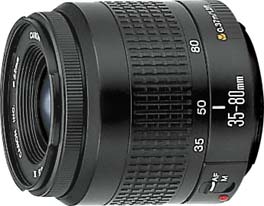
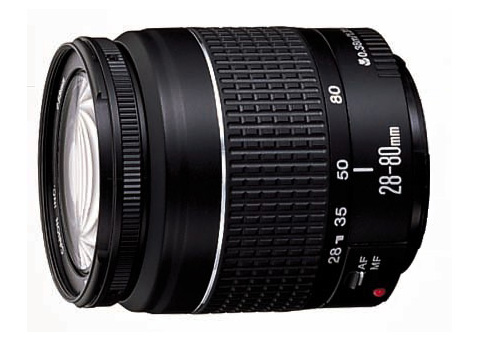
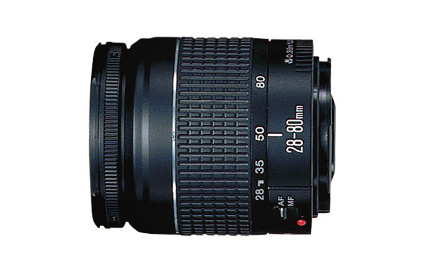
Canon EF 35-80mm F4-5.6 II

This is my 10th lens. I collected this used Canon EF 35-80 mm f/4-5.6 II on the same day as the Cosina AF 28-105mm F2.8-3.8, but from different sellers though. The is my 2nd used lens after the Cosina and as usual, old lenses that show up these days needs some serious cleaning. The screws on the moving elment are rusty, there were dust everywhere. To restore, first I sent the lens to the "expert" and once the lens are cleaned from inside out, the cosmetics are next. Using a mild cleaning solution, I cleaned the lens body and slowly swipe clean all the grooves and lines. Then bought a new filter, a new lens cap and a rear cap.  Now the lens looks so much "younger". OK, now back to the lens. The Canon EF 35-80 mm f/4-5.6 II came as a kit lens for the Rebel Series SLRs, the EOS 88, EOS 1000F, etc. This is really the "big brother" of the Canon’s "cheapo lens" family – low cost to produce, and (still) usable by the mass.


* picture:  EF 35-80mm F4-5.6.II.

The first version was launched as a kit lens for EOS 1000FN SLR in 1992. Now at its 3rd & last incarnation (Mark III), this 1995 lens saw the product line through the transition period of "Digital SLR Evolution" and the arrival of EOS 10D, EOS 300D and EOS 1D. Featuring a full plastic construction (except the glass elements), you can’t really expect much from a lens made this cheap. After all if you surf the net for information about this lens, it is commonly known as the "SLR" lens, but compatible with EF mounts so all the newer DSLR can still use it. The lens do not have a Distance Scale (probably to save production cost) and there are only 3 focal length stops (35mm, 50mm & 80mm). This is indeed a simple lens. Simple to build & simple to use. The image quality of the photos from this lens are soft and lack contrast when used on my digital bodies like 500D & 5D Mark II. I attribute this to the purpose of this lens which is built and calibrated for use with Film Bodies, so it does not work that well on digital bodies. If you have a more sensible explanation to that, please email and share with me.


* picture:  EF 35-80mm F4-5.6.II.

I bought this used lens below SGD$100 (inclusive of the service fees, new caps and filter) and it is a good piece of lens to keep as a collectors’ item or you can use this lens as a "Soft Focus Lens".  (Think dreamy portraits of people) I take it out once in a blue moon for walking about shoots. Not my first choice lens in any situation. Now you get the drift.

 
Some User Facts/ Information:
(If you are looking for the specs, please google yourself, it’s all over the internet.)
– Filter Size 52mm
– Lens Hood EW-54II (Sold separately).

– Average lens for Infra-red Photography (IR), Hotspotting appears from F14 onwards.
– AF Runs on noisy Micro Motor (MM). 
– Manufactured as a SLR Kit Lens.
– Focal Range when used on bodies with smaller APS-C sensors – 56-128mm.
– Canon EF Mount is designed for use on Canon’s EOS Full Frame & Cropped Bodies (with corresponding increase x1.6 APS-C or x1.3 APS-H)

What I Like:
– Good walkabout range when used on my 500D & 350D-IR.
– Super Cheap.
– Collectors’ Item.

What I Hate:
– "Toy-Like" & Plasticky.
– Very Noisy Focusing.
– Cheap look, Cheap feel.
– Fragile and can’t stand abuse.

*Picture Source Internet.

 
——————————————————
Add Us on Facebook: http://www.facebook.com/ourshutterjourney
Join Us on Facebook Group: http://www.facebook.com/group.php?gid=104720569560391#!/group.php?gid=104720569560391
——————————————————
Posted in Brand: Canon | Tagged , , , | 1 Comment

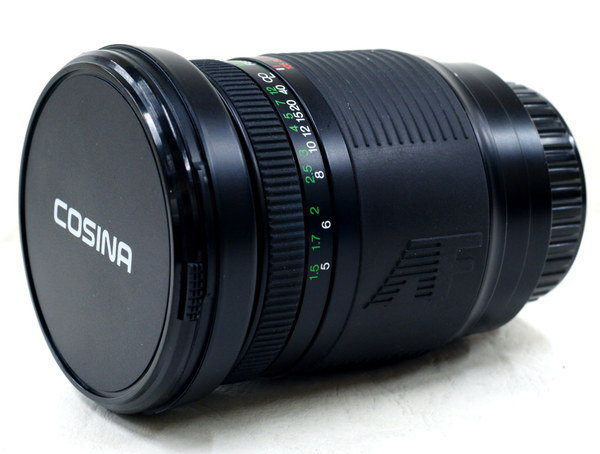
Cosina AF 28-105mm F2.8-3.8

 
Most will wonder which lens will end up as my 9th Lens. Yes, I am into my 9th len now. As I was browsing the photography forums and “looking” around, I saw a topic in the Buy/Sell folder of a local forum. The word “Cosina-Canon Mount” caught my eye. When I read on, this lens sounds really interesting, it’s a Cosina AF 28-105mm F2.8-3.8. I did a quick research on this lens and I found both positive and negative feedbacks about this lens. I decided to contact the seller and understand further. So it is a “push-pull zoom” lens – which means this is an old lens. The range from 28mm to 105mm also hinted that this lens is from the 2nd generation. (1st Generation 35mm is wide. 2nd Generation, 28mm is wide, the 3rd (current) Generation, 24mm is wide <18mm in EF-S>- anything wider is called “Ultra Wide Angle” or UWA Lens). However the apeture is interesting, F2.8 to 3.8, that means this lens is (supposed to be) a very fast lens even in today’s standard.


* picture:  Cosina AF 28-105mm F2.8-3.8.

A brief meeting was set up and I bought over the lens from the seller with little fuss, since I already expected more restoration work needs to be done. The lens elements was dusty from inside out, the rubber ring dirty and smudges all over the lens from the body to the glass. I sent the lens along with another used lens (which I am going to cover in the next article) to an expert for cleaning lenses, especially old and classic ones. Once that is completed, I set out to buy new filter, a new Canon 72mm front lens cap and a rear cap and further conditioned the rubber parts. Some screws was missing from the lens mount and I have them replaced too by the same expert. Now the lens looks like new. (will not be posting the pictures now – saving those for later articles) However, I found some really nice photos on the net for this lens as included in this article.


* picture:  Cosina AF 28-105mm F2.8-3.8. Nice piece of used glass of you ask me.

The construction of the lens is “so so”, but the apeture is sweet when wide open. Bokeh on portraits is creamy and smooth. At the telelphoto end, the lens performed inconsistently with AF working harder to focus at F3.8, but problem solved when the apeture narrows down to F7.1 and yes, now the lens is fast as claimed. It takes a bit of getting used to using this lens, once that is acheived, this is one great walkabout lens. On cropped bodies, the range increased to 45-168mm which is very acceptable for general walkabout shoot. Don’t try this lens on Macro though, it sucks. For a used lens that cost me less than SGD$100 including the restoration & cleaning charges plus the new filter and caps, I can’t really complain right?

* picture:  Cosina AF 28-105mm F2.8-3.8. This is how it looks like when it is NEW.
 
Some User Facts/ Information:
(If you are looking for the specs, please google yourself, it’s all over the internet.)
– Filter Size 72mm
– Lens Hood (No available information).
– Average lens for Infra-red Photography (IR), Hotspotting appears from F18 onwards.
– AF Runs on Micro Motor. 
– Push Pull Zoom
– Focal Range when used on bodies with smaller APS-C sensors – 45-168mm.
– Cosina’s “Canon Mount” is designed for use on Canon’s EOS Full Frame & Cropped Bodies (with corresponding increase x1.6 APS-C or x1.3 APS-H)

What I Like:
– Good walkabout range when used on my 500D & 350D-IR.
– Well priced (when New, even Better when USED).
– Push Pull Zoom is a Classic, every collector must have one of these lens.

What I Hate:
– Zoom Strays as there are no locking mechanism.
– Noisy Focusing.
– Push Pull Zoom design attracts dust into Lens Body and eventually inside the glass elements.
– No Distance Scale.

*Picture Source Internet.

 
——————————————————
Add Us on Facebook: http://www.facebook.com/ourshutterjourney
Join Us on Facebook Group: http://www.facebook.com/group.php?gid=104720569560391#!/group.php?gid=104720569560391
——————————————————
Posted in Brand: Others (Cosina, Carl Zeiss, Leica, Mamiya, Samyang, Vivitar, Zenitar,etc) | Tagged , , | 2 Comments

Sigma 150-500mm F5-6.3 APO DG OS HSM

 
Looking at my gear set up, I am pretty much convinced that I got “covered” at most of the important focal range. When I got to know that my Dad was ill, I wanted to do something for him. The man loves wildlife and I would like to dedicate a collection of animal photos for him. I started hunting for a super telelphoto lens. During the process of research and selection for the lens to buy, I got taken back by the prices – Super telephoto lenses cost a bomb, an arm and probably add a limb too. Set backed, I started to ask for advices & recommendations from fellow photoraphers. Sigma was mentioned to me by several photographers so I decided to read up a bit more on their offerings. Sigma manufacture lots of super telephoto lenses at a great price, so I decide to check out the the Sigma 150-500mm F5-6.3 APO DG OS HSM which became my 8th Lens.


* picture:  Sigma 150-500mm F5-6.3 APO DG OS HSM.

As a person who owns a 100% Canon Lens Stable, buying a new 3rd Party lens is full of anticipation and stress. I was worrying over the smallest things like; will the lens work on my camera bodies, sharpness, build quality, etc. My worries are addressed the day I collected the Sigma 150-500mm F5-6.3 APO DG OS HSM.
The lens was built very solidly and of good quality material. Switches was arranged sensibly and easy to operate. The package comes with a Lens strap, tripod mount ring, a hood, a lens pouch and instruction booklet. Very well package and priced! That was my first reaction when I opened the box. Optics wise, very pleased with the photos. Colors are well reproduced, sharpness is evident in every photo, and at F10, the photos are almost 3D. This may sound unbelievable or elaborated, but that is what I gotten from my copy.


* picture:  This is how Sigma 150-500mm F5-6.3 APO DG OS HSM will look like after mounting on a camera and fully extended with hood. .

Using this lens requires lots of energy. The lens are huge and very heavy and I do not recommend shooting handheld, have it sitted on a tripod and the lens will feel more at home when mounted. And for those who are foreign to Sigma terms, APO stands for Apochromatic (lens are made using Special Low Dispersion Glass to control color abberration), DG stands for Digital (designed and suitable for use with both DSLR or SLR), OS stands for Optical Stabilizer (similar to Canon’s IS for Image Stabilizer or Nikkon’s VR for Vibration Control) and HSM stands for Hyper-Sonic Motor (similar to Canon’s USM for Ultrasonic Motor or Sony’s SSM for Super Sonic Motor) for fast and quiet focusing. The front elements zooms out very far during operation and it is constructed based on rear focusing mechanism. Lastly when mounted on my cropped bodies like the 350D-IR or 500D, I get a whopping range of 240-800mm! To conclude, I feel that I have made the right decision to buy this Sigma as my 1st 3rd party lens and my 8th lens to add to my stable. Well, at least my Dad loves my animal photos now.   


* picture:  This is how Sigma 150-500mm F5-6.3 APO DG OS HSM will look like after mounting on a tripod. .Some User Facts/ Information:
(If you are looking for the specs, please google yourself, it’s all over the internet.)
– Filter Size 86mm
– Lens Hood LH927-01 737 (Supplied in Box).

– Tripod Mount Ring (Supplied in Box).
– Average lens for Infra-red Photography (IR), Hotspotting appears from F10 onwards.
– Runs on Hyper Sonic Motor (HSM). 
– Optical Stabilizer (OS) comes in 2 modes (1 handheld and 1 panning) – Remember to switch off the OS when mounted on tripod.
– Focal Range when used on bodies with smaller APS-C sensors – 240-800mm.
– Sigma’s “Canon Mount” is designed for use on Canon’s EOS Full Frame & Cropped Bodies (with corresponding increase x1.6 APS-C or x1.3 APS-H)

What I Like:
– Super range of up to 800mm when used on my 500D & 350D-IR.
– Well priced.
– Good “in-the-box” package.
– Fast Focusing & Quiet HSM Lens.
– Solidly Built and Quality Construction.
– Distance Scale.

What I Hate:
– Very very very heavy lens.
– OS Mode 2 for Panning is not fast enough
– Exterior Material Coating attracts dust.

*Picture Source Internet.

 
——————————————————
Add Us on Facebook: http://www.facebook.com/ourshutterjourney
Join Us on Facebook Group: http://www.facebook.com/group.php?gid=104720569560391#!/group.php?gid=104720569560391
——————————————————
Posted in Brand: Sigma | Tagged , , , | 2 Comments

Canon EF 100mm F2.8 Macro USM

Venturing further into photography, one will start to explore the various genres like a curious child.
Macro photography fascinated me. The ability to see super close up details not exactly visible to human eye gave me additional reason why I wanted to learn Macro. So I got my 7th Canon lens. This time, I gotten the EF 100mm F2.8 Macro USM. I was pretty lost for a while on which macro lens to buy. There were simply too many choices from Canon and also offerings from 3rd party lenses to consider. I set out to ask fellow photographers and I received diversed reactions and feedbacks. From what I gathered, I need a good range thus the 100mm. I have also learnt that for any range below 90mm for macro, those are really for shooting stills (product shoot).


* picture:  EF 100mm F2.8 Macro USM.

So I was left with just a few choices, Canon’s EF 100mm F2.8 Macro USM, EF 100mm F2.8L IS Macro USM, Tamron 90mm Macro, Tokina & Sigma’s 105mm Macro. The 3rd party lenses has great reviews especially the Sigma & Tamron and the price is much cheaper than Canon’s. But I dropped the idea then solely because I have not really tried a 3rd party lens and so I lack the confidence & courage to buy them. Back to the Canon Camp, I am left with the 2 100mm macro to choose from. The L version offers Image Stabilizer (IS) but costs almost 50% more than the non-L equivalent. (L-Version RRP SGD$1569 & Non L-Version RRP SGD$999). Then intensive research start. I scours the net and read up every available article on these 2 lenses and soon a decision was made. You may probably laugh at why I arrived on my decision, but heck, I am going to share it anyway. I picked the EF 100mm F2.8 Macro USM over the L Version because of the price. I thought it is crazy to pay so much more for the IS and a red ring. And way before the L version was launched, most professionals was (and still using) only using the non L version as the only L version macro lens was the EF 180mm F3.5L Macro USM. So that finalised my decision.


The build quality of this lens are L-like. Solid metal body, sturdy and definitely not from Canon’s lower range lenses. The ultrasonic motor (USM) works fast and quietly – this is important when shooting insects. Weight wise, this lens is not exactly heavy and since it is medium size, lugging this lens around is also easy and effortless. The glass offer sharp magnification of the tiniest thing you can think of, and when wide open at F2.8, this lens is also a great portrait lens offering great bokeh due to its 8 apeture blades construction. Using it for product/ still shoots, F8 through F14 is extremely sharp with zero vignetting and all details are captured leaving nothing behind. For insects, floral & fauna, F16 onwards gives great macro shots of little things that never once matter to me. When used on my 350D-IR or 500D, the APS-C sensor literally gives me an added range to 160mm which is a great bonus when shooting insects from a distance without disturbing or scaring them away. When used on my 5D Mark II, this is one of the best portrait lens I ever had. Need I say more?


* picture:  EF 100mm F2.8 Macro USM.

Some User Facts/ Information:
(If you are looking for the specs, please google yourself, it’s all over the internet.)
– Filter 58mm
– Lens Hood ET-67 (Sold Separately).

– Tripod Mount Ring B (Sold Separately).
– Great lens for Infra-red Photography (IR).
– Runs on Ultrasonic Motor (USM). 
– Focal Range when used on bodies with smaller APS-C sensors – 160mm.
– EF Mount is designed for use on Canon’s EOS Full Frame & Cropped Bodies (with corresponding increase x1.6 APS-C or x1.3 APS-H)

What I Like:
– Super Sharp Magnified photos & great Bokeh when wide open for portrait shoot.
– Great range of 160mm when used on my 500D & 350D-IR.
– Great portrait lens for my 5D Mark II.
– Reasonably priced.
– Good travelling size & weight.
– Fast & Quiet USM Lens.
– Super magnification.(1:1)
– L-Version like built and construction.
– Distance Scale.

What I Hate:
– Tripod ring B Not Supplied.

– Hood Not Supplied.

*Picture Source Internet.

 
——————————————————
Add Us on Facebook: http://www.facebook.com/ourshutterjourney
Join Us on Facebook Group: http://www.facebook.com/group.php?gid=104720569560391#!/group.php?gid=104720569560391
——————————————————
Posted in Brand: Canon | Tagged , , , | 1 Comment

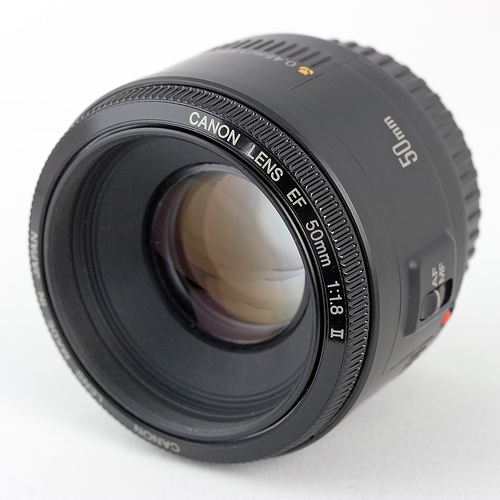
Canon EF 50mm F1.8 II


"I think the 50(mm lens) is an extremely good discipline lens; it requires you to see in a more refined way, not just tighter."
– William Albert


* picture:  EF 50mm F1.8 II.

 
Received this lens together on the same day with the EF 15mm F2.8 Fisheye. This is my 6th Canon Lens and also my 2nd prime lens. Widely known as the "Nifty Fifty" or "Plastic Fantastic" in the industry, one can easily understand why this is so. The EF 50mm F 1.8 II is a full plastic constructed lens down from body to the lens mount. (except the lens elements of course! Those are real glass!) This successor to the original mark I 50mm F1.8 was a far cry from what it replaced. Some websites actually suggested that this lens was made this way so that the EF 50mm F1.4 USM can sell. Rumours or speculations, I will leave that to your imagination.


* picture:  EF 50mm F1.8 II.

This is a truly value for money lens. At a RRP of SGD $159 (Street Price $120), this lens are most photographers’ first prime lens. Fairly priced as Canon’s cheapest lens in the whole EF Lens Line, this lens performs well and fast. It work very well in low light conditions and the image are sharp and crisp – a norm for prime lenses. The F1.8 gives great bokeh (blur off/ off focus blurring) when appropriately used for portraits. The end results are often amazing and of exceptional quality thus earning it’s positive nicknames. This lens is also Canon’s lightest lens at 4.6 oz and one of the smallest too. When used on a cropped body, it gives the user a 80mm range which is great for portraits and once mounted on a full frame body, the 50mm is good enough to be a walkabout lens. However, the only complain I have about this lens is, the focusing motor are very noisy. It sqeaks a lot – typical of old skool micro motor (MM). Probably also explains the cheap retail price for this lens. At that price, will you complain?    

 
* picture:  EF 50mm F1.8 II.

 
Some User Facts/ Information:
(If you are looking for the specs, please google yourself, it’s all over the internet.)
– Filter 52mm
– Lens Hood ES-62 (needs adapter ring 62-L).
– Great lens for Infra-red Photography (IR).
– Runs on Micro Motor (MM). 
– Focal Range when used on bodies with smaller APS-C sensors – 80mm.
– EF Mount is designed for use on Canon’s EOS Full Frame & Cropped Bodies (with corresponding increase x1.6 APS-C or x1.3 APS-H)

What I Like:
– Sharp photos with great Bokeh when wide open..
– Great portrait lens for my 500D & 350D-IR.
– Great walkabout lens for my 5D Mark II.
– Good price.
– Good travelling size & weight.
– Fast Lens.

What I Hate:
– The plastic construction.

– The AF micro motor (MM) is dated and very, very noisy.
– The tiny focusing ring is miserably small.
– No Distance scale.

– Fragile Lens – not for abuse.

*Picture Source Internet.
 
——————————————————
Add Us on Facebook: http://www.facebook.com/ourshutterjourney
Join Us on Facebook Group: http://www.facebook.com/group.php?gid=104720569560391#!/group.php?gid=104720569560391
——————————————————
Posted in Brand: Canon | Tagged , , , | Leave a comment

Canon EF 15mm F2.8 Fisheye

 
Going wider (literally), I got interested in creating "Beautifully Distorted" photos. The lens that caught my attention and eventually became my 5th Canon lens is none other than the EF 15mm F2.8 Fisheye. On my 350D-IR & 500D, it gives me a 24mm wide, mildly distorted, but ultra wide perspective due to the intended barrel distortion. When used on my 5D mark II, this lens became one of the most interesting lens to use. On a Full Frame camera, it gives the user a 180 degree view – from left to right – so this lens is also known as a "horizontal fisheye lens". And it so happens that this is also Canon’s one & only Fisheye lens. (Other alternative Fisheye lenses from 3rd party manufacturers are available – both Horizontal & Circular Fisheye) Being a Canon "Hardcore" person, I picked this lens over the competition, naturally . Using it on both cropped and full frame bodies, this Fisheye offer lots of fun. I use it for alternative landscape and sometimes, candid portraits that computer softwares is unable to acheive or render. The corner sharpness is unsurpassed when compared to competition and this is a pleasant surprise.

* picture:  EF 15mm F2.8 Fisheye.

This beautiful metal-bodied lens came with a prefixed petal-like metal hood and the lens cap is held in place by FRICTION on the fixed hood! So far it had worked pretty well and the lens cap came off only once while packed into my gear bag and travelling. The overall construction and build quality of this lens is good, except the focusing ring feels a little cheap and a tad loose. The focusing mechanism runs on Arc Form Drive (AFD) Motor (Sits in between the low cost Micro Motor <MM> and the higher end Ultrasonic Motor <USM>) so expect lots of noise but this does not affect the focusing speed at all. At F2.8, this is a fast performing lens and it does not exactly comes cheap. This is a must-have lens for all Canon Hardcores.  


* picture:  EF 15mm F2.8 Fisheye.
 
Some User Facts/ Information:
(If you are looking for the specs, please google yourself, it’s all over the internet.)
– Filter – slotted Gelatin Filter. (sold separately)
– Lens Hood is Fixed and doubles up as a Lens Cap catch.
– Great lens for Infra-red Photography (IR).
– Runs on Arc Form Drive Motor (AFP). 
– Focal Range when used on bodies with smaller APS-C sensors – 24mm with mild barrel distortion.
– EF Mount is designed for use on Canon’s EOS Full Frame & Cropped Bodies (with corresponding increase x1.6 APS-C or x1.3 APS-H)

What I Like:
– Sharp photos with great color reproduction from corner to corner – even on the distorted ends..
– Great wide angle lens for my 500D & 350D-IR.
– Super Wide with diagonal fisheye effect when used with my 5D Mark II.
– Good Build Quality & Construction.
– Good travelling size & weight.
– Fast Focusing.
– Distance Scale.

What I Hate:
– The Lens Cap is held in place by friction created by the fixed metal hood.

– The AF motor is noisy, very noisy.
– The focusing ring feels cheap and loose.

*Picture Source Internet.

 
——————————————————
Add Us on Facebook: http://www.facebook.com/ourshutterjourney
Join Us on Facebook Group: http://www.facebook.com/group.php?gid=104720569560391#!/group.php?gid=104720569560391
——————————————————
Posted in Brand: Canon | Tagged , , , | Leave a comment

Canon EF 17-40mm F4L USM

This is my 4th lens (and my 2nd L-series EF Lens) and it is probably the most popular ultra wide angle (UWA) lens from Canon. Sitting on Canon’s EF "L-Series" lens hierachy, this UWA is a favourite "Upgrade" for most Canon Users when they can’t get enough out of their existing kit lens. When used on bodies with APS-C sensors (x1.6), this lens gives you an increased wide angle from 27-64mm (EF-S 18-55mm give you the wide equivalent to 28mm on 35mm sensors) and making this a good walkabout lens. I used this lens on my EOS 500D for the longest time as my full time lens before I bought my full frame EOS 5D Mark II. The focal range became super wide once mounted on my 5D but the telephoto end became far off and not exactly usable as a walkabout lens on full frame camera. (which I bought the EF 24-70mm F2.8L USM later as the main lens) This lens being a L-Series EF Lens, the build quality is superb and solid. It is also one of the lightest & smallest zoom lens in the "L" family.

* picture:  EF 17-40mm F4L USM.

Image quality suffers slightly at F4 where the center is sharp and the corners are slightly soft. However, from F5.6 onwards, every details is sharp from corner to corner. This lens is moderately priced – within reach for most enthusiasts or advanced amatuers thus explaining its popularity. The focusing are super fast and accurate while the ring USM ensures silent operation on the internal focusing lens body. There is a bigger brother who are twice as fast – the EF 16-35mm F2.8L USM), but cost twice as high too, so before buying your UWA lens, do take into consideration the applications you are going to use for. As for me, I selected the EF 17-40mm f4L USM over the EF 16-35mm F2.8L USM was purely the fact that I do landscape shots during the day most of the time and I use tripod for almost every night shoot. So this is not a problem at all. For tight indoor/interior shoot or handheld, I use flash to bounce off light so F4 is not exactly handicapped too. For the attractive price and ultra wide angle, I selected this lens. Did I also mentioned that this lens produce great colors too?  


* picture:  EF 17-40mm F4L USM.


Some User Facts/ Information:
(If you are looking for the specs, please google yourself, it’s all over the internet.)
– Filter Size is 77mm
– Lens Hood is EW-83E (Supplied in Box).
– Average lens for Infra-red Photography (IR) portraits. Slight hotspotting appears at 17mm & 24mm stops.
– Ring Ultrasonic Motor (USM)/ (Not Micro USM) – the real deal. 
– Weather Sealing (only when used with a front screw-on filter)
– Focal Range when used on bodies with smaller APS-C sensors – 27-64mm.
– EF Mount is designed for use on Canon’s EOS Full Frame & Cropped Bodies (with corresponding increase x1.6 APS-C or x1.3 APS-H)

What I Like:
– Sharp photos with great color reproduction.
– Great walkabout lens for my 500D & 350D-IR.
– Super Wide when used with my 5D Mark II.
– L-Series Build Quality & Construction.
– Good travelling size & weight.
– Fast Focusing.
– Silent Operation.
– Weather Sealing.
– Moderately Priced.
– Distance Scale.

What I Hate:
– The supplied hood EW-83E is pretty useless and the size makes it hard for storage. 

– Useless leather lens pouch that came in the Box.

*Picture Source Internet.

 
——————————————————
Add Us on Facebook: http://www.facebook.com/ourshutterjourney
Join Us on Facebook Group: http://www.facebook.com/group.php?gid=104720569560391#!/group.php?gid=104720569560391
——————————————————
Posted in Brand: Canon | Tagged , , , | Leave a comment

Canon EF 70-200mm F4L USM

Buying my 3rd Canon lens seems like the most natural thing to do as I progress on. While doing my research, I have read about a very common and popular lens range – 70-200mm. At that point of time, I have only 4 choices to choose from. (EF 70-200mm F2.8L IS USM Mark II was not launched back then)
The famous four are: 
1) EF 70-200mm F4L USM.
2) EF 70-200mm F4L IS USM.
3) EF 70-200mm F2.8L USM.
4) EF 70-200mm F2.8L IS USM.

So I started to do extensive reading up on these four lenses and I surf the net for all the possible users’ review and information I can find. After much consideration and after reading not less than 20 articles and 40 reviews on internet, I’ve decided to go for the EF 70-200mm F4L USM. Why? Of the 4, the F4L Non IS happens to be the sharpest among the four. Also taking into consideration that I may not do any telelphoto shots or portrait shots at night, so F4 is already sufficient for most applications that I am doing. And I am glad to find out later that this is also the cheapest & lightest among the four siblings.  

* Picture:  EF 70-200mm F4L USM.
 
This lens being a "L-Series EF Lens", (L stands for Luxury in Canon language) the build and construction of this lens is solid and well put together. Though much heavier than the "plasticky" EF 75-300mm F4-5.6 III USM, this EF 70-200mm F4L USM is the lightest and the smallest 70-200mm among the four. Featuring a full metal body painted in an off-white color, this lens is a joy to use and a joy to own. I bought a tripod ring (not supplied in the box) to complement this lens but found that I seldom use it. The supplied lens pouch was never used and I thought this accessory was quite redundant – will be happier if Canon replace the pouch with a tripod ring instead. I shoot handheld with this lens very often and still get sharp and nice photos on all focal range stops. Focusing is exceptionally fast (and rumoured to be faster than the F2.8L Non IS) and precised while internal focusing with ring USM ensures almost silent operation. Constant F4 is a sweet revver. Try it, you will understand why I rated this lens highly.

Some User Facts/ Information:
(If you are looking for the specs, please google yourself, it’s all over the internet.)
– Filter Size is 67mm
– Lens Hood is ET-74 (Supplied in Box).
– Pretty good lens for Infra-red Photography (IR) portraits. May have slight hotspotting when used with UV Filters.
– Ring Ultrasonic Motor (USM)/ (Not Micro USM) – the real deal. 
– Focal Range when used on bodies with smaller APS-C sensors – 110-320mm.
– EF Mount is designed for use on Canon’s EOS Full Frame & Cropped Bodies (with corresponding increase x1.6 APS-C or x1.3 APS-H)

What I Like:
– Sharp photos with great color reproduction.
– Great portrait lens and medium telephoto range adds flexibility to use.
– L-Series Build Quality & Construction.
– Fast Focusing.
– Silent Operation.
– Distance Scale.

What I Hate:
– The longer you carry, the heavier it gets.
– White Color body attracts unwanted attention.

– Odd filter size (67mm).
– Useless leather lens pouch that came in the Box.

*Picture Source Internet.
 
——————————————————
Add Us on Facebook: http://www.facebook.com/ourshutterjourney
Join Us on Facebook Group: http://www.facebook.com/group.php?gid=104720569560391#!/group.php?gid=104720569560391

——————————————————
Posted in Brand: Canon | Tagged , , , | Leave a comment

Canon EF 75-300mm F4-5.6 III USM

This is one of the cheapest telephoto lens from Canon. Designed as consumers’ "First Telephoto Lens", don’t expect too much is what I will say. Yes you heard it. People always say "you get what you pay for" and that is certainly true when used in Canon’s context. I bought this lens (Canon EF 75-300mm F4-5.6 III USM) as my 2nd lens and mainly due to its cheap price. Of a price for this focal range is definitely value for money. However, the results are a tad disappointing. Photos are soft at 75mm and it only starts to improve from 135mm onwards. Sharpness is acceptable, but not without first mounting this lens on a steady tripod. For the price I paid, I am not complaining. Made from the same material like the little 18-55mm brother, the plastic construction made the lens feels cheap and definitely NOT for abuse. What surprised me was, this lens has 7 apeture blades, and the micro ultrasonic motor (USM) indeed made focusing faster and more quiet.

* Picture:  EF 75-300mm F4-5.6 III USM.

Before I sold this lens away, I took it to the zoo once and to Indonesia once to try out. Zoo photos turned out fine when used on a tripod but not for those handheld shots. For Indonesia’s shots, under bright sunny condition, this lens performed well and fast enough. Once darkness creeps in, this lens is better left in your dry cabinet. If you are looking out to buy your first telephoto lens and with a tight budget, this is one good starter telephoto lens. Otherwise, I will recommend getting the slightly more expensive IS version or the EF 70-300mm IS USM, which is a better performer anytime.

Though the time I spent with this lens is short, I enjoyed using it for its friendly carry-about weight and shortened length when it’s not extended during zooming. Oh, be warned too in case you get confused. There is another even cheaper version known as Canon EF 75-300mm F4-5.6 III. That is the really the worst cheap range telephoto lens that one will buy. I sold off this lens soon after I bought my EF 70-200mm F4L USM. I guess I may never know how good are the L-Lenses if I don’t first try out the bottom range lenses. But I must also state that I have never regretted buying this lens as my 2nd lens.


* Picture:  The "Lesser Version" EF 75-300mm F4-5.6 III. (Non USM version)
 

Some User Facts/ Information:
(If you are looking for the specs, please google yourself, it’s all over the internet.)
– Filter Size is 58mm
– Lens Hood is ET-60 (Sold separately).
– This Lens is NOT suitable for Infra-red Photography (IR)
– Do not confuse this version with the lesser EF 75-300mm F4-5.6 III. (Non USM)
– Focal Range when used bodies with smaller APS-C sensors – 120-480mm.
– EF Mount is designed for use on Canon’s EOS Full Frame & Cropped Bodies (with corresponding increase x1.6 APS-C or x1.3 APS-H).

What I Like:
– Light and good for travelling
– Sharp photos from F14 onwards.
– Cheap to replace if damaged.
– Micro USM is cool & near silent.
– Sharp photos at 200mm and 300mm stops.

What I Hate:
– No Distance Scale.
 

– Cheap "feel".
– Soft photos when apeture wide open.
– No or very low Resale value. (Brand New RRP SGD $429, Used SGD $180-$250)

*Picture Source Internet.

 
——————————————————
Add Us on Facebook: http://www.facebook.com/ourshutterjourney
Join Us on Facebook Group: http://www.facebook.com/group.php?gid=104720569560391#!/group.php?gid=104720569560391
——————————————————
Posted in Brand: Canon | Tagged , , , | 1 Comment

Canon EF-S 18-55mm F3.5-5.6 IS & Non IS

 
To start things off, I have decided to write about the gears that both of us are currently using and also to let this be an information to those who may be searching for it. Since we started as "new" beginners, we will kick off the first article with Canon’s 2 version of standard kit lens. The EF-S 18-55mm F3.5-5.6 IS (Image Stabilizer) and the older brethel EF-S 18-55mm F3.5-5.6 Mark II. For those who bought EOS 10D, 20D, 30D, 40D, 300D, 350D, 400D and earlier batch of 450D, you would have probably bought the body in a kit package that came with EF-S 18-55mm F3.5-5.6 Mark II. For the later models like EOS 450D, 500D, 50D & the recently launched 550D, the IS version come as a kit lens. though there are other kit lens with more versatile focal range (18-135mm, 18-200mm & 15-85mm), the 18-55mm is still by far the most popular "starter" lens -given its price and usable range.


* Picture:  EF-S 18-55mm F3.5-5.6 Mark II.


* Picture:  EF-S 18-55mm F3.5-5.6 IS.

I own both of these kit lens and though I have given the Non-IS version away, I am writing up a quick overview on the 2 lenses’ performance and usability.

Like all kit lenses, you can never expect too much. Since the lens is designed and constructed for the consumer market (mass market), the build quality of the Canon’s kit lenses are known to be "plasticky",  "cheapo" and sometimes "unusable". The cost for making these lenses has to be kept really low to remain competitive among the competition. (Place a Nikon’s Nikkor or Sony Alpha’s equivalent side by side and you know what I am talking about). However, the look and feel of the lens does not really tell or readily announce it’s capability. Someone quoted as saying "with some practice, you can still get good photos from this kit lens" and I must agree. Since returning back to photography, I re-started the passion again via the digital route with an entry level DSLR the Canon EOS 500D that came with the IS Kit Lens. I exploited both the camera and the kit lens to the extreme putting this combo through the paces of landscape, macro, nightscape and every other genre of photography that one can think of. The image quality improved with time once I get accustomed to the lens’ limitations and so this lens CAN produce reasonably good photos as well.

Between the newer IS and the older Mark II version, the most visible change is the redesigned zoom ring rubber grip. The IS gets the finer grip lines while the Mark II has a broader grip lines. The IS version is slightly larger in size, but it takes an eagle eye to spot the size difference. In addition to the "IS" switch and a better focus ring on the newcomer, there isn’t really much difference between the two. Image wise, both are comparably (or acceptably) good – only when used properly. I will leave that to your imagination.


* Picture:  EF-S 18-55mm F3.5-5.6 Mark II.


* Picture:  EF-S 18-55mm F3.5-5.6 IS.

Some User Facts/ Information:
(If you are looking for the specs, please google yourself, it’s all over the internet.)
– Filter Size is 58mm
– Lens Hood is EW-60C (Sold separately).
– Both the IS & Mark II version is NOT suitable for Infra-red Photography (IR)
– Both are plastic mount.
– The IS is not the same IS found on higher end models – simplified version. 
– Focal Range when converted to Full Frame sensors – 29-88mm.
– EF-S is designed solely for use on Canon’s EOS Cropped Bodies.

What I Like:
– Light and good for travelling
– Magnification is exceptionally good thus making it suitable for light macro use.
– Cheap to replace if damaged.
– IS on the newer version.
– Sharp photos at 24mm and 35mm stops.

What I Hate:
– Plastic mount.
– No distance scale.

– Cheap "feel".
– Every other person is using it.
– No or very low Resale value. (Brand New RRP SGD $369, Used SGD $90)

*Picture Source Internet.

 
——————————————————
Add Us on Facebook: http://www.facebook.com/ourshutterjourney
Join Us on Facebook Group: http://www.facebook.com/group.php?gid=104720569560391#!/group.php?gid=104720569560391
——————————————————
Posted in Brand: Canon | Tagged , , , | Leave a comment